
To gear up for your return, try The Grand Continent. The ideas and analyses you won’t find anywhere else. But you’ll see them everywhere soon. In your inbox starting at 8 euros per month
It all began with the “shock and awe” strategy, shock and awe, which has accompanied almost all major wars pursued by the United States over the last half-century, and which was recently illustrated by the conflict with Iran.
The overwhelming display of force during the initial attack carried out jointly by the United States and Israel against Iranian targets, marked by the familiar images of precision strikes, paralyzed enemy forces, and civilians in shock, was amplified by the elimination of a large portion of the leadership, including the Supreme Leader, Ayatollah Ali Khamenei. Even though this attack was conducted by the Israeli Air Force, the unrelenting onslaught of American forces against military targets and Revolutionary Guard positions seemed to confirm the United States’ unquestioned military hegemony.
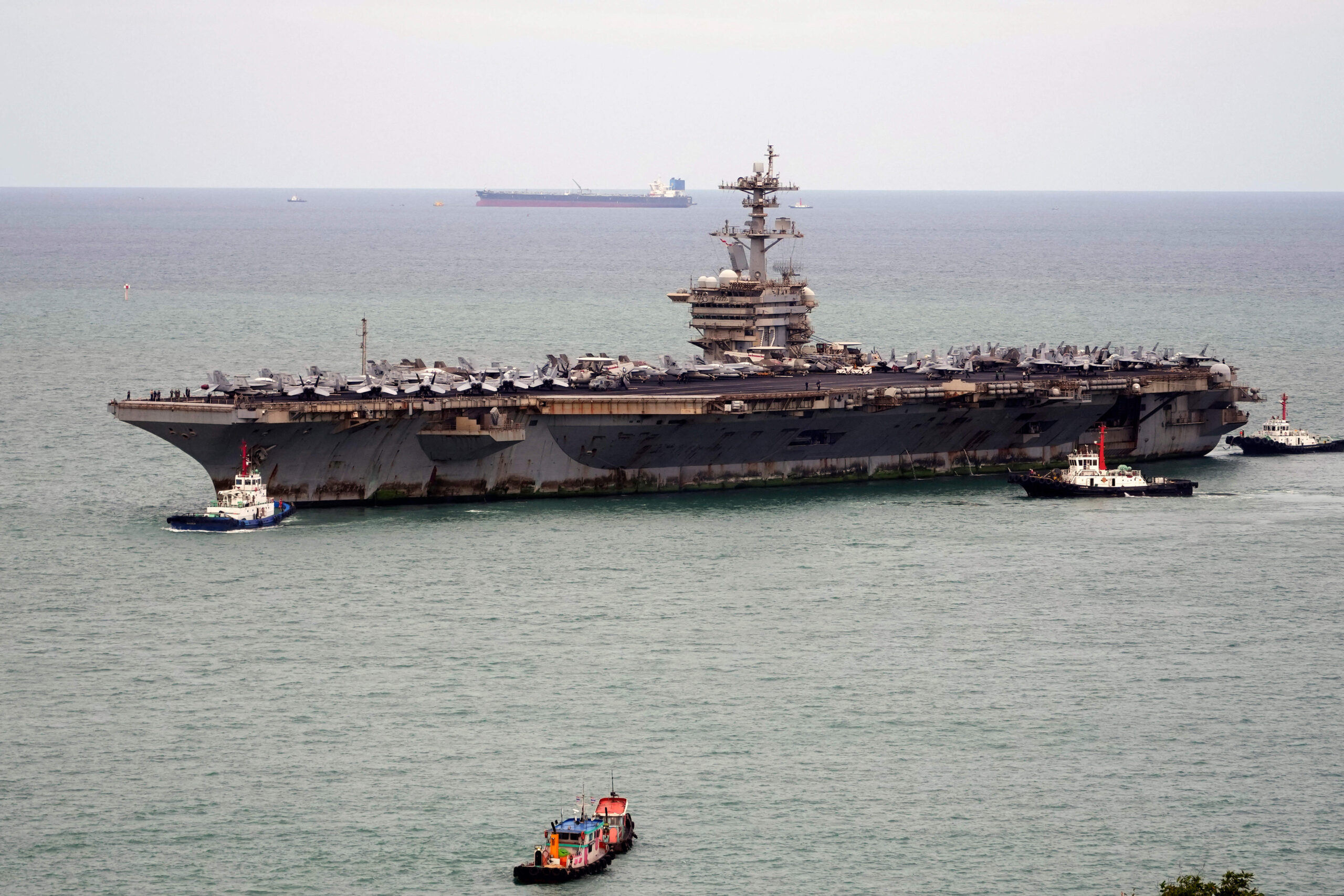
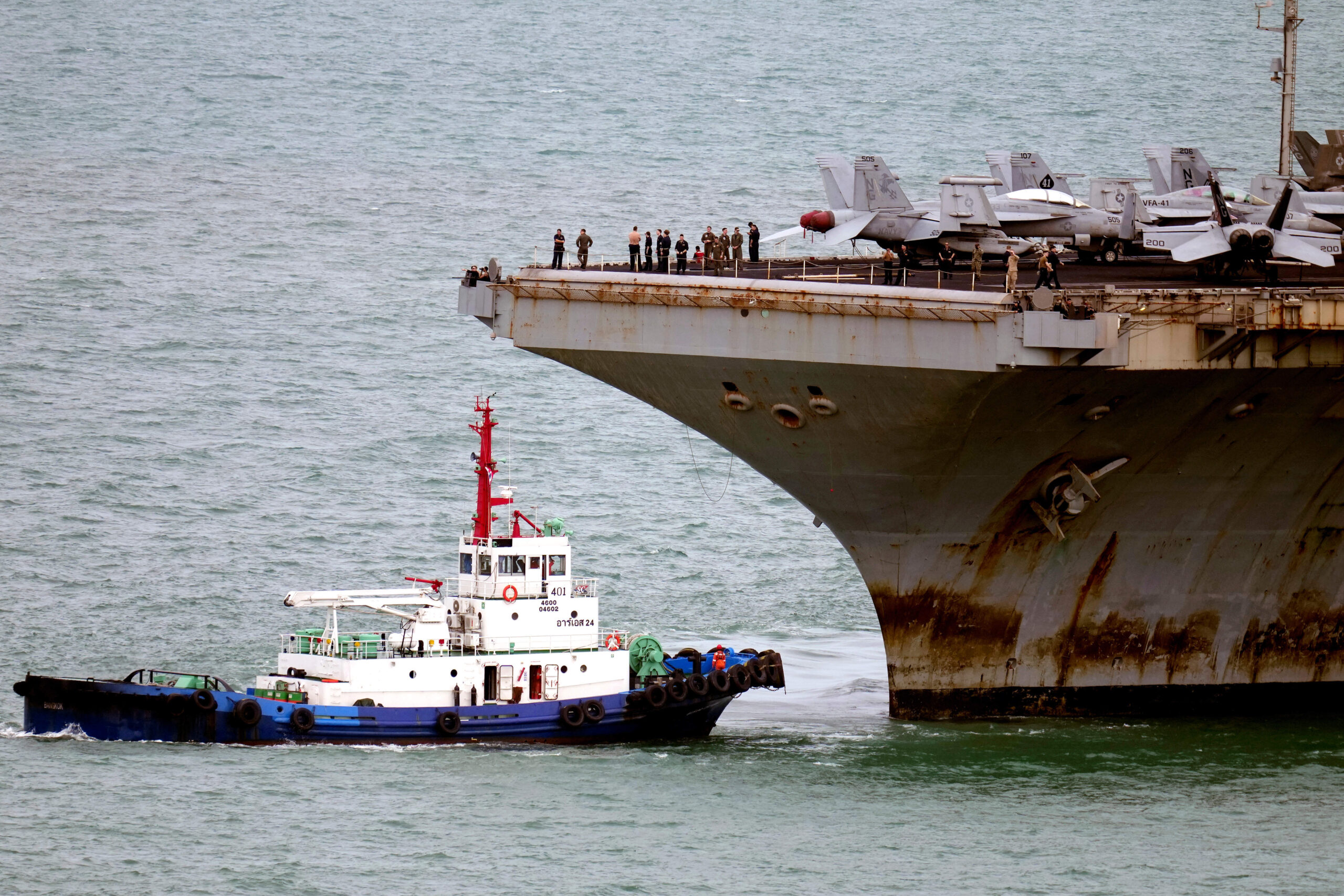
Six months later, the situation is quite different. The war that President Donald Trump hoped would last only a few days or a few weeks is still underway, with no clear political exit in sight. Iran has demonstrated its ability to disrupt maritime traffic in the Strait of Hormuz and to threaten American bases and their regional allies. Air defense and missile stocks are under pressure, and ships and aircraft have been mobilized for much longer than anticipated. Dozens of thousands of American soldiers remain deployed and missions are extended to 2027, despite warnings from senior officers about the consequences for other theaters of operation. The stopover of the USS Abraham Lincoln in Pattaya, Thailand, after 286 days at sea, with an exhausted crew and a rusting hull, offers an uncomfortable metaphor for a military establishment that remains immensely powerful, yet is asked to do more than its institutional foundations allow.
It is tempting to attribute the causes of this crisis to the erratic decisions of the second Trump administration and to the perturbations inflicted on the officer corps by the Secretary of War, Pete Hegseth. Yet, the increasingly precarious state of the American military cannot be reduced to events of the last two years. Its origins go back to the “peace dividend” of the early 1990s, through the dysfunctions caused by the war on terror after 2001, to the reluctance, during the 2010s, to challenge the fundamental assumptions concerning procurement, logistics, doctrine, the role of allies and the very nature of military power.
Trump and Hegseth are therefore as much symptoms as causes of a crisis that has accumulated over the past thirty years. The institutional erosion of the armed forces has left them increasingly vulnerable to political subversion exercised by a reactionary and unpredictable presidency, which has, at heart, amplified weaknesses already deeply ingrained.
These shortcomings manifest differently across each branch of the military. In the Navy, organizational dysfunction has eroded the hardware foundations of maritime power. In the Air Force, technological sophistication coexists with doctrinal rigidity regarding the real capabilities of air power. Finally, in the Army and the Marine Corps, the emphasis on a particular conception of the warrior—reinforced by the prestige gained by special forces over twenty years of fighting terrorism—has fostered forms of “praetorianism” that are increasingly difficult to reconcile with democratic military professionalism and the practical demands of a decisive victory.
Taken together, these three crises raise a question with profound implications for Washington’s allies. While debates about the reliability of the United States as a partner intensify in the face of Trump’s erratic leadership and his obsession with tariffs, the central question about the United States’ status as a global power is no longer limited to Washington’s willingness to exercise global leadership. It now concerns whether, after decades of institutional erosion, the country will still possess the military capacity to do so.
The organizational failure: the material decline of the United States Navy
From the outside, the United States Navy remains formidable. Its eleven aircraft carriers, its fleet of nuclear submarines, its cross-service forces with the Marine Corps, and its network of bases give it an unparalleled global presence, enabling it to link the Atlantic, Pacific, Mediterranean, Indian Ocean, and Persian Gulf. The Chinese Navy, currently undergoing rapid expansion, does not yet possess a comparable global infrastructure.
These impressive capabilities conceal, however, the increasingly precarious state of American maritime infrastructure. For a continental nation whose economic and strategic interests span the globe, maritime power is the precondition for nearly all other capabilities. Aircraft, infantry, missiles, and special operations forces can only succeed in military operations if supported by ships, logistical networks, and prepositioned stocks.
This reality has often been obscured by reverence for special operations forces and their cutting-edge strike capabilities, with the spectacular destruction of a target being seen as the very essence of military power.
But an F-35 aircraft or a member of the special forces actually depends on a colossal logistical apparatus. Without a supply and maintenance infrastructure able to secure control of global sea lanes and guarantee the operational readiness of warships, a large part of what gives the United States its military edge quickly becomes unusable.
The structural crisis threatening this system traces back to the early 1990s after the collapse of the Soviet Union, when the pursuit of the “peace dividend” led to budget cuts that reduced the Navy’s fleet by half in twenty years. At the same time, after the September 11 terrorist attacks, the main resources and political attention shifted toward land wars and the fight against terrorism in the Middle East. Owing to these additional financial pressures, maintenance and supply functions—previously overseen by the government—were outsourced, shipbuilding capabilities were cut back, and the remaining fleet had to maintain a global presence with fewer ships and diminished crews. Faced with this contradiction, Navy leaders sought technological solutions to offset organizational problems. The best-known result was the Littoral Combat Ship program, which, rather than delivering modular, low-cost ships requiring small crews, accrued technical failures and cost overruns.
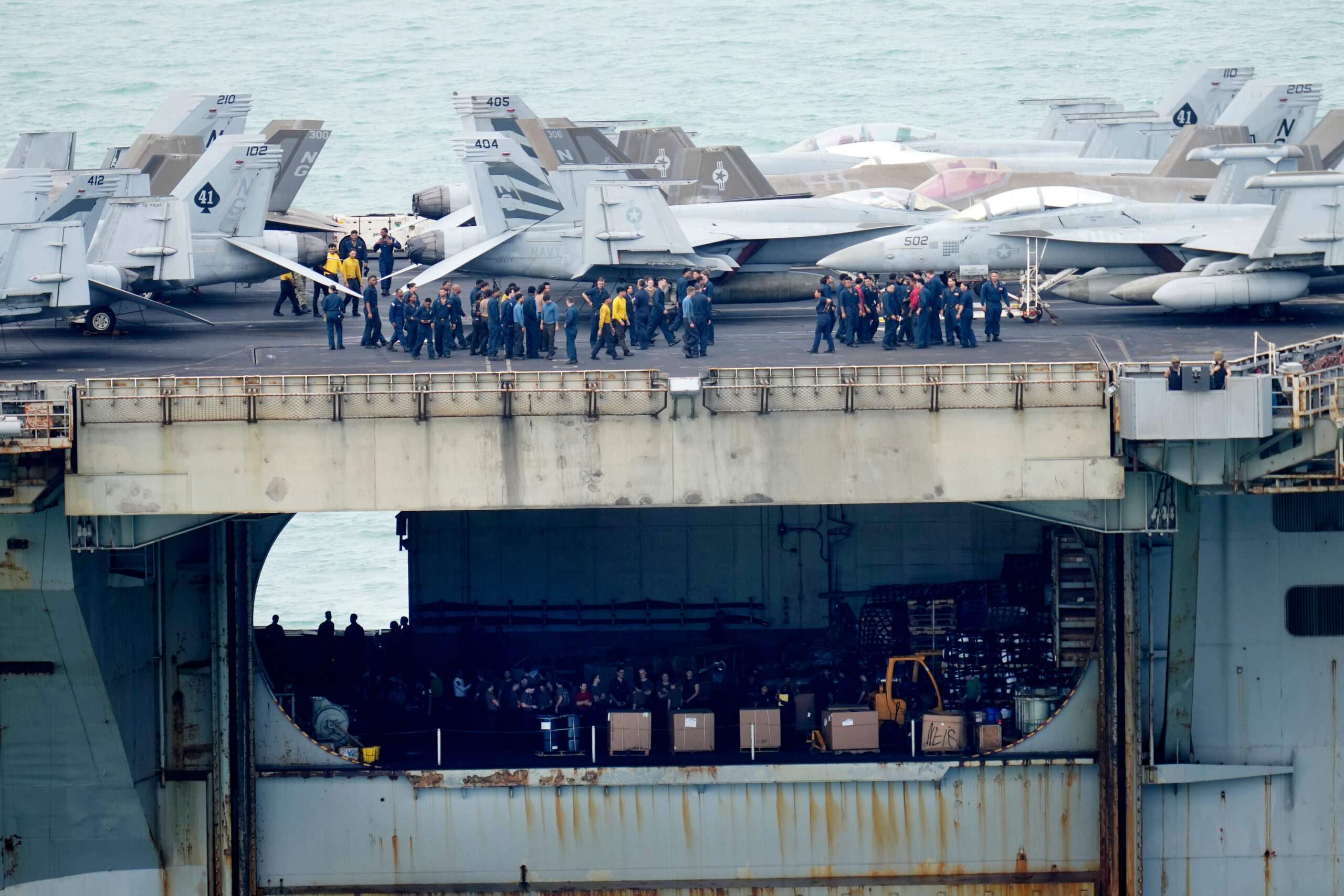
Problems surrounding the modernization of the fleet, notably within Ford-class aircraft carriers and Columbia-class submarines programs, were less spectacular but revealed similar difficulties, and despite more recent increases in shipbuilding budgets, the Navy still has not managed to stabilize the size of its fleet.
This is mainly explained by a shortage of skilled labor and procurement processes that regularly take on technological risk before designs are mature, leading to delays in many programs. The growing maintenance crisis, already a concern among senior officials in the early 2010s, is even more troubling for American naval planners. In August 2026, the Government Accountability Office noted that the Navy’s attack submarines had lost more than 15,000 operating days due to maintenance delays and downtime in the previous decade.
Hence, there remains a widening gap between theoretical power and actual power at sea. A ship sidelined for months awaiting maintenance stays on the registry and cannot be deployed, and the budgets passed do not rebuild at the same rate a pool of welders and engineers or a fleet of dry docks that decades of underinvestment have allowed to shrink. These organizational dysfunctions are such that the Navy struggles to compensate for shortages of spare parts and qualified maintenance personnel, even when Congress provides the necessary funds.
Since January 2025, the second Trump administration has subjected this system to further strains. The firing of experienced officers, such as former Chief of Naval Operations Admiral Lisa Franchetti, and former Commander of Southern Command Admiral Alvin Holsey, was followed by a broader wave of departures. Moreover, factional battles and political uncertainty have caused another loss of personnel within naval institutions, and the war against Iran has further aggravated these difficulties.
During the 2010s, the pressure on understrength crews to meet long deployment calendars already contributed to personnel fatigue and a string of accidents. Deployments of aircraft carriers, now lasting most of the year, illustrate how political commitments that exceed organizational capacity to fulfill them can break any national institution.
The doctrinal failure: the intellectual stagnation of the United States Air Force
The Air Force faces a problem that is harder to pin down. The United States still possesses, by far, the world’s most sophisticated fleet of combat aircraft, sensors, tankers, bombers, and support systems. Its mastery of striking targets thousands of miles away with precision weapons remains unmatched. Yet at the heart of the Air Force’s crisis lies a persistent tendency to confuse destructive capacity with the ability to achieve durable strategic victories.
Since the rise of strategic bombing theory, the U.S. Air Force has systematically relied on the idea that technological superiority would circumvent the costly realities of war. Different generations have framed this hypothesis in various ways, ranging from strategic bombing and aerial blockades to precision strikes, through effects-based operations and the “shock and awe” strategy. The institutional priority has consistently centered on the adversary’s vital elements, with the aim of destroying them quickly while limiting the need for large-scale ground operations.
The experience in Iraq, Afghanistan, and today in Iran illustrates the limits of a doctrinal approach that had already drawn fierce criticism from researchers like Robert Pape in the 1990s. Certainly, air power can destroy command centers and equipment, but it cannot reliably determine how the enemy regime will react once those targets disappear. Indeed, an adversary may fracture rather than surrender, or simply endure levels of destruction that planners deem strategically irrational.
Thus there is a glaring gap between tactical excellence and strategic disappointment that characterizes American strategy. As American aircraft continually demonstrate their ability to dominate conventional adversaries, failure can always be attributed to political leaders or to underutilization of force, rather than to the doctrine’s fundamental principles. Technological superiority has also contributed to an emphasis on sophisticated systems whose cost and complexity make rapid deployment or deployment in sufficient numbers difficult. We already see how the proliferation of drones and cheap missile systems challenges a model in which airspace supremacy rests on a small number of platforms with exceptional performance, whose acquisition and maintenance can run into hundreds of millions of dollars.
It is also worth noting that some components of the United States Air Force now acknowledge how their model risks becoming obsolete. The Doctrine 2035 program explicitly identifies the need to avoid “doctrinal stagnation,” as artificial intelligence, miniaturization, and logistical challenges transform the battle space. War-gaming simulations for 2026 have specifically highlighted vulnerabilities related to logistics and communications, which older conceptions of technological supremacy tended to downplay.
The problem therefore lies in the fact that institutional adaptation must overcome decades of investments, career structures, and organizational identities built around a long-standing concept of air superiority. Despite considerable reformist efforts, organizational chaos and the arbitrary dismissal of key leaders under the Trump administration have increased the risk that new technologies will be folded into the old conceptual framework rather than drive its evolution.
The strategic failure in Iran is thus the symptom of this lack of intellectual adaptation. If American air power has destroyed numerous targets, it has not managed to produce rapid decisive results against adversaries capable of inflicting losses on logistics networks and wearing down American missile stocks. A doctrine focused on the ability to strike anywhere loses much of its effectiveness when the problem is sustaining the campaign while the thousandth strike has still not ended the war.
The moral failure: the “praetorianization” of the U.S. Army and Marine Corps culture
The crisis facing America’s land forces is different. The Army and Marine Corps retain formidable combat capabilities and have thus far escaped some of the material pressures faced by the Navy. Yet behind questions of supply and readiness lies a potentially more corrosive transformation, which has allowed a shift in the cultural understanding of what a soldier is supposed to be.
These fundamental changes in institutional culture stem from the way twenty years of the “war on terrorism” have significantly elevated the status of special operations forces. Units tasked with highly specialized missions have become a central element of the armed forces. More importantly, in popular culture and in some corners of the military itself, they are regarded as the pure expression of the Army. Since 2001, the elite warrior has replaced the “soldier-citizen” as the ideal of the American military identity.
What has emerged is what one could call a “special forces cult,” in the form of a semi-mythological narrative featuring small teams of men endowed with extraordinary destructive power, whose aggression and skills allow them to overcome the heavy constraints of conventional institutions. These dynamics have been reinforced by the media and social networks, which present these special operations in spectacular fashion. While a raid conducted by a SEAL unit offers impressive television footage, the supply system that ensures an essential helicopter for mission completion receives the parts it needs far less attention.
Yet military effectiveness has always depended on that system, far more than our societies, enthralled by images of elite soldiers, would like to admit. The 2021 Afghan defeat of strategic logic starkly highlighted long-standing strategic lessons. No amount of sophisticated equipment or highly trained commando units could have protected a country whose armed forces depended on logistical and maintenance systems they could not supply themselves.
The moral logic that can accompany the warrior cult is even more dangerous. If extraordinary lethality becomes the ultimate military virtue, then legal restraint, civilian oversight, and respect for noncombatants risk becoming bureaucratic obstacles imposed by people who do not understand war. The military might thus begin to see itself as a caste of professionals with unique powers, whose experience of violence affords them a decisive authority that civilians cannot possess.
The Eddie Gallagher controversy, a Navy SEAL, in the mid-2010s exemplifies these trends. Hegseth’s public intervention on his behalf, while he was still a commentator at Fox News in 2019, reflected a broader political dynamic: allegations of battlefield misconduct could be seen as proof of the warrior’s authenticity, while military lawyers and commanders attempting to enforce professional standards were portrayed as enemies of lethality. Once this logic is established, the line between targeted military action and savage, blind violence tends to blur.
Hegseth was profoundly influenced by this culture. The emphasis he places on restoring the “warrior ethos,” his assaults on diversity initiatives, and his definition of military reform through a aggressively masculine rhetoric centered on lethality confer political legitimacy to currents that have grown for decades within the subcultures of the American military.
These implications go beyond civil-military relations. An army that glorifies fighters risks despising the people upon whom modern war increasingly depends: engineers, logisticians, intelligence analysts, drone experts, maintenance technicians, software specialists, and officers capable of learning from foreign militaries. Anti-intellectualism, often associated with a performance-driven combat culture, therefore impacts operational aspects by encouraging the belief that aggression, determination, and will can substitute for institutional competencies.
Yet the war between Ukraine and Russia since 2022 teaches the opposite lesson. Ukrainian resilience rests on exceptional improvisation to build supply networks, adapt drone technologies, and integrate battlefield innovations. Sixty years earlier, the Vietnamese forces likewise demonstrated that no act of battlefield heroism, however grand, could withstand American power without the support of sophisticated logistical systems.
This “praetorianism” thus threatens American military power on two fronts: constitutionally, it encourages officers and soldiers to view themselves as guardians of a particular vision of the nation rather than as servants of civilians lawfully elected under the constitutional order; operationally, it favors an outmoded conception of military virility precisely at a time when war demands greater institutional sophistication and intellectual curiosity.
Europe’s dilemmas in the face of the decline of the United States
The United States will not stop being a great power overnight. The country possesses substantial economic resources, an unparalleled military infrastructure, exceptional reservoirs of technological expertise, and none of the processes described are irreversible.
The lessons for Europeans and other allies lie elsewhere: to reverse this trend and avoid the United States’ strategic dysfunction, one must recognize the systemic nature of the American military decline. Financial resources alone will not suffice to revive shipyards whose skilled labor has disappeared. Likewise, more capable aircraft cannot compensate for a doctrine that confounds destruction with strategic success. Moreover, Pete Hegseth’s reflection on the “warrior ethos” cannot offset the erosion of professional norms, logistical competencies, and openness.
Europe now faces three interwoven dilemmas. In the short term, it must bridge the gap between American credibility and the time required to rearm, and that not only in the face of Russia but also in the Atlantic and the Mediterranean. In the medium term, Europeans must determine which elements of the American defense system are truly indispensable, which would impose an untenable financial burden, and in which areas partnerships with Canada, Japan and other major democratic powers could guarantee global resilience. In the long term, they might be compelled to renegotiate the foundations of a transatlantic relationship in a radically different dynamic, with increased capabilities on one side and a weakened but still powerful United States on the other.
Since 1945, Europeans have faced security challenges with American military support. Trust in this relationship, deeply rooted, now appears dangerous and complacent. The strategic question facing the European Union and the United Kingdom is therefore the reverse of Henry Kissinger’s quip that Washington didn’t know who to call when it wanted to reach Europe.
Decades hence, Europeans confront the possibility that when they call on the United States, there may no longer be an America able to answer their call.