To prepare for your return, try Le Grand Continent. The ideas and analyses you won’t find anywhere else. But you’ll soon see them everywhere. In your inbox from 8 euros per month
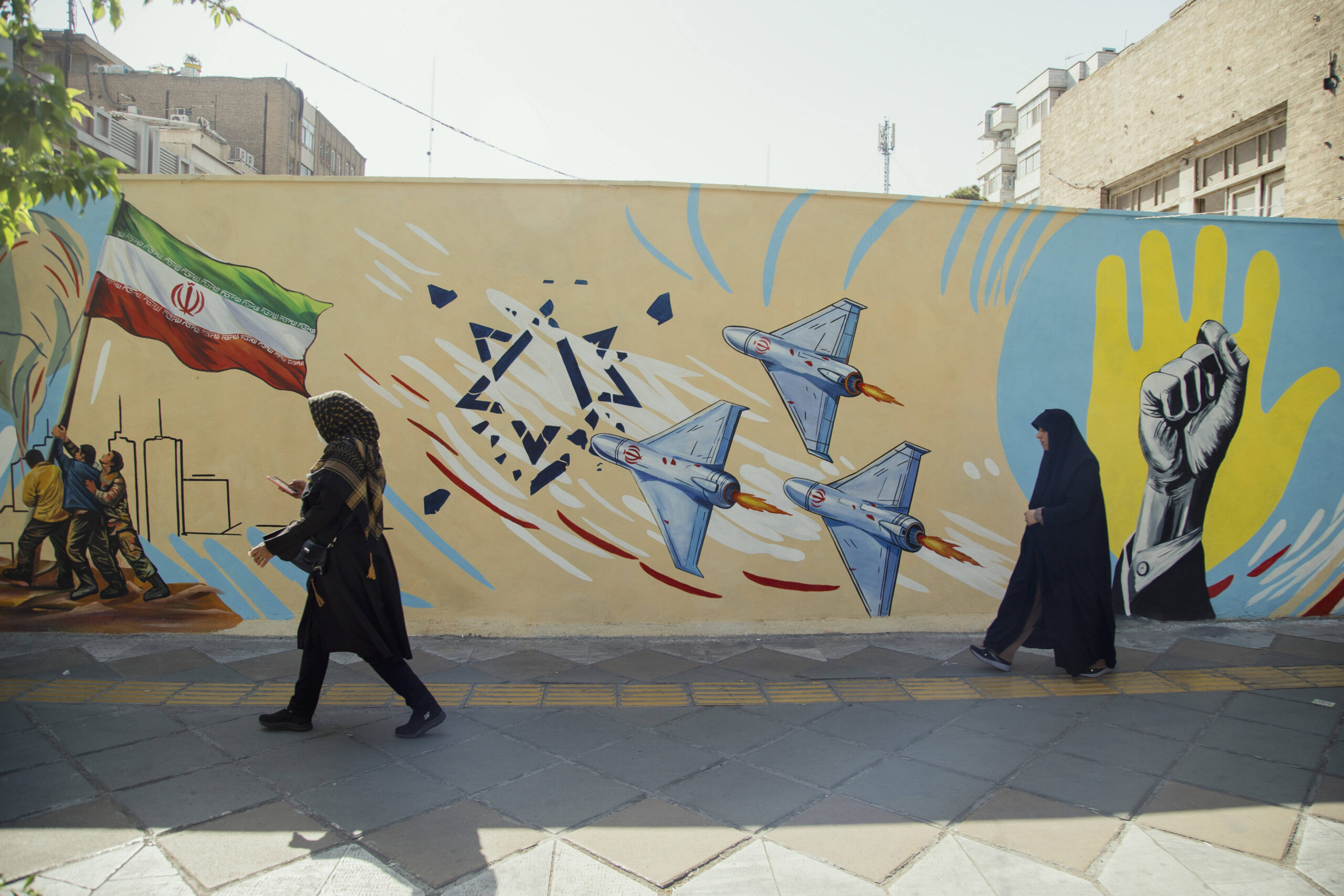
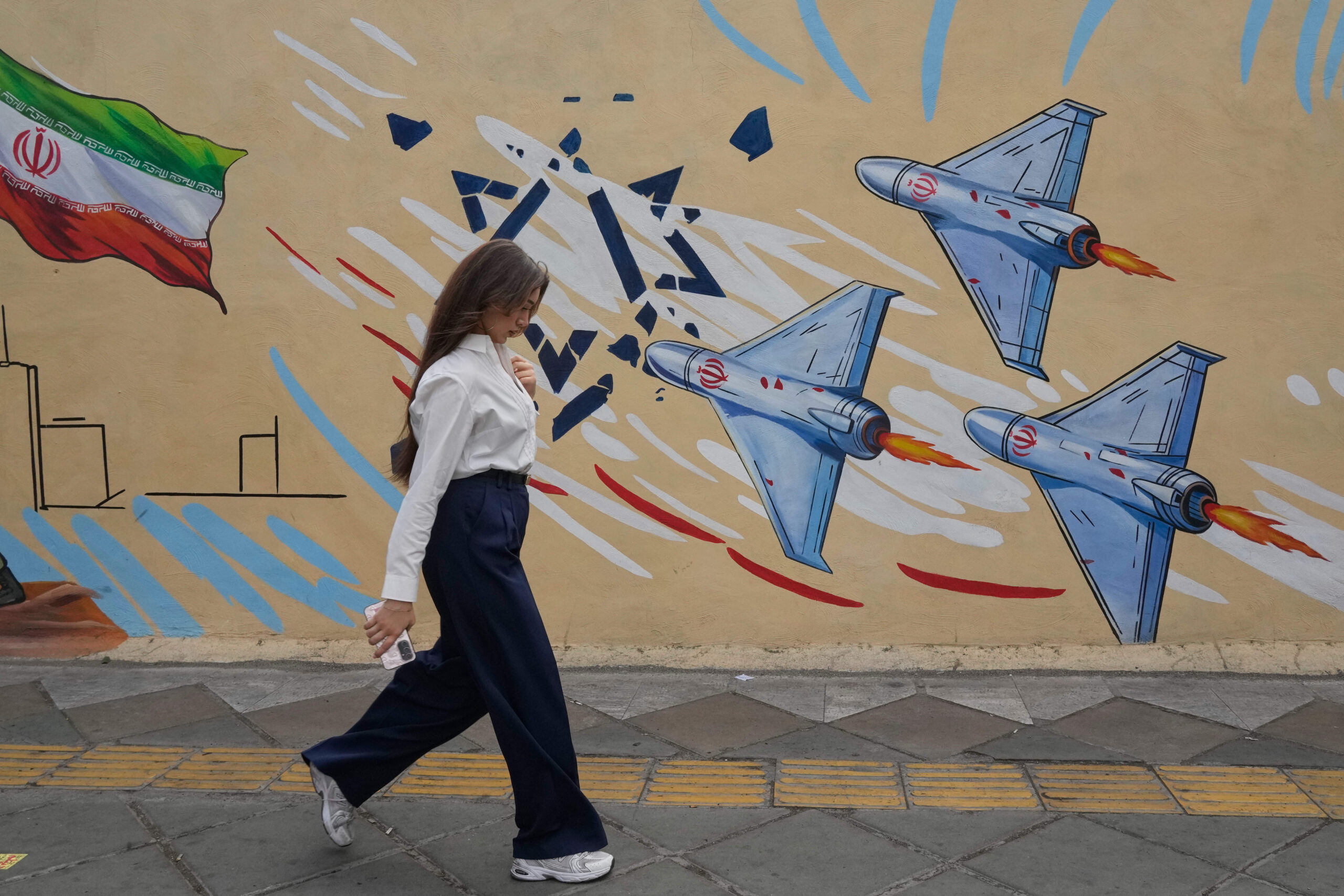
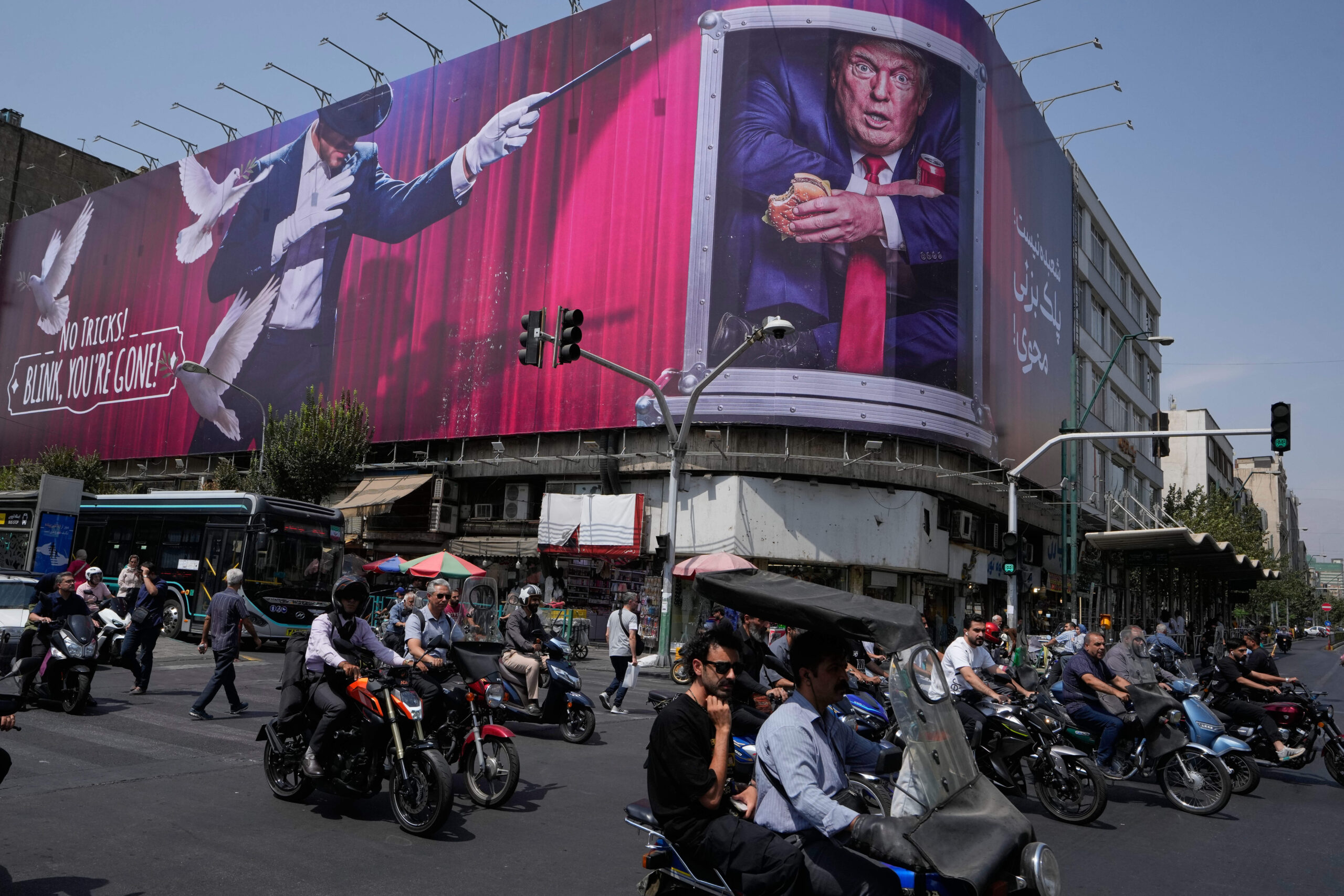
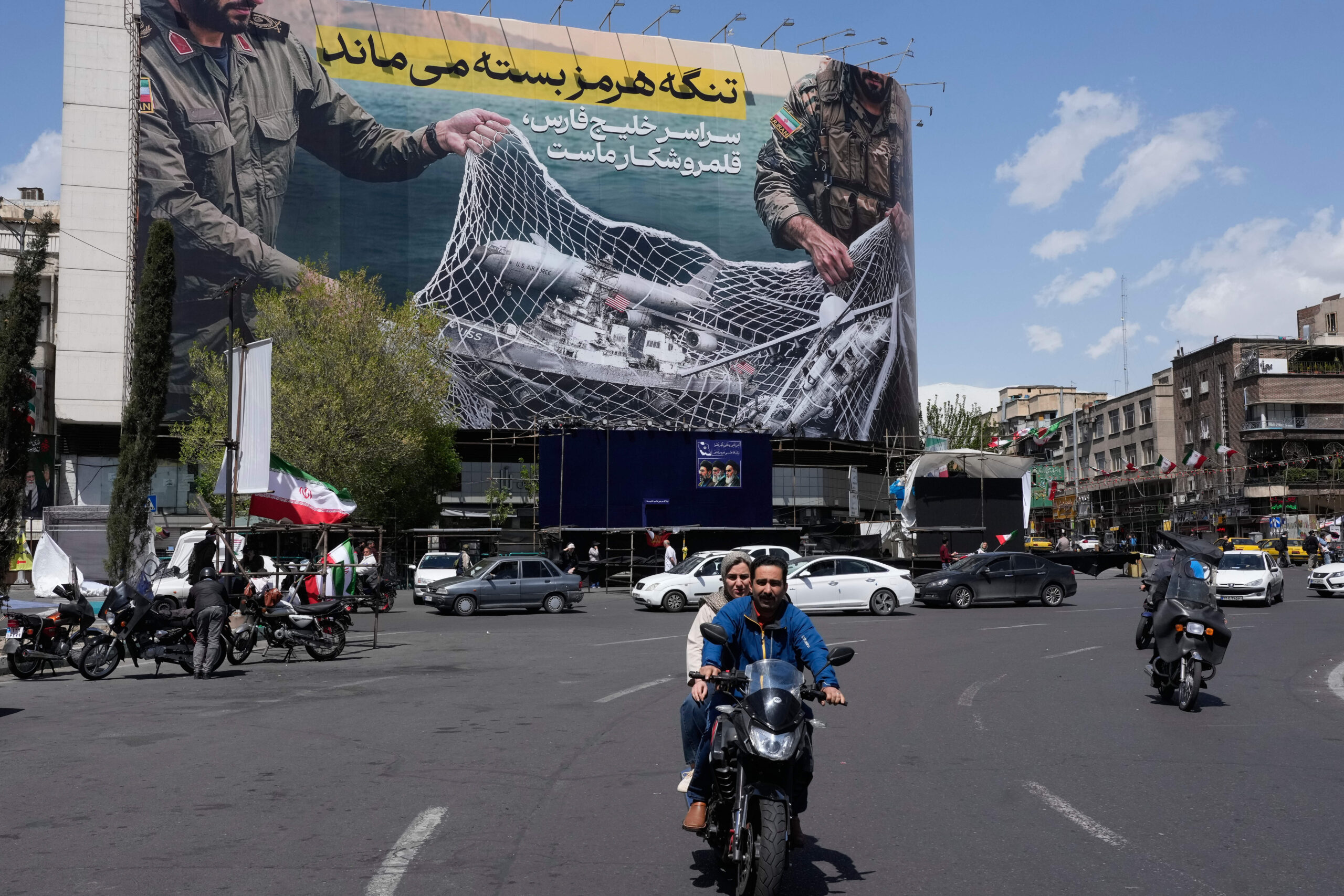
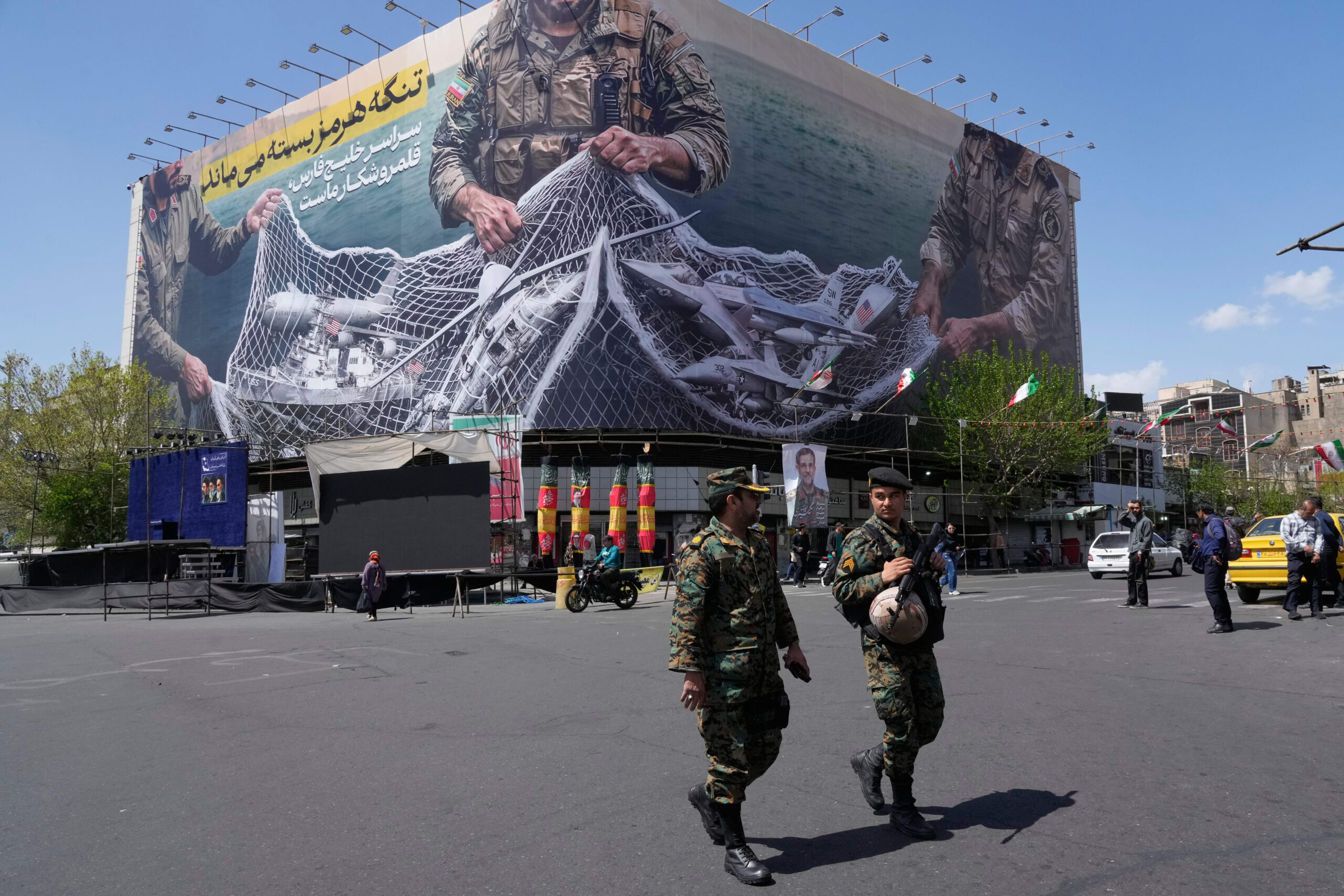
Since the 1979 Revolution, the Iranian urban space has been a spectacular theater for the deployment of state propaganda, one of its most recurring themes being hostility toward the United States.
This hostility manifests along the city’s main axes and is regularly renewed. It can take the form of large posters, murals, temporary exhibitions of cartoons in major metro stations, or the “Museum of Western Arrogance,” the former United States Embassy in Tehran, nicknamed the “nest of spies” (lâneh-ye jâsûsî) in revolutionary terminology, and repurposed as a site for explaining the “misdeeds” committed by the United States to the world and to Iran.
The war that began in 2025 and has intensified since February 28, 2026 provides the pretext for a redeployment of this propaganda apparatus.
Designating the Enemy
The first element of these propaganda campaigns is the centrality of Donald Trump.
Many posters do not exhort to war, but to the outright assassination of the American president.
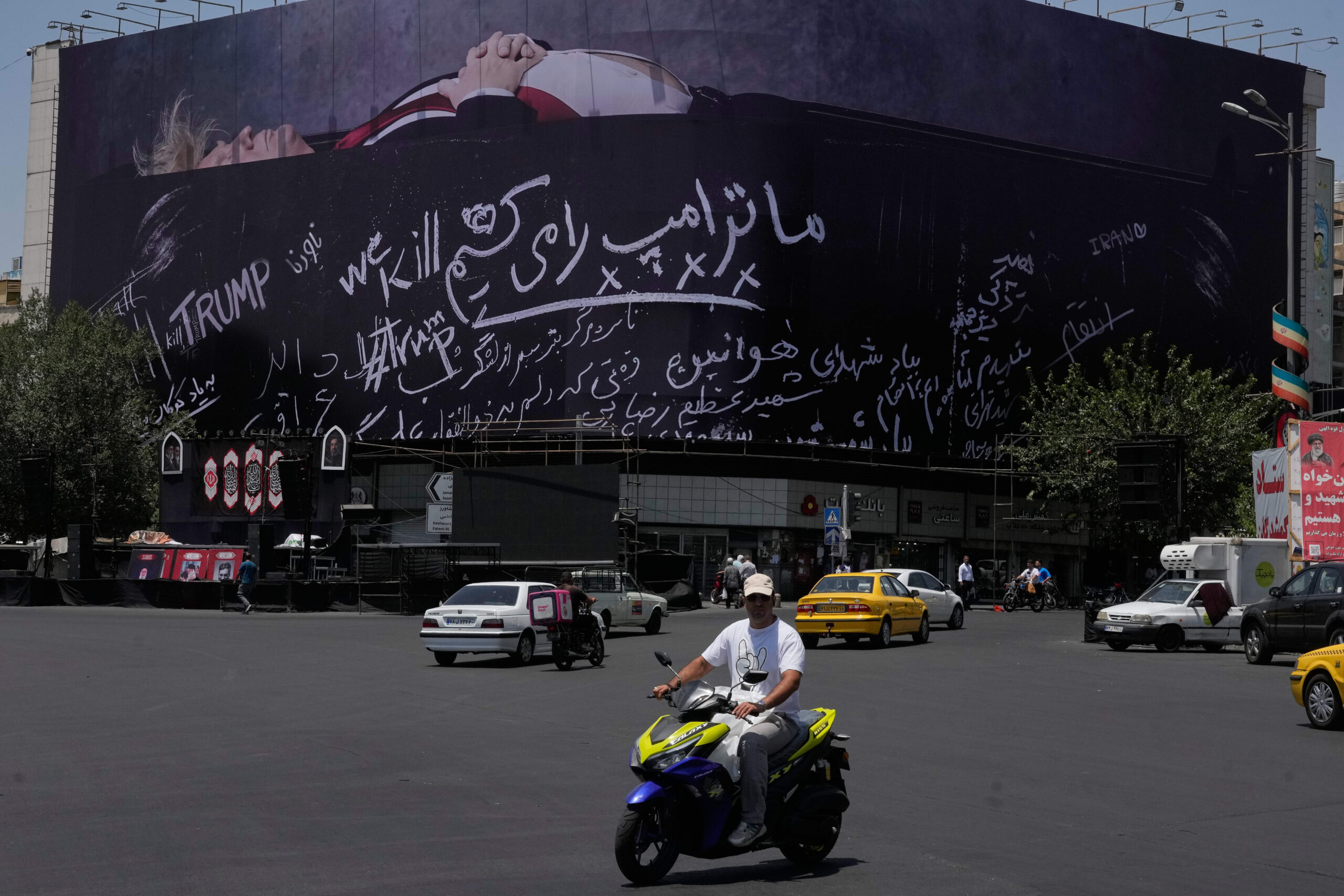
This theme is often developed with deliberately simple, non-calligraphic handwriting, giving the impression that a single person could tag a blank wall. The graffiti style also echoes the chalkboard wall on which mourners could write messages in chalk during Ali Khamenei’s funerals, held from July 4 to 9. The crowd repeatedly shouted “Death to America” and called for vengeance.
Several hypotheses can explain why the Iranian regime targets the American president: personalization certainly serves to designate a culprit, but it also resonates with the vendetta logic opened by the 2020 assassination of Soleimani, a logic reinforced by the assassination of the Supreme Leader and much of his family in February 2026. One can also read on the panel “In memory of the children of Minab,” a reference to the southern Iranian city where a strike hit a primary school on February 28. The constant mixing of registers — religious (martyrdom, Muharram), nationalist (Ferdowsi, Delvari) and popular (brand typography, hashtags, use of English, references to music or memes) — indicates that this propaganda is designed as much for the streets of Tehran as for the screen and international circulation.
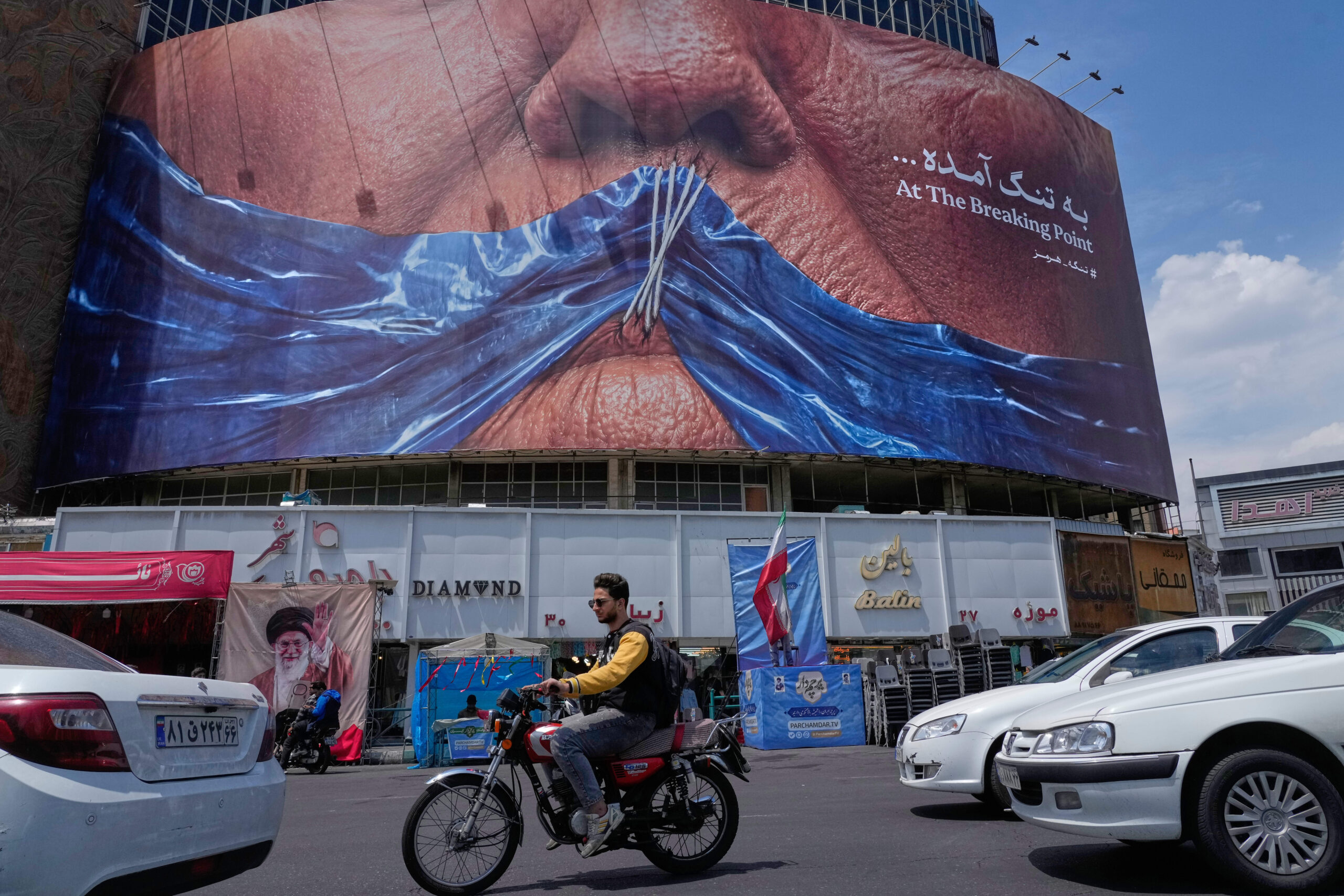
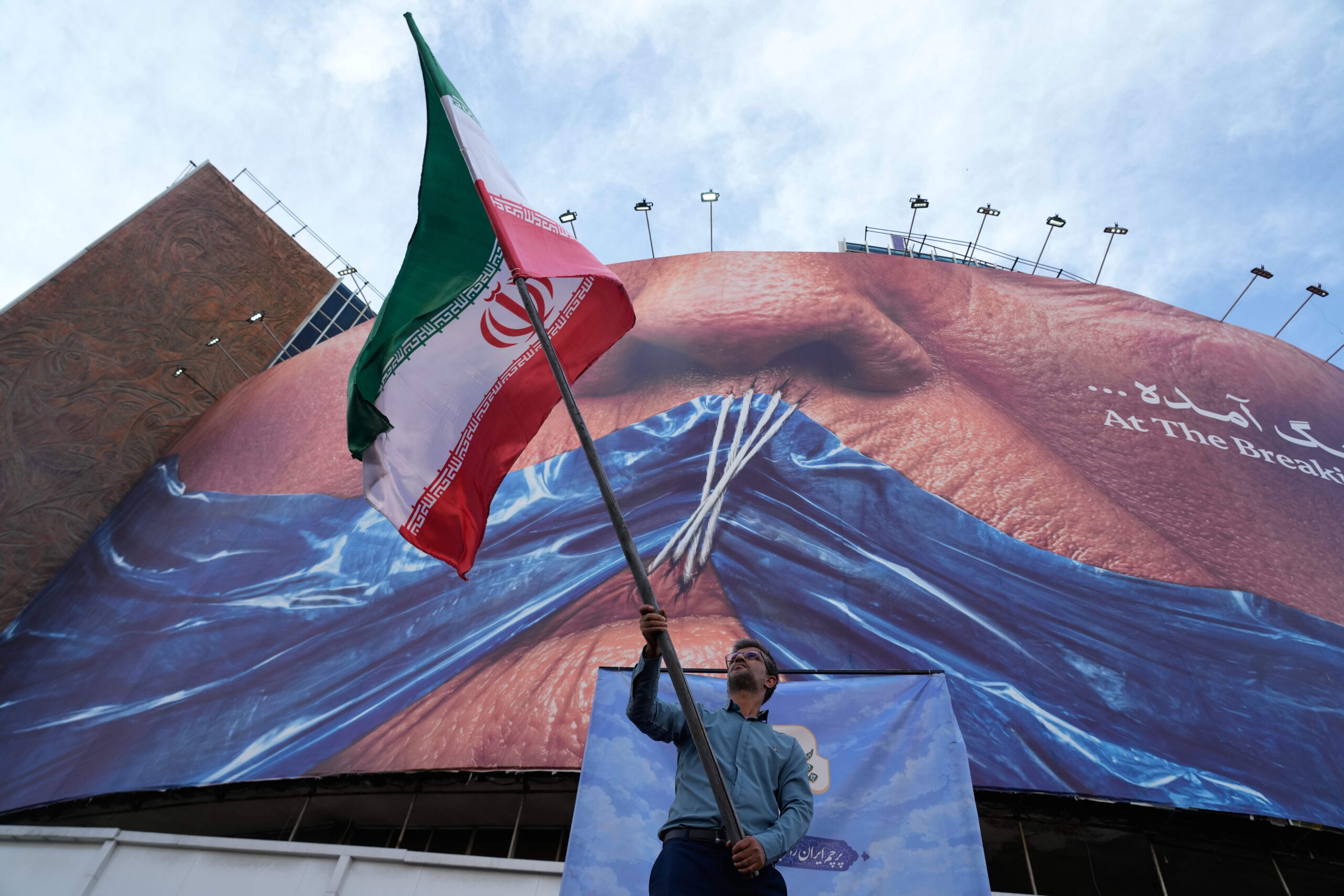
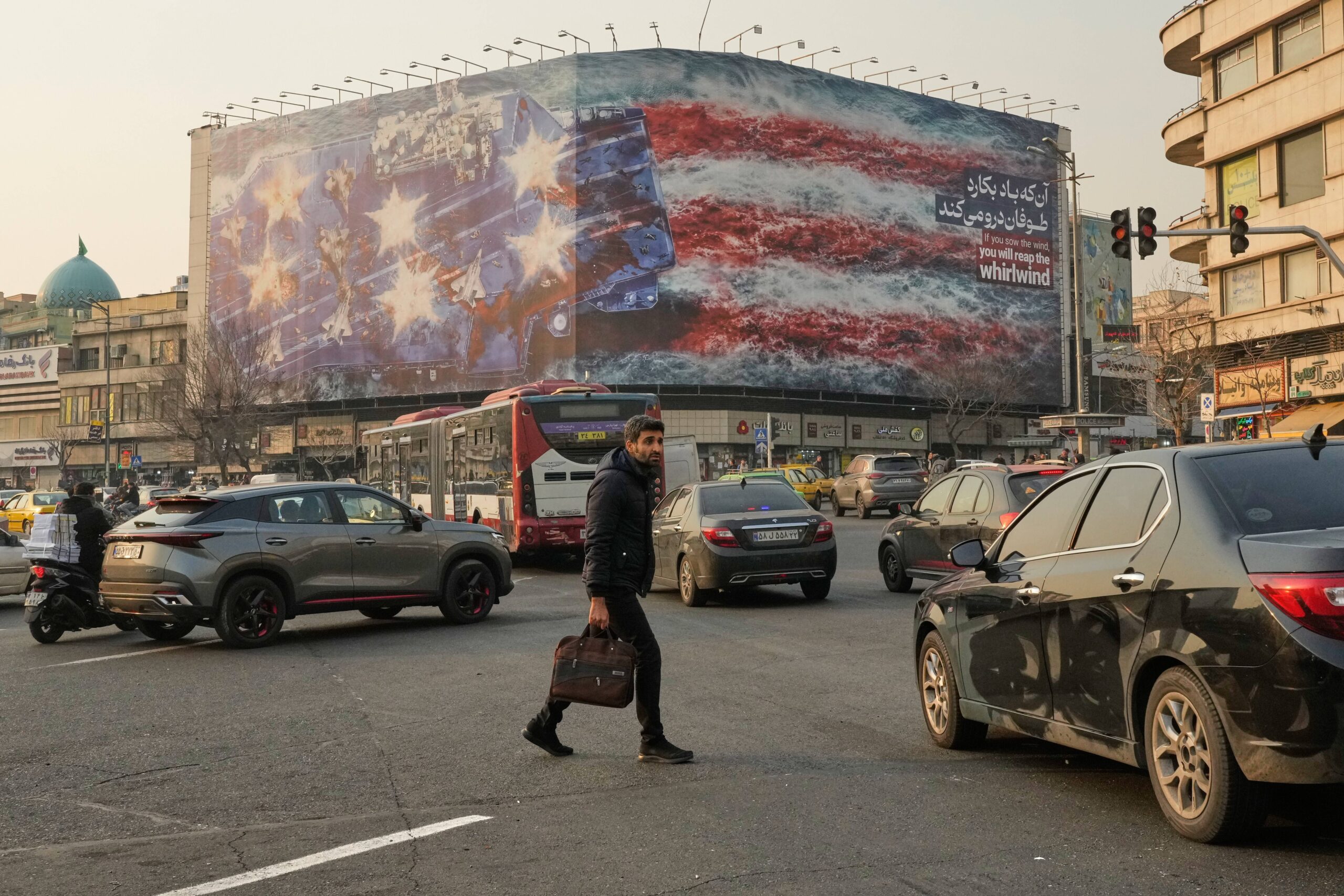
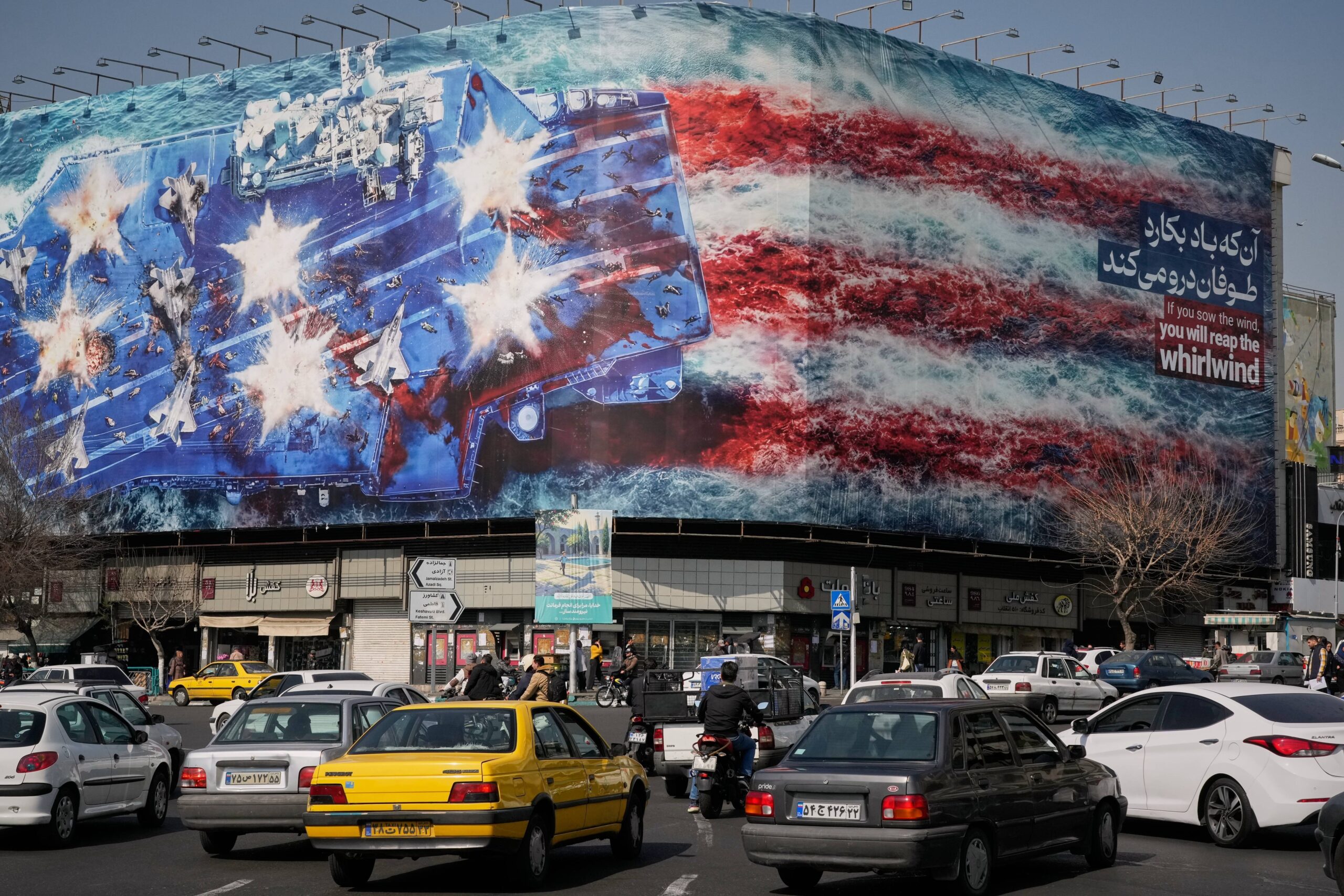
For about fifteen years, the giant sign in Vali-e Asr Square, the most photographed in the country, has indeed served as a communication medium for the regime. Each poster is revealed (ronamayi) and immediately relayed by agencies connected to the Guards, then picked up by English-language channels and Arabic-language outlets, before being captured by photographers from Western agencies.
A Tehran billboard thus becomes, in a few hours, an image circulating worldwide, and that is precisely why it is designed: a horizontally calibrated frame for photography from the crossroads, a bilingual slogan, typography readable in a thumbnail, and the absence of details that would not be perceptible in miniature on a smartphone.
Most of these signs and murals are produced by the artistic and media organization Owj, a NGO founded in 2011 and affiliated with the Guards, in partnership with Tehran’s municipal urban beautification organization. But now, the generation of images using artificial intelligence has also become one of the regime’s propaganda tools.
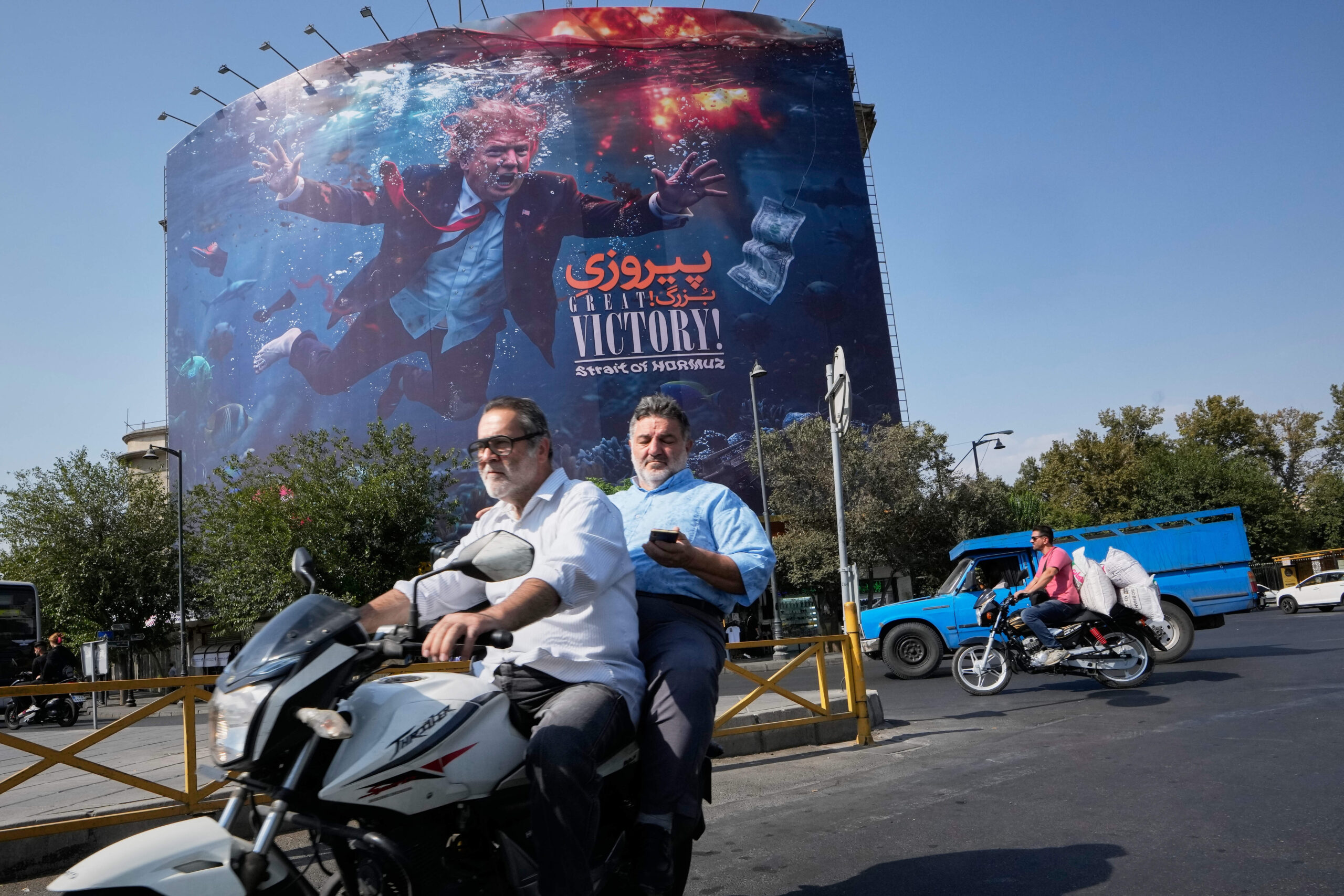
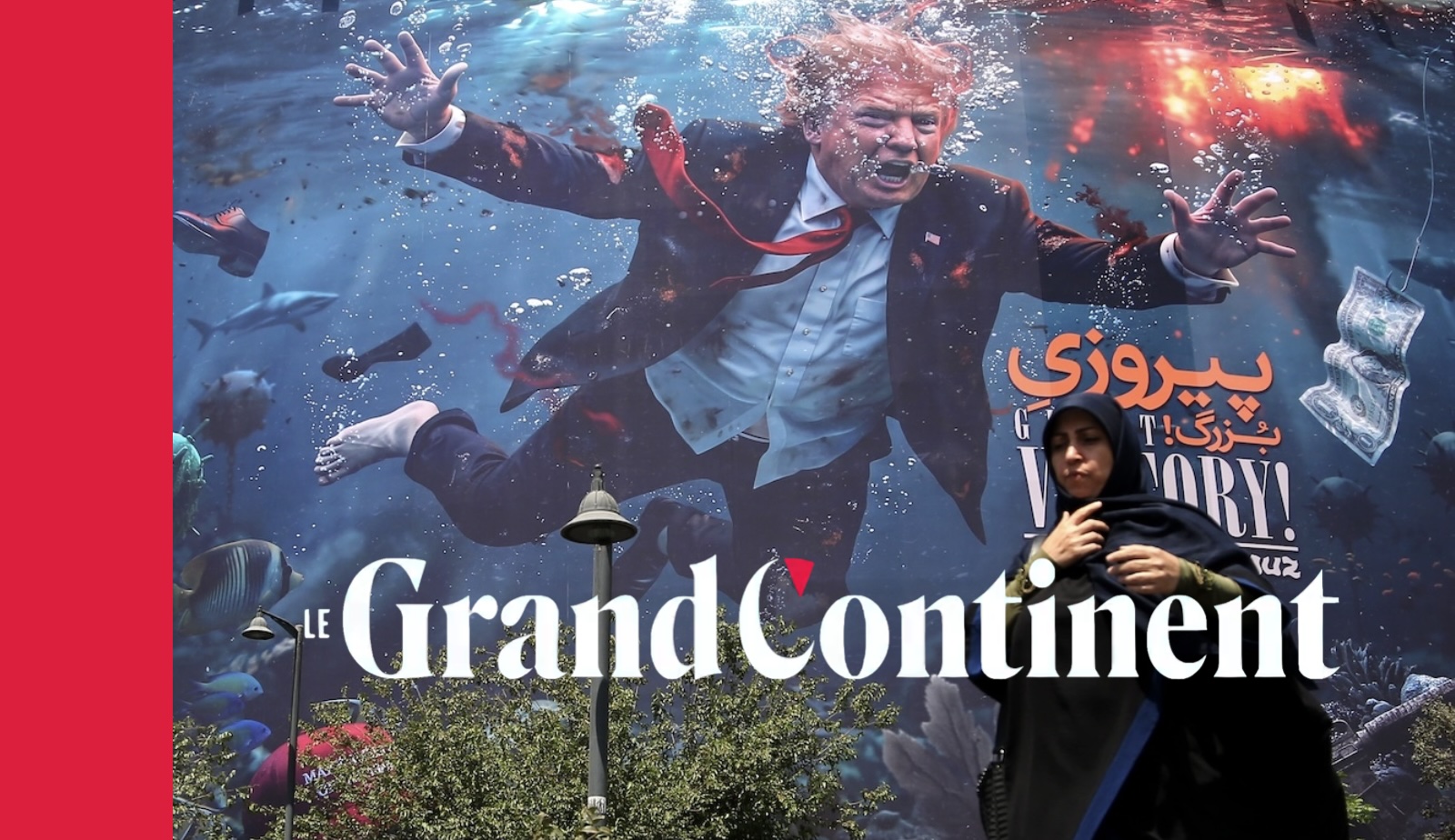
The use of English on these posters follows the same logic. The Strait of Hormuz, the regime’s main lever in its conflict with the United States, recurs here as a central motif, depicted alternately by water or by a cartographic representation. The image of Donald Trump sinking with the dollar in the waters of the strait thus illustrates the idea of an American financial power in decline, while also drawing a reinterpretation of the famous cover of Nevermind, Nirvana’s album. Its central position in the international financial system would be compromised by the closure of this maritime artery essential to world trade.
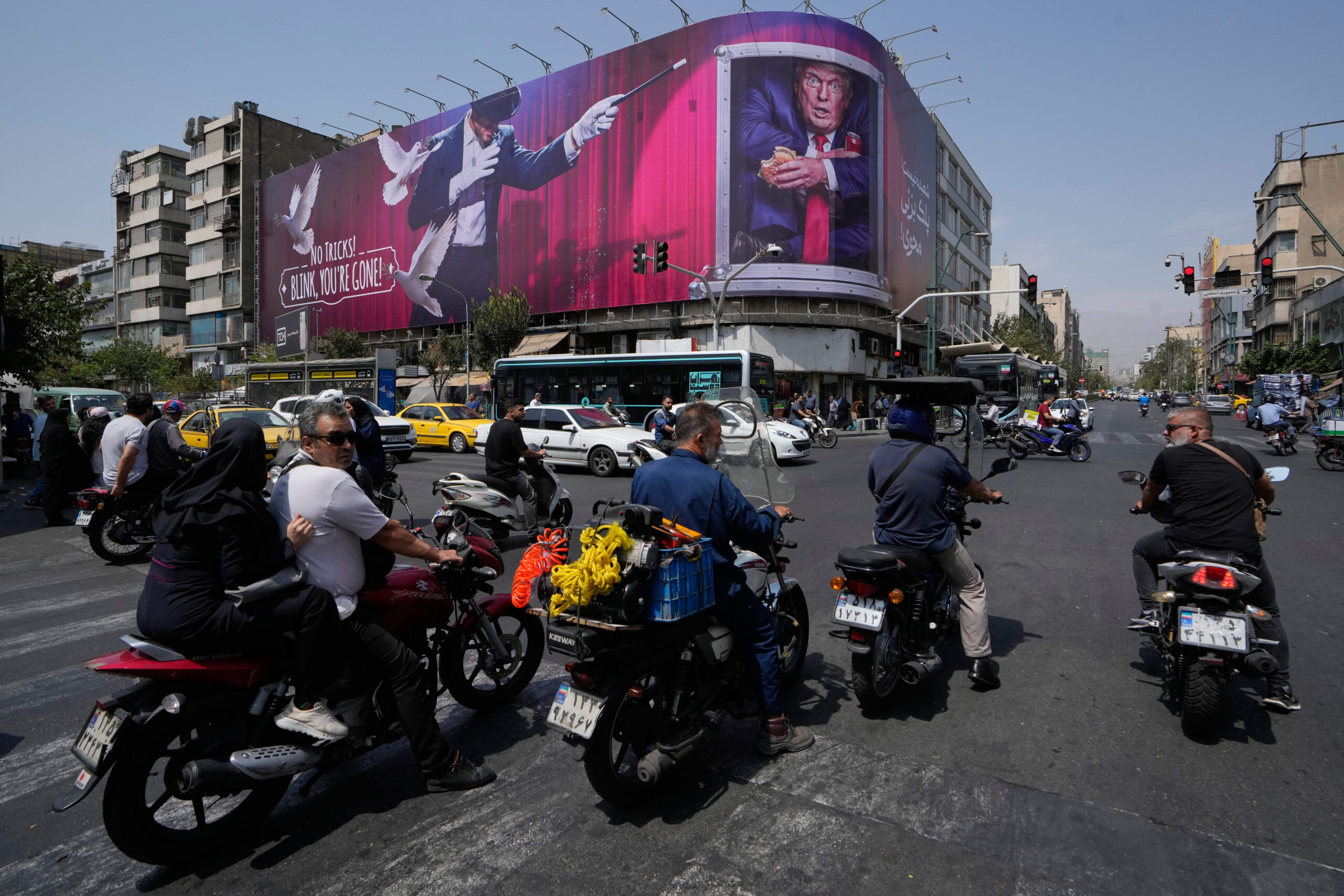
This poster, again aimed at an international audience, implies that “the next” after Lindsey Graham’s sudden death this summer could be “DT,” i.e., Donald Trump.
The targeted assassination constitutes an important dimension of the conflict between the United States and Iran, and both sides have integrated it into their doctrine. Four days after the February 28 strikes, Pete Hegseth, the Secretary of War, stated at a Pentagon briefing: “Iran tried to assassinate President Trump, but it was President Trump who had the last word.”
While Washington and Israel have since February carried out the physical elimination of a substantial portion of Iran’s upper echelon, the Iranian threat seems for now mostly verbal. Yet it has deep effects on the American security apparatus.
One only has to recall Donald Trump’s plane change from Ankara, where he was attending an NATO summit, to understand how seriously the White House takes these threats. The same dynamics occur on the Israeli side: last month, Benjamin Netanyahu asserted that Iran had attempted to assassinate one of his sons. Last month, a video titled “Where to kill Barron Trump” promised ten million dollars to anyone who would kill the president’s son, and Iranian media broadcast similar content targeting Melania Trump as well as a list of targets including several members of the American cabinet.
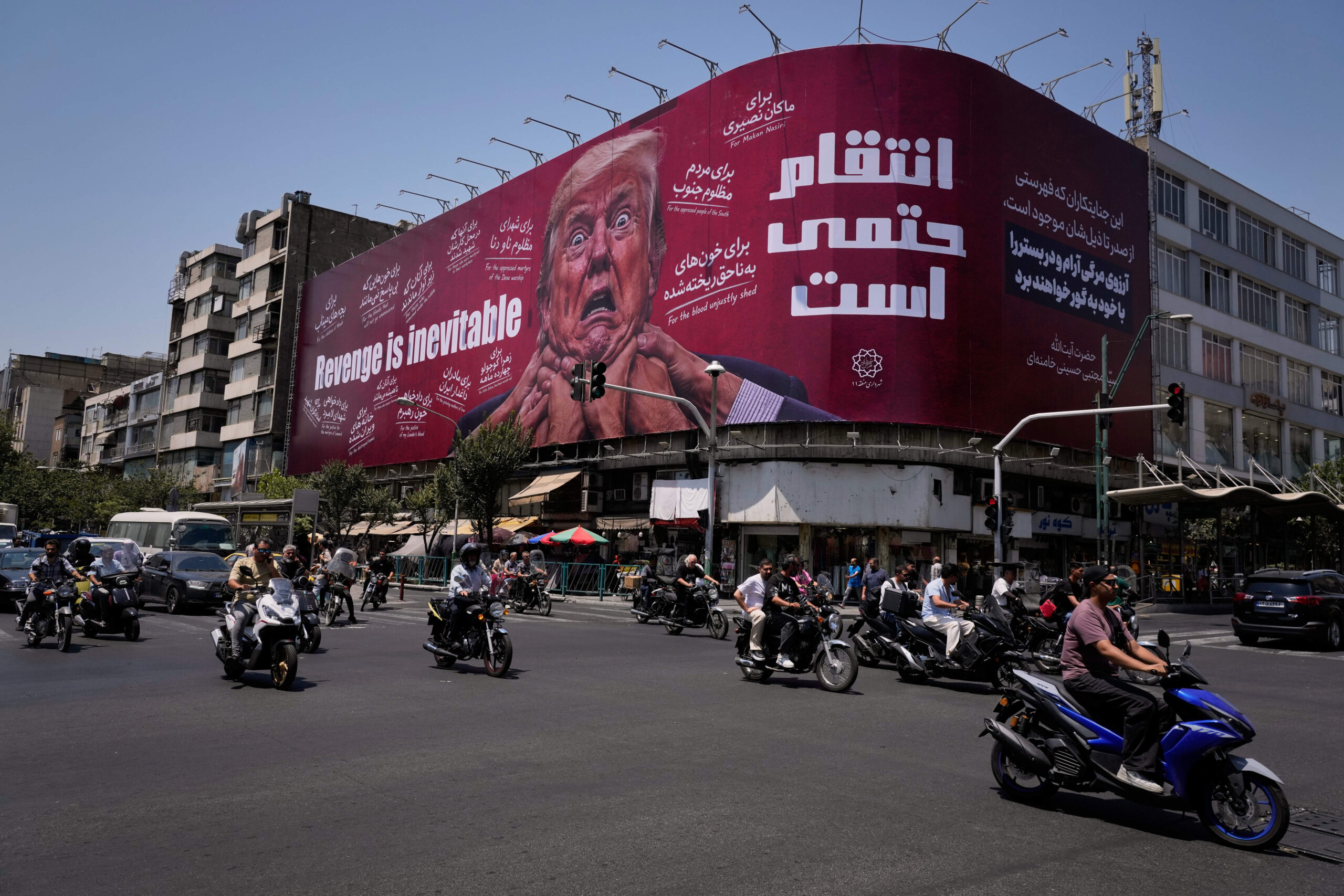
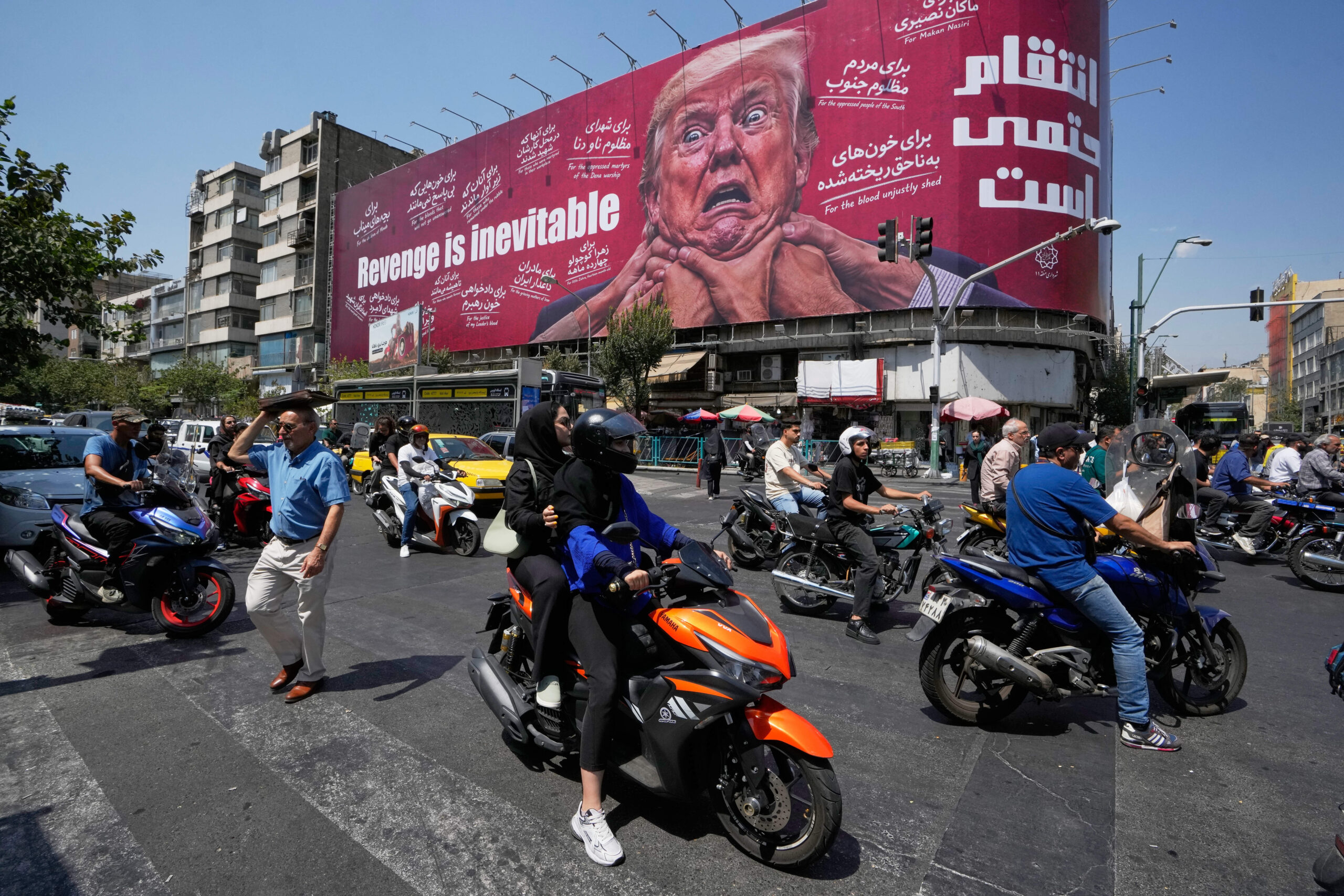
The intersection of Jomhouri (Republic) Street and Vali-Asr (Master of Time, referencing the Twelfth Imam) is one of the most central and busiest crossroads in Tehran.
This poster is intended for internal propaganda. We see the former Leader, Ali Khamenei, with a raised fist, behind what appears to be a blood moon, referencing both his “martyrdom” and the moon of Islam, with the calligraphic slogan “باید برخاست,” “We must rise,” the word also denoting the takeoff of an aircraft.
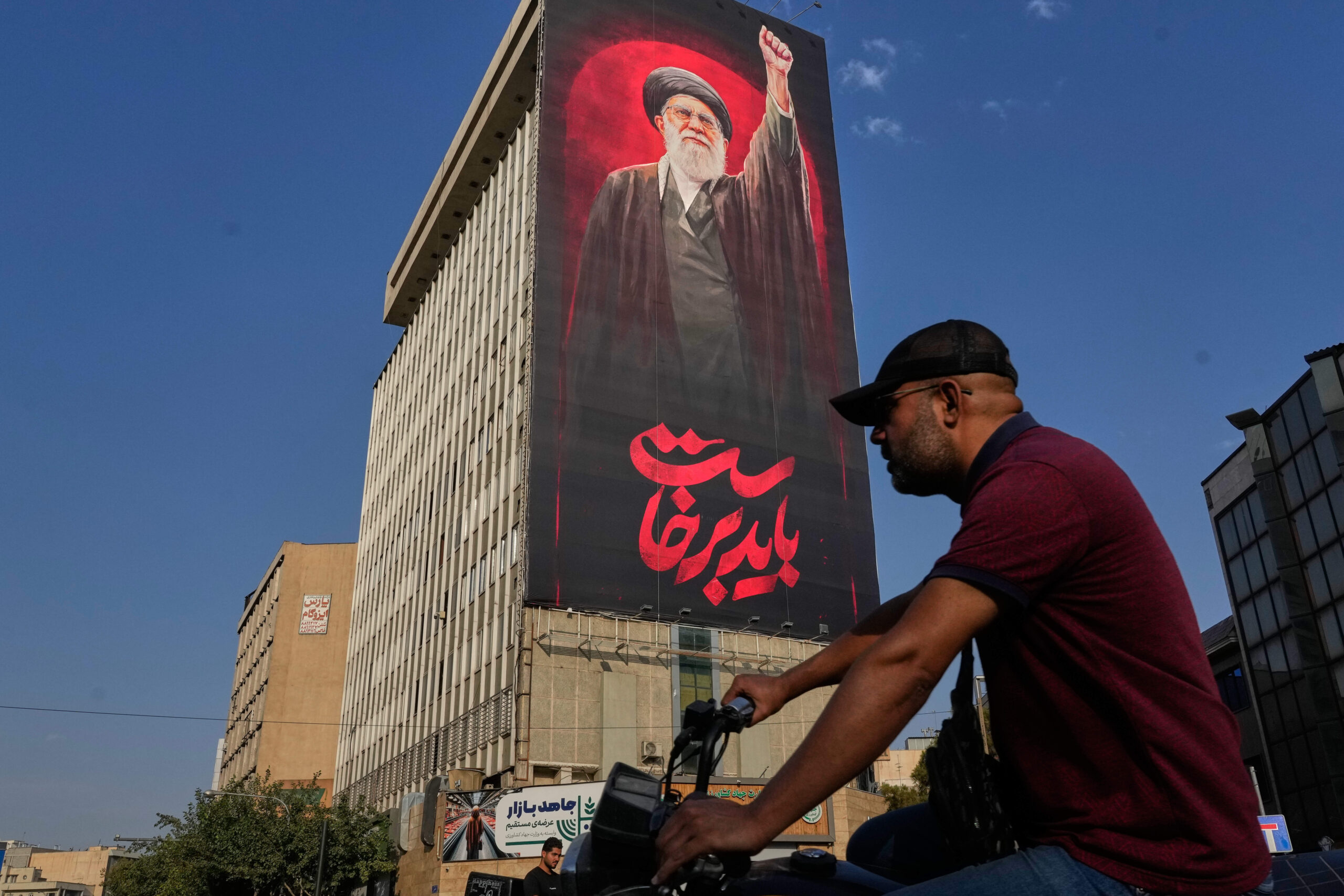
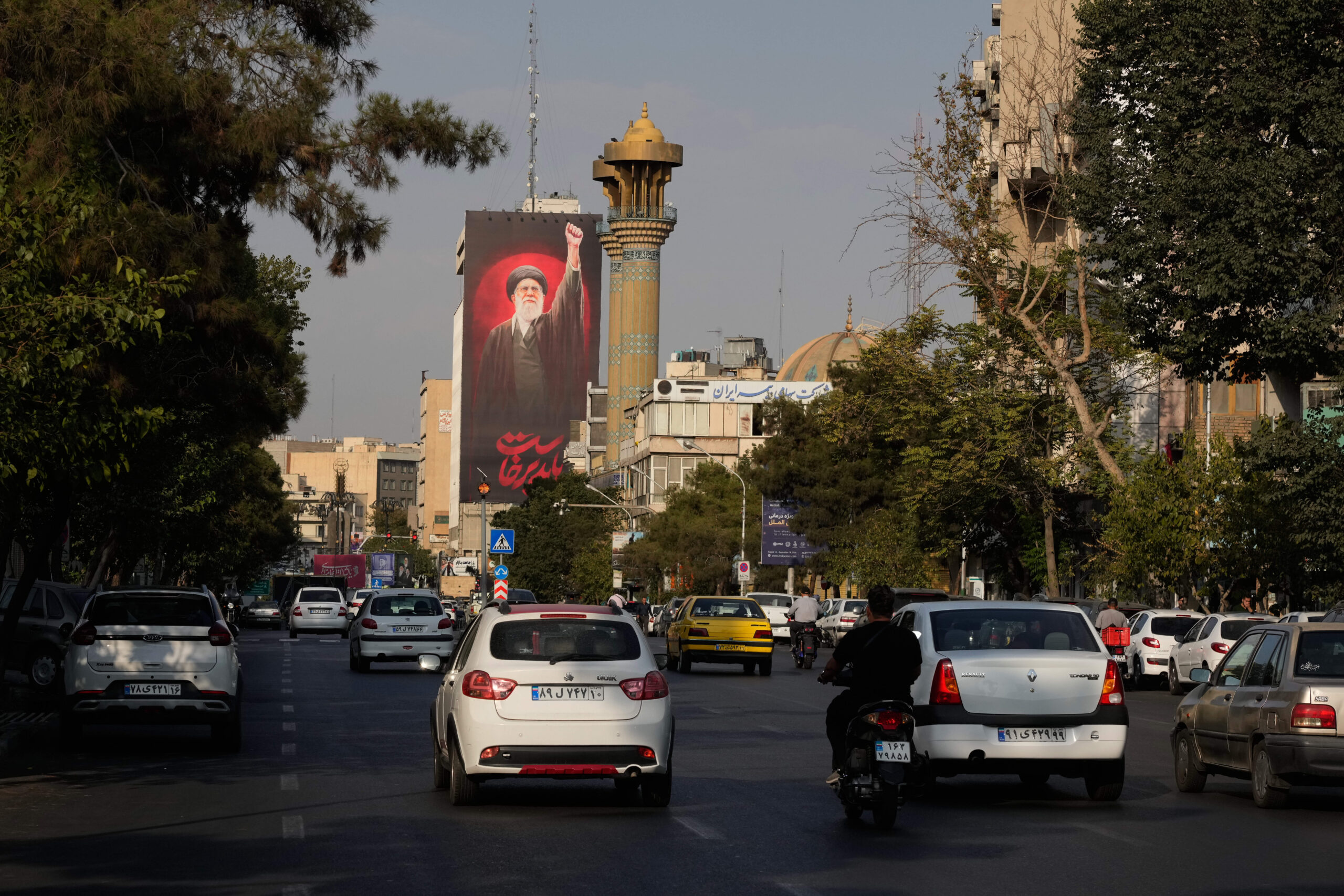
The slogan refers to the Mohsen Mohammadi Panah song of the same title, performed in honor and homage to Ali Khamenei during his national funeral ceremonies.
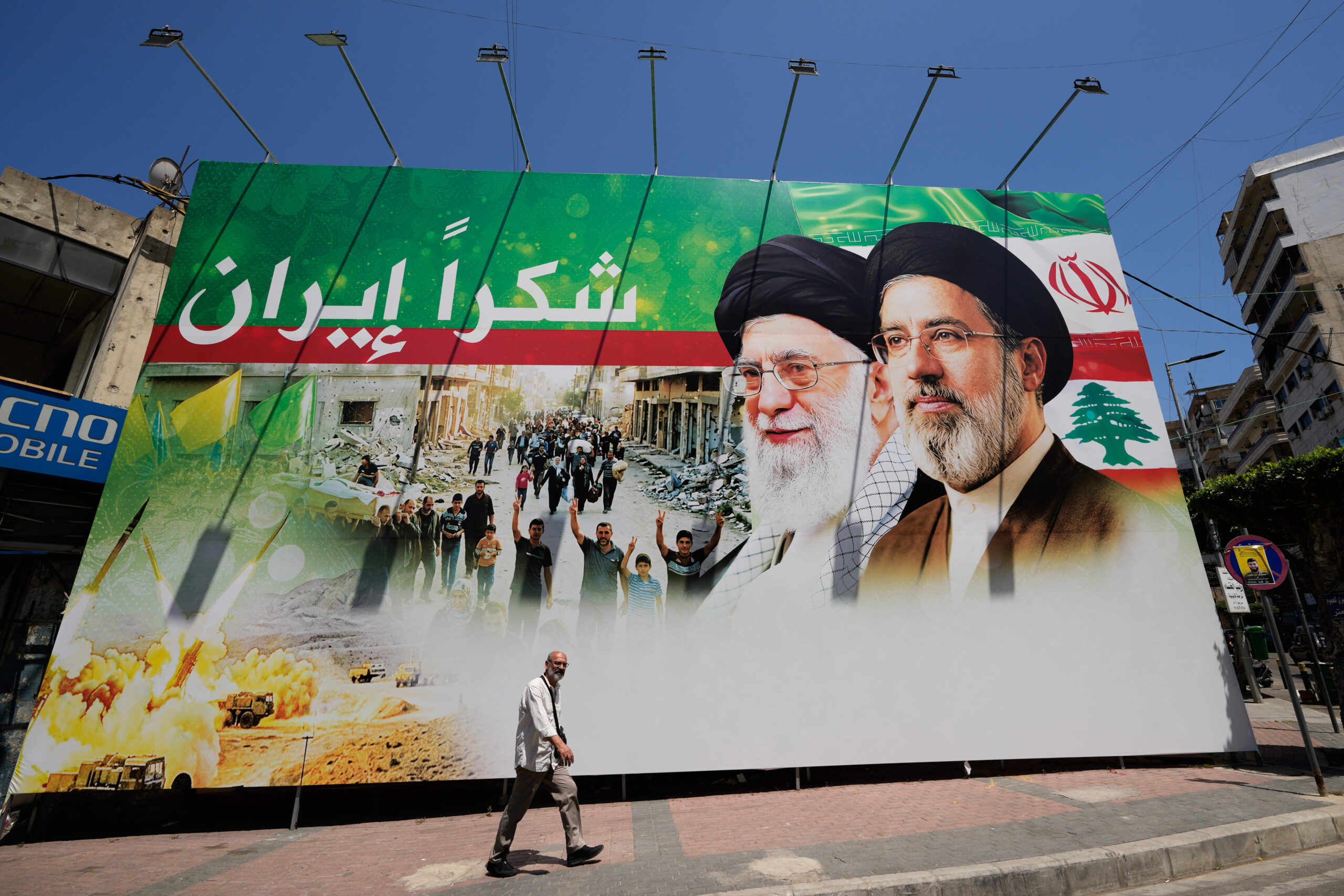
This Beirut poster highlights the links between Iran and Lebanon, as shown by the mix of flags and the inscription “Thank you, Iran” in Arabic (the expression is also transparent in Persian). It shows a crowd celebrating Ali Khamenei and his son Mojtaba Khamenei, while in the bottom left, ballistic missiles’ launch is depicted.
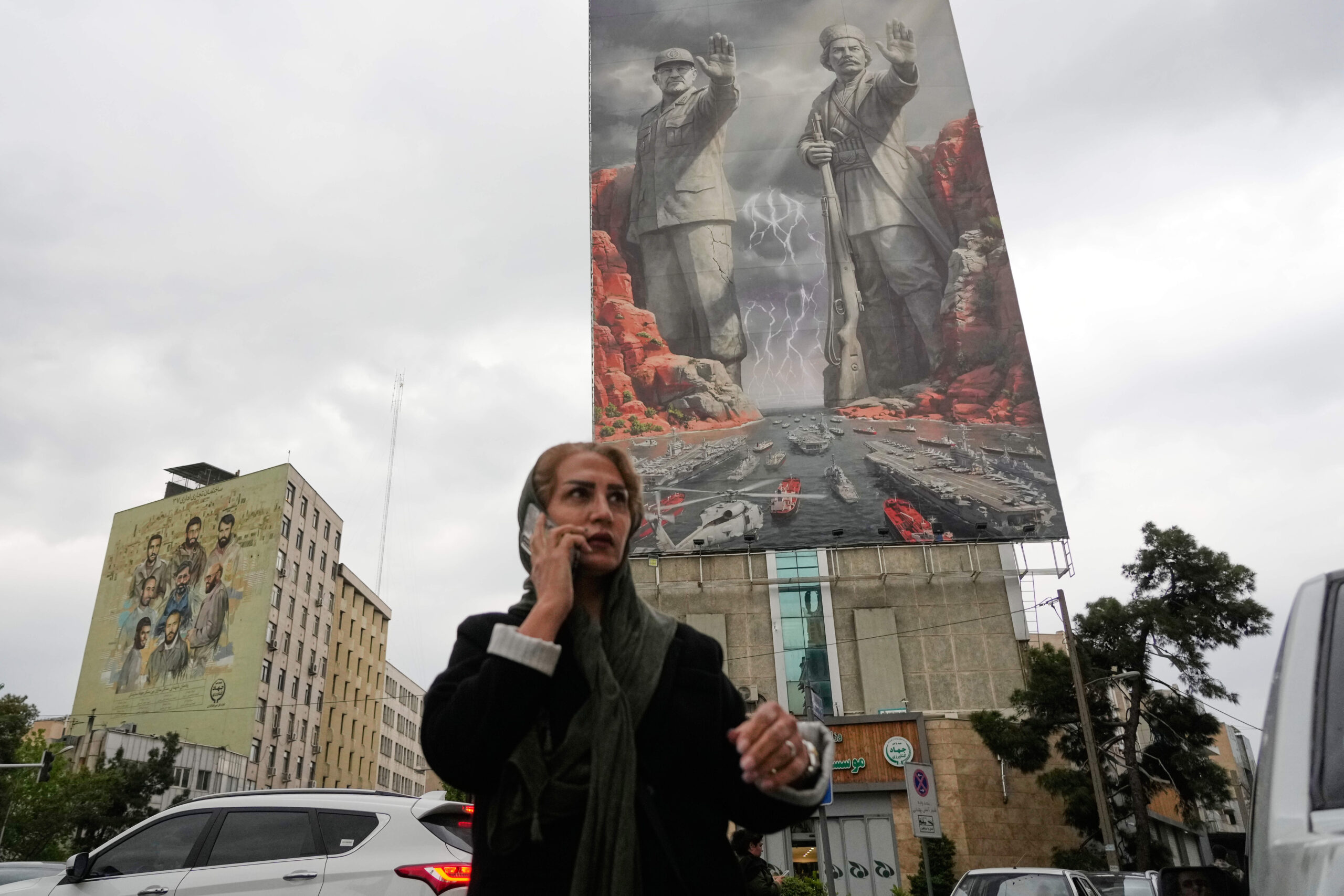
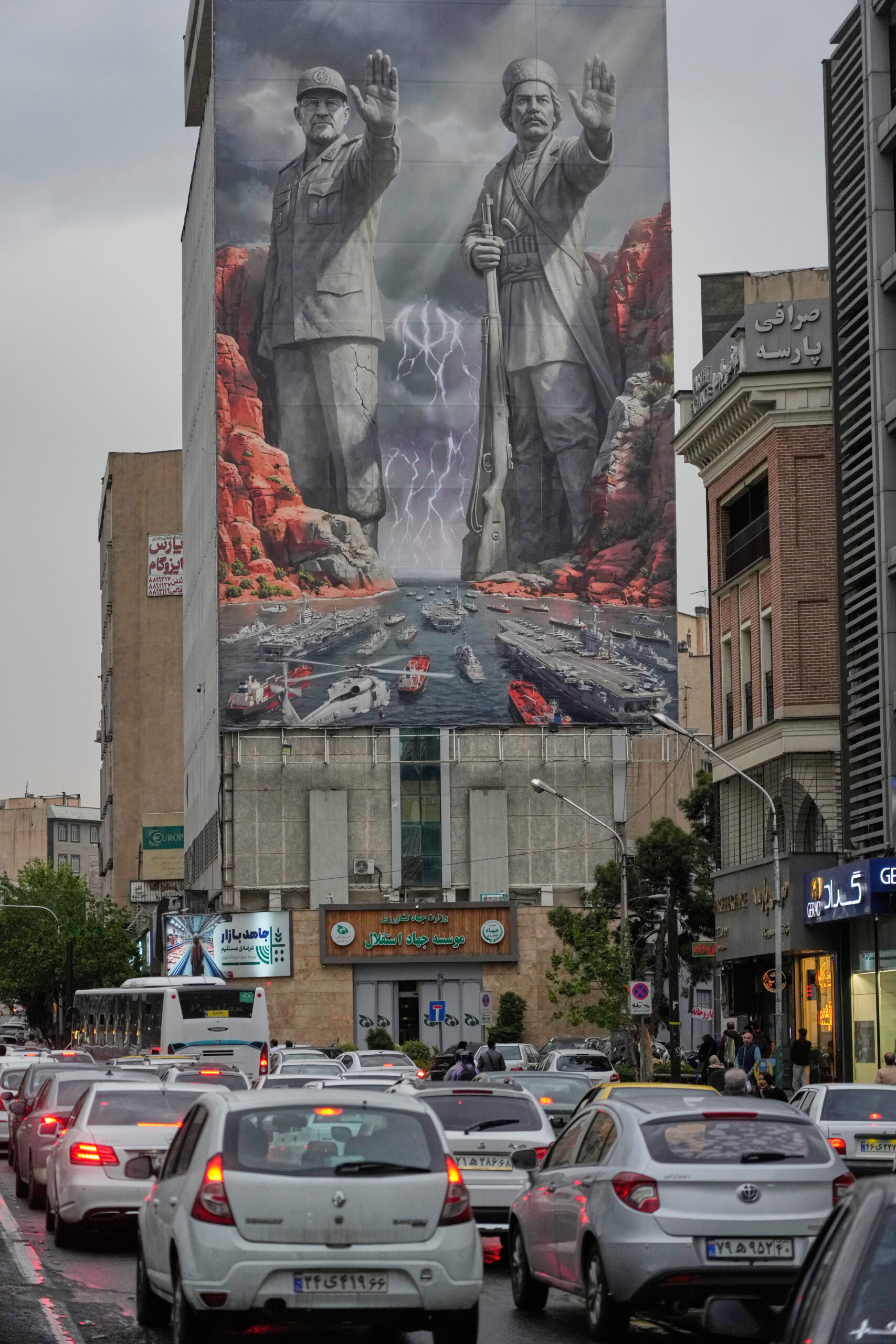
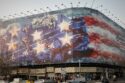
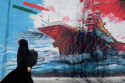
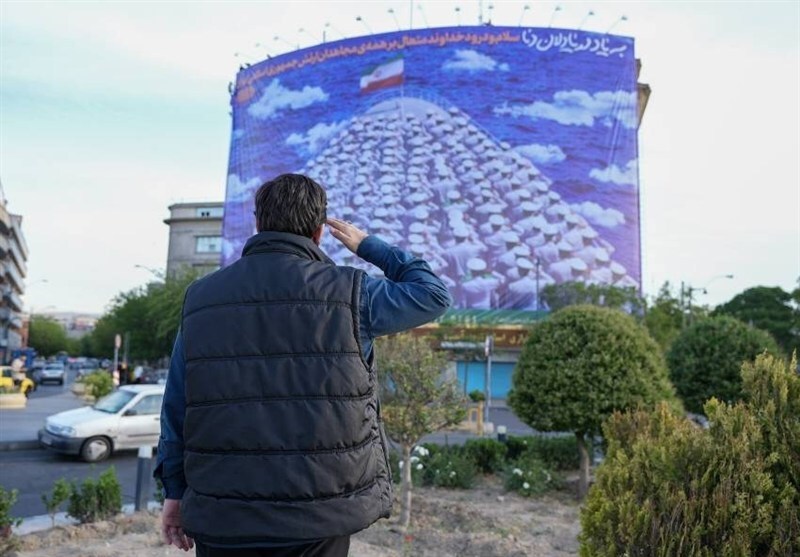
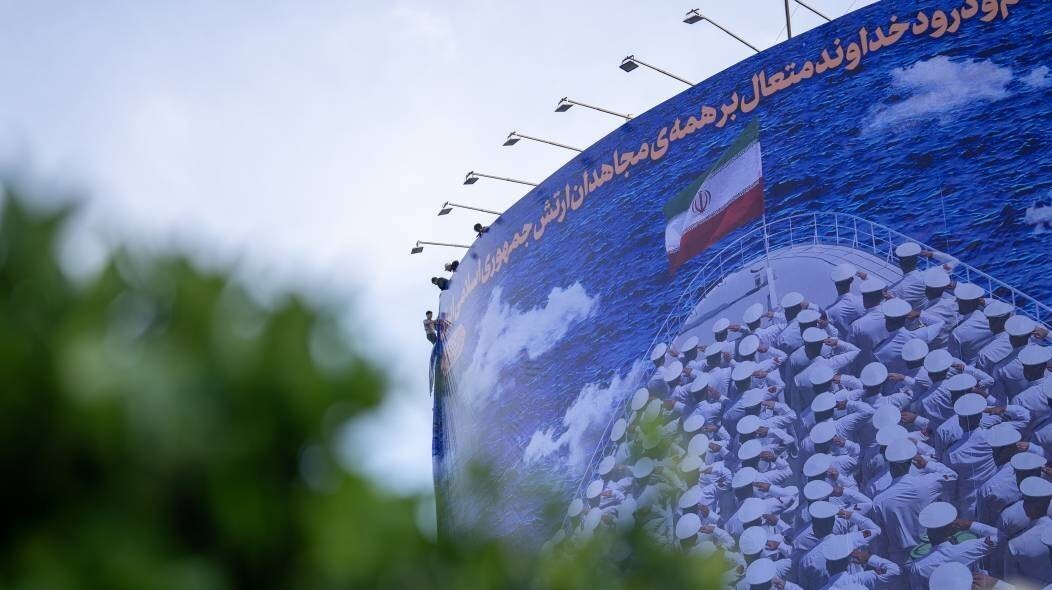
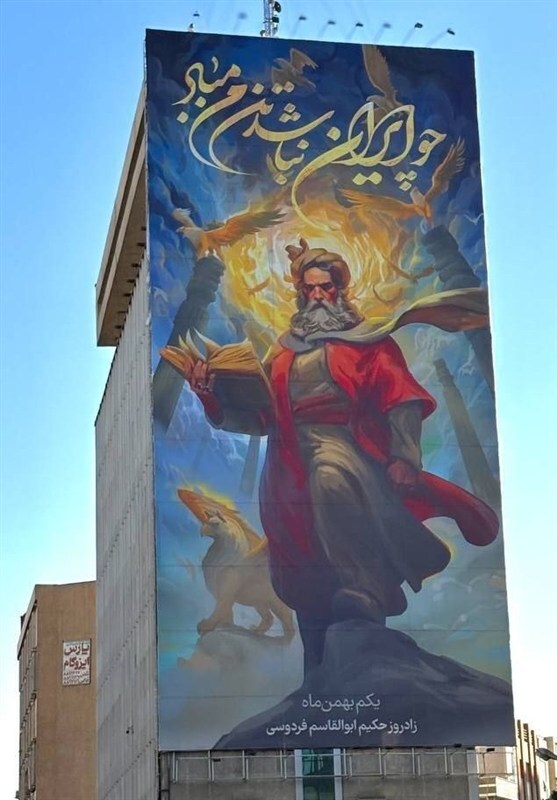
A more traditional nationalist representation based on the medieval poet Ferdowsi (940-1020), whose epic the Shahnameh (“The Book of Kings”) is one of the central works of Iranian literature. This display was installed during the massive repression of January 2026 protests.
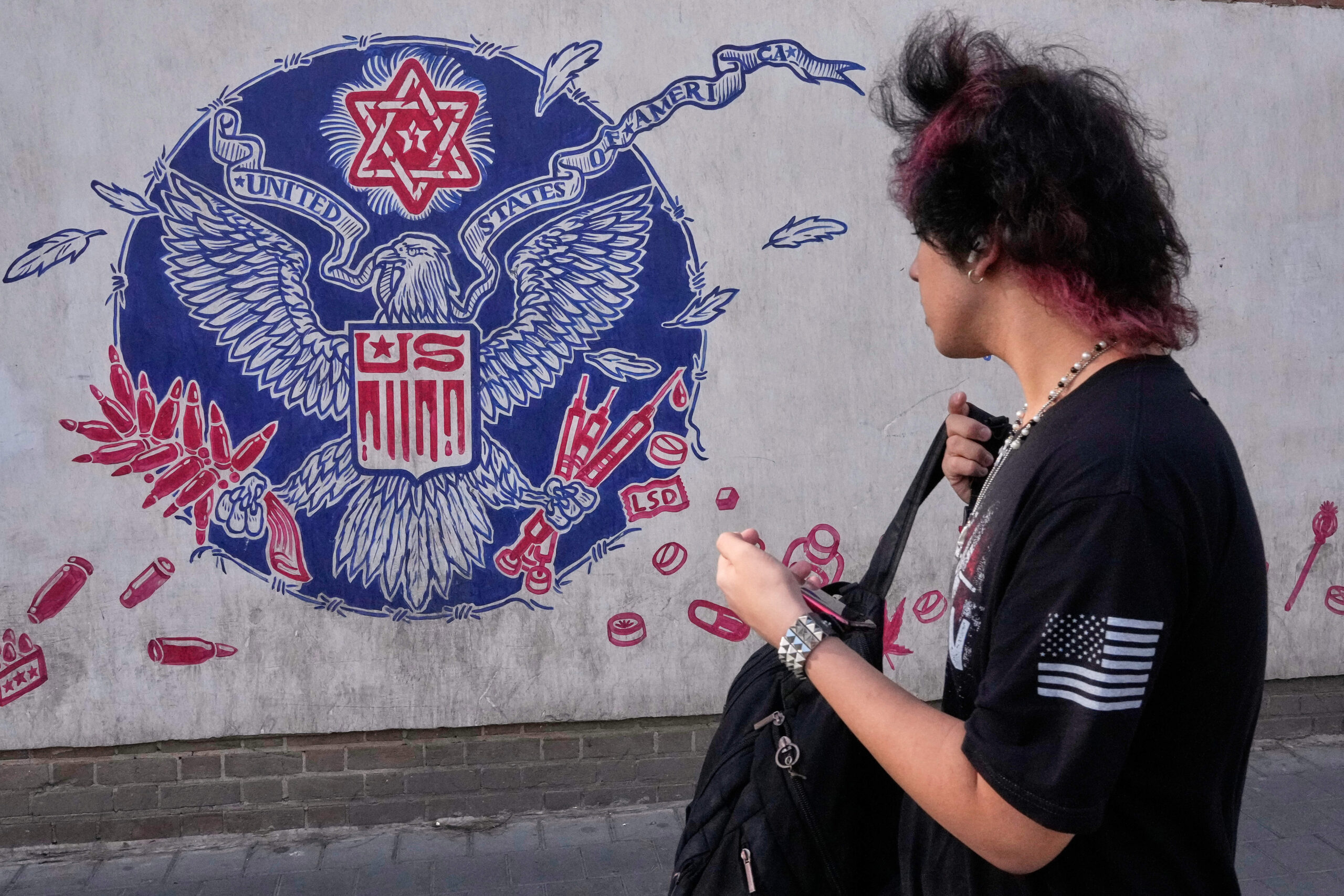
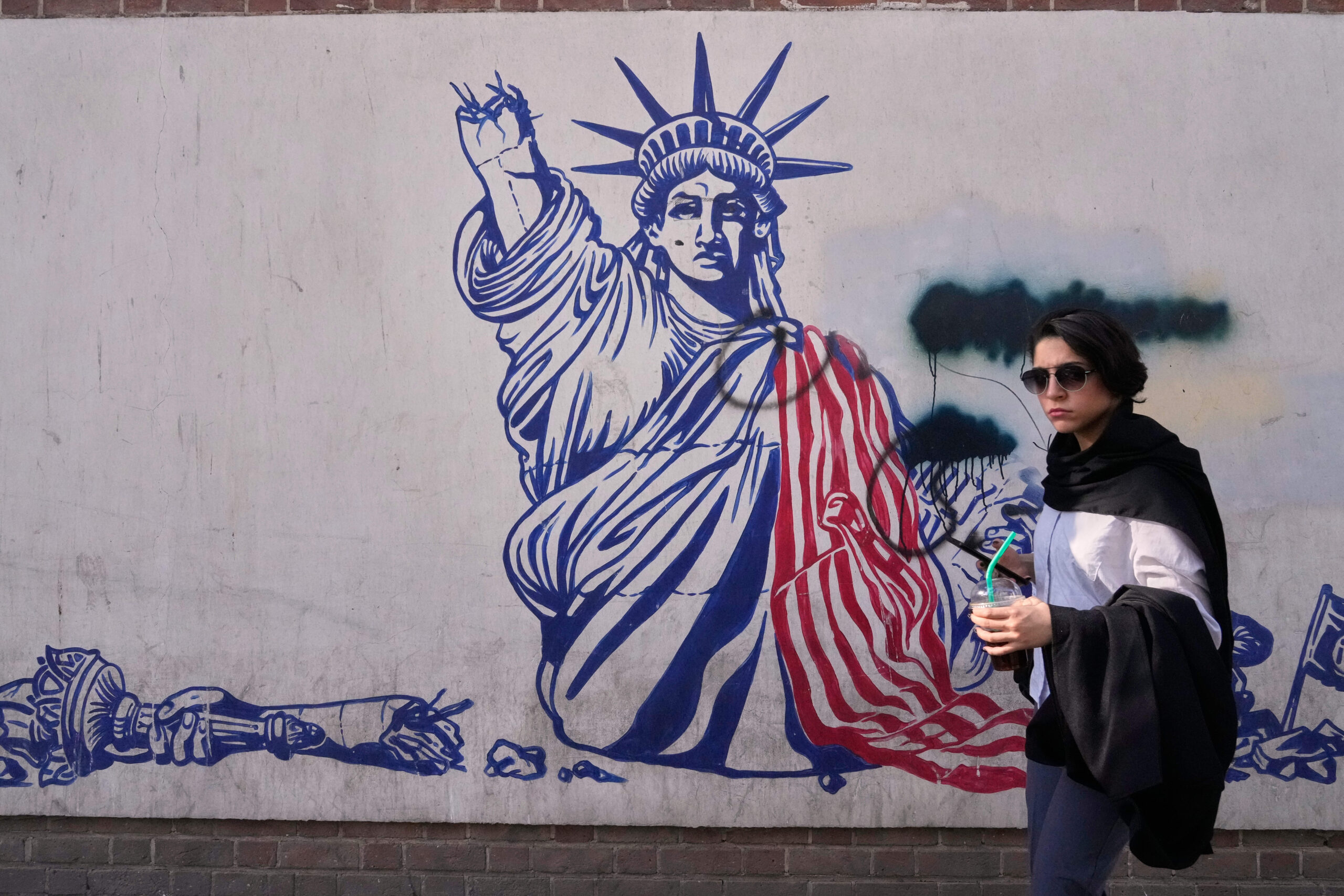
Propaganda from the mural frescoes in Iran is also accompanied by conspiracy-laden suggestions, such as on the left photo that twists the seal of the United States by adding a Star of David, weapons, vaccines, dollars, and even LSD.
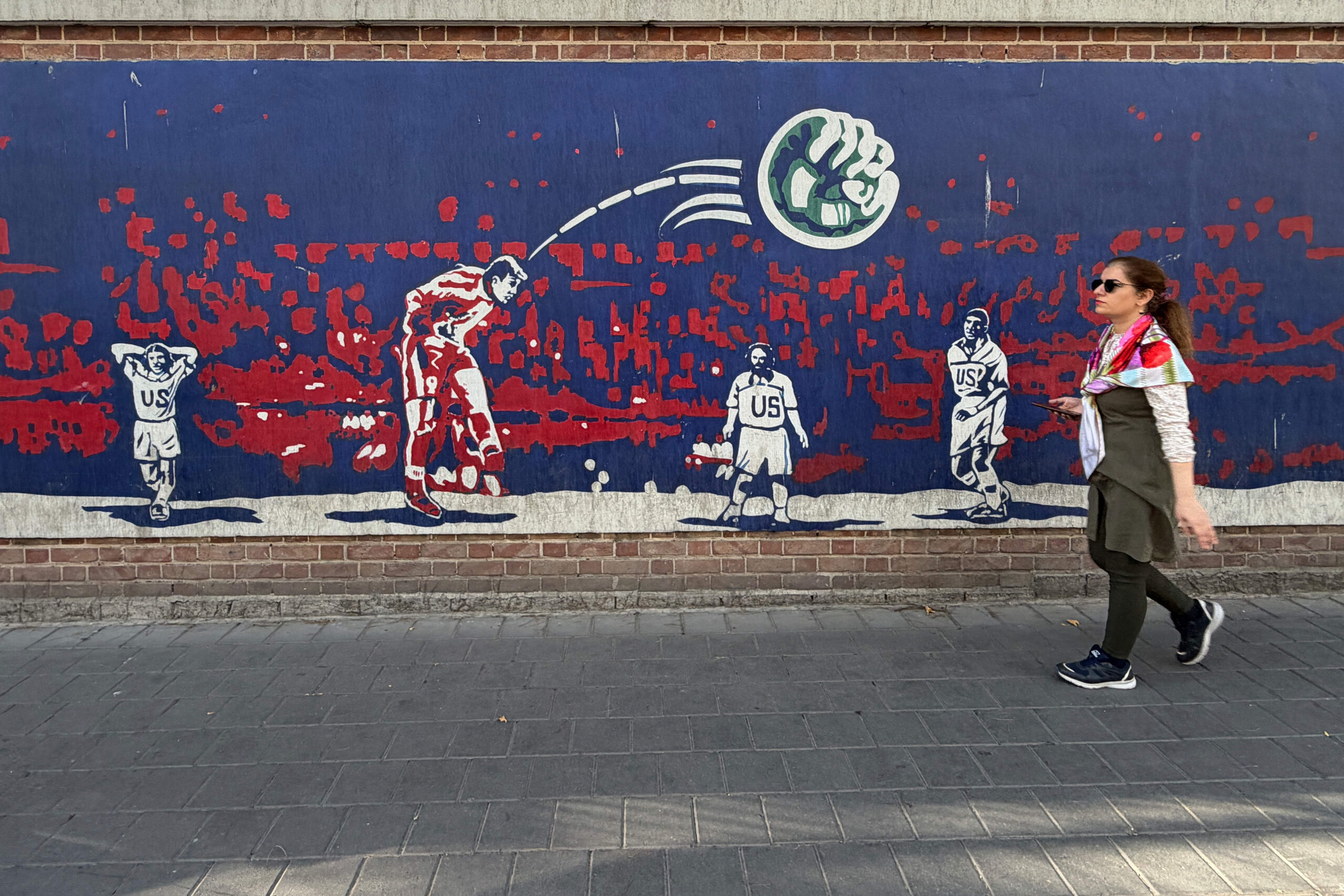
An illustration of the footballer Hamid Estili who scored against the United States during the 1998 World Cup. Qualified for that year’s World Cup, held in the United States, Mexico, and Canada, the Iranian national team could not enter U.S. soil to play its matches. It thus had to establish its headquarters in Mexico.