
To gear up for the new season, try Le Grand Continent. Ideas and analyses you won’t find anywhere else. But you’ll see them everywhere soon. Delivered to your inbox from eight euros a month
Before us, the scene is strange. A motorized procession winds through the streets of Kabul. The armored vehicles are modern. Humvees and MRAPs with anti-mine armor, the very ones the Americans abandoned during the chaotic August 2021 evacuation. On board, tens of Taliban soldiers raise their weapons toward the sky. The jubilation is evident. The massive building that serves as the backdrop was the American embassy. A fortress inaugurated in 2006, one of the United States’ largest diplomatic outposts in the world, designed to endure long deployments.
On the lime wall that surrounds it, propaganda inscriptions. One is not a slogan but a panel: “TAYBA,” the “pure.” It is the name of the madrasa the regime has opened inside the compound, where children and youths memorize the Qur’an and jurisprudence in the most austere tradition of religious subjects. Today is August 15, and for five years the regime has celebrated Victory Day: the West’s withdrawal from Afghanistan.
The Reconversion Regime
It is an odd scene, yet common. Twenty-five years after 9/11, the Taliban’s refusal to hand over Osama bin Laden and Al-Qaeda, followed by their retreat from Kabul in the face of the U.S.-led international coalition, the celebration of Victory Day allows the regime to present this democratic interlude as an illusion.
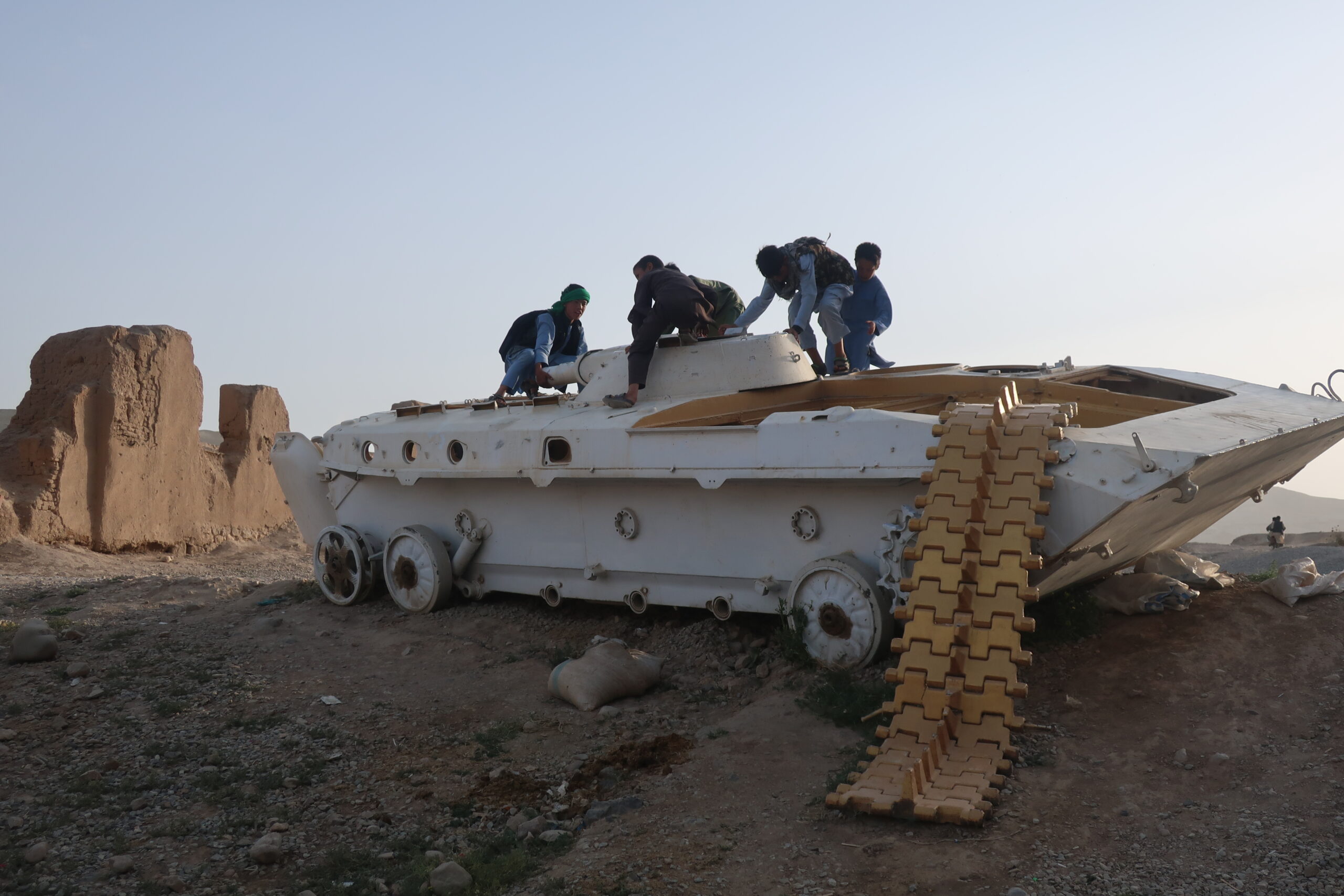
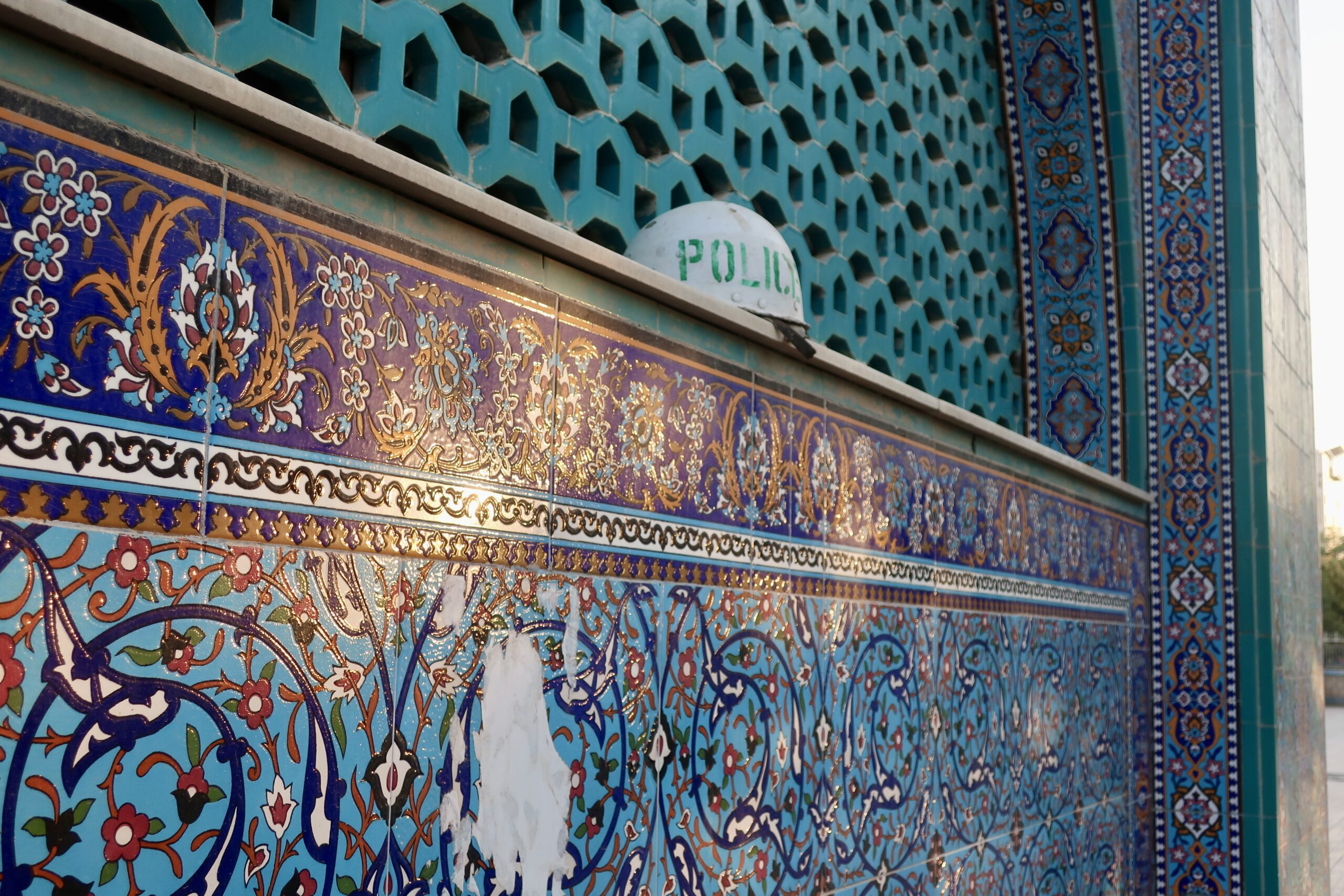
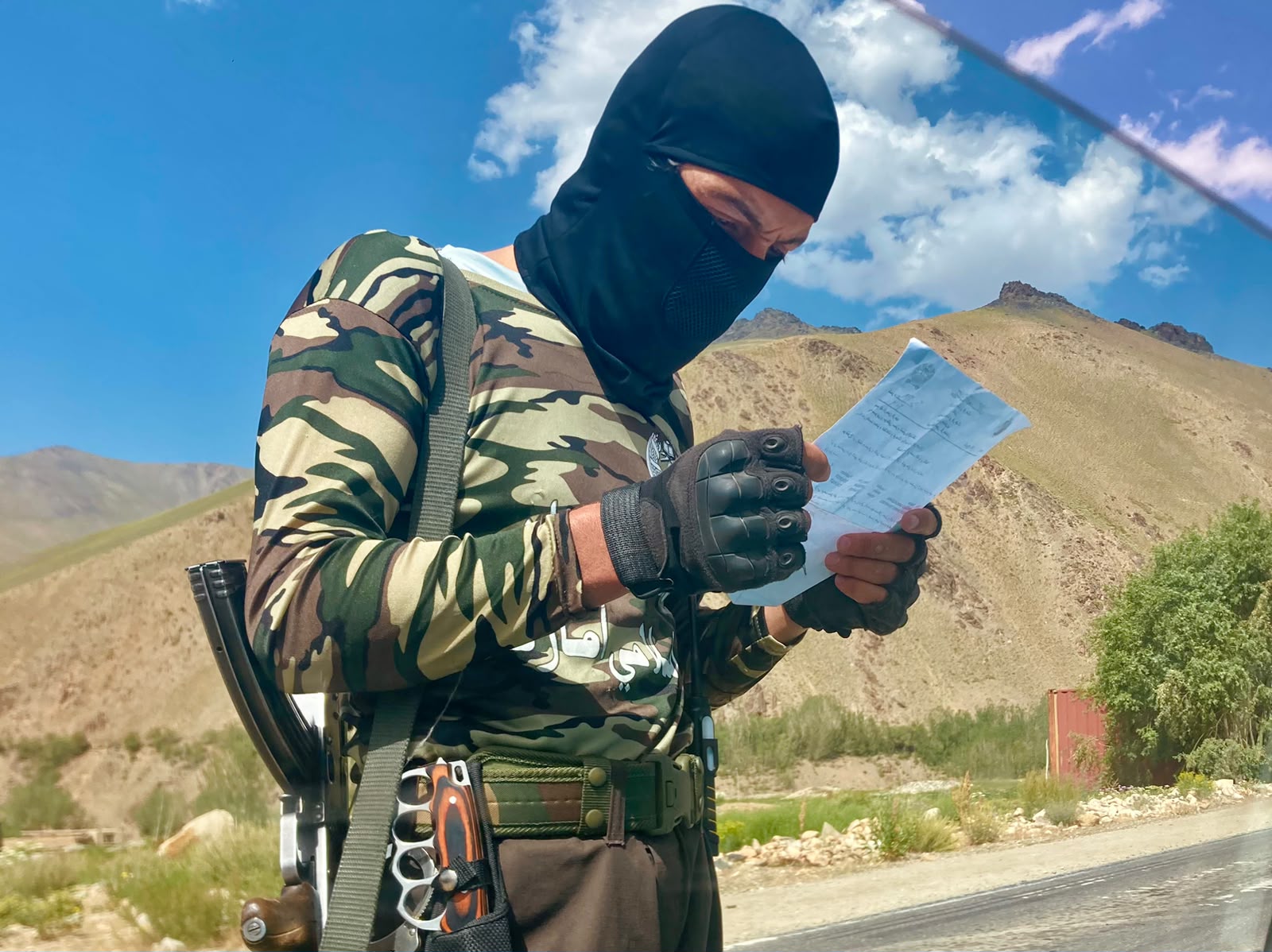
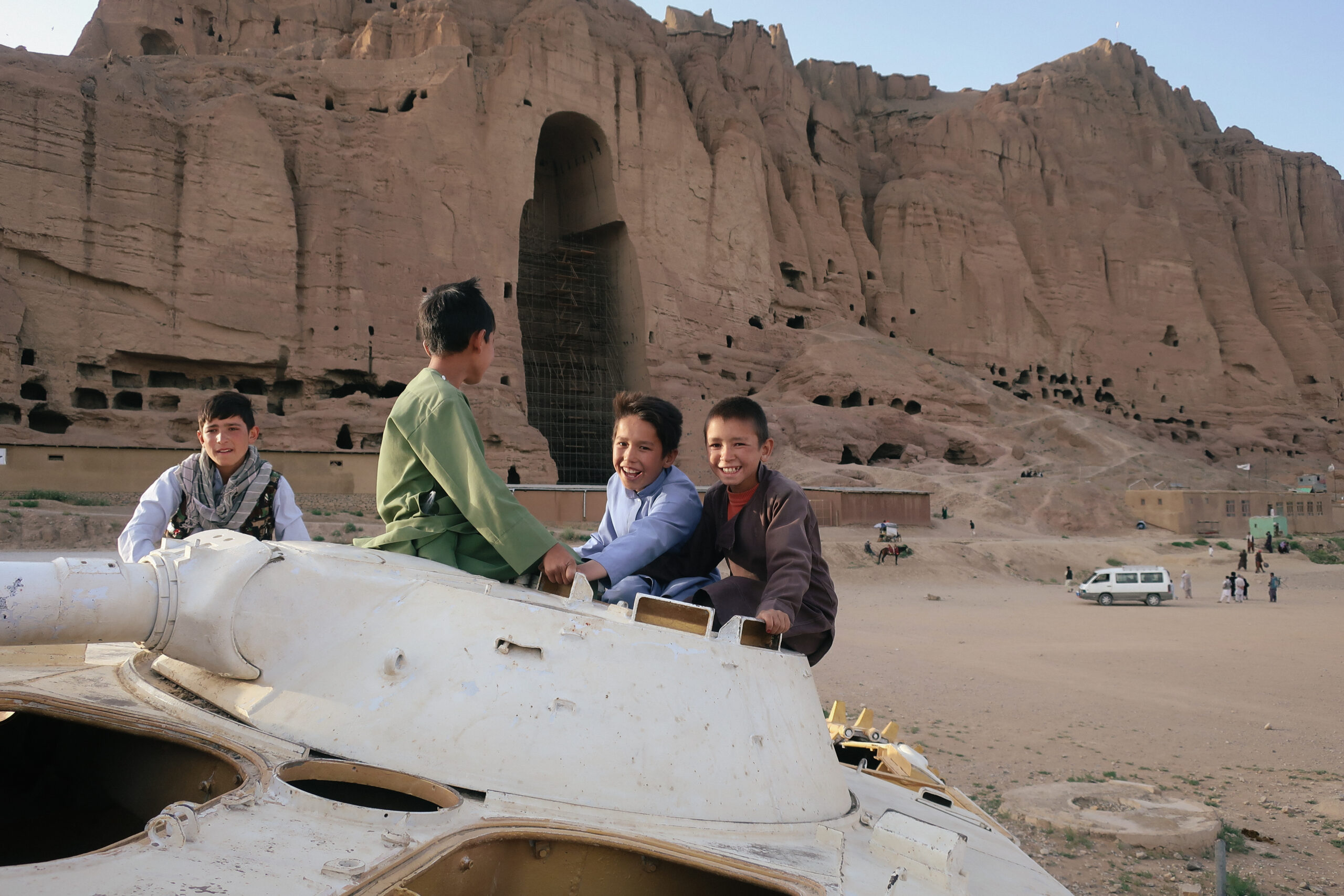
Today Afghanistan has become a fortress state. The regime projects an obviously reactionary and ancestral imaginary, yet it lives off the remnants of the enemy. Since 2021, the Taliban have occupied the institutions abandoned by the West, they have donned their uniforms, barely peeling off the star-and-stripe insignia. Seeing them in the streets, at checkpoints, one first suspects cosplay, disconcerting at first glance. In reality, it is the mark of a regime that did not build itself against the occupation’s legacy but from within it.
Everything the Americans left behind has been looted, then recycled, including equipment, military vehicles, and, of course, hundreds of thousands of weapons, for an estimated total value of $7 billion according to the United States.
The most eloquent case is the Afghan Parliament. Built by India for $90 million and inaugurated in 2015 by Narendra Modi in the presence of President Ashraf Ghani at the time, the building housed the national legislature for less than six years. The first images posted after Kabul’s fall already showed militiamen sprawled across the chamber’s seats. Since the official dissolution of both houses in 2022, the complex rests in silence at the foot of the mountains surrounding the city. Meetings with clerics and gatherings with regional delegations are sometimes held there. Sovereignty has shifted to Kandahar, where the supreme leader Hibatullah Akhundzada resides.
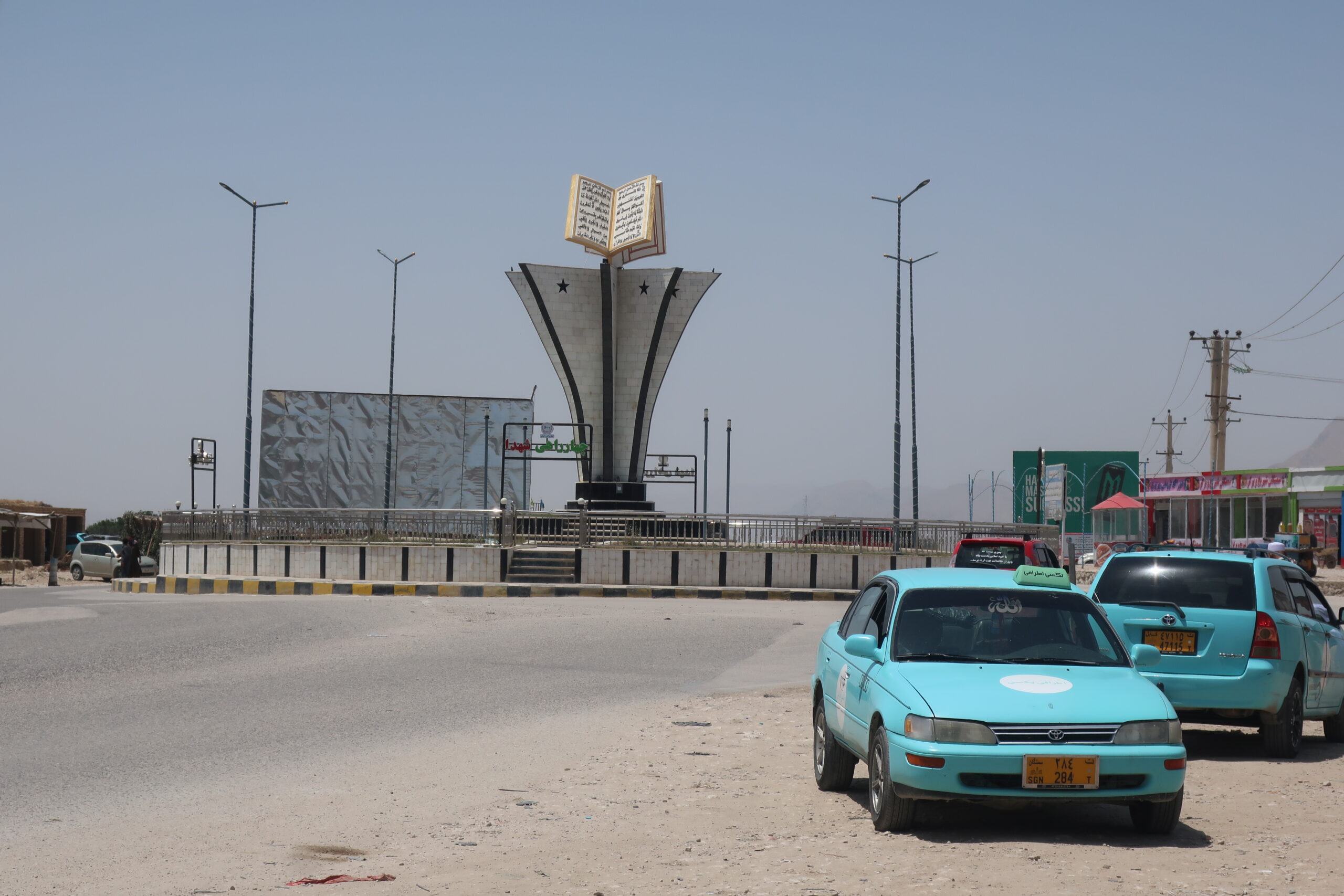
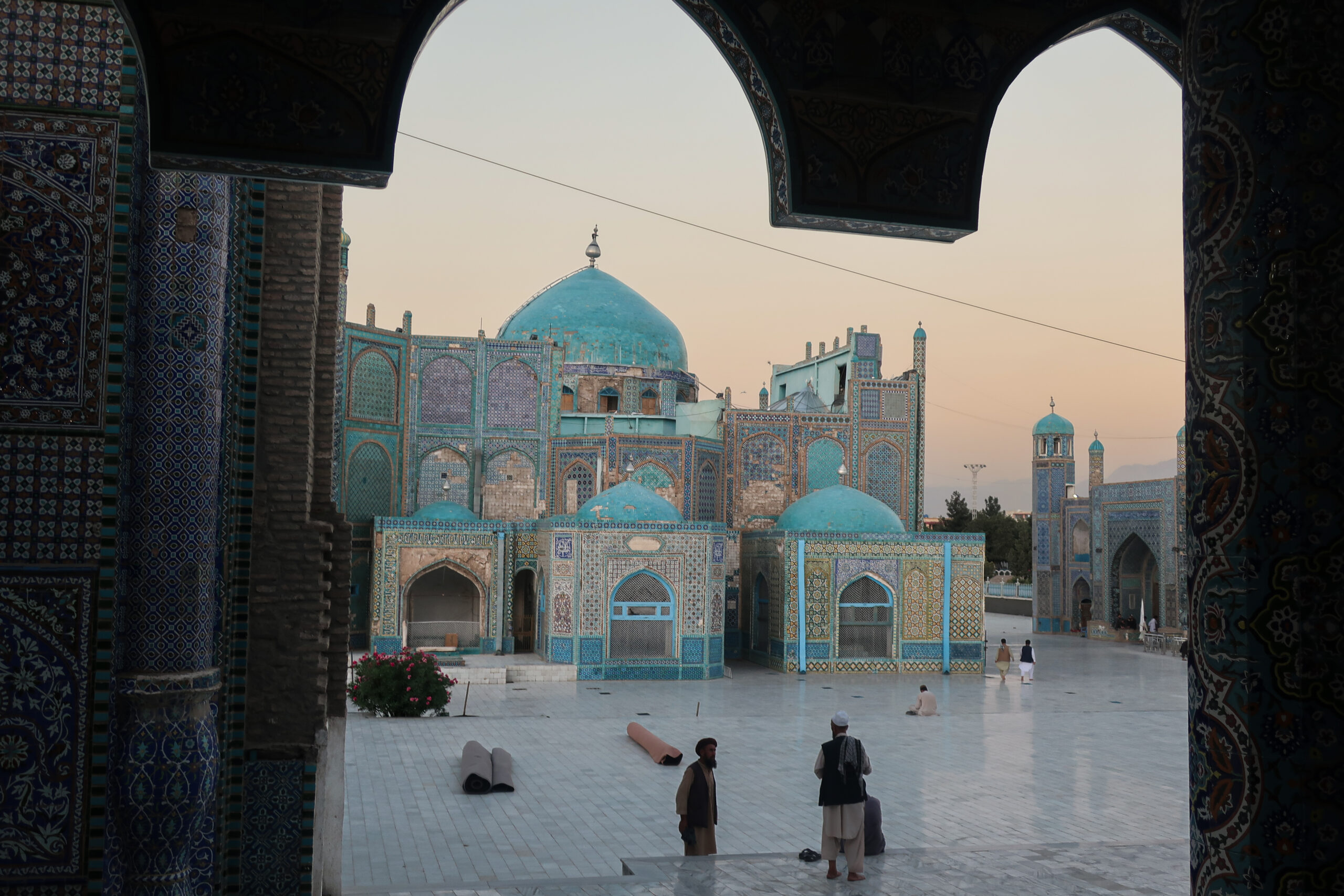
It is a doctrine that extends far beyond urban planning. Since 2021, the number of registered Quranic schools rose from about 5,000 to more than 23,000, and this explosion is hardly due to construction projects. They are largely existing schools and training centers that have changed vocation. The Emirate does not build; it reconverts.
A Mutilated Country
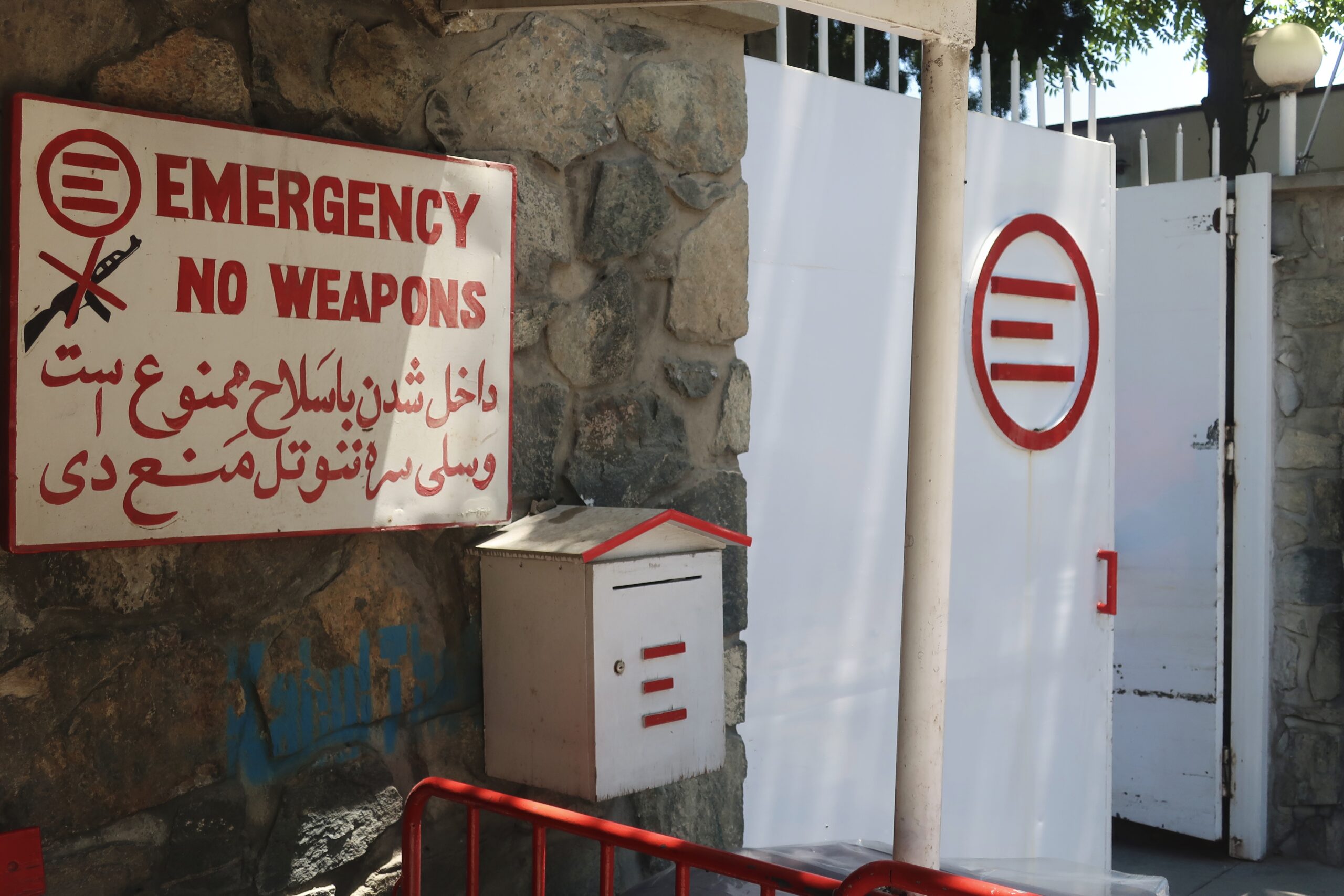
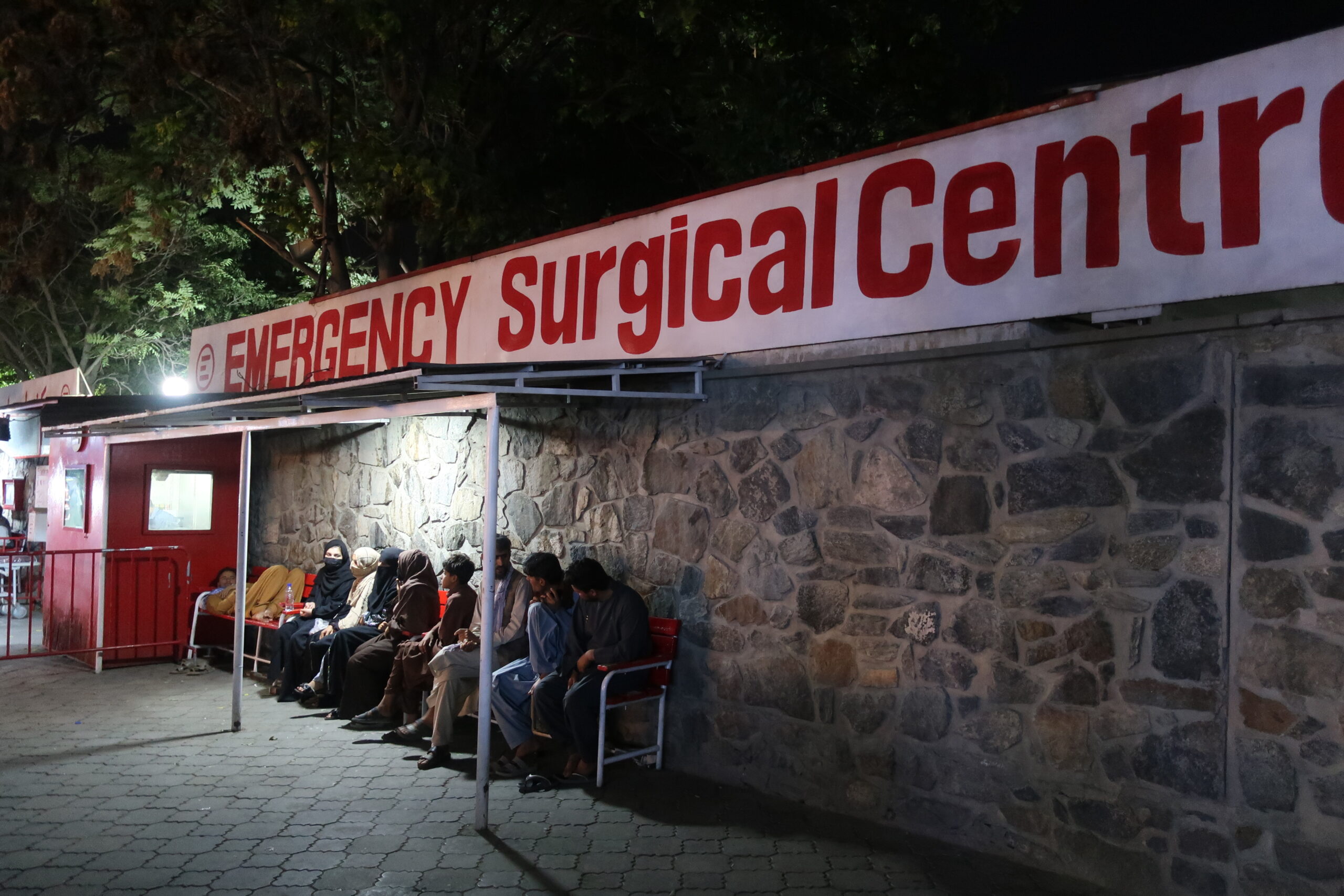
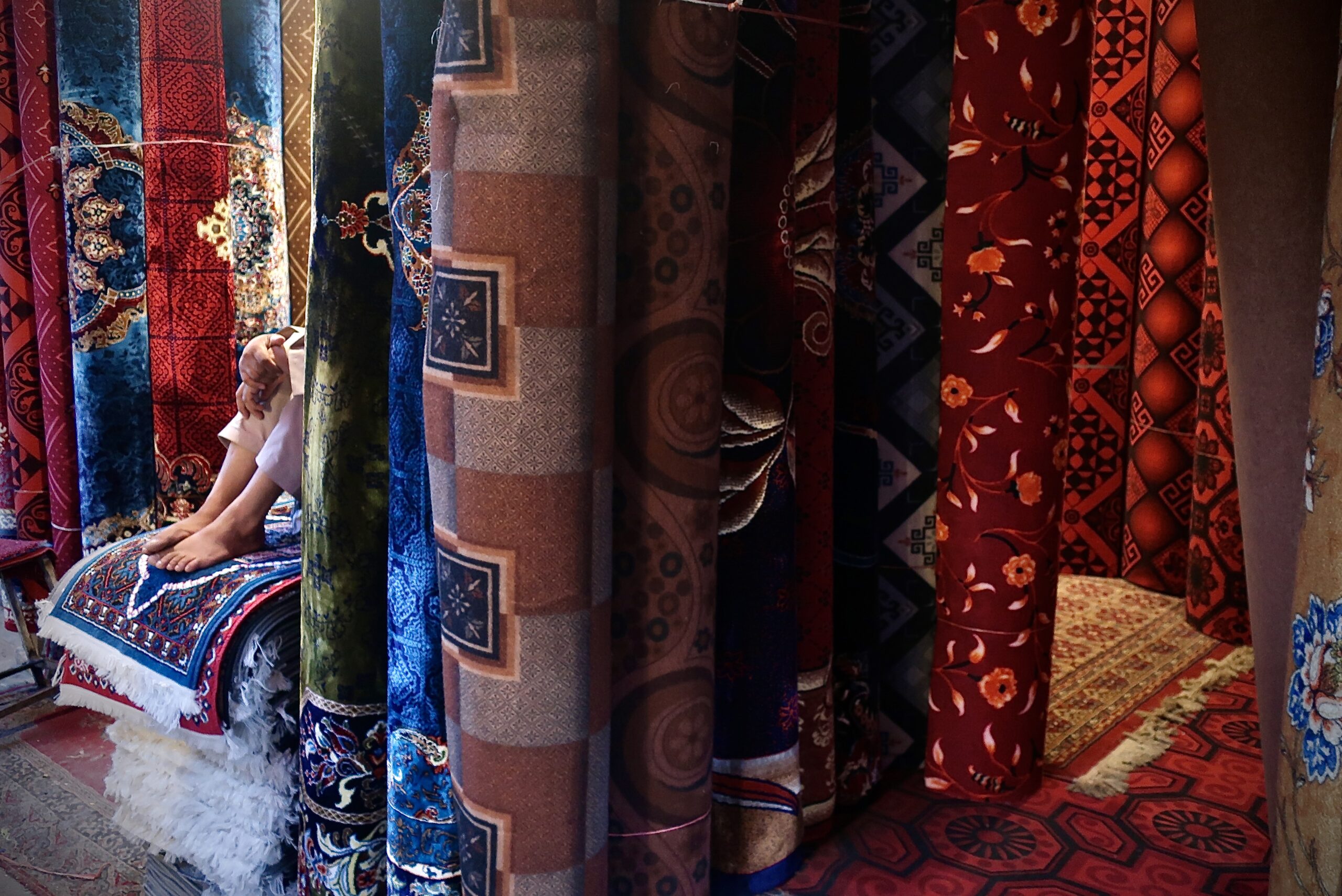
Lines of people, often amputees, camp out day and night on the sidewalk, where they have laid Afghan carpets they brought from home. They wait patiently for a surgical procedure, a prosthesis, or a bed that does not exist. It is a portrait of a country literally maimed.
There are about 100,000 civilians who have been amputated due to more than 15 million mines buried in the ground since 1979. Most victims are children, injured while playing or herding livestock.
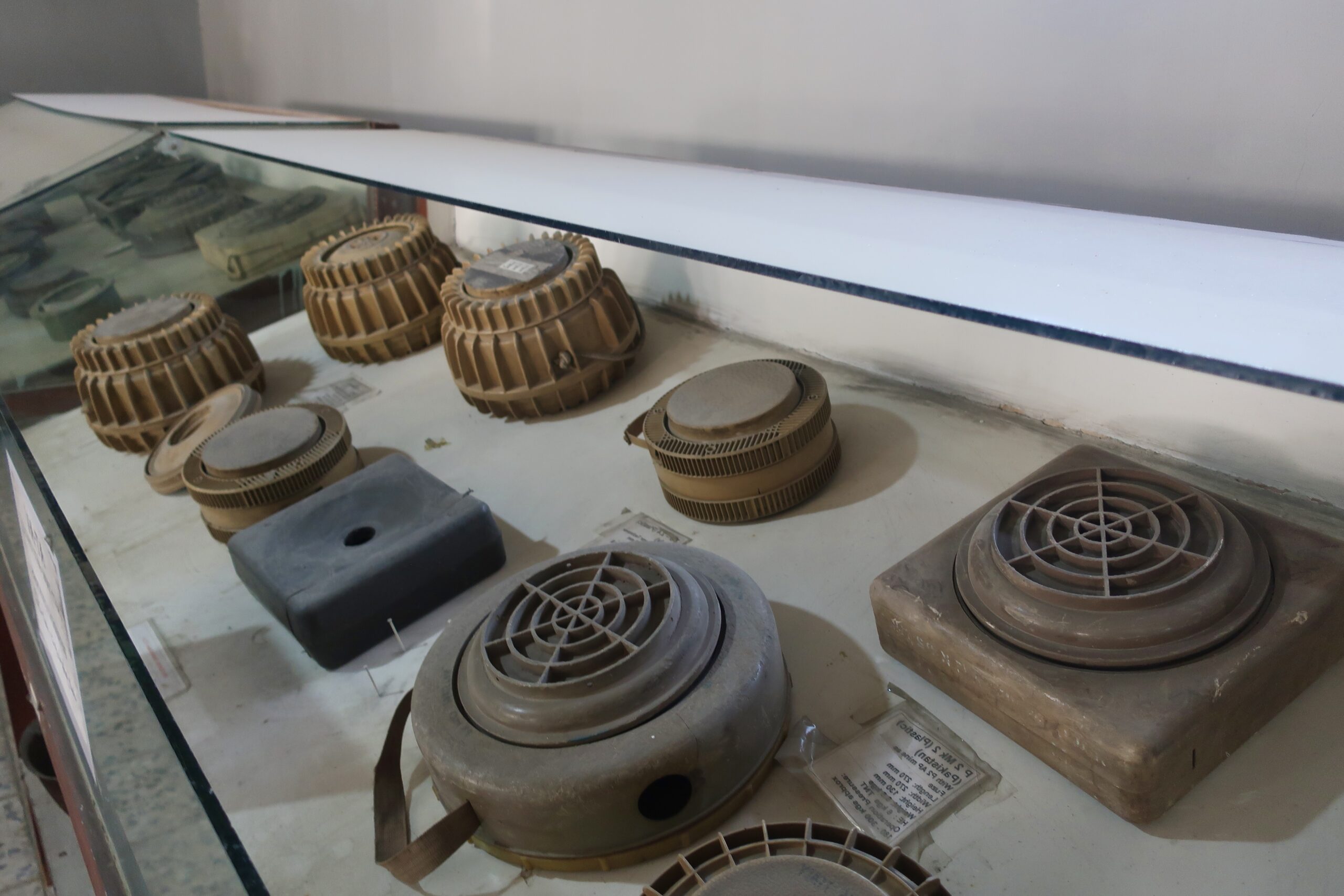
In Kabul, OMAR, the country’s main mine-clearing organization, runs a small museum that inventories more than 50 types of mines, a macabre archive of Afghanistan’s subsoil. “These were called the ‘butterflies’,” explains a volunteer who now gives a brief improvised tour in a cynical tone.
It is estimated that more than 3.3 million Afghans live within a kilometer of a mine-affected area. Soviet, mujahideen, Taliban, and American wars stack on top of one another in the same soil, and each left its own layer.
Not far from there, the Red Cross and Emergency orthopedic centers have operated for decades well beyond their capacity, to provide first aid and protheses made from recycled plastics.
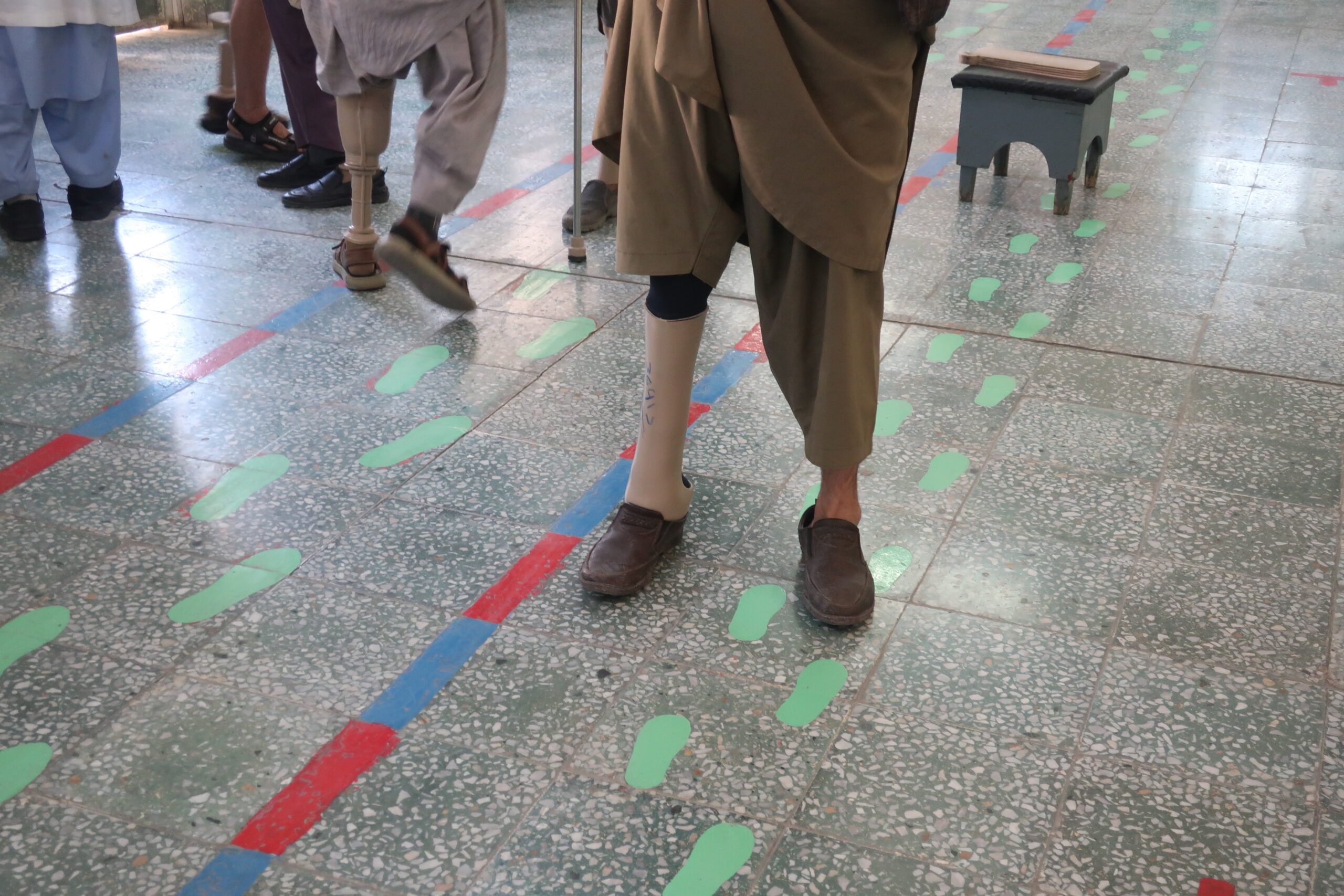
Those who survive receive almost nothing in return. The disability pensions that the Republic paid to war wounded became politicized and unreliable under the Islamic Emirate of Afghanistan, when they were not simply suspended.
A former Taliban fighter receives a fixed monthly allowance of 10,000 Afghanis (about 120 euros). A civilian disabled by the same war receives only a fraction, if he has luck or patrons.
The State Without Opium
For decades, opium cultivation and export were the Taliban’s most lucrative and stable revenue source. The country supplied up to 80% of global production.
The drug financed weapons and guerrilla warfare, enriched warlords, and kept farmers alive where the central state had never taken root.
Between the tax on cultivators (ushr) and that on traffickers and laborers (zakat), the Taliban collected up to $400 million a year during the decade preceding their return to power. Presented as a religious duty, these taxes operated as a protection contract against police raids or eradication campaigns by the government. They were challenged twice in the last six years. In July 2000, Mullah Omar banned poppy plantations as contrary to sharia, then recanted a year later to preserve farmers’ support. In April 2022, Supreme Leader Hibatullah Akhundzada decreed a ban on poppy cultivation.
Under the weight of the second ban, cultivated land fell by more than 90%, dropping from 232,000 hectares in 2022 to a little over 10,000 in 2025. Farmers’ incomes were halved from 260 to 134 million dollars in a single year, not counting millions of seasonal agricultural workers who found themselves unemployed. The decree initially hit Helmand and Kandahar, the cradle of the Pashtun movement; yet poppy cultivation rebounded in the northeast, at Badakhshan, outside the regime’s control. Ephedra-derived methamphetamine, a wild plant from the central mountains, is taking the place of it in seizures.
The shortfall was partly offset by taxation that remains heavy, but benefits from the tools inherited from Western-donor–provided computerized customs systems for the Republic. Strengthening customs, tightening fraud control, ushR (10% on harvest) and zakat (2.5% on wealth) systematically imposed on the rest of agriculture, the country’s main productive sector.
The result is plain to see. Customs revenue rose by 11.7% in 2025, and the total fiscal take (nearly $3 billion for the 2023 fiscal year) exceeds what the Republic could collect with a much weaker economy and without foreign aid that used to cover around three-quarters of public expenditure.
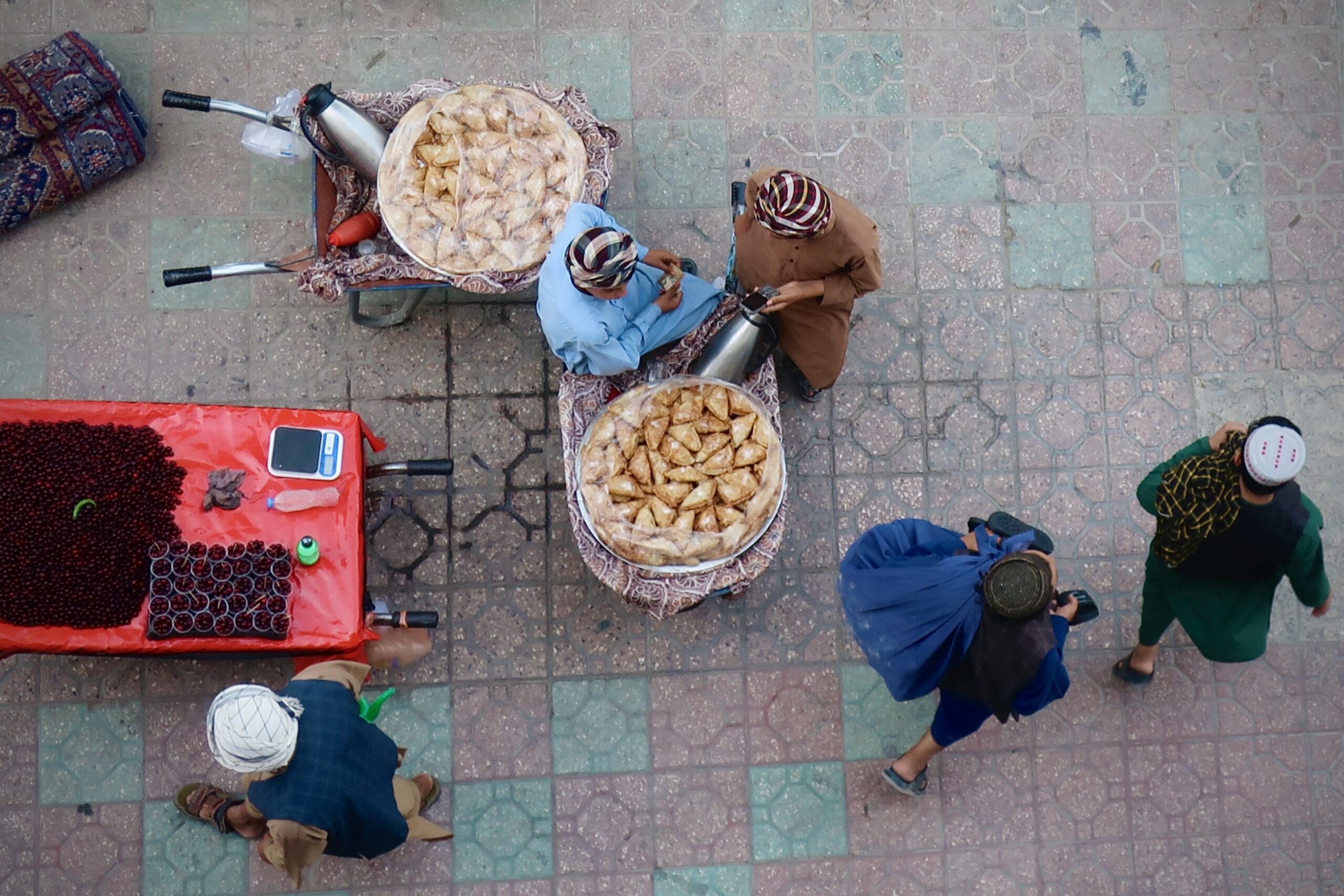
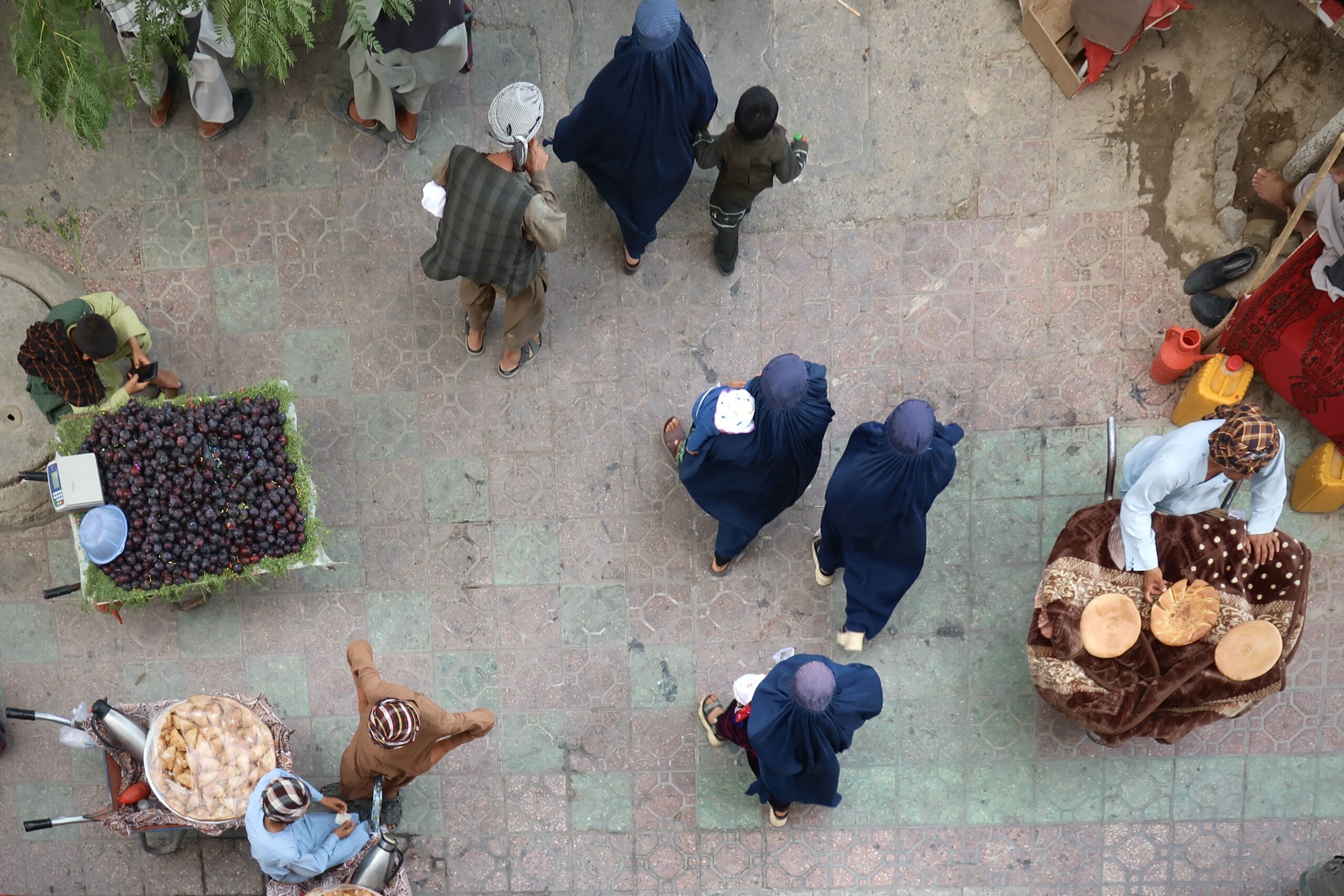
The little social protection that remained has been eliminated. Lacking structural investments, the Taliban state produces nothing and provides no services. It merely taxes efficiently and everywhere. Including the street vendors’ children who hawk candy for a few cents by the roadside.
The Ghost Money
Cut off from the SWIFT system, the interbank infrastructure through which nearly all international payments pass, Afghanistan survives financially thanks to a system older than the banks themselves. Hawala is an informal network of brokers who exchange payment promises without money ever crossing a border physically.
In Kabul, when you ask passersby, they all point without hesitation to Sarai Shahzada bazaar, which, with its hundreds of counters and dozens of currencies handled, is the heart of the system. Up to 90% of the country’s transactions pass through this channel, including those of more than 70 international NGOs, which, without hawala, could not deliver humanitarian aid into the country.
Hawala is documented in Muslim law as early as the 8th century and practiced under the Abbasids, three centuries before the first Italian banks; this system spread along the Silk Road to shield caravan goods from bandits. It still relies on a simple principle: instead of transferring money, it is entrusted to an intermediary whose network—usually belonging to the same tribe—delivers it to its destination, in exchange for deferred payment or an inverse credit.
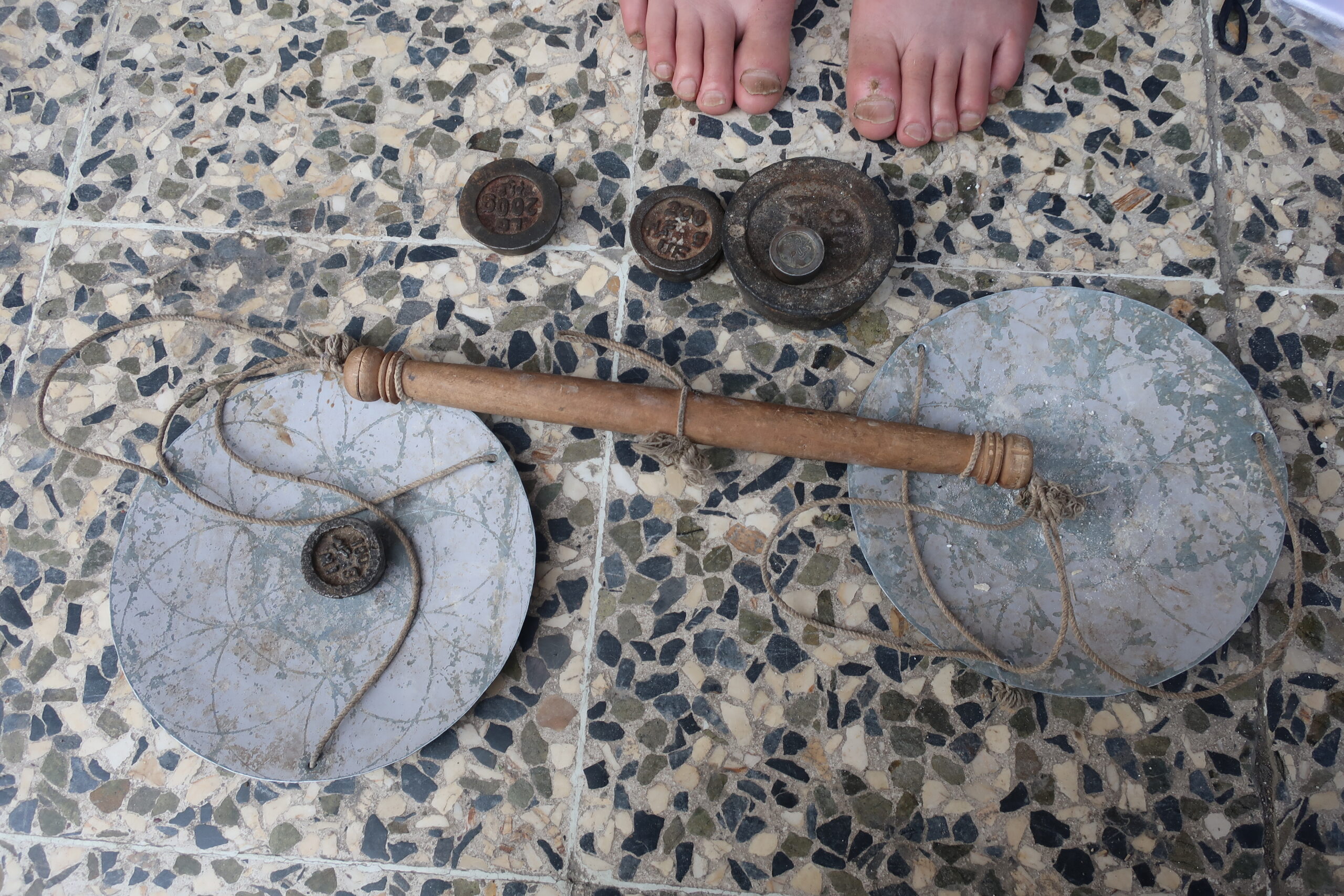
Secret formulas, cut-out letters to assemble on arrival, seals, wax molds and cryptography—the hawala remains an occult system, capable of moving capital without leaving traces, a perfect instrument for laundering money.
The system also performs a rudimentary but effective monetary-policy function. Each week, the central bank auctions dollars to the hawaladars, who settle in afghanis, removing afghanis from the market. The currency becomes scarcer, exchange rates stabilize. In a country where more than half the population relies on aid, the afghani appeared in 2023, according to Bloomberg, among the world’s most dynamic currencies.
Moreover, the dollars generated by these auctions often come from sources not chosen by the government. International organizations, which cannot resort to hawala due to its traceability, have no option but to use cash. More than $2 billion was flown by air cargo to Kabul between 2022 and 2024. Handed by donor countries to the United Nations, this money was then routed through private banks to humanitarian organizations to circumvent sanctions. A congressional inquiry in the United States highlighted the structural limit of this arrangement. Agencies pay salaries, suppliers, and invoices in afghanis, not in dollars. Consequently, private banks are compelled to convert dollars into afghanis, and only the central bank, controlled by the Taliban, can absorb such volumes. It purchases dollars intended for humanitarian ends, then reintroduces them into the market through weekly auctions. This circuit, intended to siphon money away from the regime, actually provides it with the foreign currencies it needs to sustain its currency.
China Is Not Far Away
Cut off from SWIFT, the markets, or the nine-and-a-half billion dollars of the Afghan Republic that remain frozen, humanitarian aid channeled under UN auspices remains the Taliban’s sole external financing source. That is why rapprochement with China is an essential objective for the regime’s development.
The relationship between the two countries is deeply asymmetric. In 2024, China exported $1.5 billion worth of vehicles and textiles flooding Kabul to Herat markets, and imported only $42 million in total. The Wakhan Corridor, this narrow 76-kilometer strip squeezed between the Pamir Mountains that constitutes their only common border. Despite years of promises of openness, there are only dirt roads and hiking trails that stop abruptly before the border.
Yet Afghanistan is not devoid of natural resources. Its copper, lithium and other mineral deposits are estimated at $3 trillion. But Mes Aynak, one of the world’s largest untapped copper deposits, ceded to Beijing in 2008 for production promised for 2013, has produced not a single kilogram. In June 2025, the Taliban canceled the Amo-Daria oil agreement signed with CNPC, China’s state-owned oil company and the country’s largest producer, citing non-compliance with the promised investments.
With resources scarce, the Taliban’s true currency remains security. In October 2023, at Beijing’s request, Kabul relocated hundreds of Uyghur fighters away from Badakhshan, the Xinjiang border province. In return, the Emirate gained what no one else can offer: access to a vast market and a form of diplomatic legitimacy. China thus became the first country to appoint an ambassador to Kabul under the new government, though it stopped short of recognizing the government, something Moscow did in July 2025.
Beijing keeps this card and will not show it until Kandahar meets its demands on reforms, security, and good neighborliness, with Pakistan foremost among them.
“My Generation Is the First to Live Without a Kalashnikov”
“My family is from the Panjshir,” remembers Farid, a craftsman in his early twenties. “My grandfather lived through the revolution and fought in the long war that followed. He was a mujahid… My father, he was on the front lines with the Northern Alliance, alongside the Americans…” He hesitates, biting his lip, and adds: “I hate the Taliban, but my generation is the first to be able to live without brandishing a Kalashnikov.”
It may seem paradoxical that a family of fighters, the “lions” as Ahmad Shah Massoud’s guerrilla was nicknamed in the Panjshir valley in the 1990s, should confide its weariness to a foreigner. In today’s Afghanistan, that sentiment is widespread. Forty years of uninterrupted war have shattered entire generations of young Afghans who have never known peace or have forgotten it.

Inside Afghanistan’s borders, for the first time in decades, a single group holds the monopoly on force, yet cannot quiet the guns. The Islamic State in Khorasan, the local branch of ISIS, strikes Shia mosques and foreign interests. In the north, remnants of the Panjshir resistance, led by Ahmad Massoud, the commander’s son, wage an ongoing low-intensity guerrilla war. The Global Peace Index ranks Afghanistan as the fifth least peaceful country in the world. On security, the Emirate occupies the very last place, 163rd out of 163.
But it is above all the open conflict with Pakistan that betrays the peace rhetoric, one of the pillars on which the Emirate built its propaganda since its creation. Islamabad, historic protector of the movement, accuses Kabul of harboring the Pakistani Taliban (TTP), who frequently carry out attacks on Pakistani soil. In October 2025, the Pakistani Air Force even bombed Kabul, before a ceasefire was concluded under the mediation of Qatar and Turkey.
The Fight Against Corruption
Alongside peace, another regime’s rhetorical pillar is the fight against corruption, and that is far from insignificant. During the twenty years of the Republic, the Taliban’s itinerant courts resolved land disputes quickly, for free, and without bribes, whereas Kabul’s judges were slow, costly, and corrupt. Adam Baczko showed how this parallel justice built, village by village, a legitimacy that weapons alone would not have granted, while Ashley Jackson and Florian Weigand described populations preferring Taliban judges to those of the State, less out of devotion than because their decisions were enforced.
Again, the reality is more nuanced. In the early months, bribes at checkpoints, the everyday scourge of the republican era, seem to have indeed diminished. But the truce in petty corruption did not touch the big one.
The Anti-Corruption Justice Centre, the special tribunal created in 2016 to pursue high-level cases, was closed by the Taliban themselves, while Transparency International’s index now places Afghanistan 169th out of 180 countries, a decline from previous years.
The Kabul mayor’s affair illustrates this rhetorical usage well. In June last year, according to several Afghan exile media, Mawlawi Abdul Rashid was detained for three weeks in Kandahar by Taliban intelligence services, as part of an inquiry into financial misappropriations tied to large municipal construction projects. About twenty senior officials were arrested, around forty civil servants fired, and the mayor’s nephew was among those questioned. The city government denies all charges. This case says less about how vigorously corruption is being fought than about how it is being conducted: without a court or public procedure, following a summons of the mayor to Kandahar, the city of the supreme leader.
The tali-bros
Only a few decades ago, Afghanistan was a waypoint on the legendary Hippie Trail. Young, disillusioned travelers left Europe by road, on minibuses or hitchhiking, from Istanbul to India, seeking adventure and exoticism. To reach their destination, the quickest route crossed the Hindu Kush, placing the country on the map.
Today, motivations may be different, but the sense of adventure remains the same. Since the end of the war, a small army of travel vloggers—nearly all Western men belonging to Generation Z—has transformed Afghanistan into the new frontier of extreme tourism on social media.
Online, they have been dubbed the “tali-bros,” a portmanteau of “Taliban” and “bros,” modeled on the Silicon Valley’s tech bros.
Foreign visitors rose from 691 in 2021 to around 10,000 in 2025, numbers that the Taliban government cite as a success, to the point of introducing electronic visas this year, replacing the tedious paperwork with an online application.
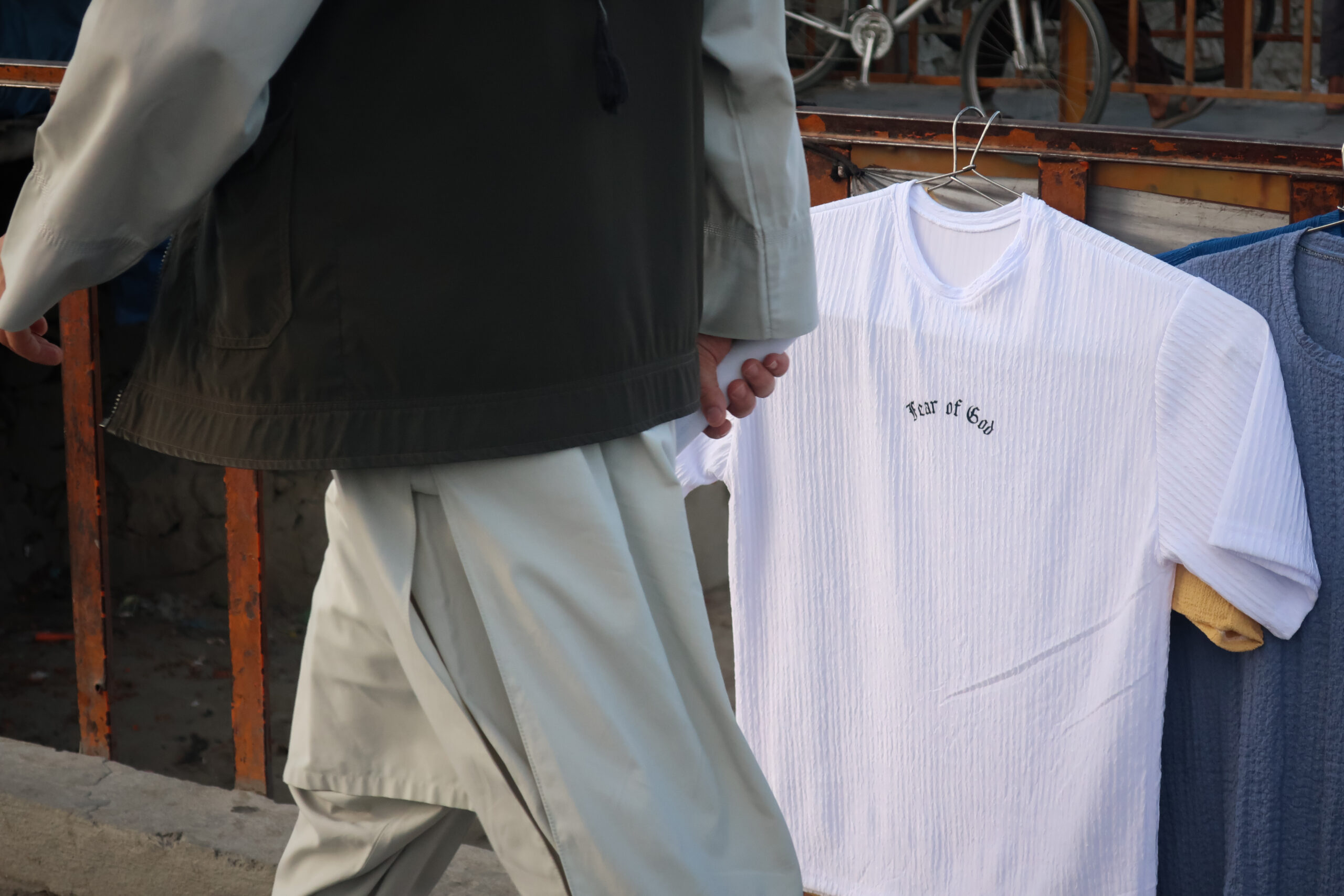
Taliban leaders have decided to invest in this sector, going so far as to sponsor influencers. It is a particularly beneficial arrangement, because the more tourists there are, the more images of normalcy and proof—real, but minimal—there are to present, both domestically to reinforce the idea of peace, stability, and security, and internationally where a public-relations campaign showcasing the Emirate’s face is being assembled through these accounts.
State propaganda can thus simply recycle the free content that vloggers publish online. The government has even begun granting them broadcasting licenses comparable to those of a television channel. At least ten creators who posted critical content have had their videos removed from YouTube.
The strategy seems to work; these videos end up racking up hundreds of thousands, even millions, of views.
The world depicted by the vloggers is orientalist and idealized: markets, lakes, hot tea with smiling militiamen, rifles raised for souvenir photos… For a regime with no diplomatic recognition or press service, a twenty-year-old with a GoPro is worth more than many press releases.
The Off-Screen
None of the “tali-bros” videos show the Taliban’s strict regulation of leisure activities that the regime has imposed.
Music is forbidden, unless it is religious in nature. Only the human voice would be worthy of praising God—not instruments, considered haram. In 2023, the Taliban publicly burned guitars, harmoniums and drums, publishing videos online. That same year, a concurrent ban on playing music at weddings was instituted. Chess is also banned: “The government classified it as a gambling game…,” Jawid, a former national champion, told me with a bitter laugh: “Perhaps the real gambling in this country is to think.” He used to make a living from prizes offered by the Afghan Federation; today, he sells fruit juices to make ends meet.
The regime’s post-change professional reconversion has touched many others as well. Ehsan, a former laundry worker at Bagram base: “I washed the uniforms, the Marines’ laundry. Sometimes even the parachutes….”
Today, Ehsan makes a living by giving private English lessons he picked up by ear in the base’s corridors. A risky job, because the regime views it as one of the occupation’s most stubborn legacies to erase. No longer part of public-school curricula and heavily hindered in private schools, English remains the specialty of TikTok and platforms where very young people navigate to bypass Internet blocks.
Kites have long been frowned upon, despite centuries of tradition in the country, accused of diverting the youth from prayer.
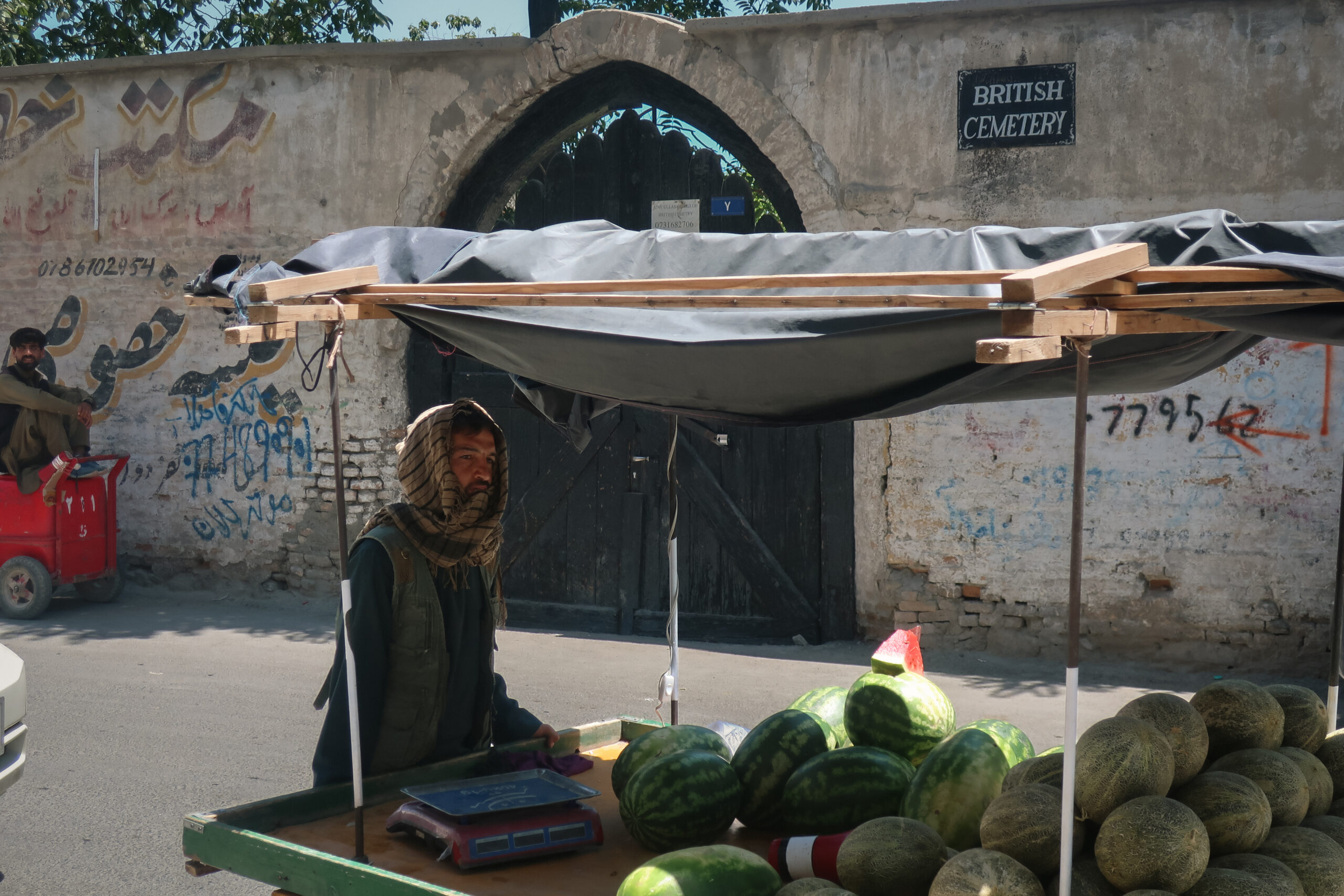
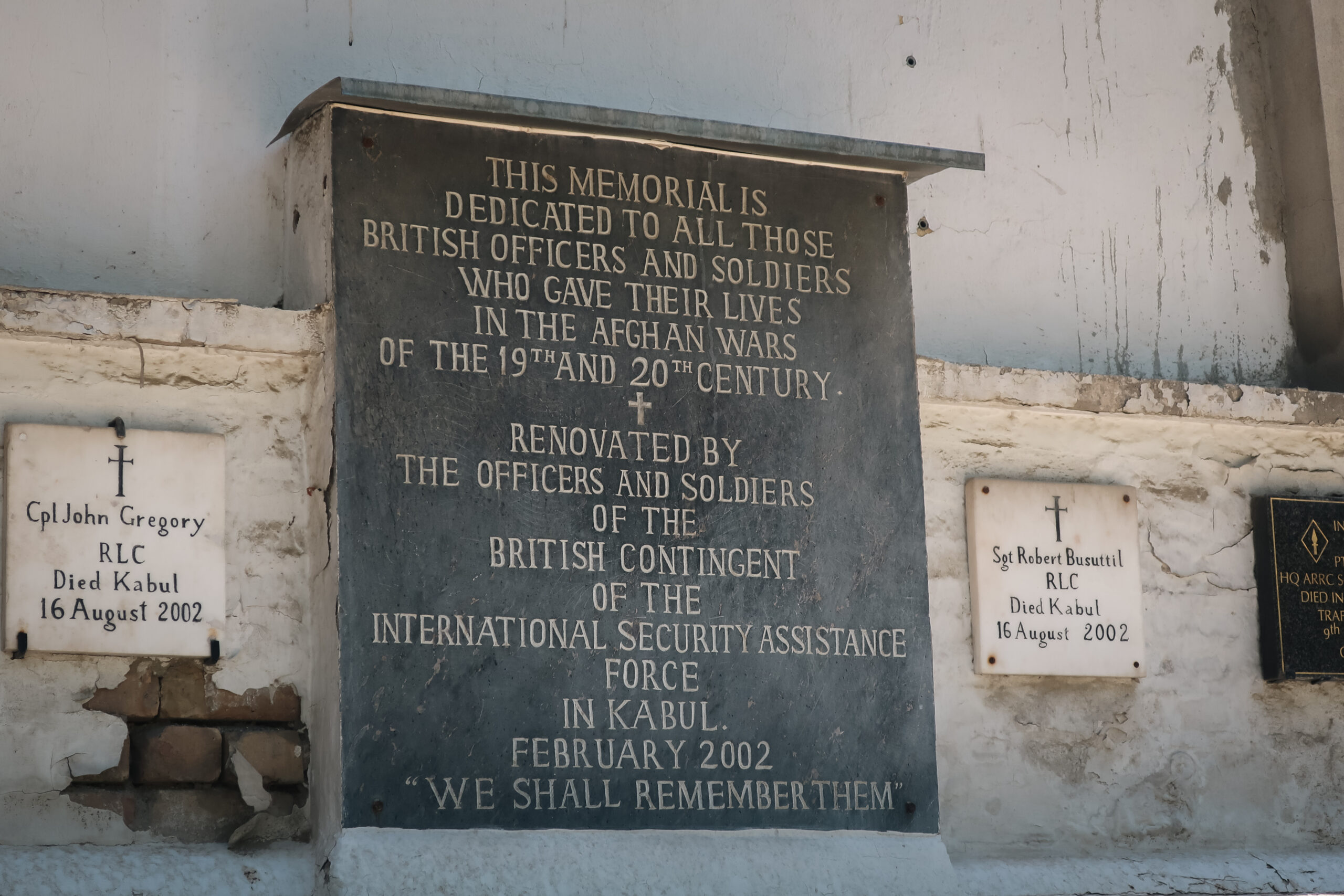
That entire set of rules and precepts clashes with the hypocrisy of practices still deeply rooted. A double-morality example is bacha bazi, literally “playing with boys,” a social practice involving the subjugation of male minors and the sexual exploitation of them by wealthy men.
These boys—often vulnerable, orphans, or from very poor families—are recruited with promises of food, protection, and salaries paid to their families. They are then treated as private property by their masters.
Women Have Disappeared
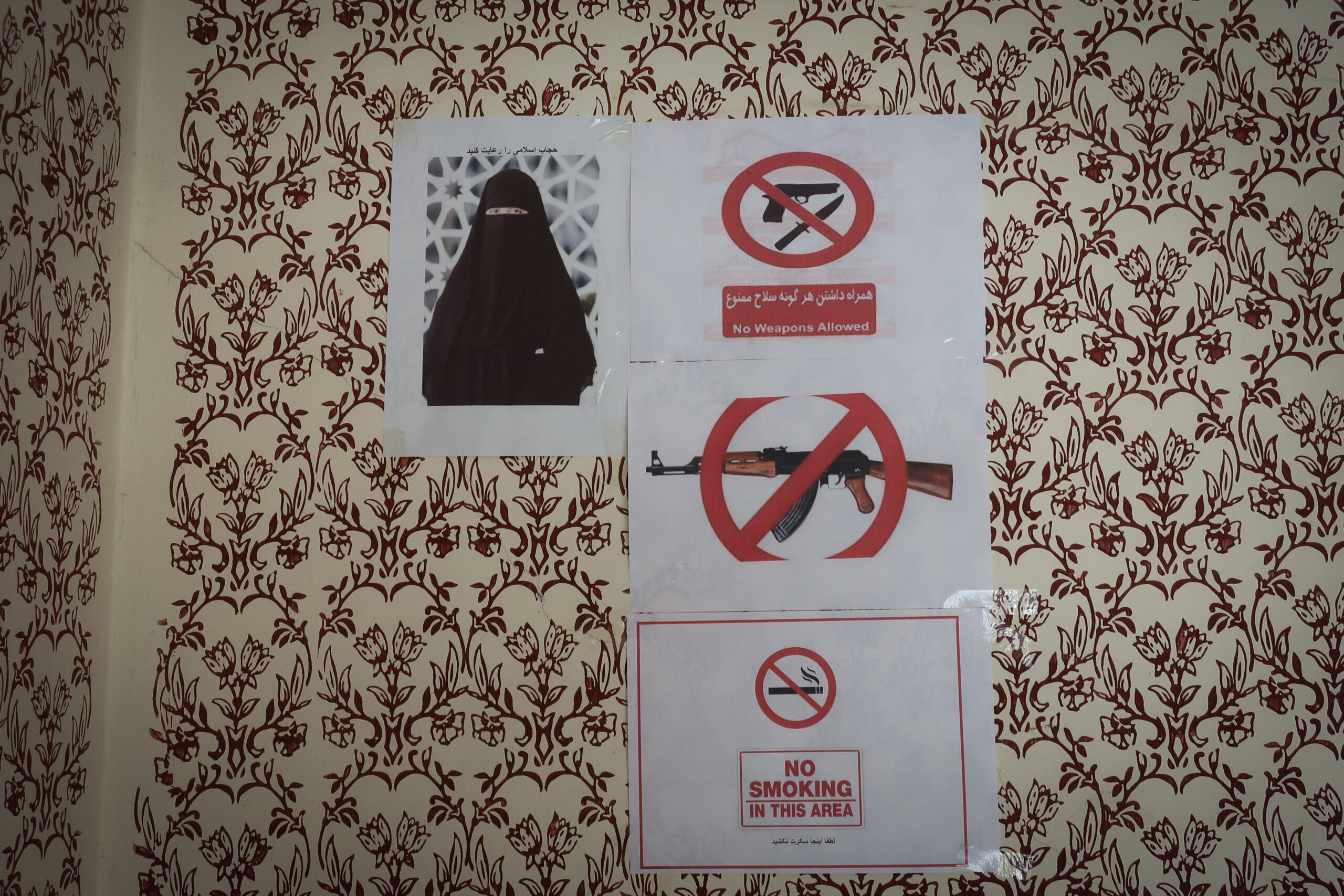
One point is obvious, and its obviousness does not make it any less essential: women have disappeared. Propaganda images as well as travel videos are inevitable, since it is illegal to film them in public. They do not appear on screen, nor in Afghan civil society. They are relegated to the domestic sphere, barred from schooling after puberty, and deprived of public spaces, except markets where they may move about if accompanied by a male relative.
They are even barred from parks, such as the lavish Babur Gardens in the capital, created by the dynasty’s founder and left with his name. “Here, before 2021, 80% of visitors were women, teenage girls and little girls,” a site-preservation official who asked to remain anonymous, observes.

That is the face of the Islamic Emirate that influencers fail to show. The freedom of movement they enjoy is precisely what Afghan women are denied.
Renaming the Republic’s Ministry for Women’s Affairs to the Ministry for Promotion of Virtue and Prevention of Vice, the Taliban have institutionalized a moral police that makes every father and husband a state watcher within the walls of his home. It is a social biopolitics that makes gender discrimination the keystone of surveillance, through which the regime seeks to govern half of the population by controlling the other half.
The forced exclusion of women from schools and work has already cost the country nearly 5% of GDP between 2024 and 2026, according to the UNDP, and threatens to widen structural shortages in the very near term. The regime has had to create exceptions. In hospitals and clinics, where women are allowed to work by ideological workaround—since men are forbidden from touching women who are not of their family—only women can examine and treat women. But when the shortage of doctors, nurses, and surgeons reaches a crisis point, it is unclear what will become of patients.
The State of Siege
In recent months, the Emirate’s internal order has undergone several tensions.
The first pits Kandahar against Kabul, the two centers of Taliban leadership. On one side, the informal seat of the theocracy governed by religious decree; on the other, the capital where ministries and the general staff must translate those decrees into concrete administration. It is a coexistence that does not come without friction: Kabul tolerates Kandahar’s numerous vetos poorly and, since it holds the operational levers of power, often manages to have the last say.
In addition to these rifts within the royal family, public discontent has risen. In Herat, last June, civil tensions peaked since 2021; dozens of women were arrested for alleged breaches of the dress code. For the first time, men took to the streets alongside them. The protest was violently crushed, leaving several dead. At the same time, in Badakhshan, rebel militias seized Taliban posts and held them for several days. Disturbances this large within the Taliban’s order had not occurred in five years of the Emirate, and the incident was not isolated: in the first week of August alone, three distinct fronts—the Afghanistan Freedom Front, the National Resistance Front, and the Afghanistan United Front—claimed fifteen attacks across nine provinces, killing dozens of Taliban fighters.
The regime responded with severity. Massive reinforcements were sent to the North, civilians’ weapons were confiscated, and loyal commanders were transferred from other provinces. But resources do not follow suit. The air fleet inherited from the Republic requires overhauls that the Emirate can no longer finance.
Taken together, these frictions signal wear on three fronts—institutional, social, and military—that the Taliban had never before had to manage simultaneously.
Europe watches from afar. For five years, the European Union remains the country’s top humanitarian donor without the slightest influence on its domestic or regional policy. A Taliban delegation was received in Brussels two months ago, in the quietest possible manner, to negotiate the repatriation of Afghan refugees within the Schengen area.
“We still have twenty years, at least,” sighs a taxi driver as we leave the capital’s traffic. The regime may fall, but from within, like a metastasis. For now, its operational superiority remains crushing against any opposing faction and, on the civil front, the courage shown by a hostage-to-the-regime civil society—such as in Herat—remains an exception.