
Spain has become a European laboratory. It is first the epicenter of the climate crisis in Europe, the continent’s most exposed country to warming and its effects. Three-quarters of its territory are threatened by desertification and, in high-emission scenarios marked by strong temperature rises and insufficient adaptation, the country risks sinking into a spiral of impoverishment and decline.
This process, fed by both very destructive punctual events—such as major wildfires or torrential rains—and by new climate extremes, such as the spread of tropical nights or heatwaves, can gradually render several of our economic pillars unviable, such as irrigated agriculture or tourism. It is also likely that as the 21st century advances, the quality of life in Spain will deteriorate markedly: due to the deterioration of collective determinants of health, damage to our infrastructures and the growing disruption of our economic models, but also to the loss of Mediterranean culture’s distinctive ways of life, such as the intense sociability of public spaces, which heat could severely restrict for a growing portion of the year. Finally, our position at Europe’s southern border makes us particularly vulnerable to the amplifying effect of the climate crisis on 21st-century migrations, as well as to their instrumentalization as a geopolitical pressure tool.
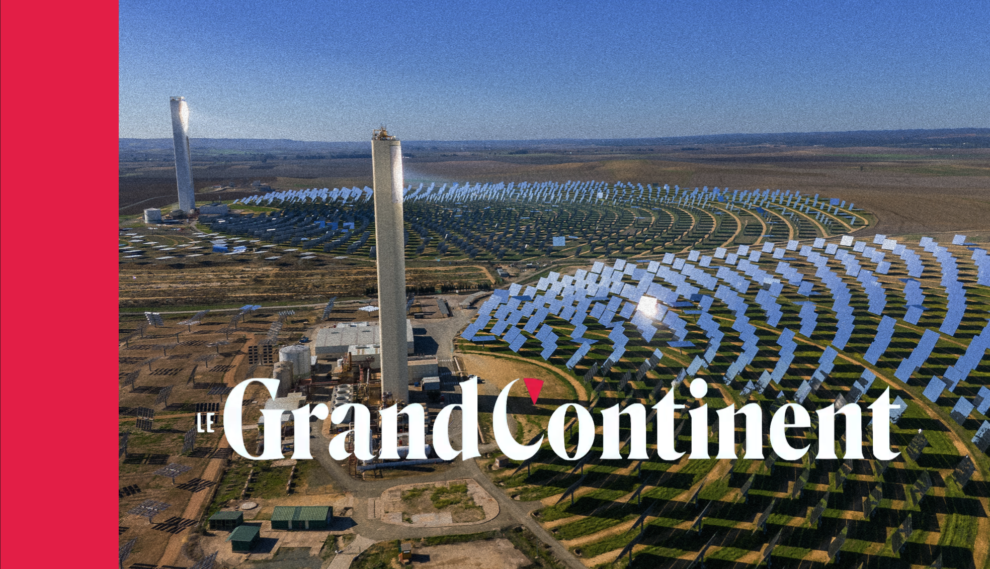
But at the same time, Spain possesses a huge comparative advantage to lead climate transformations, particularly in the energy field. The country has the best solar potential in Europe, complemented by solid wind potential in certain regions, as well as enough space for a massive and well-planned deployment of renewables that would not compete with other land uses, nor with other economic activities, nor with areas of high environmental value. Nothing justifies perpetuating the fossil model: reliance on foreign oil and gas chronically weighs on the current account. Spain also has remarkable institutional experience: the latest progressive cycle has driven a historic deployment of renewables, which now accounts for 60% of electricity production, and has successfully carried through a socially explosive process—the phase-out of coal. In another domain of the ecological transition, the agri-food sector, Spain, given the degradation of its soils and its water stress, would have a great deal to gain if the regenerative paradigm, which promises both higher yields and lower environmental impact, moved from the experimental stage to the Common Agricultural Policy, as already studied by the European Commission.
Far from being an abstract promise, Spain’s commitment to decarbonization is already visible in its macroeconomic accounts: the exceptional growth of the Spanish economy since the pandemic, close to twice the OECD average, is partly explained by the new renewable energy mix, which makes it more resilient to energy shocks and which underpins Europe’s lowest wholesale electricity prices. It also owes much to immigration, which confirms that the path to 21st-century prosperity goes exactly against the worldview of nationalist forces.
We call this paradox the “climate all-or-nothing.” This Spanish dilemma extends well beyond the national frame: it prefigures, in a concentrated form, a strategic question for Europe. Will the ecological transition become a new project of prosperity, sovereignty, and modernization at the continental scale, or will it be blocked by a global fossil-fuel backlash whose mission is to destroy the European project?
The ecological revolution of productive forces and the conflicts it provokes
Over the past decade, the fight against the climate crisis has ceased to be merely an effort to preserve the status quo in the face of the era’s greatest threat: it has become the challenge of moving beyond energy and economic structures to aim for a better life. This shift owes itself to a historical novelty that ecologism did not anticipate, but which constitutes the best heritage of its struggles: the ecological revolution of productive forces. We designate, first, the rupture triggered by renewable energy, the electrification of usages, and batteries—technologies we underestimated for decades but whose expansion and falling costs now follow unprecedented curves in the history of energy. We also refer to the still-promissory potential of regenerative transformation in agriculture and ecosystem management, based on a better understanding of soil ecology.
These two revolutions reconcile economic modernization with an environmental program like we had never imagined, and open an unprecedented path for political ecology: a tangible horizon of ecological prosperity that no longer rests solely on defending frugal, low-impact lifestyles.
The fundamental idea is that this revolution breaks with the classic sustainable development trilemma (the difficulty of reconciling economic growth, social inclusion, and environmental sustainability) and allows ecology to transcend the cliché of the “watermelon”: ecological transition is no longer necessarily a socialist project in disguise. It is a superior social metabolism which, precisely because it is more efficient and more productive, generates surpluses whose distribution can then become the subject of political struggle. The left can defend ecological prosperity because it opens up a field of redistributive, democratic, and socialist possibilities. But conservative actors can also see in it an evolution of capitalism and a new regime of accumulation. This horizon of abundance within planetary limits also helps pull the debate away from Malthusian logics of scarcity, present in the most restrictive versions of degrowth as well as in catastrophic drift.
But ecological prosperity is an opportunity, not a guarantee. No trajectory of progress is ever assured. If history has taught us anything, it is that any sense of immunity to history is illusory: the most obvious opportunities can be missed and the richest and most stable societies can fail. Chronic problems and accumulated inertia weigh, to be sure, but it is always the sequence of collective bad decisions that makes the difference. Politics is the decisive factor.
National paths toward ecological prosperity
Our central premise is that the ecological transition must be imagined from national particularities, not from abstract proposals that would apply to any country in the world.
We thus start from Spanish realities that shape our field of political possibilities. We first focus on a geographic framework shaped for centuries by the combination of abundant sunshine and water scarcity, which the climate crisis will intensify, and which opens very different futures depending on whether Spain bets on maintaining activities such as irrigated agriculture or tourism, or strengthens its productive reorientation toward renewable energy. We also examine a unique sociological configuration, which places housing at the heart of the economic model and social conflict; the particular weight of plurinationlity in the country’s deep political dynamics; finally, a recurring trait in Spanish history, which economic historians Carreras and Tafunell have called the “Sisyphean myth of the Spanish economy”: the tendency to periodically lose pace with European modernization.
Indeed, over the past half-century, with the consolidation of democracy and the full integration of the Spanish economy into the Union, this curse seems to have been warded off in its most serious manifestations, those that drove the country toward the abyss with the Civil War, the White Terror, and autarchy. Its effects remain perceptible in contemporary politics. They show up in the energy policy of conservative governments of the last decade, which not only blocked solar self-consumption and slowed the rise of renewables, but also contributed to the bankruptcy of companies like Siliken or Isofotón, formerly among the world leaders in photovoltaics.
These reversals of Spanish economic development have multiple causes, but one element constantly recurs: the patrimonial conception of the state typical of conservative oligarchies, which goes back to the historical genesis of the state—“premature empire and late nation,” in the famous phrase of philosopher José Luis Villacañas. A portion of the Spanish right is marked by an authoritarian and exclusive political culture. Its governing habits were forged in the law of conquest and the repressive and inquisitorial mechanisms, and it is accustomed to governing without hegemony. In short, it is a right that has repeatedly shown it would rather sacrifice the country’s economic future than relinquish power. Everything suggests it will be the same with ecological prosperity.
Toward a new climate cleavage?
Since politics plays a central role in resolving the climate “all or nothing,” and since we must consider each country’s particularities, we analyze what would be required to build a climate majority in Spain. To do so, we combine a Gramscian approach, in which majorities are not sociologically given but constructed politically, with the theory of cleavages, according to which ancient historical fault lines delimit the field of the possible yet can be moved by conflicts. Politics is neither liquid nor solid: it is sticky. These two traditions agree on the need to conceive the collective subject as a coalition of identities rather than a mere aggregation of claims. Our results are, of course, closely tied to the Spanish reality, but some conclusions may have European implications. Our approach is also very close to the one Pierre Charbonnier developed for France in La Coalition climat.
First, we estimate that the climate crisis will not give rise in Spain to a purely climate-based cleavage between “greens” and “browns,” sharp enough to swing elections or form governments, but it will traverse and reorganize existing cleavages: the left-right cleavage (in its two dimensions, economic and moral) and the center-periphery cleavage (also double: mononational against plurational, Spain depopulated against Spain saturated). The interaction between the “fossil-climate” cleavage and these existing cleavages can produce two configurations. The first is a polarized continuity, in the wake of the current political dynamic: on one side, a progressive and plurational bloc favorable to climate action; on the other, a conservative and mononational bloc, regressive or climate-sceptic. The second is a crossing of cleavages, where an explicitly regressive left and an explicitly climate-right appear as internal poles of opposition within their respective blocs, which would open a more volatile and unstable scenario. Our hypothesis is that Spanish politics will move toward an intermediate position, but much closer to continuity than to crossing: the regressive left and the climate-right will remain, at least in the short term, minority currents, at odds with their own camp.
Two important political consequences follow. The first is that a hypothetical climate shift of the Spanish right, which today is foreshadowed by weighty intellectual interventions, such as the book El ecologismo de derechas by Luis Quiroga and Toni Timoner, will run into structural limits: the memory of cleavages, their international dimension, and the weight of Trumpist climate denial in any future conservative government in Spain. The second, which stems from the first, is that, despite the aspiration to return to centrist state policies, a consensus climate policy would imply in Spain an suboptimal compromise: a climate ambition scaled back and inadequate exploitation of the opportunities opened by the ecological revolution of productive forces.
From our analysis of Spain’s cleavages, we thus sketch three possible climate trajectories, associated with different action scenarios: acceleration, regression, and continuity. Each corresponds to a hegemonic relationship between historical blocs. Acceleration presupposes a progressive and plurational hegemon; regression, a conservative and mononational hegemon; continuity can result either from a lack of hegemon (a kind of catastrophic stalemate where no bloc imposes its line on the country), or from a discreet climate consensus.
In Europe, climate will probably interact with existing cleavages in the same way. But, unlike Spain, certain center-right European formations combine, or did combine, a real climate commitment with a commitment to democracy that sets them apart from the far right.
It can thus be imagined that the European climate coalition will be more consensual and centrist, while in Spain, due to the cleavage structure, an ambitious climate trajectory seems doomed to lean to the left.
There will be no climate policy without hegemonic coalitions
Pursuing ecological politics does not consist in drafting a perfect catalog of decarbonization measures, but in designing a viable coalition architecture. In Spain, this first means protecting the core of this coalition from the climate shock, the urban majorities that form the shared political, cultural, and electoral space of the left and social democracy, and then broadening it to peripheral sectors: by bringing forth a new green working class, by splitting capital to rally green capital and erase brown capital, by revitalizing rural areas through regenerative agriculture, and by electrifying the peri-urban middle classes.
On this basis, we propose five major reform axes, designed both to advance ecological prosperity in Spain and to politically consolidate the coalition that carries it. Properly transposed, these reforms can also have European relevance:
- a urban reform, at the heart of the coalition’s political gravity, that guarantees access to housing, the right to sustainable mobility, thermal comfort, and climate security;
- an industrial reform that fosters the emergence of a new green working class and a core of environmentally committed enterprises, to revitalize the poorest regions and those hardest hit by demographic decline;
- a rural reform that enables regenerative transformation of agriculture and makes ecosystem preservation a new pillar of the welfare state;
- a reform of social protection mechanisms, to adapt them to the new Anthropocene risks;
- a reform of the state’s strategic capacity, backed by a new fiscal order and making accelerated decarbonization the constitutive principle of the 21st-century social contract.
But data never replace narratives. We therefore also propose a series of founding stories to weld the coalition, by fixing its guiding values, its key metaphors, and its adversaries. For this, we take the three principles of the French Revolution and adapt them to the challenges of our era:
- ecological prosperity: a path toward abundance within planetary limits. It expands the principle of equality as shared access to ecological abundance and opposes fossil power;
- climate security: universal protection in the face of fossil chaos. It translates the principle of liberty as the right to a life without fear and opposes climate denial;
- planetary responsibility and care for the common home: a solidarity that extends beyond humans. It translates the principle of fraternity and opposes the cruelty ethics of the far right.
Europe facing the Sisyphean curse?
The global situation has taken on a paradoxical turn.
While Spain, thanks to the deployment of renewables, shows the first signs of breaking with the Sisyphean curse, it is Western civilization as a whole that risks falling into its trap: prolonging the life of the fossil technosphere—a choice that would cause us to lose the battle for technological modernization forever while intensifying the ongoing climate chaos.
The fossil accumulation regime, which concentrates risky assets and unrecoverable costs of astronomical value (some studies even compare it to the world GDP), has indeed declared war on the emerging ecological accumulation regime. Fossil interests are at the origin of a global climate counter-revolution, aimed at keeping the world in an economically suboptimal and climatically suicidal state, in order to preserve their grip on the structural source of power and privilege. To achieve this, they are ready to undermine, or even destroy, not only the climate but also democracy.
Ecological politics, in its recent history, has perhaps underestimated the fossil power’s capacity to resist. We now know it will resist, by any means necessary. We do not doubt, however, as the Argentinian Charly García sang, that the fossil dinosaurs will eventually disappear too. But it will not be a gentle extinction due to technological obsolescence: it will be a battle. It will even be the great political battle of the next quarter-century, fought on all fronts: economic, cultural, climatic, and democratic. The European project being besieged, squeezed between two imperial powers among the world’s largest “oil states,” the United States and Russia, reveals the scale of this civilization clash around the material foundations of the twenty-first century.
For Europe’s future, Spain is a decisive jersey in this clash between accumulation models with incompatible energy foundations: an ecologically prosperous Europe, strategically autonomous and democratically sovereign, needs a Spain that has become a superpower of renewable energy. Over the past eight years, Spain has also stood out: in this new historical context, it offers the most striking demonstration that a progressive government committed to the ecological transition can achieve exceptional economic performance, even if these gains have not translated as clearly into social progress.
The implications of these questions are clear. The technocratic aura that surrounded Europe’s climate policy has dissipated, and it will only reconstitute itself when Europe makes a definitive choice for the twenty-first century, which will shape its future: ecological prosperity or subjugation to fossil energies.