
During a meeting between FIFA, the FBI, and the Atlanta police, authorities had labeled the Argentina–England match as the World Cup’s most high‑risk confrontation.
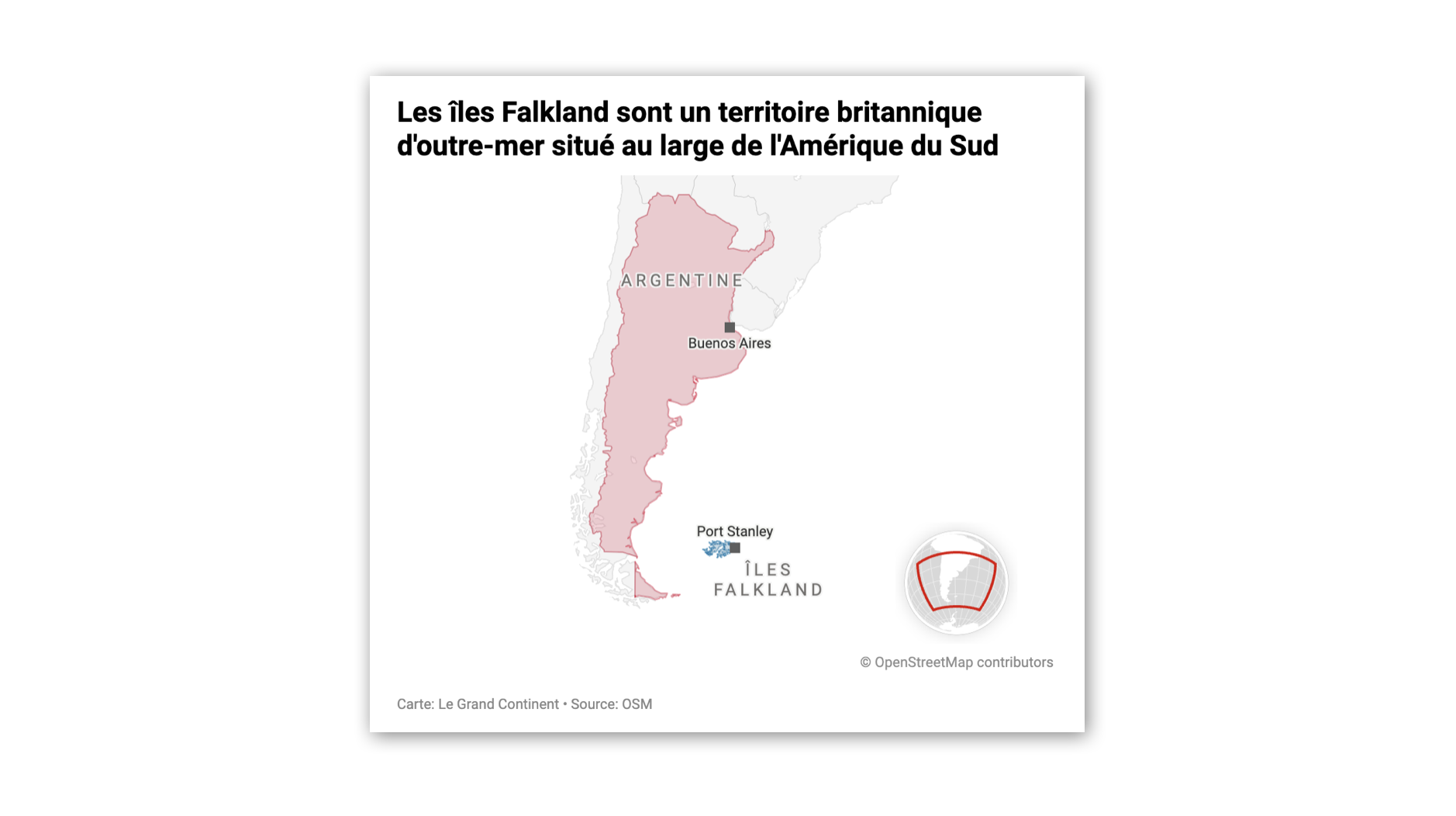
- Beyond the record of past meetings, the game threatened to be weighed down by the shadows of a war waged between Argentines and Britons 44 years earlier over control of the South Atlantic archipelago known to the British as the Falkland Islands and to Argentines as the Malvinas (“Malvinas”).
- To prevent clashes between supporters, stadium entrances had been segregated, and separate bars had been allocated to each group.
In the long history of colonialism, no one had ever waged a real battle for the control of the Malvinas.
- The question of their discovery remains debated: navigators from Portugal, England, or the Netherlands could all have spotted them first.
- Yet, the first to colonize them were the French, who arrived in 1763. Since they all came from Saint‑Malo, they gave the archipelago the name Îles Malouines, which has become the designation used in all Romance languages.
- At the same time, English settlements were established on the western coast of the archipelago.
- In 1766, France renounced its claims in exchange for an alliance with Spain against Britain in the War of the Seven Years’ War. The archipelago then consisted of only a few dozen inhabitants, and British and Spanish settlements coexisted until 1774, when Britain decided to withdraw its garrison from the islands.
- In 1810, the United Provinces of the Rio de la Plata, today’s Argentina, gained independence from Spain and claimed themselves as heirs to all of the region’s Spanish territories, including the Malvinas. They sent a naval vessel and several garrisons that took possession of the archipelago and began its colonization. The activities conducted there were limited to cattle farming and seal hunting.
- In 1833, the English returned, deposed the settlers, and took control of exploiting the territory’s scarce resources. The facts are murky, and the various garrisons that disputed control of the island were more mercenaries and privateers than government agents.
Latent tensions between the United Kingdom and Argentina over the archipelago’s control intensified in the second half of the 20th century, when Argentine President Juan Perón asserted sovereignty over the islands. He sought to buy them and nationalize them, as he had done with the railway network, but Winston Churchill rejected the idea. In early April 1982, events accelerated when the Argentine army invaded the Malvinas.
- The Falklands War is a tale of political arrogance and military incompetence: General Leopoldo Galtieri, head of the Argentine military dictatorship, knew the regime was losing legitimacy.
- The economic crisis was suffocating the country, and the fate of the disappeared along with the mechanisms of repression of dissent had been laid bare.
- The aim was thus to rally the nation, rekindle nationalist sentiment, and boost the junta’s prestige. Moreover, Argentina invaded the Malvinas believing that the United Kingdom would not respond.
- London, however, reacted brutally: the Argentine soldiers, poorly armed and poorly trained, were swept aside. 649 of them died, 1,500 were wounded, and 11,300 were taken prisoner.
- Beaten militarily, Argentina emerged from the conflict with its pride wounded, and this wound has never fully healed.
During their first football meeting, at the 1986 World Cup, the conflict had only ended four years earlier.
- The June 22 match remains one of the most famous in the history of the tournament — more than any other, it shows how impossible it is to keep politics out of football. Maradona scored his two most famous goals there: the first with his hand, the second after weaving through half the English defense. After the game, he did not hide that the revenge also fueled him: “We defended our flag, the men who died in combat, the survivors. That’s why I believe my goals carried such great meaning,” he would later say.
The match yesterday took place 44 years after the Falklands War, and none of the players on the field had been born in 1982. Yet, while the Argentine players had stated the day before that the past had nothing to do with it and that it would be merely a football match, they celebrated their victory by waving a banner reading “The Malvinas are Argentine.”
The Argentina team now risked sanction.
- The regulations of IFAB, the football governing body, formally prohibit the display of political flags, slogans, and symbols other than national flags.
- Furthermore, the British government officially asked FIFA to open an investigation into the banner displayed.
Argentine claims to the Malvinas have never left the debate nor the collective imagination. In football, this theme reappears regularly.
- References to the Malvinas appear on banners and in supporters’ chants, and in 2014, the national team itself posed with a flag bearing the inscription “The Malvinas are Argentine,” ahead of a friendly against Slovenia.
- The FIFA disciplinary committee had then fined the Argentine federation 30,000 Swiss francs (about $37,000).
The nationalist sentiment surrounding the sovereignty claims over the Malvinas remains extremely alive, and it manifests in many facets of Argentine life.
- There is even circulating a 50‑peso banknote dedicated to the archipelago.
- On its site, the Argentine Central Bank explicitly states that the note “represents Argentina’s sovereignty over the archipelago.”
The debates obviously did not end with the election of Javier Milei, who built his campaign and rhetoric around nationalist sentiment and Argentina’s ambitions of international prestige.
- As president, he has repeatedly reaffirmed that the Malvinas belong to Argentina and that reclaiming them is a non‑negotiable national objective, while maintaining that the issue should be resolved through diplomatic means, in dialogue, and not by force.
- Milei maintains a special relationship with the United Kingdom: he has repeatedly cited Margaret Thatcher as his political model, drawing criticism from veterans and from Argentines most attached to the cause.
Several months ago, Milei stated in an interview that Argentina was “making progress like never before” on the Malvinas issue. This statement came soon after it was revealed that the United States was considering a series of measures to sanction NATO allies that did not back their Iran policy – including the possibility of withdrawing support from the United Kingdom on the Malvinas question.
- It remains to be seen whether Milei will attend Sunday’s final in the stands alongside Trump, as the final pits Argentina against Spain.
- The two men are close political allies, and Trump has described Milei as his “preferred president.”