1 – The Arrival of Donald Trump
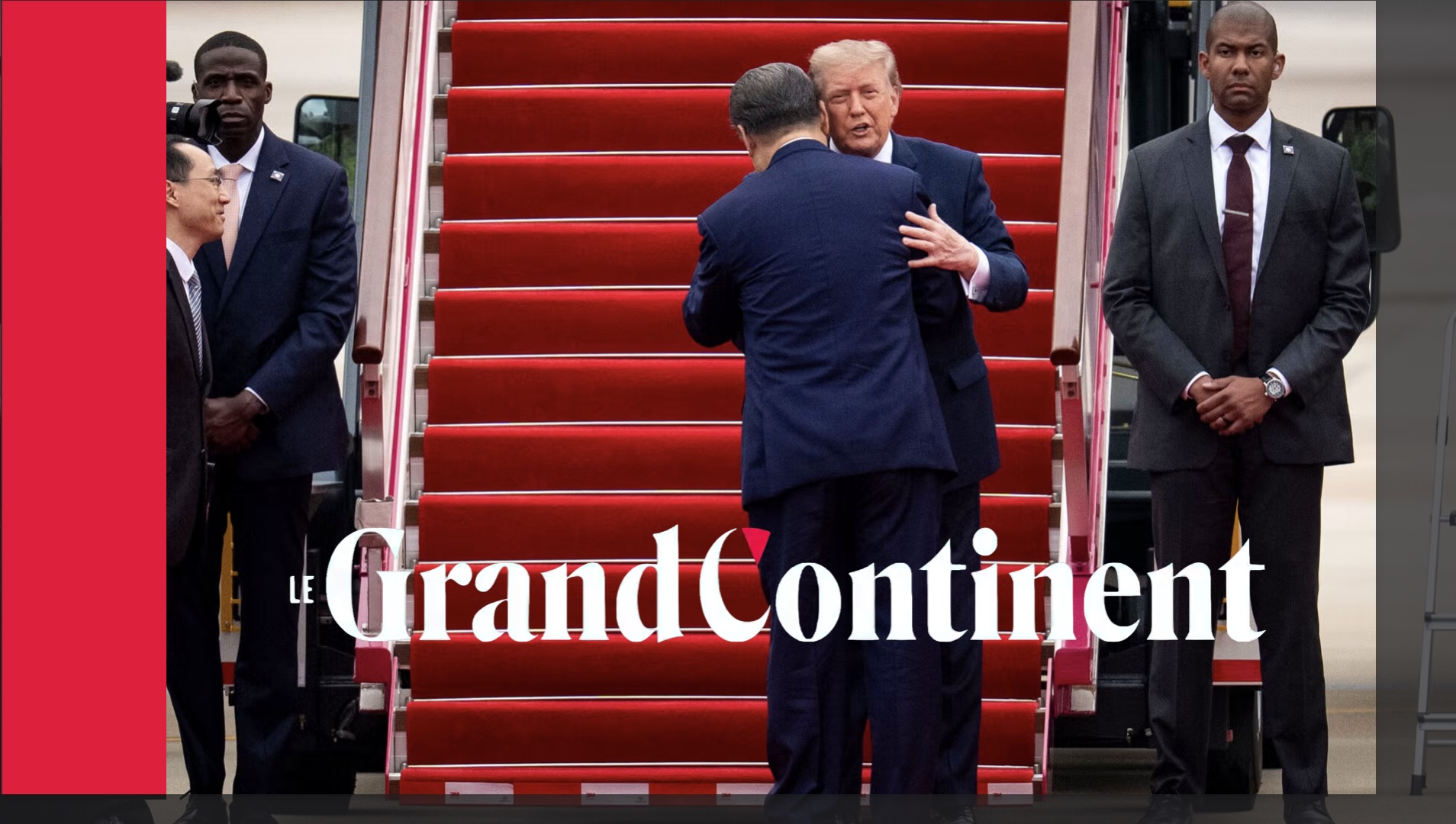
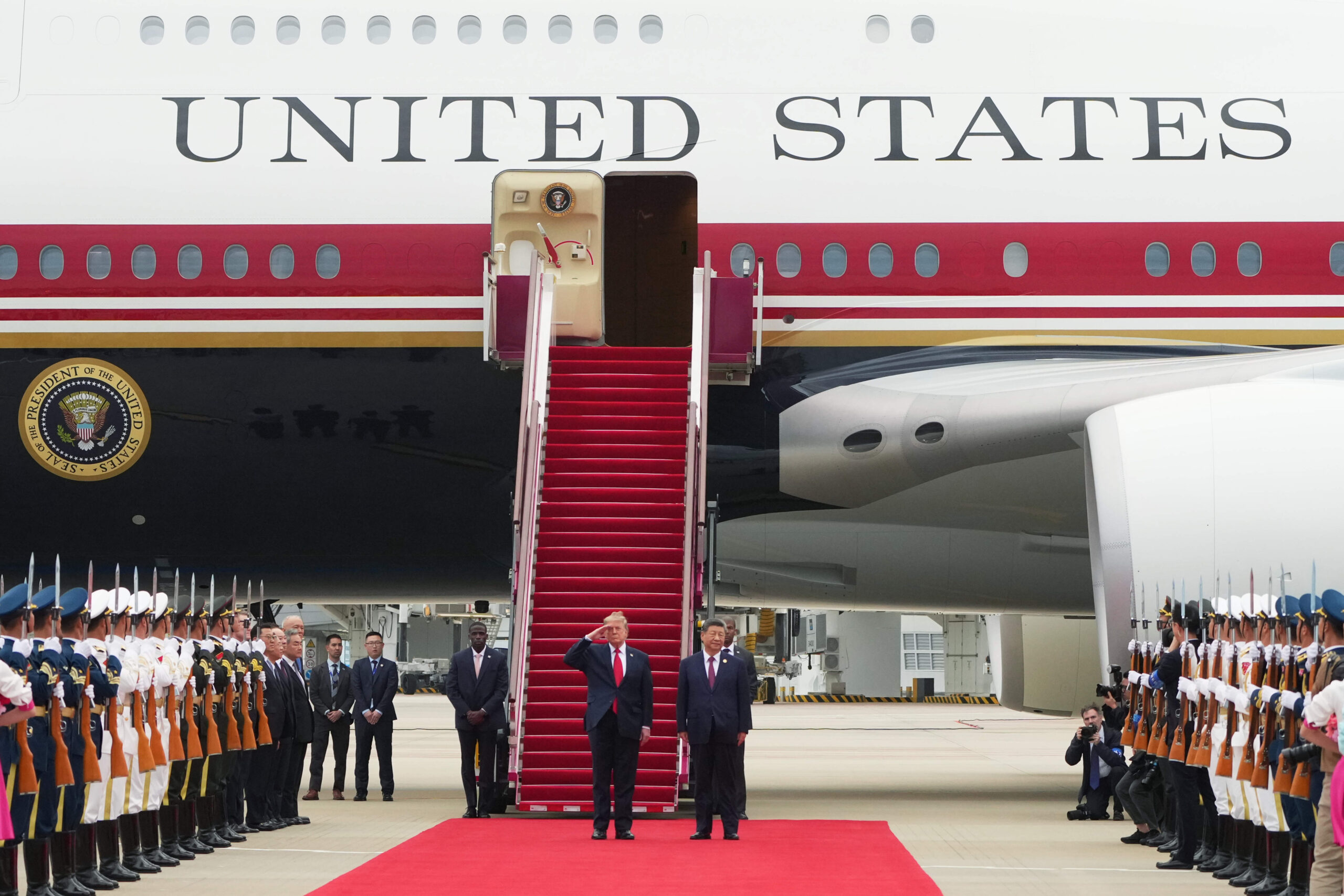
The week during which Washington unveiled new restrictions on semiconductor exports and access to computing power, Xi Jinping greeted Trump at the foot of the aircraft stairs on the tarmac, breaking with almost fifty years of tradition. The Chinese president told local reporters that China was a nation of “good manners,” “with a tradition of reciprocity,” and insisted that Trump had done the same during his September visit to the White House. Trump, for his part, had indeed become the first American president since Kennedy to come to Andrews Air Force Base to receive a counterpart – outside papal visits.
2 – Putin’s Arrival
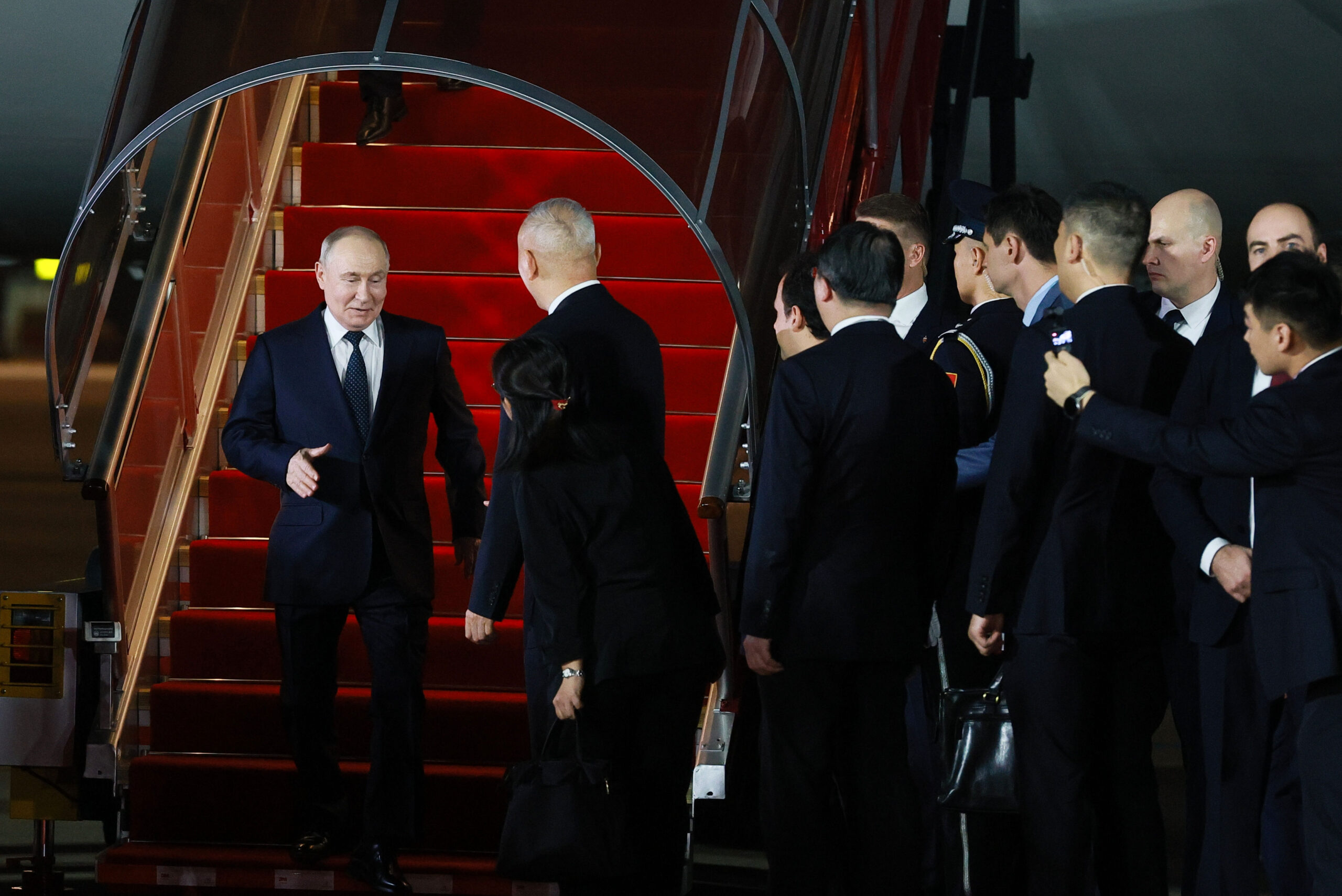
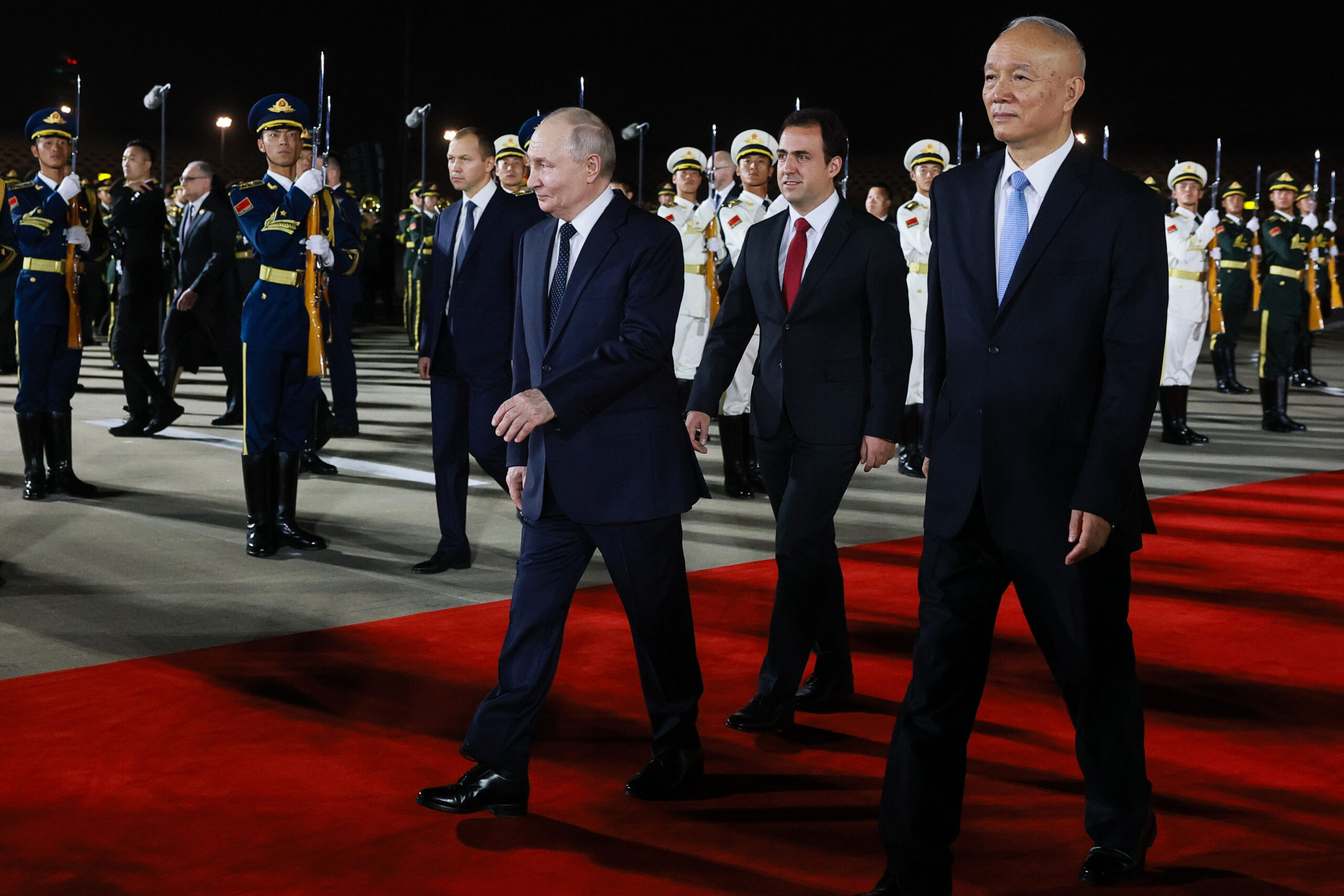
Equally imposing on the ceremonial level, Putin was welcomed at the airport by Cai Qi, one of the seven members of the Communist Party’s Politburo Standing Committee and considered one of Xi’s closest confidants. The arrival of the Russian president carried an additional surprising element: at the same moment, two Russian Tu-95MS nuclear bombers landed in the region, at Da Nang airport in Vietnam. This situation triggered a swift mobilization from Japan and South Korea, which dispatched fighter jets after detecting the Russian aircraft in their airspace.
— His nuclear arsenal, the world’s largest, is the only element that can grant Moscow a sense of belonging to the club of superpowers, given the stalemate on the Ukrainian front, the colossal human losses, its lag in technology and innovation, and the size of its economy, etc.
— The issue of non-proliferation should be on the agenda of the Trump-Putin-Xi meeting, even though China has shown very little interest in engaging on it in the past.
— On the same topic, a possible Trump-Kim Jong-un meeting was discussed.
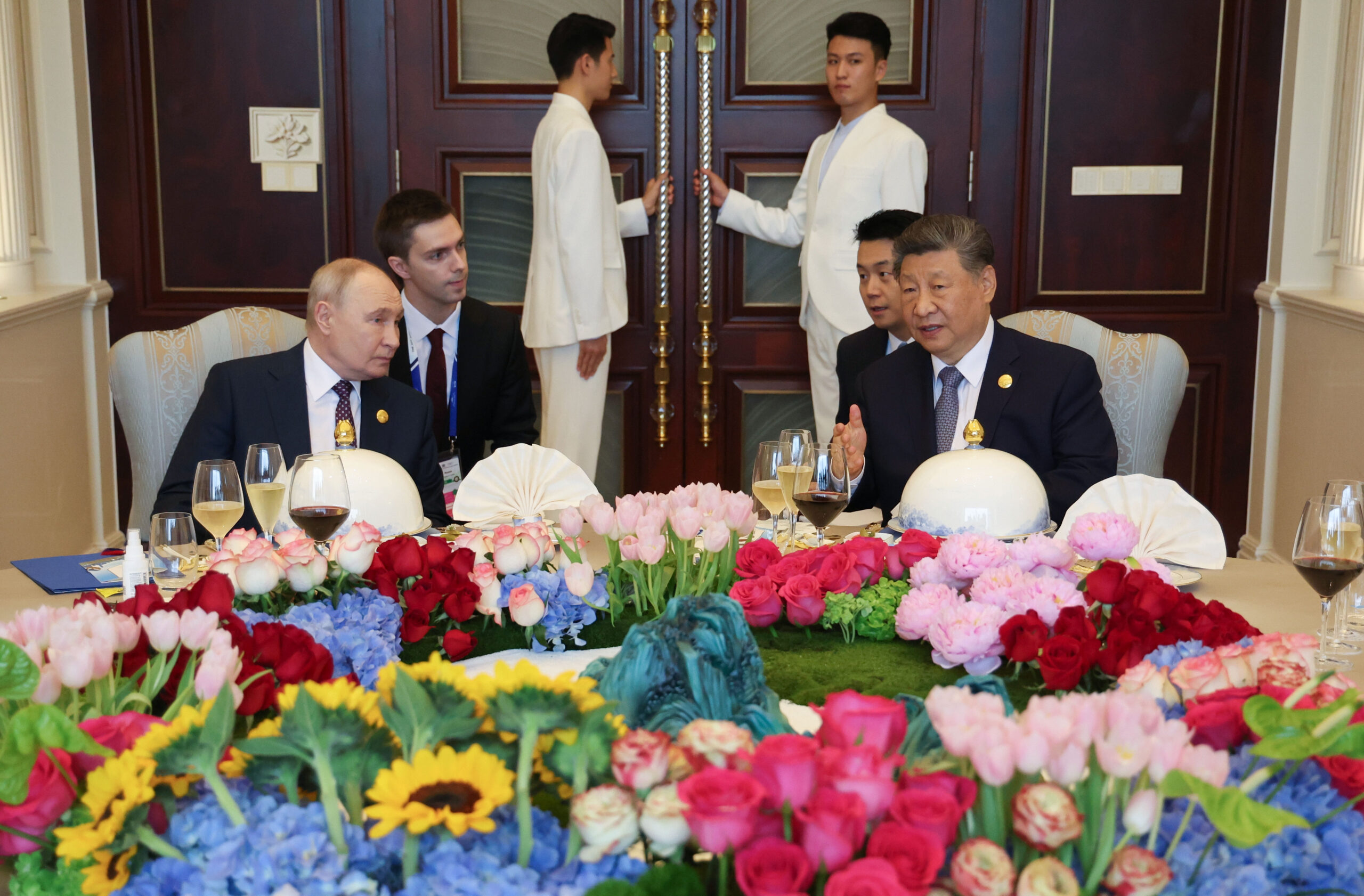
During his bilateral meeting with Xi, Putin pledged to work “shoulder to shoulder” with the Chinese leader, in the interest of their countries. The Chinese president called Putin a “old friend” and emphasized that this marked their 50th meeting, whether in person or via video link, since 2013. He added that Sino-Russian relations were “unshakeable like a mountain in the face of storms.”
3 – The Family Photo
For the first time since 2017, Vladimir Putin is present in a family photo of the APEC leaders and occupies a central position beside Xi Jinping (they are separated only by the latter’s wife) and Donald Trump. Since 2014 and Russia’s annexation of Crimea, family photos from summits and international meetings have served to illustrate Putin’s diplomatic isolation: Russia was suspended from the G8 (which became the G7) in 2014, and the large-scale invasion of Ukraine in 2022 and the International Criminal Court’s arrest warrant issued in March 2023 have further restricted the geography in which the Russian leader can travel. Since 2022, the president of Russia has made an average of eight visits per year, compared with 19 per year during 2012–2016.Moreover, since the start of the large-scale invasion of Ukraine, he has visited only one NATO country: the United States, in Anchorage, in the summer of 2025.
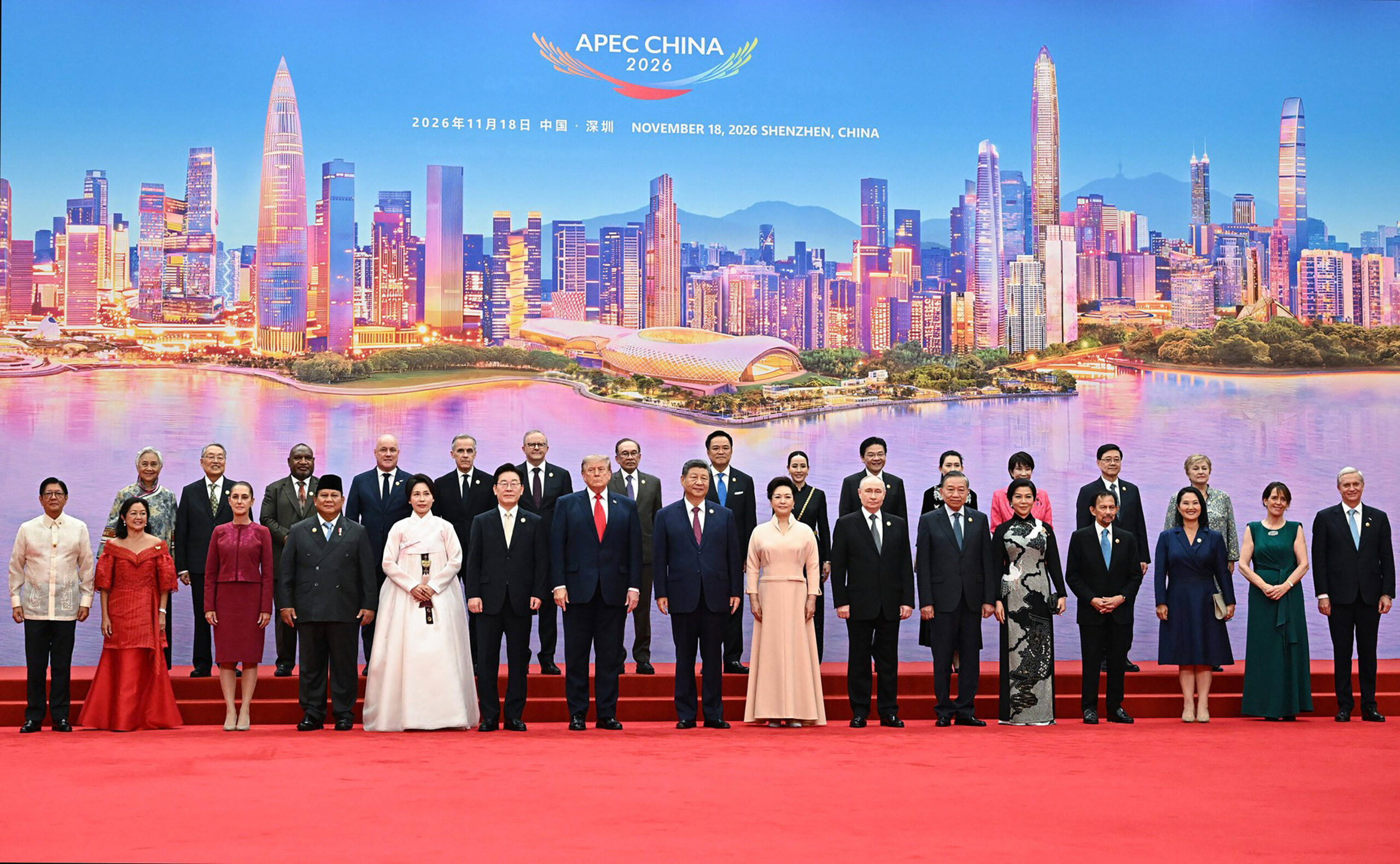
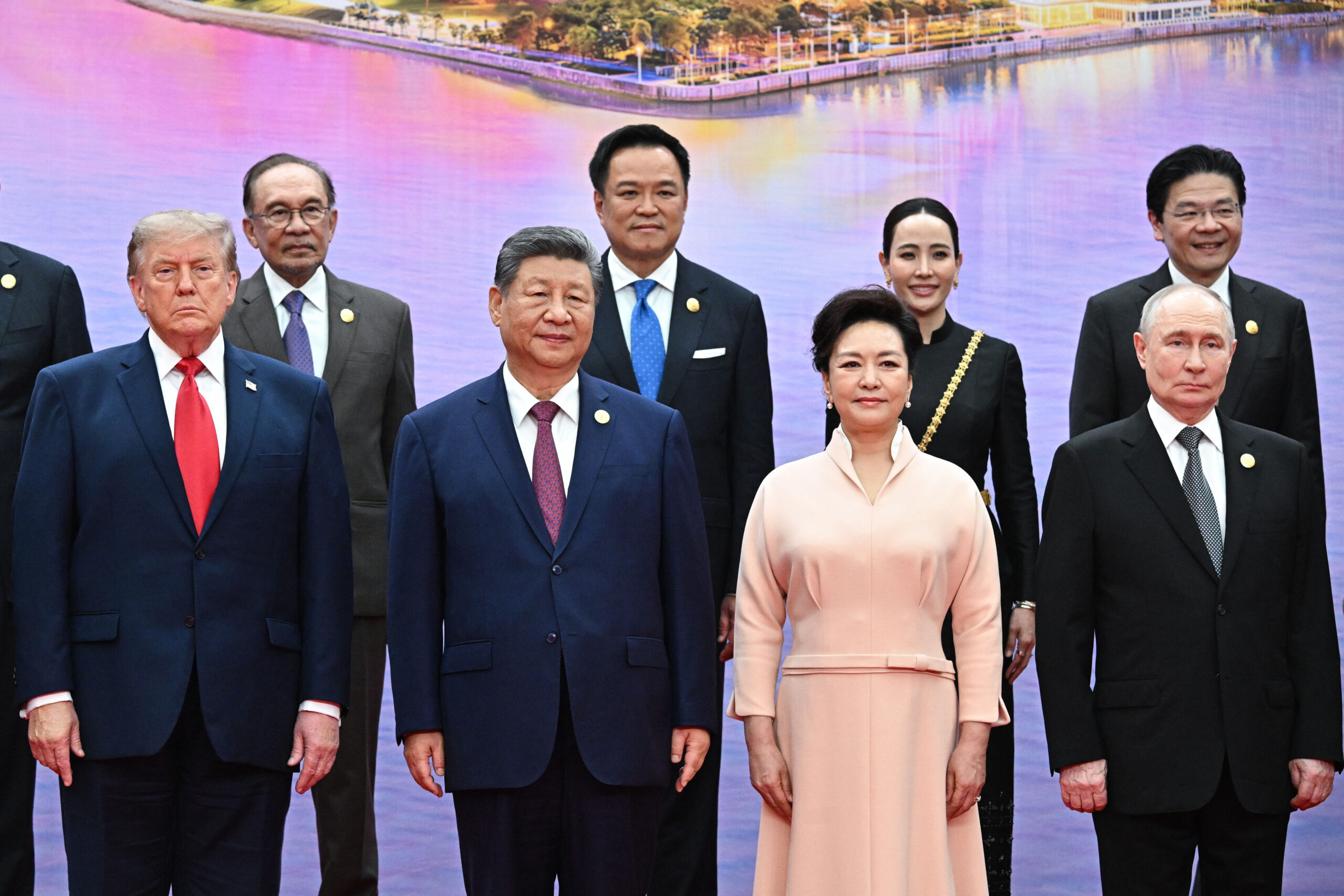
The last time Putin appeared in an APEC family photo dates back to 2017, in Vietnam. The few occasions on which he has been seen on the international stage are almost always tied to China: Xi Jinping had invited him, for example, to the military parade in Beijing in 2005.
4 – Xi Jinping’s Speech
Despite the warm welcome afforded to Trump, Xi Jinping spoke out against “Western” protectionism in a message clearly aimed at the Global South: “China has opposed unilateralism and protectionism and remains committed to true multilateralism.” He added: “Whatever the evolution of the international context, China will not waver from its willingness to cooperate in a mutually beneficial way with all other countries.”
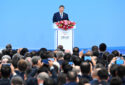
He called for closer cooperation in the field of artificial intelligence, presenting technological advances as a shared engine of growth. He described China as “an enormous testing ground for innovation, where cutting-edge technologies are tested, improved, and perfected under real-world conditions.”
5 – Around Shenzhen
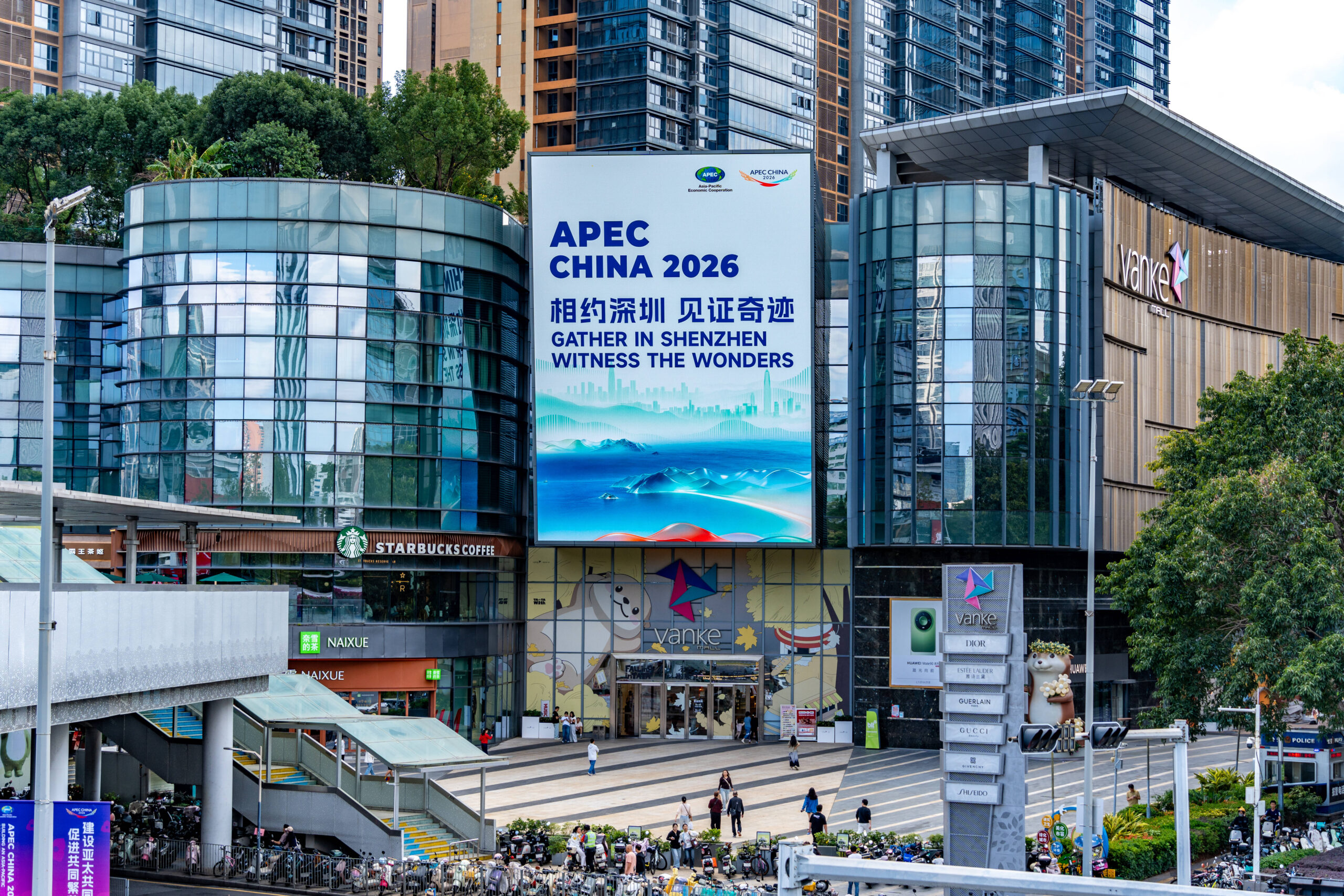
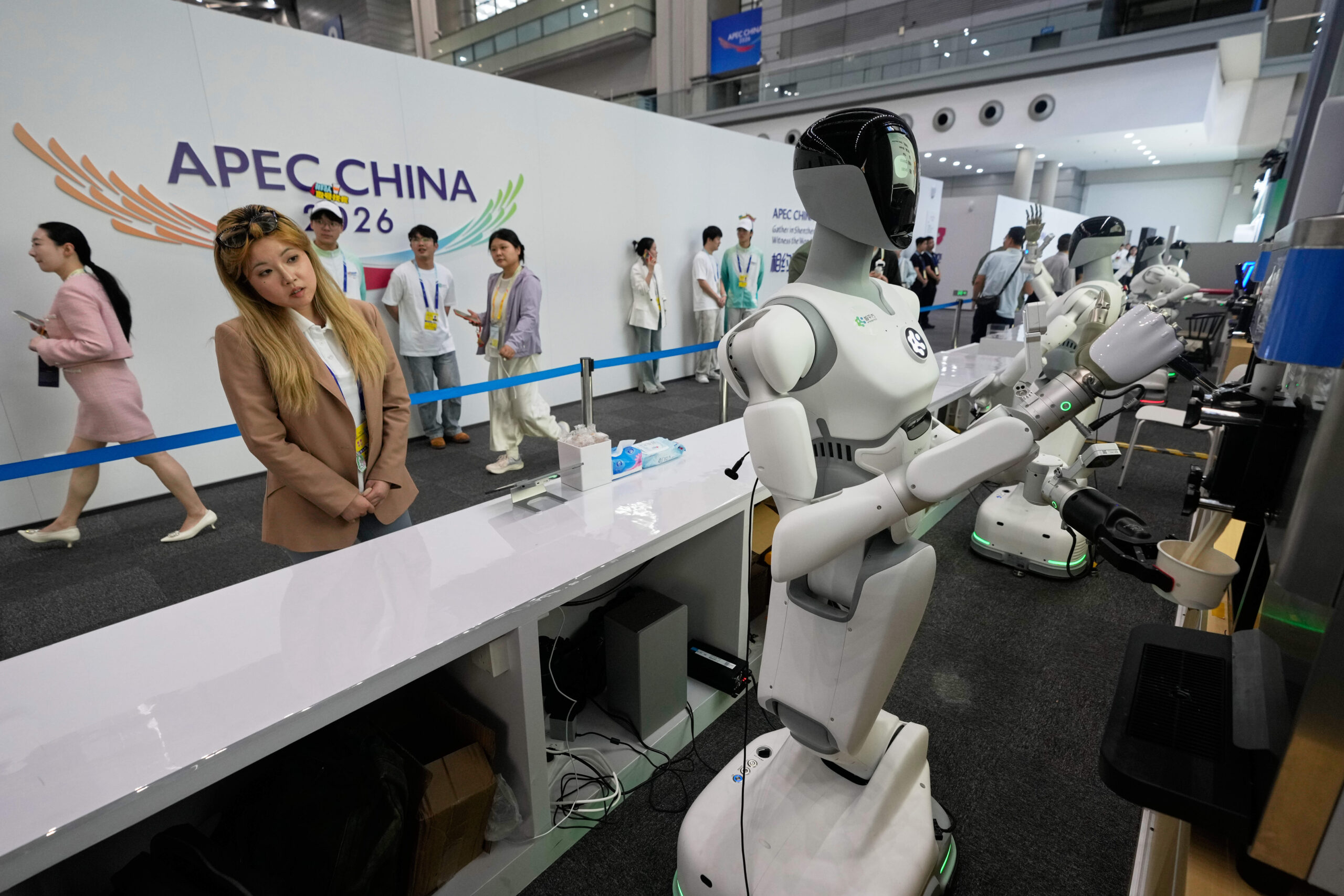
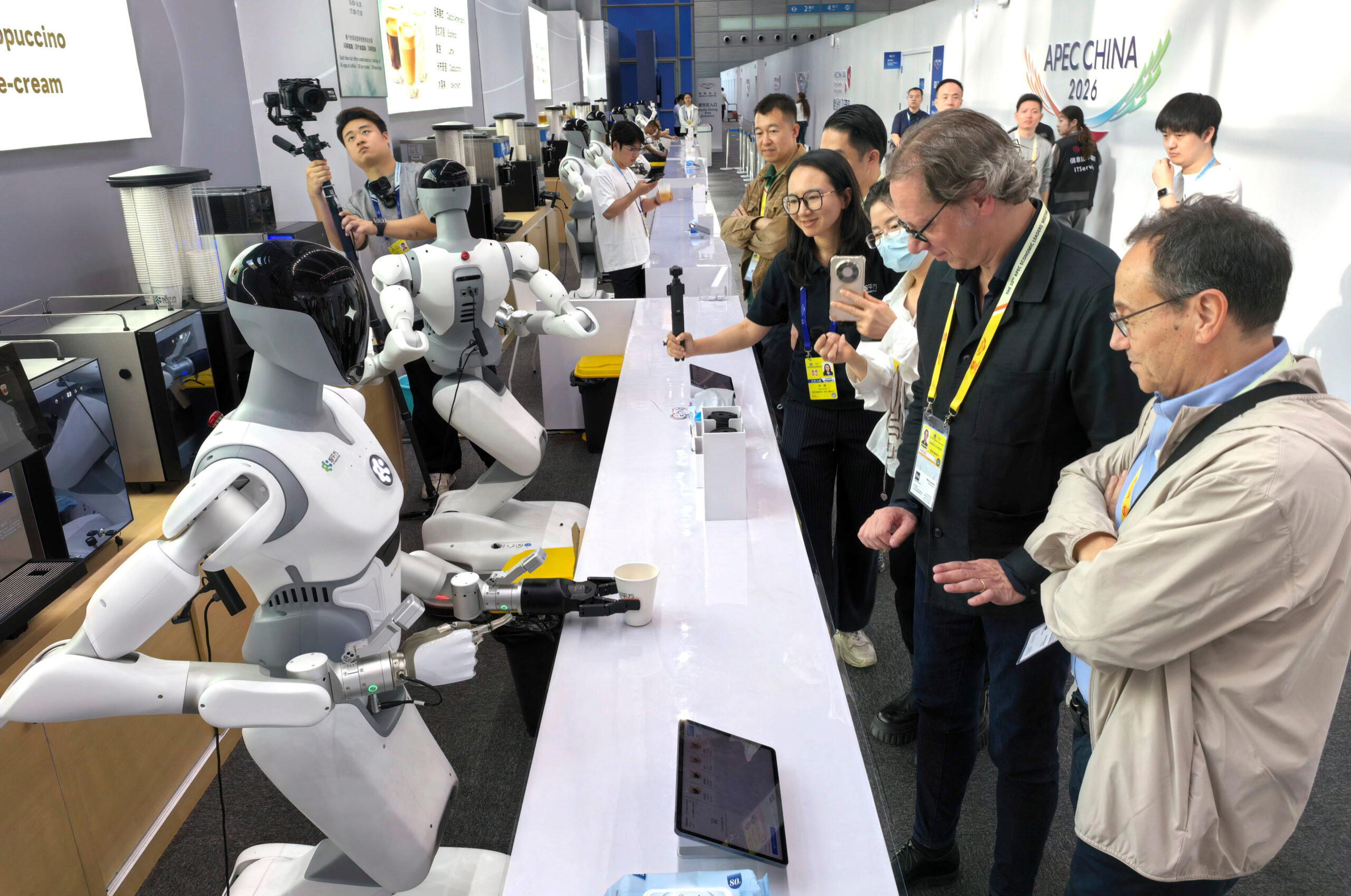
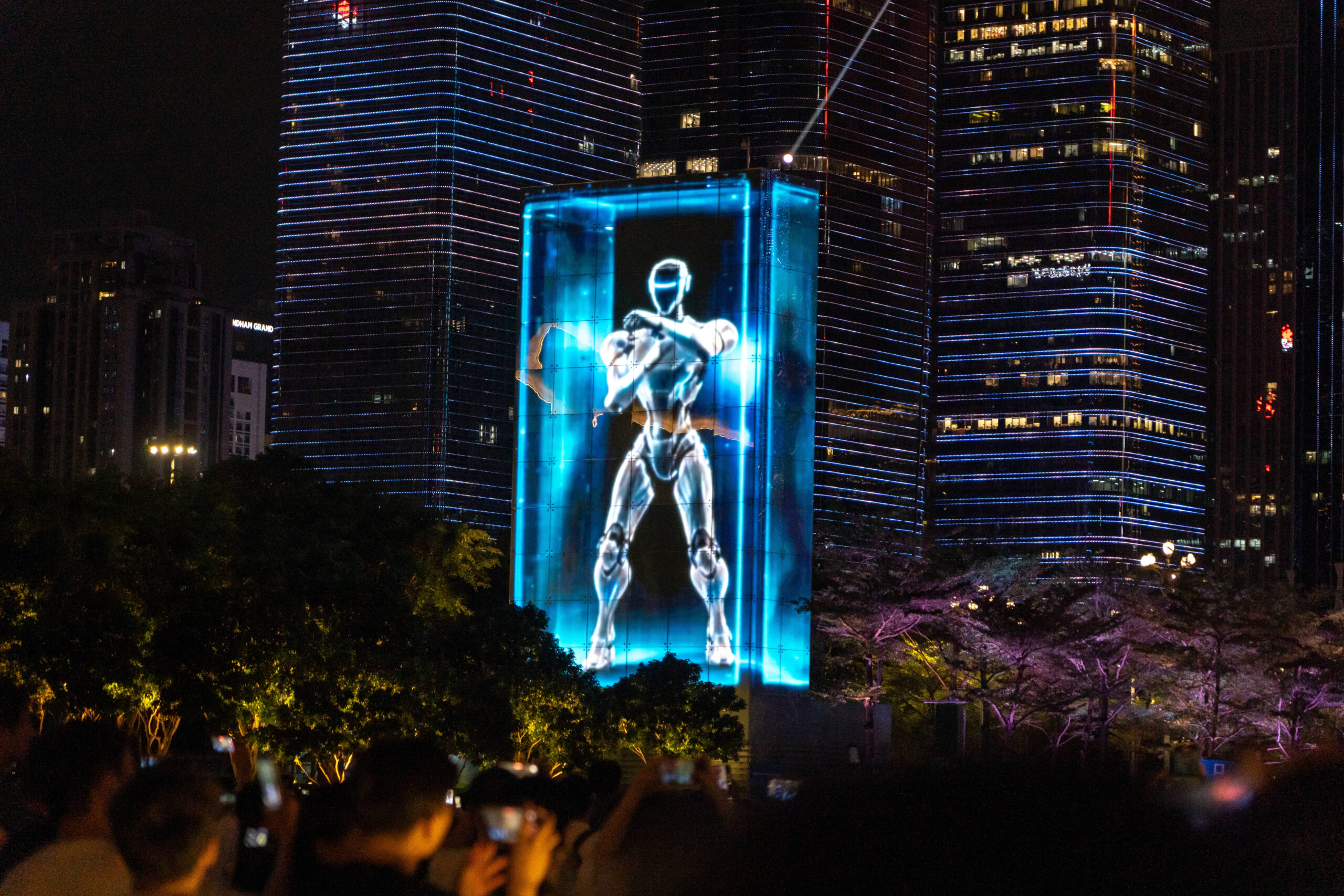
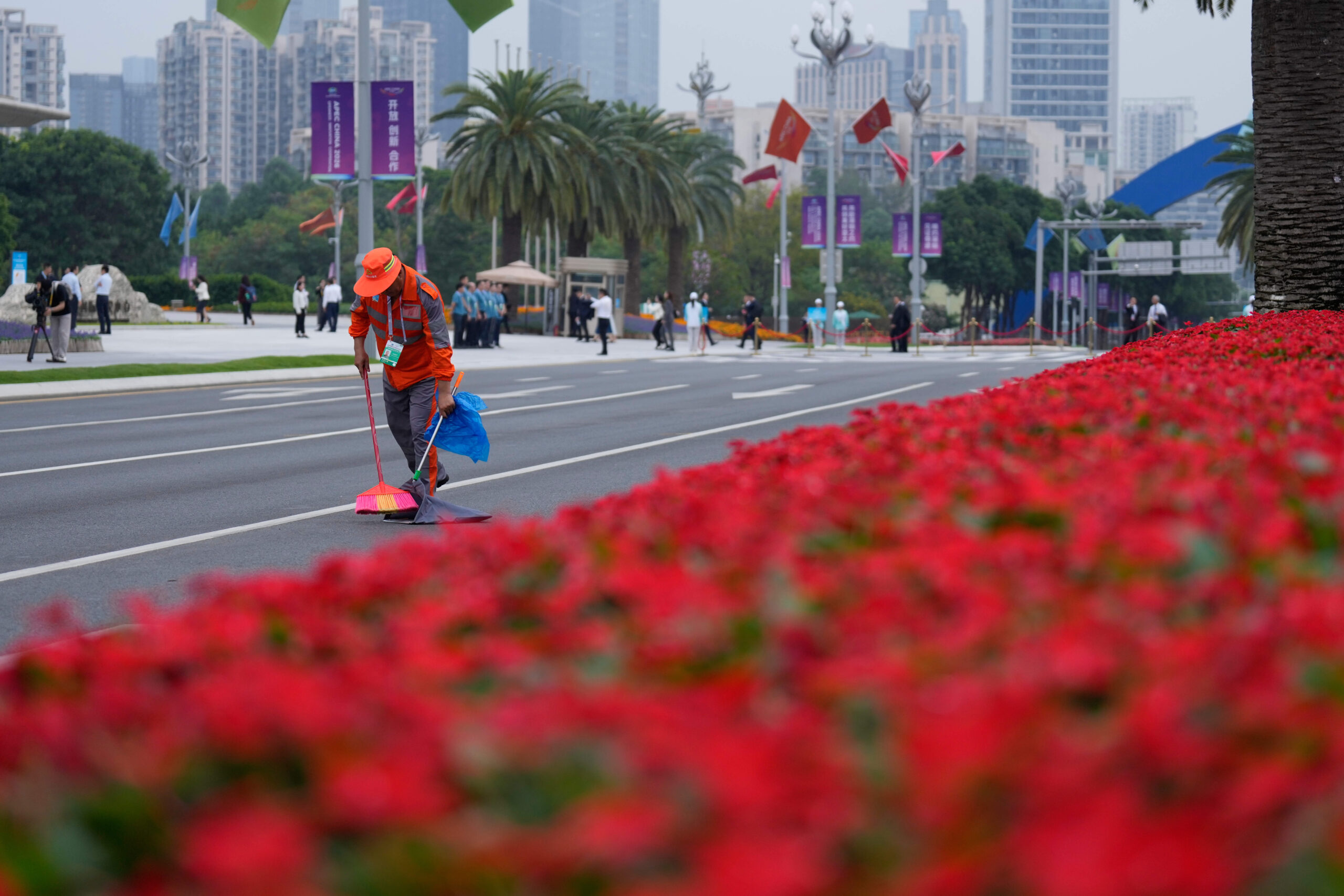
This year, China is hosting the summit of Asia-Pacific Economic Cooperation (APEC) leaders in its tech hub, Shenzhen, which is often presented as the Chinese equivalent of Silicon Valley. The city indeed has more billionaires than any other metropolis in the world except New York, and major companies such as Huawei, drone maker DJI, and automaker BYD have set up headquarters there. Like in Los Angeles or San Francisco, Shenzhen’s streets are now home to robotaxis and drones delivering meals.