
To prepare for the new academic year, try the Grand Continent. The ideas and analyses you won’t find anywhere else. But you’ll see them everywhere soon. In your inbox from 8 euros per month
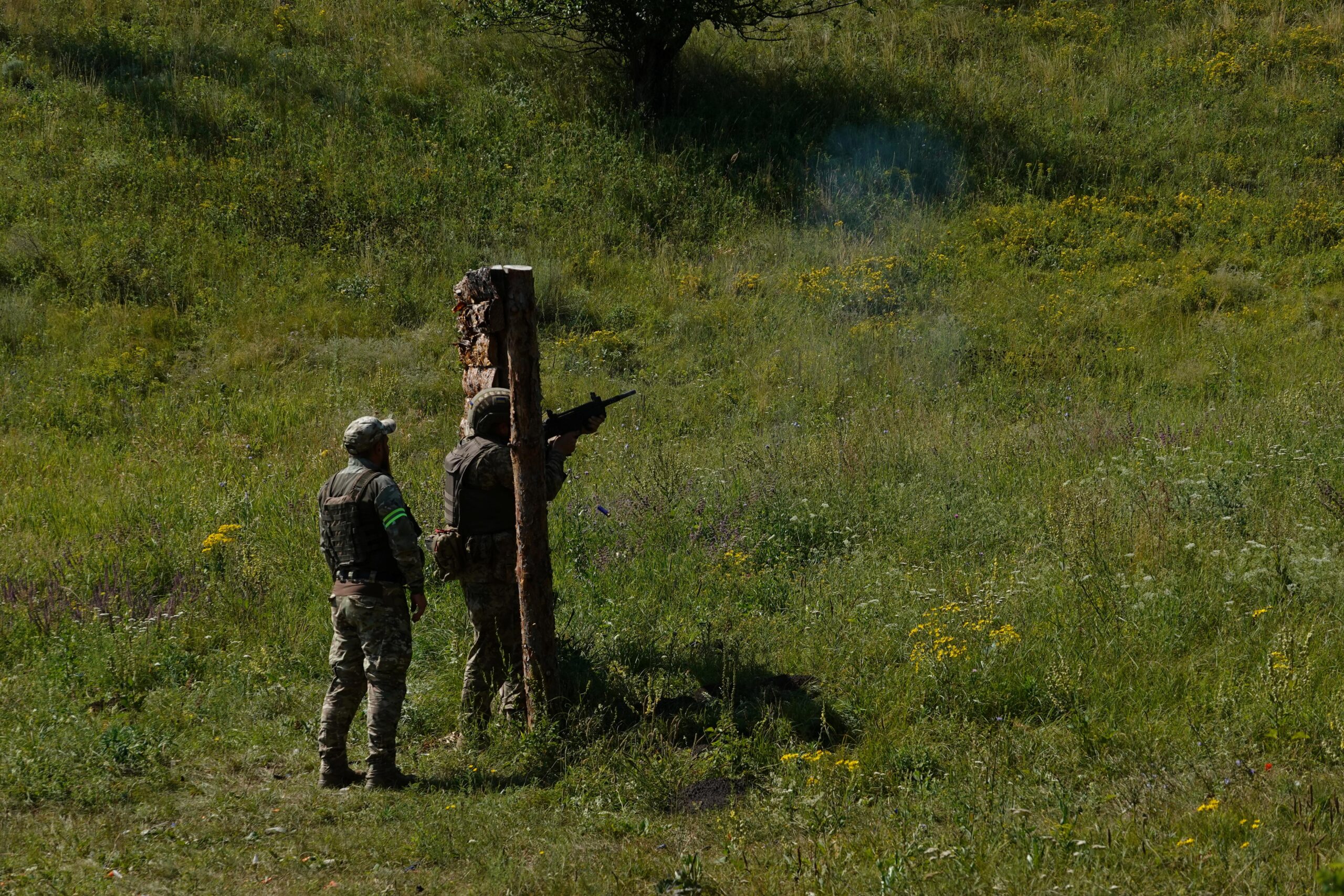
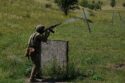
The pump-action shotgun jammed again, and one wonders whether the soldiers waiting their turn at the edge of the woods all ask the same question: what would happen if the target were not a live orange disc hurled into the air at a Kharkiv region training ground, but a real Russian drone packed with explosives? The few seconds that “Rybak” spends frantically cycling the bolt to eject a cartridge suddenly seem to last an eternity. A few weeks earlier, the recruits’ first contact with a drone, then merely a Mavic launched for training, had taken them by surprise: few could have imagined it would be so fast and agile, far from the predictable arc drawn in the air by the clay-patch range.
But the drone dominates the war, everyone searches for countermeasures at all levels, and the shotgun’s pellet cloud is favored by many soldiers on the front. It is therefore fitting to teach these recently mobilized men, soon destined for the front: they have only one day dedicated to anti-drone combat, then a three-day march as the final exam.
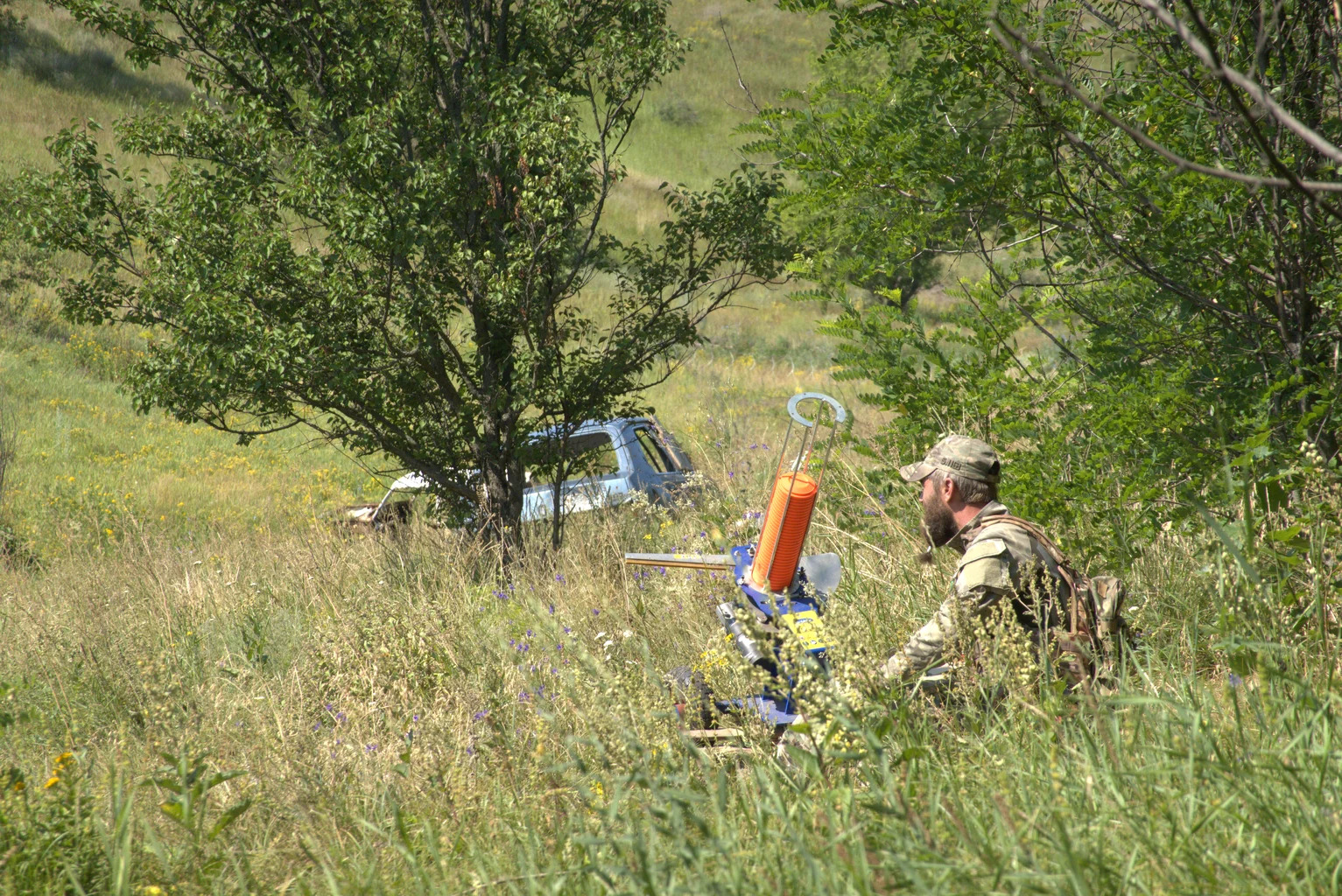
One by one, they proceed in a throat of this rolling training ground and grip for the first time this weapon of Israeli design and Ukrainian manufacture. The cartridges are specifically designed for anti-drone warfare. The boxes that contain them display, with a certain optimism, the image of a long-range Russian drone. The weapon is actually intended to shoot down these small, close-range devices that swarm on the battlefield, rather than the 2.50-meter-wingspan Shahed bombs that regularly fall on towns behind the lines.
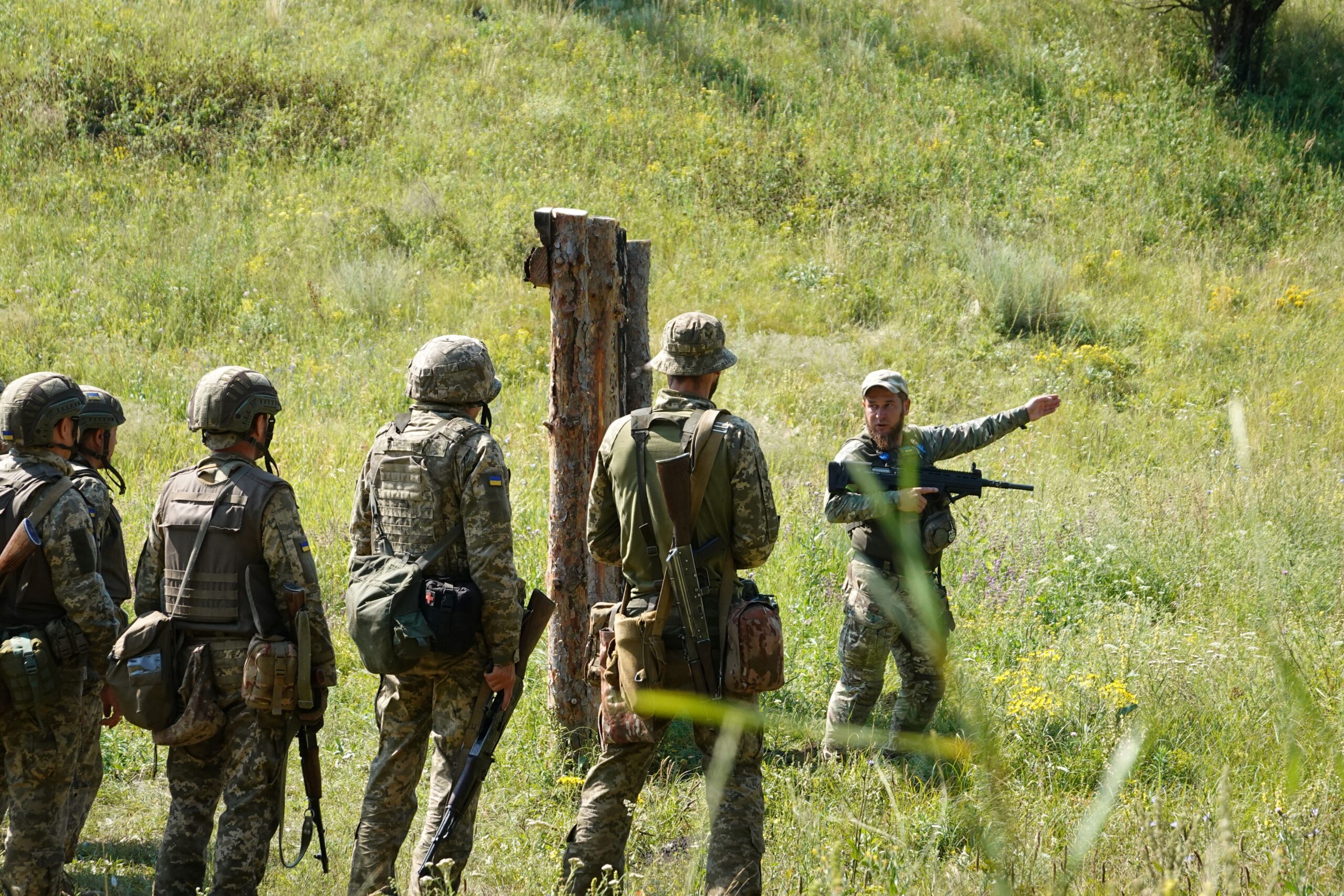
At the trigger behind the ball-trap launcher, “Santa” has explained to the men, with studied calm, how and when to use this weapon. The repeated jamming is, he concedes, a problem. If he himself had to return to the front, the instructor would not hesitate and would keep his Kalashnikov.
Where the nets still hold
With a supplicating slowness, the war has come to the gates of the last two major Donbas cities still under Ukrainian control. Not long ago, men like those of the 28th Brigade still trained in the waterlogged quarries on the outskirts of Kramatorsk. The training is now carried out several dozen kilometers away, far from cities gradually turned into battlegrounds. On August 21, the Donetsk regional administration officially classified the cities of Sloviansk and Kramatorsk as “combat zones.” Several tens of thousands of people still live in Kramatorsk and the neighboring city of Sloviansk. Cafés, restaurants, and hair salons continued to operate that summer, serving a clientele increasingly masculine and military. In this peculiar purgatory, no longer fully rear but not yet fully at the front, the drone threat dominates minds.
Yet it may not, in this summer of 2026, be the most potentially devastating. An FPV drone (First Person View, where a camera mounted on the drone allows the operator to see from the drone’s point of view) is packed with about three kilograms of explosives, and can be destroyed in several ways: a net can entangle it, a jamming system can bring it down, and a Kalashnikov or shotgun round can shoot it out of the air. This threat is very different from a bomb weighing 250 or 500 kilograms, capable of flattening an entire building, for which no defense currently exists. Launched several tens of kilometers from the front by Russian fighters out of range of Ukrainian air defenses, these bombs crash daily into the Donbas, producing a constant rumble and rising columns of smoke on the horizon.
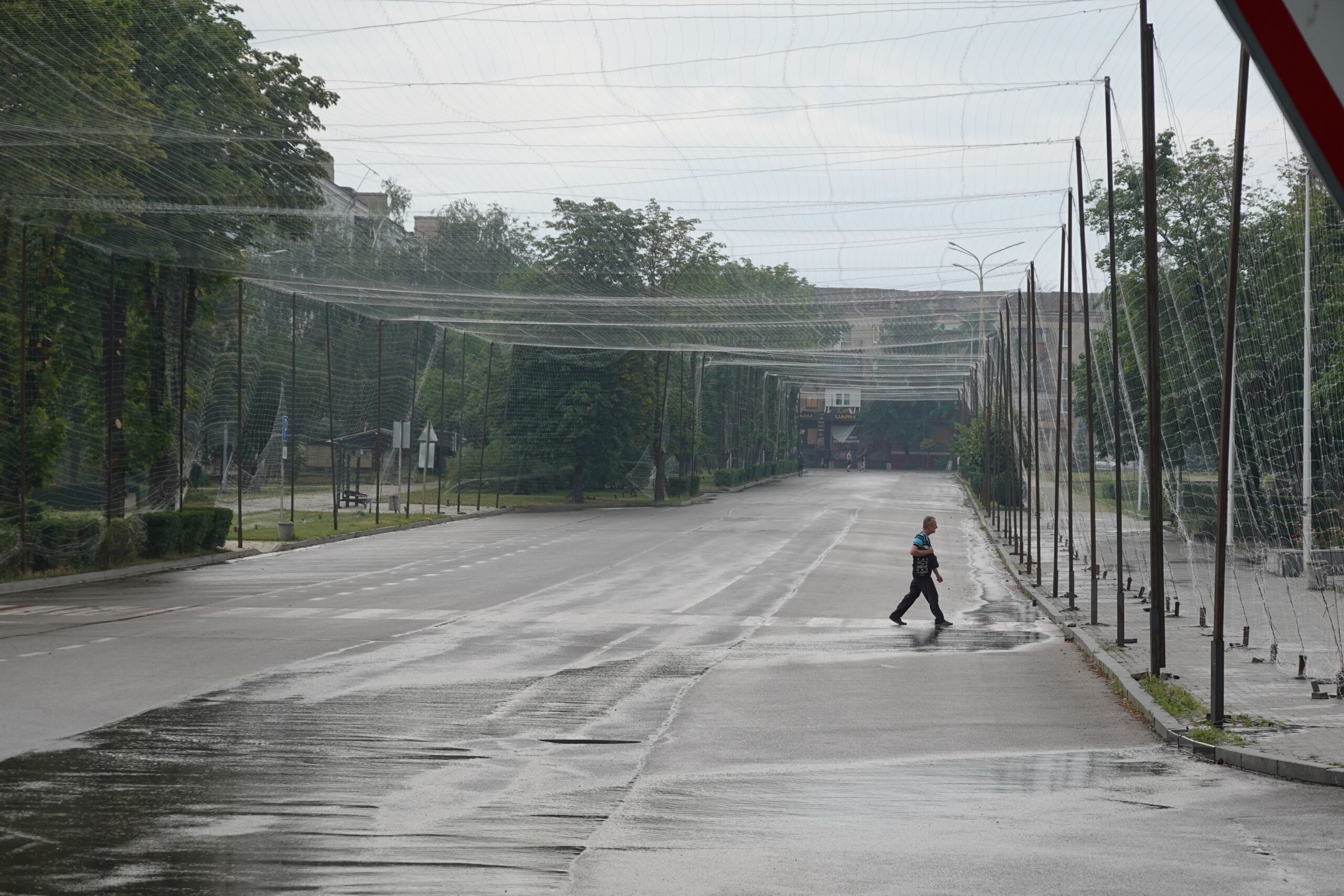
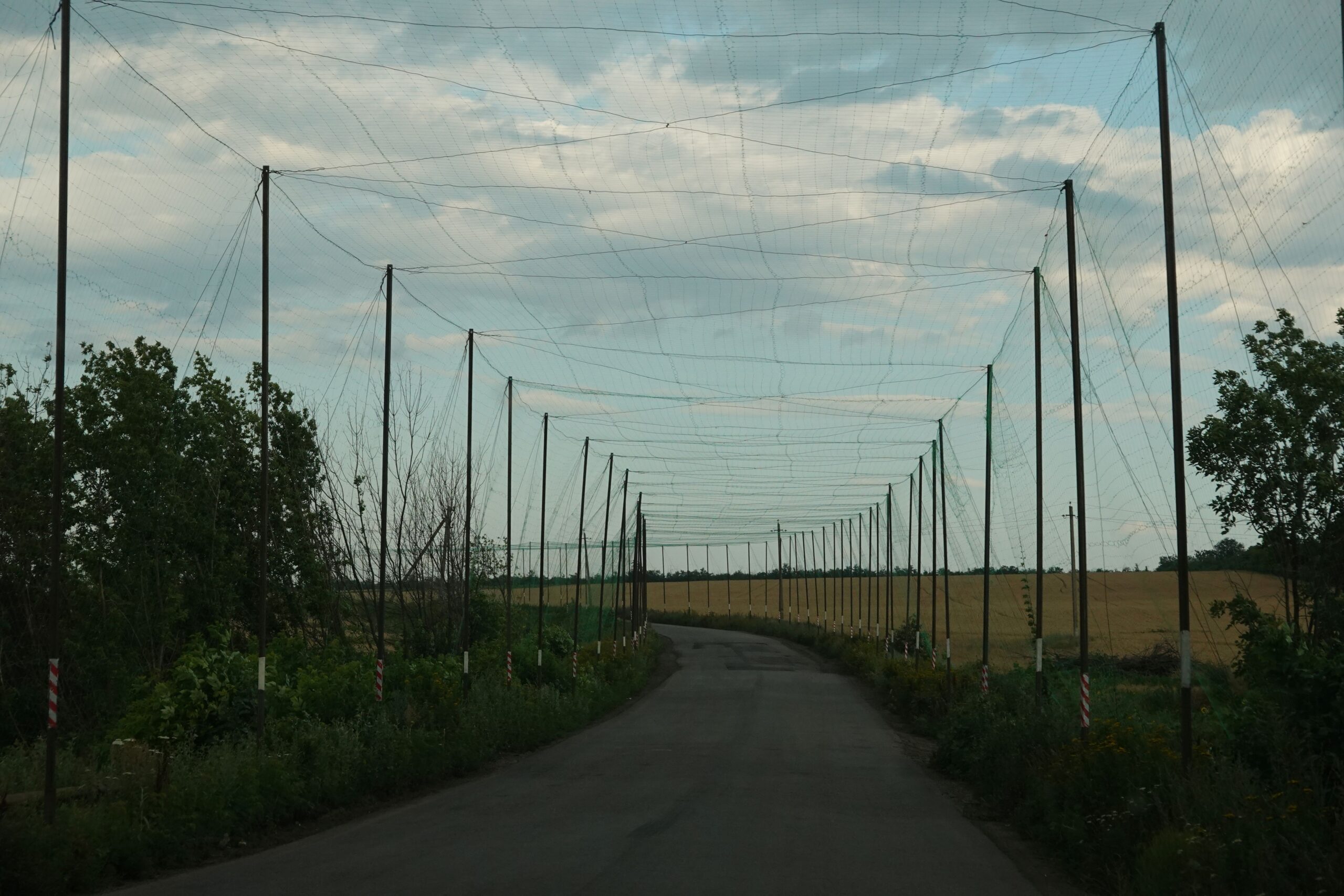
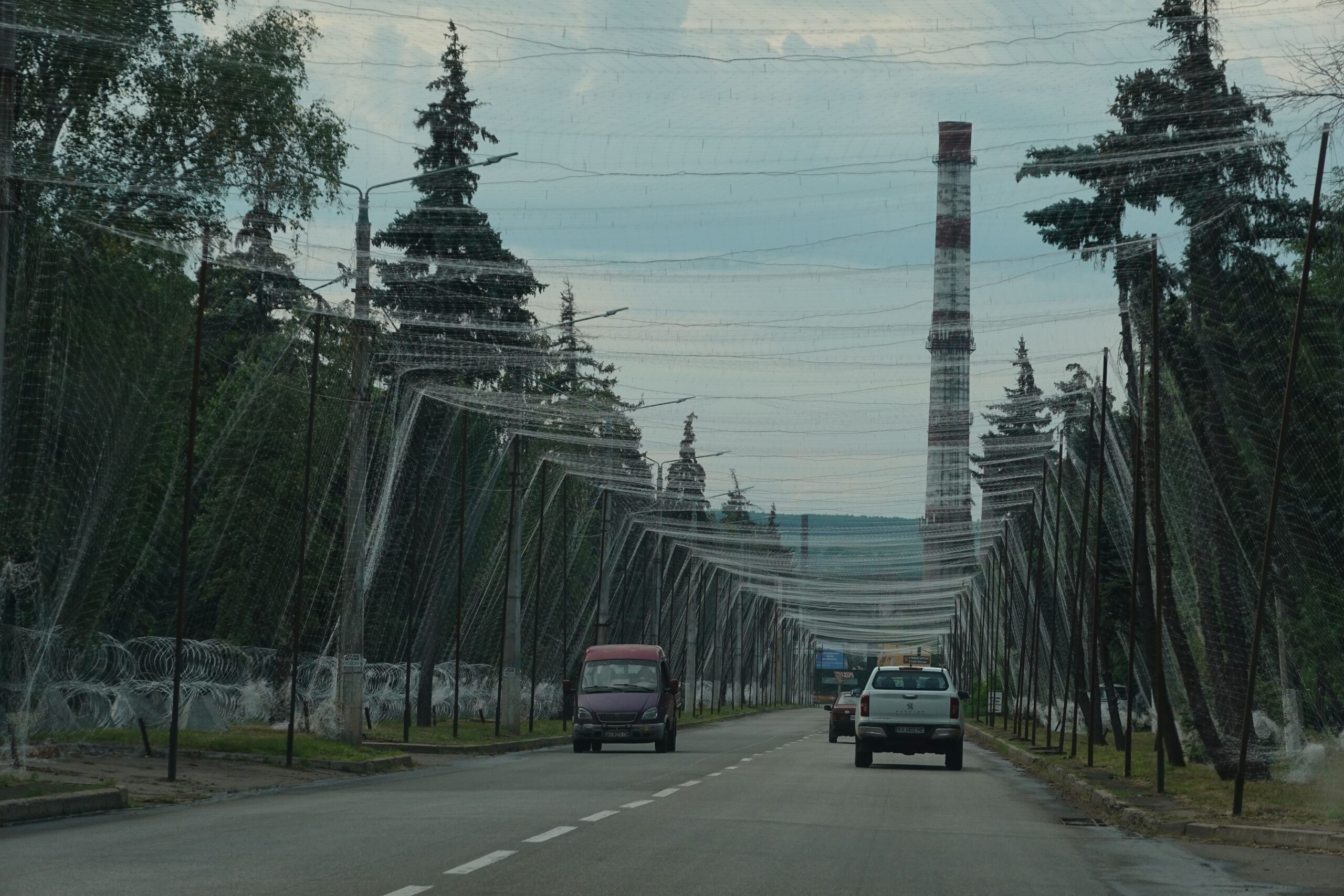
But if the falling bomb is a formidable weapon, the drone is the only constant presence. If the bomb destroys, the FPV drone—and the mere threat of its presence—immediately reshapes the environment. The web of anti-drone nets that spread in the city from spring onward, and extend its meshes along the tens of kilometers of routes into and out of Kramatorsk and Sloviansk, is the most conspicuous visual illustration. You can find a pole every four or five meters, and these nets (often fishing nets from Brittany, Italy, or the Netherlands) are stretched to form tunnels. The constructions are fragile, and the routine of a driver in the region also involves regularly crossing soldiers mounted on scaffolds to do what one of them describes with a smile as “work of a craftsman.” The net keeps deteriorating, but rarely due to enemy action: it’s more the wind, fallen branches collecting in the canopy, or a car perhaps that crashes into one of the pylons. Then someone climbs up and, with duct tape, carefully patches this vast web. At the foot of the scaffolding, a man watches the sky, his Kalashnikov usually leaning against a nearby fence.
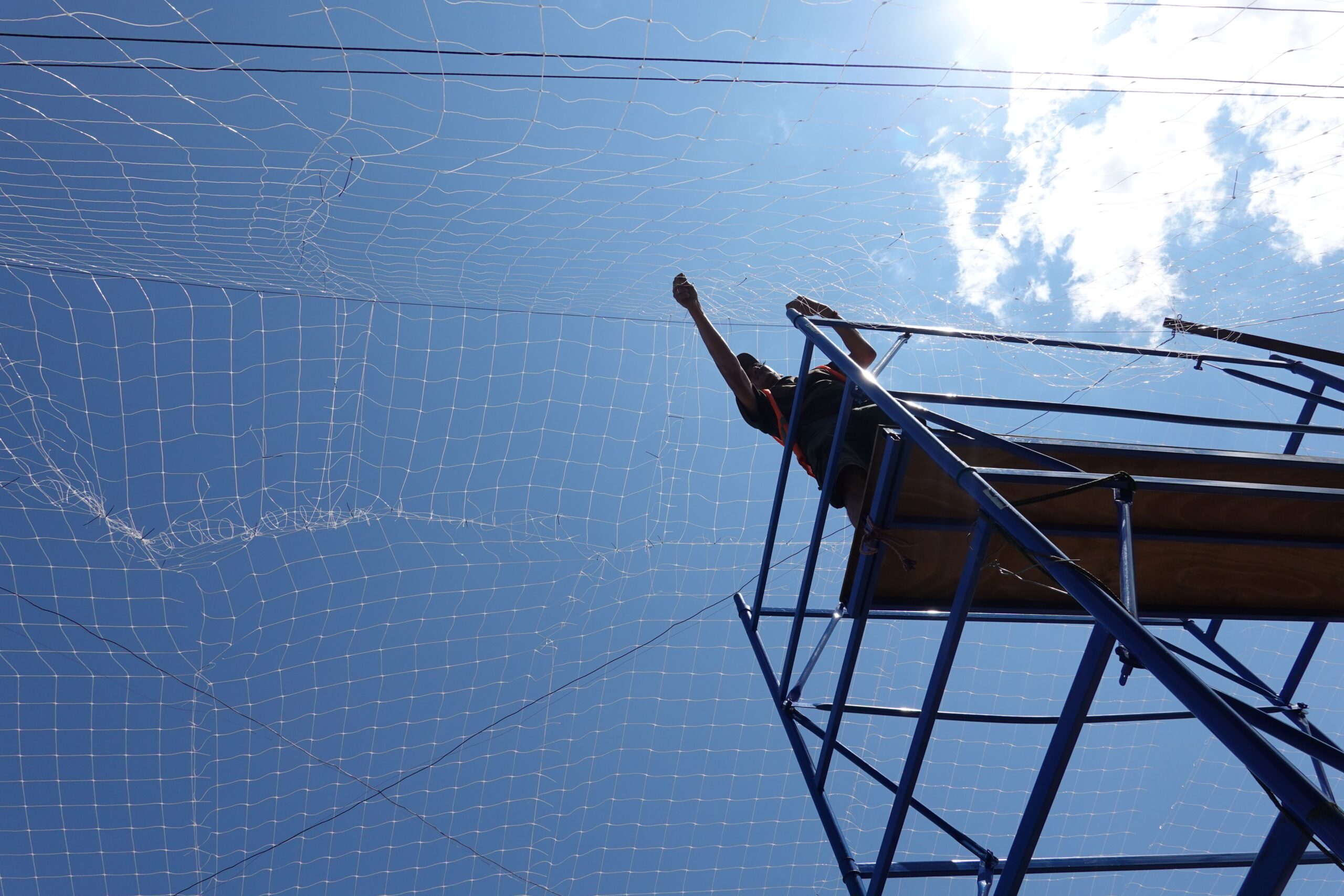
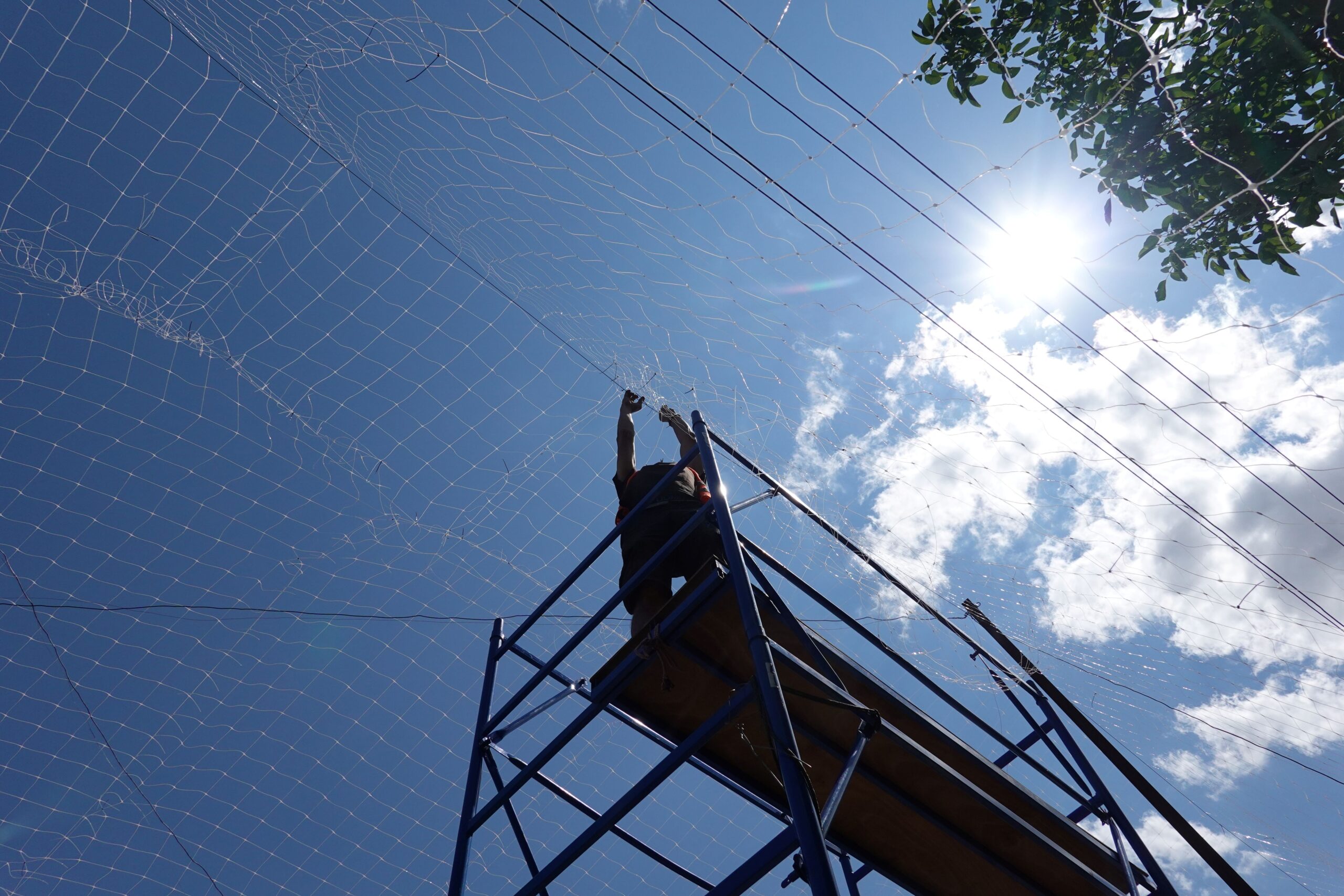
The tunnel of the anti-drone net marks the entry to a space that is not the front line. The drone is still present there, perhaps a little longer, intermittent.
The front is not where the anti-drone nets hold and protect, but where they hang in tatters, having been struck repeatedly in environments too exposed to send soldiers to repair them.
In this intermediate space, where the anti-drone net provides protection against a real but not yet overwhelming threat, the drone’s presence initially hinders and stifles movement. Indeed, it is mainly that of vehicles that the drone pilot aims to control, and thus that is where the risk arises. Moving becomes a source of reflection. Do I really need to take the car today? To travel these few kilometers on the road between Sloviansk and Kramatorsk, which are most often watched by reconnaissance drones from Russia? Evgueni Pavenko, a Protestant pastor from Kramatorsk who has already witnessed a drone strike on a train a few months ago, recounts with a nervous smile how the drone comes to dominate: to cross the charred remains of a car, to hear the buzzing of an FPV drone and to run, run to hide for moments spaced enough to allow a semblance of normal life between two strikes. The threat does not grow uniformly, and the neighborhoods closest to the front are the most exposed. The Kramatorsk administration thus suspended garbage collection in several areas of the south and east of the city during the summer because the risk of drone strikes had become too high.
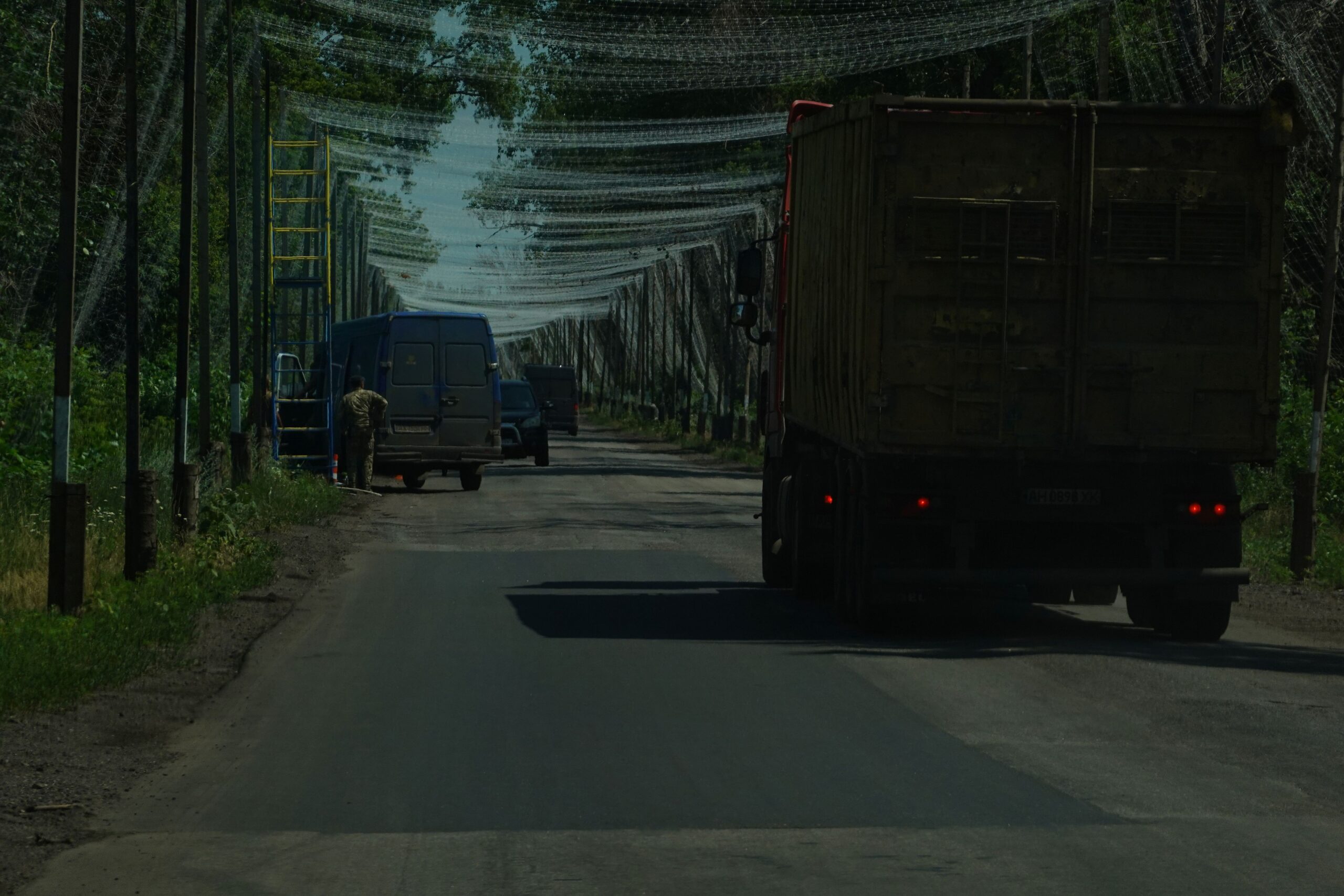
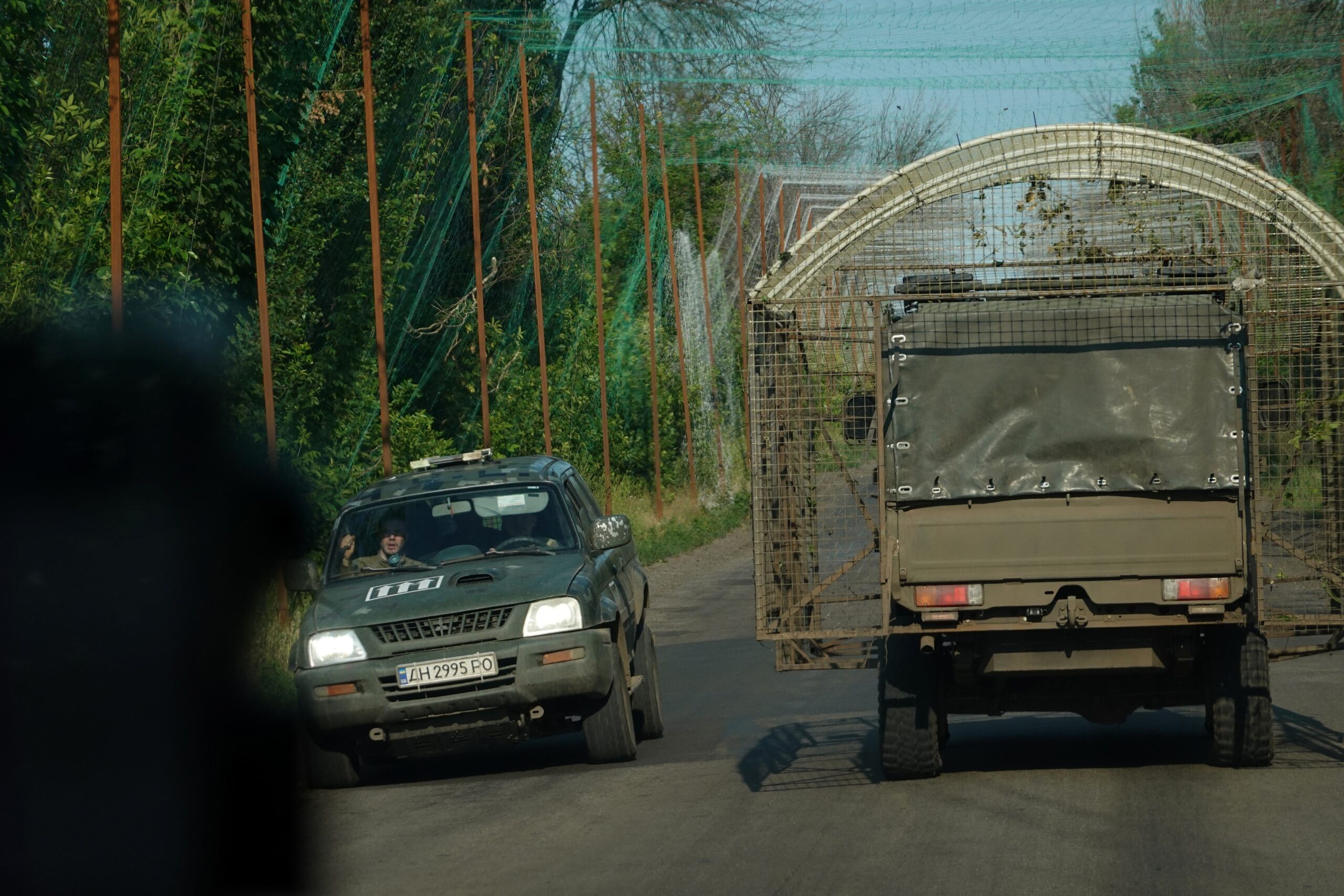
Even the net, the visual symbol of the drone’s grip on space and mind, is no panacea: “That stops only one FPV; a Lancet will calmly pass right through it,” grumbles a soldier on the roadside, busy holding the rickety scaffold on which one of his men repairs a net. In the city, openings must also be left in front of every house, building, or intersection: so many places through which a drone can easily slip in. And a completely hermetic corridor can turn into a deadly trap if a drone somehow makes its way in, blocking any escape for vehicles on the road. “But still, we feel lighter when we come back to a road with these nets,” says one sapper. Next to him, another interrupts: “Well, it depends… Some people look at the net and say, ‘Okay, that means drones fly around here…’.”
The “little gods”
Silence falls suddenly in the dim light of the living room as the conversation is interrupted by the movement on the imposing screen of this battalion command post housed in a nondescript shack in Kramatorsk. A unique video feed has replaced the previous dozen live drone images from the front near Kostyantynivka. Comfortably seated on a sofa, “Kuma,” a 35-year-old navigator, “Balkan,” a 26-year-old pilot, and “Pasitchnik,” a 29-year-old sapper, observe like professionals the maneuver of a colleague, who is probably also somewhere in Kramatorsk.
In the black-and-white image, the drone flies over a deserted road, then slowly descends over a row of trees. One can almost hear the pilot thinking for a moment, his navigator perhaps indicating the mission’s target: a buried Russian position made of sand and logs peeking out from the shrub. The drone lands and calmly settles on one of the logs. A few flames appear before the image cuts out. No one is seen at that Russian position, and “Balkan” does not think the pilots themselves knew whether the position was occupied or not. Either way, a destroyed casemate is one fewer opportunity for Russian assault groups attempting to break through Kostyantynivka, 20 kilometers to the south, to hide and rest.
Kuma, Balkan, and Pasitchnik (whose call sign “beekeeper” refers to his civilian profession) fight where anti-drone nets have, for a long time, lost their usefulness. They live during these rotations with the drone as a constant, nagging presence. Their status as drone crew members makes them primary targets for Russian pilots. To reach their position near Kostyantynivka, like many others, they have abandoned vehicles — even armored ones with metal cages — that pilots prioritize. They descend this road lined with charred vehicle wrecks on electric scooters, still crisscrossed by nets that are torn and useless. They regularly overtake wheel-driven robots loaded with ammunition or rations, which they push aside to avoid a front-line vehicle cascading toward disaster. The scooter provides more stealth than a four-wheeled vehicle, yet is faster and less tiring than walking. The drone has transformed the environment and the movement. It also reshapes the minds of all who live under its watch. Pasitchnik does not hesitate when asked whether he views artillery as more or less stressful than drone strikes: “Much less, of course. A shell is blind; it will usually crash a hundred meters from you, and in any case, it will not chase you.”
Indeed, the drone has industrialized pursuit, a martial activity once reserved for snipers and small commando teams. It is intensely personal, each attack carried out with the awareness that there is behind it a pilot who watches, directs, and adapts. A missile or a shell only targets coordinates, whereas the drone and the man who directs it aim at a person. A pilot who has not found his target can, before running out of battery, fling his drone at the first car that comes along. A drone can slip gently through a building’s window, look left and right, take time to think. “It’s interesting, that moment,” one drone pilot confided to me last year, pausing a video of one of his flights on his phone — a frozen image where two Russian soldiers in a field catch sight of the Ukrainian drone and start running in opposite directions. “At that moment, you decide who lives and who dies,” the man continued, softly. The drone pilot, he said, is a “little god.”

On the front, the permanent drone threat also changes the men. Iuliia Matvieieva, a health professional, regularly conducts training in psychological first aid with Ukrainian army units: “In a typical acute-stress situation, you first have the onset of the stress episode, which then peaks before it ends.” “But with drone attacks, there is never a clearly defined start or end of the episode; it is a prolonged period spent waiting for an attack.” Specialists speak of a mix of hypervigilance and anticipatory anxiety.
On the front, almost everything is first a matter of sound, says Balkan, a formidable figure of a sturdy, bearded fighter. One must listen constantly to be able to react: this is also the advantage of the electric scooters used by the pilots, far quieter than a four-by-four that might mask a drone’s noise. There are drone detectors capable of intercepting the video feed of an enemy drone, but optical-fiber devices are undetectable by this method. The only solution is to detect that characteristic buzz, which can be isolated or become an unbearable honeycomb when dozens of drones operate in the same zone. You must listen to hide, he explains: “Because when you shoot, you risk giving away your position; the flash of a burst is highly visible on a camera.” Better to find a thicket and wait, until the humming subsides or an explosion rings out. And then resume marching.
This constant tension is exhausting, explains Yuliia Matvieieva: “It’s like driving a car with the accelerator floored; if you do it too long, you’ll have an accident or run out of fuel, but you can’t sustain it indefinitely.” How fast? On the front, soldiers lose about half their effectiveness after ten days in their foxholes, estimates Balkan. The drone threat also isolates soldiers from natural light (going outside risks being spotted and hit), not to mention sleep deprivation.
A misnamed disorder
The question of how this constant drone threat and fear transforms people has not yet found an answer. The examples and anecdotes abound in conversations: a friend of this Ukrainian sapper who claims to hear drones even when none are present; another scarred by a thunderclap; a soldier unable to get into a car after being wounded by a drone strike while driving his vehicle. This is a particular form of post-traumatic stress called “dronophobia,” which remains under-studied.
On June 9, an online seminar organized by “Ti Yak?” (“How are you?”), an Ukraine mental-health promotion initiative founded by the first lady, attempted to present a first snapshot of knowledge. Facing an online audience of several hundred health professionals from across Ukraine, psychiatrist Serhii Andriichenko offered an overview of what he also calls a “complex and still poorly studied” phenomenon. He uses the term “dronophobia,” though he regards it as imperfect: “It would be more accurate, at this moment, to label dronophobia as ‘drone-related anxiety.’” Why? Because the most important aspect is not merely fear but “a pathological psychological reaction to a specific stimulus.”
If the reaction to a drone attack differs from that of an artillery strike, it is primarily because of the “visualization” of the threat: the soldier or resident of Kramatorsk can see the drone arrive, whereas the shell is invisible. The two weapons also differ in sound: the whistle of a shell is audible only at the last second, too late to react, whereas the drone’s buzz on the battlefield imposes “a constant acoustic pressure.”
“In other words, this presence is felt constantly, especially by soldiers on the battlefield. They keep asking themselves whether the sky is being filled with a multitude of drones, without ever really understanding to whom they belong. Are they ours or those of the enemy? What is happening?” All this leads to a feeling of being perpetually targeted, which, according to the psychiatrist, is amplified by watching videos showing drone strikes, and can give the subconscious impression of the drone’s omnipotence, which will always hit its target. Yet most FPV drones fail to hit their target.
He does not hesitate to call for the censorship of Telegram channels that broadcast these videos and also worries about the psychological impact of drones on pilots themselves. Distance, he explains, can yield a sense of “impunity” in the pilot, which can lead to a “desire to inflict pain and injuries.” A temptation hard to ignore in the “human safari” perpetrated by Russian forces in Kherson: a drone-strikes campaign against the city’s civilian population, which the UN condemned last year as a “crime against humanity.”
![« La rage c'est… de larguer ensemble une [mine anti-tank] TM-62 depuis un [drone] Vampire », affiche de recrutement pour une brigade d'assaut de la police nationale ukrainienne dans la région de Kharkiv, le 6 juillet 2026.](https://www.thefec.org/news/wp-content/uploads/2026/08/1787809753_244_Dronophobia-Investigating-the-21st-Century-Malady.jpg)
The drone threat is personalized, sharpened by the awareness that a man is both the actor and the witness of this violence. Even prevention cannot be done without feeding this constant anxiety: the drone detector capable of intercepting video streams from devices thus enforces constant surveillance, a terrible and perhaps unique case in human history of a tool that also allows the prey to see the hunter’s point of view as the drone strikes.
The psychiatrist focuses particularly on neurological effects: “We observe amygdala hyperactivity. The brain is constantly in a state of alert, which leads to a kind of impulsive reaction: hypervigilance, irritability, etc. The sensory overload and the constant need to stare and listen exhaust the brain’s control centers. This results in cognitive distress.” The brain’s inability to enjoy a moment of calm to absorb information and place it back into context leads to exhaustion and can result in what the psychiatrist calls “counter-intuitive” behaviors, such as exposing oneself to danger rather than protecting oneself.
The elastic that won’t spring back
Tiring and untenable in the long run, the hypervigilance to which soldiers are subjected on the front is nonetheless perfectly rational. “It’s important to stress this,” insists Yuliia Matvieieva. “When faced with a mortal threat, it is normal to be hypervigilant and to constantly scan the surroundings.” The fear of the drone is not, at this stage, “post-traumatic”; the trauma is ongoing. When it lasts for weeks or months, exhaustion blends with habituation.
Yet there comes a moment when the soldier leaves his position — on foot, by scooter, or perhaps in a armored vehicle — gets into a car, and drives backward, first under intact anti-drone nets, then on a road without protection, because protection is no longer necessary. Silence descends, but the hypervigilance remains. “Many soldiers tell me that the farther they get from the front, the more anxious they feel,” says Yuliia Matvieieva. She evokes the image of a stretched elastic that has been pulled for too long and cannot regain its original shape. It is only then that anxiety becomes pathological. Serhii Andriichenko warned in his seminar that “dronophobia” is not pure and mixes with more classical forms of post-traumatic stress. Hypervigilance persists and transforms into an attempt to maintain control beyond the rational: a man might, during a Shahed drone attack, move closer to windows to catch a glimpse of the drone, even though he has no means to stop it, or avoid passing through a park too exposed to a possible drone strike (even if the city is entirely out of reach of any FPV drone). Like in more classical forms of PTSD, sound is a trigger for trauma. There are so many sounds that can recall the buzz of the FPV drone: a lawnmower in the courtyard of a military hospital, the acceleration of an electric car, a simple video on a phone.
The problem will not disappear, and Ukraine already faces the prospect of a nation traumatized by drones.
Not far from Kramatorsk, a military psychologist on leave in a countryside dacha sighs: “Everyone will suffer from PTSD; it will just be a matter of degree.”
Already, a handful of incidents give a glimpse of the moment’s trauma and potential future problems. Thus, the Kiev court’s ruling, published last summer for events that occurred in April 2025, relates one incident among many: “Questioned at the hearing, the accused fully admitted guilt, sincerely repented, and told the court that he had undergone theMilitary Medical Commission (VLK) on April 5 of this year, and that he had reported to his military unit driving his own vehicle on the morning of the 6th. Near the town of Ouman, he stopped to rest and his car was hit by another vehicle. Following this incident, a patrol was called to the scene and the car was towed away. He then went to Kiev and stayed with acquaintances. That day, he lodged in the apartment of these acquaintances. In the morning, he woke up and began to drink — a bottle of whisky he had received as a gift. He decided to clean his weapon, then he thought he heard the sound of a drone. He went out on the balcony and started shooting. He then realized that it was daytime and that there was no drone. He stated that he had served in the war as a volunteer and suffered from a fear of drones. He held a valid license for the weapon with which he shot.”