
Testez le Grand Continent. Les idées et les analyses qu’on ne trouve nulle part. Mais que vous verrez bientôt partout. Dans votre boîte mail à partir de 8 euros par mois
Europeans seem to be re-discovering the possibility of war. Are we emerging from a form of denial, or is this a sign that the threat has changed in nature?
The appetite for defense topics has steadily grown in recent years, in step with the perceived threat among our fellow citizens. An armed, physical, brutal threat that they see daily in the media, from Russia’s invasion of Ukraine to the conflicts in the Near and Middle East. But there is also a more diffuse threat, aimed more at the societal model that France and Europe embody, and that no longer emanates solely from our historical competitors. In this troubled period, we must precisely grasp the nature of the threat we face.
Armies are often accused of preparing for the previous war. Can we still anticipate the evolution of warfare, or must we simply adapt faster than the adversary?
It is obvious: in a decade, the character of war has profoundly changed. But this evolution is in the very nature of war, as Clausewitz reminds us with his chameleon metaphor. We must therefore try to anticipate it through foresight and innovation. Giulio Douhet, the great theorist of air power of the last century, said: “Victory smiles on those who anticipate the evolution of the character of war, not those who adapt once the change has occurred.” As early as 1921, drawing on the first lessons of military aviation, he theorized the advent of strategic bombing campaigns at the heart of the enemy’s territory, as we would know them in World War II. His ideas sparked controversy at the time. But history shows that strategic evolutions do not always come from such anticipation: they sometimes impose themselves on everyone, as a result of the conjunction of technological innovations and the realities of conflict. The speed of adaptation then becomes the decisive criterion.
Anticipating the evolution of conflicts is all the more necessary as history itself accelerates around us. We are witnessing a conflict landscape that now escapes international law – a law that more and more powers ignore – which constitutes a brutal strategic wake‑up call for Europeans. We must now give force to the law in a world where conflict escalates below the nuclear threshold and extends far beyond traditional milieus, toward cyber, space, or the information domain. The economic weapon has replaced international law as the language of power. It is a domain in its own right for operations, regardless of the milieu (land, air, sea) or field (cyber, space), what we call in our military jargon “multimodal multi-domain.” Hence, the keys to reading a conflict are now to be found more in supply-chain diagrams, in the curves of energy prices, fertilizer or staple goods, than on staff-state maps. Re-listen to the Canadian prime minister Mark Carney’s discourse: it is the death certificate of commercial globalization as a factor of international stability.
Finally, the environmental crises linked to climate change are multiplying, driving humanitarian emergencies and large-scale population displacements. We have all witnessed heat waves and fires this summer; some have felt them in their own flesh. We must learn to live—and therefore to fight—in a world at +1, +2 or +3 degrees.
From Nagorno-Karabakh to Ukraine, cheap drones have upended the battlefields. What is the process of adaptation?
We are in permanent adaptation, with an initial lag that we must now catch up on. Our past hesitations, notably regarding arming our Reaper drones – medium-altitude, long-endurance unmanned systems, remotely piloted by a crew of four aviators – led us to underestimate the scale of this revolution. The Nagorno-Karabakh conflict between Azerbaijan and Armenia, as early as 2020, already provided a strong early warning: it exposed the vulnerability of a conventional army, even one meeting Russian standards, literally swept away by Turkish Bayraktar drones, cheaper than Western drones.
Then the era of low-cost drones emerged in the Ukrainian war. By the end of this summer, the Russians had fired 50,000 strike drones, as many as in all of 2025, with targets now including the Ukrainian population, critical infrastructures, or energy sites, in a methodical and systemic targeting campaign. Tactically, Russia in 2026 is no longer the Russia of 2022: it has gained substantial combat experience, notably in the third dimension, and a certain familiarity with Western systems. In this theatre, we observe an upgrade in drones, from the licensed Iranian Shahed drones built in 2023 to Geran 5 drones, harder to intercept, whose speed and range approach that of cruise missiles, at a fraction of the cost. The Ukrainians are not left behind and display great ingenuity in deep strikes into enemy territory. The cycle of evolution and adaptation has accelerated, and the morphology of weapon systems changes from week to week. There is now a continuum in the weaponry repertoire, from quadcopter drones to trench warfare to high-value-target ballistic missiles.
How to close this gap, without relying on foreign technologies?
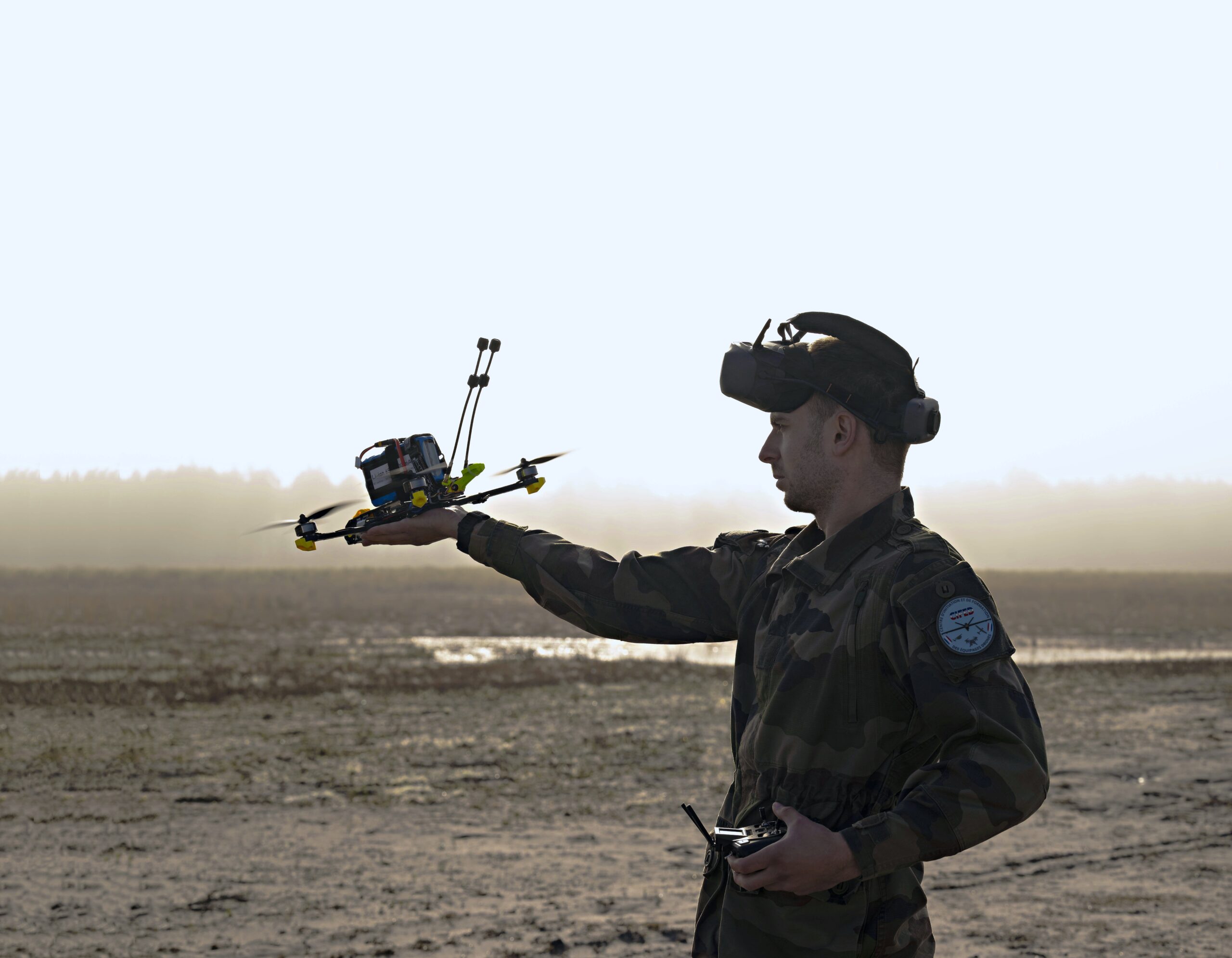
Over the coming months, at the Cazaux air base, we will establish a bomber and reconnaissance drone squadron. It will be equipped with what we properly call One-Way Effectors – MBDA’s Deluge – which will pave the way for new, far more saturating modes of action.
Désormais, les clefs de lecture d’un conflit sont à chercher davantage dans les diagrammes des chaînes d’approvisionnement, dans les courbes du prix de l’énergie, de l’engrais ou des denrées, davantage que sur les cartes d’état-major.
Jérôme Bellanger
Next will come drone interceptors within the broader anti-drone effort, with a dedicated squadron to be established before the summer of 2027. Finally, we must develop another category of drones: those that will accompany our piloted fighter aircraft. These are larger combat drones, endowed with a degree of stealth, which should ideally return to base at the end of a mission. For now, the technological solutions are American, at best Europeanized by industries such as Airbus, Helsing or Rheinmetall, which raises sovereignty concerns. Dassault Aviation is working with the Emirati company EDGE. But we cannot accept being outclassed: tomorrow, to achieve air superiority above the enemy, in a given zone and for a given duration, and thus guarantee freedom of action for the other two armed forces, we will need the full range of these drones.
The first drone squadrons are set to appear by the summer of 2027. Is this a rupture in the organization of the Air and Space Force, or an adaptation of its traditional missions?
We are not inventing anything: we are reinventing what fighter aviation knew in the 1960s, with fighter squadrons focused on aerial combat and air defense, bomber squadrons, and reconnaissance squadrons. These are the three major missions of the Air and Space Force’s fighter branch. Why drone squadrons for bombing and reconnaissance? Because these drones can strike deeply, as the Iranian Shaheds or the Russian Geran 4 and 5 do, and also serve as sensors. We have grouped bombing and reconnaissance because these missions can be, at this stage, very close, particularly in the trajectory profiles. At the same time, we will create drone fighter squadrons, tasked with protecting a space – a military site, a projected air base, etc. – with Blaze-type drones, i.e., drone-killers that intercept or capture the opposing drone.
You also speak of collaborative combat drones. The Rafale F5 is expected around 2033–2035. The HypAIRion project notably envisions such a drone for 2028, but these are only experiments. The Chief of the Armed Forces has said we should expect a jolt in 2030. Is the timeline realistic, or will we have to buy from abroad in the meantime?
We need to test these collaborative combat drones. We are behind: a country like Australia has already conducted tests, the British have joined in, not to mention the Chinese and the Americans. We could therefore consider buying off-the-shelf drones for this purpose. A request has been sent to several companies, and some, of diverse nationalities, have responded. But it will be solely for experimentation and to begin training a core in collaborative combat. Then, when we move to serial procurement, questions of sovereignty, supply, etc. will arise. It will be a different dynamic.
With the multiplication of drones, does the piloted fighter aircraft still have a future?
The future air combat will revolve around devices of varying sizes, composed of manned and unmanned platforms, connected to one another, notably through satellite constellations. They will allow us to strike deep into enemy territory, which requires mastery of the intelligence and targeting cycle – i.e., the ability to identify the right targets to achieve strategic objectives – but also the ability to deploy and disperse our forces before re-concentrating them to saturate and pierce the enemy’s system. In all these areas – intelligence, targeting, deep strikes – the Air and Space Force has built up expertise through past engagements, such as the Hamilton operation in Syria in 2018: recall that air raid to neutralize chemical weapons research and storage sites of Bashar al‑Assad.
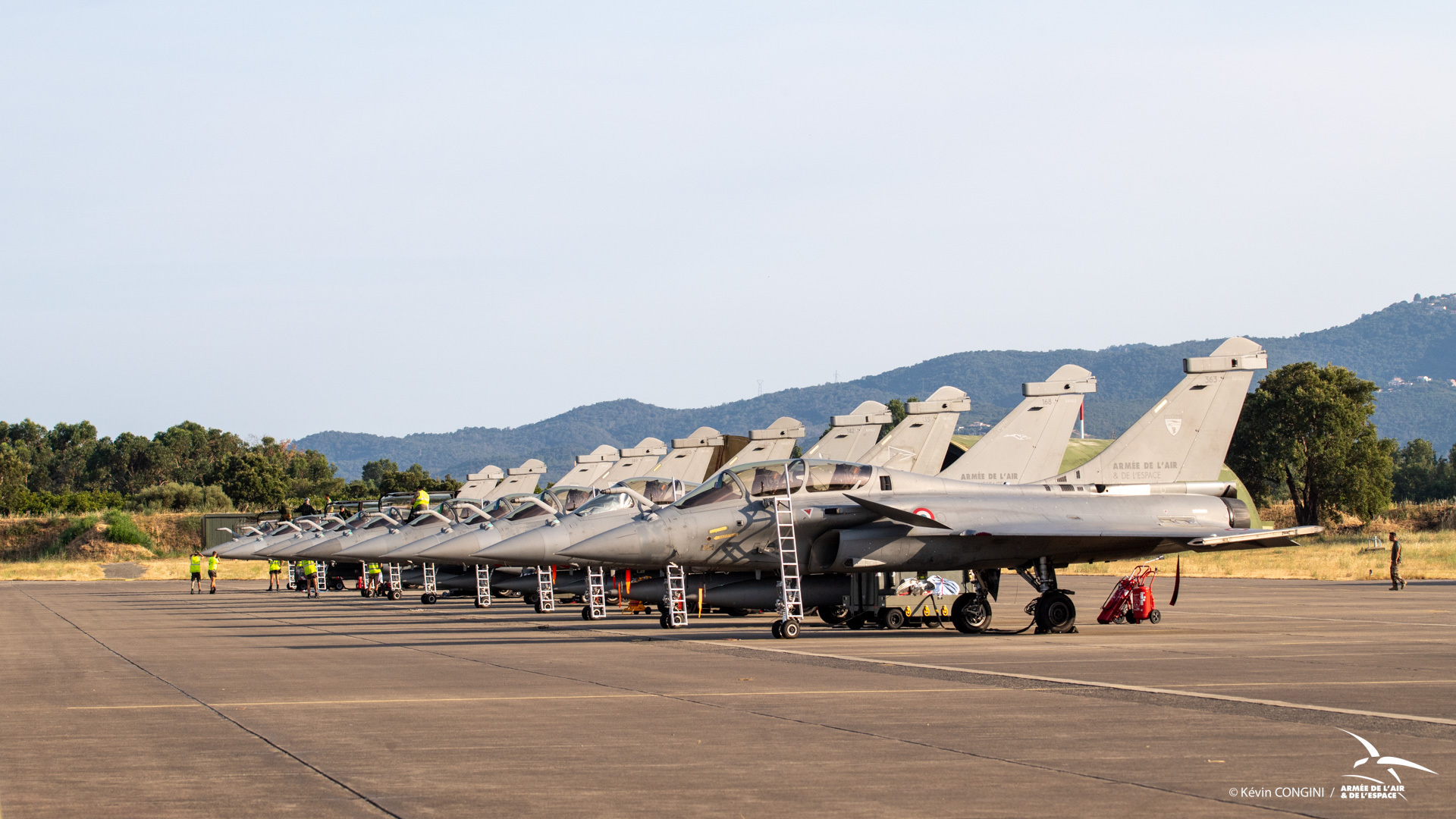
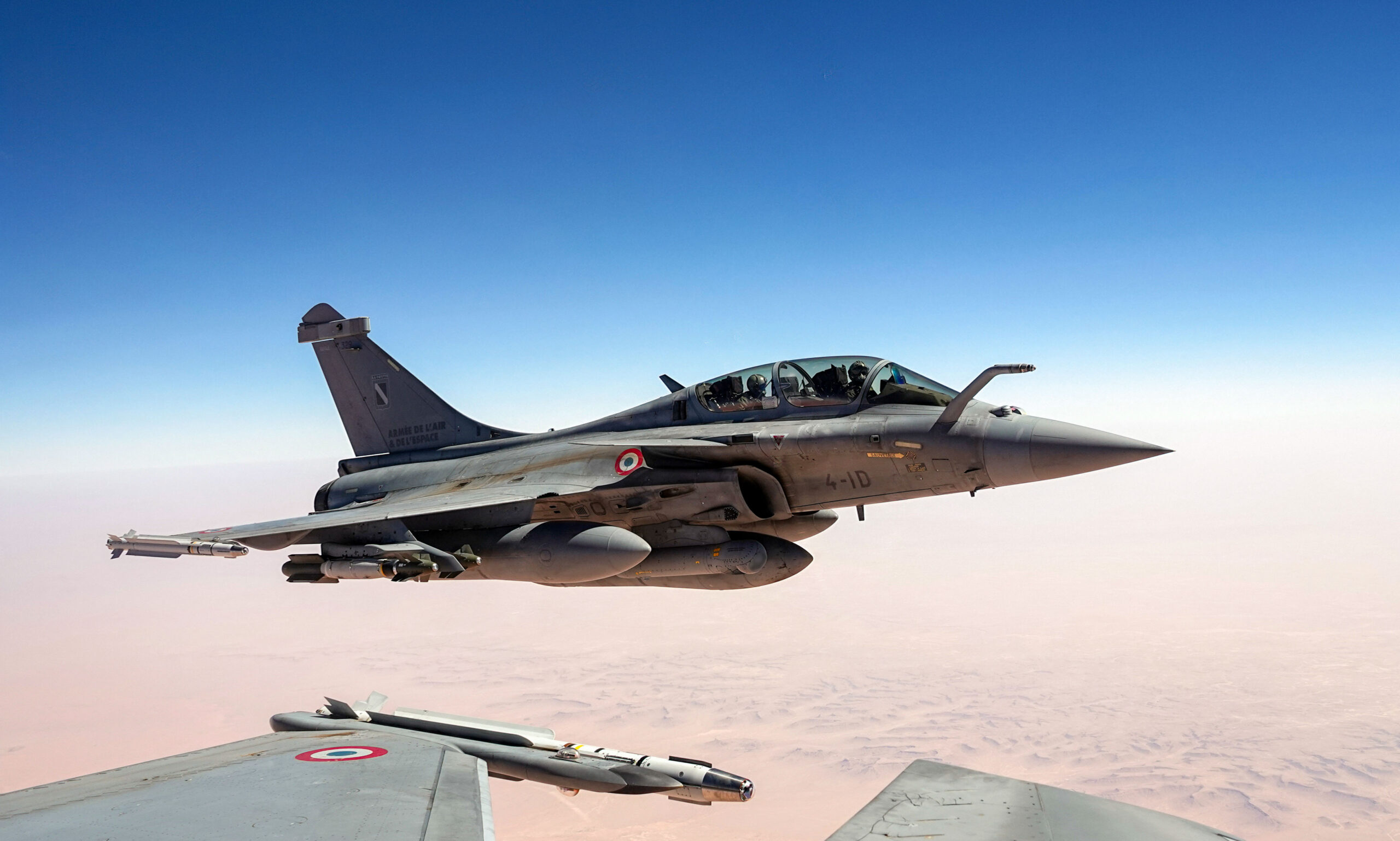
These devices remain the most reactive solution: I can carry out the mission a few hours after a political decision. The added advantage of flexibility: I act where the enemy system is most vulnerable. The greatest power: with a payload ranging from 100 kg to several tons for a full system. The greatest reversibility: I can re-articulate my system up to the D‑day, even during a mission. Finally, the ability to act anywhere on the globe, as demonstrated again with the Pegasus mission, carried out in September and October of last year: four Rafales circumnavigated the globe in nine legs. A true show of force, which strengthened our cooperation with certain countries and asserted sovereignty in our overseas territories.
Historically, space capabilities and strategic capabilities have been intrinsically linked: France became a space power because it had become a nuclear power five years earlier. Yet the 2025‑2040 space strategy does not mention deterrence. As space militarizes at a rapid pace, could nuclear deterrence and its capabilities be affected, or are these now two separate domains?
French nuclear deterrence is defensive. It rests first on political credibility: each president delivers, during their term, a speech to frame it. It rests then on operational credibility, with two components that support and complement each other: the maritime component, with the exo-atmospheric, and the airborne component, with the aerial raids of the Strategic Air Forces. It is this complementarity that ensures effectiveness, at least for the next ten, fifteen, twenty or thirty years to come, because we can use one or the other, or combine both. Finally, there is technological credibility, with the modernization we spoke of. MBDA’s fourth-generation missile is a real technological rupture, but I am confident: MBDA designed the improved medium-range air‑to‑surface missile (ASMP‑A) and before it the ASMP. This triptych allows us to be serene, even if there is a certain threat given the accelerated militarization of space. At this stage, it is far too early to say. In any case, our doctrine is defensive and rests on the rejection of unacceptable damage: we are not in a gradation logic that would follow the evolution of militarization. More than the nature of deterrence means, whether airborne, oceanic or space-based, it is the doctrine that counts. And as you know, France rejects the very idea of a “nuclear battle.”
You presented this fourth-generation missile as a technological rupture. What makes it a rupture and what does this change?
We moved from the gravity bomb that the Mirage IV carried to a propelled missile, which we have since improved and renovated: this is what we currently possess, with a little more range and speed. By 2035, it will be a so-called hyper-velocity missile, i.e., hypersonic – it will fly at more than Mach 5 – and endowed with maneuverability in the final phase, in order to reach its target without being intercepted, or at least to make interception much more difficult. A hypersonic missile that also maneuvers in the final phase is formidable, and this is what we included in MBDA’s specifications.

In his recent statements, the President of the Republic opened a new pathway toward European autonomy with advanced deterrence. Bilateral cooperations are being established with the ten partner countries who have shown interest. Last October, Royal Air Force Typhoons participated in a Strategic Forces exercise, marking the shift from observation to genuine operational integration. Is France moving toward sharing its deterrence?
Advanced deterrence consists in reaffirming the European dimension of our vital interests. Nevertheless, the button remains on the desk of the President of the French Republic, and his alone. Moreover, practicing advanced deterrence with a country does not turn the relationship into a transactional one, and we do not require a counterpart to carry out our mission. Whether they want to contribute resources or not, whether they authorize us or not, we will fulfill our nuclear deterrence mission as before. This simply has the virtue of explaining to them what we do, which matters; and, if needed, of providing additional means to participate in a nuclear raid. But we retain full autonomy. Finally, advanced deterrence does not mean sharing the decision to use or not to use this capability.
Advanced deterrence is, in fact, poorly understood. It is met with broad acceptance in Europe, but we are at different stages depending on the country. The first stage is to explain. The second is to conduct joint exercises, at least on paper. The third is what we did with the British: involve them in a deterrence exercise to see how they could position themselves. We will continue, notably with Nordic countries. By contrast, it is met with a certain reserve in North America, where there is more questioning of our intentions. We explain to them that we are by no means challenging NATO’s nuclear deterrence: it is complementary. The objective is simple: to complicate our opponent’s calculations.
In his speech on March 2, Emmanuel Macron also dedicated the “strategic backing”: for nuclear deterrence to be credible, there must be strong conventional forces. What does that entail for the Air and Space Force?
Facing the apparent rise in the nuclear threshold we observe in practice, we need a very strong conventional force. The strategic backing, as described by the President, has three components. The first is advanced warning: detect, characterize, and rapidly transmit information to the political leadership in the event of a ballistic missile launch, to be able to counter it. We are working on this by rehabilitating the Nostradamus trans-horizon radar. We also have a German partner as part of the JEWEL program, which combines ground radars with satellites in geostationary orbit.
Advanced deterrence consists in reaffirming the European dimension of our vital interests. For all that, the button remains on the desk of the President of the French Republic, and his alone.
Jérôme Bellanger
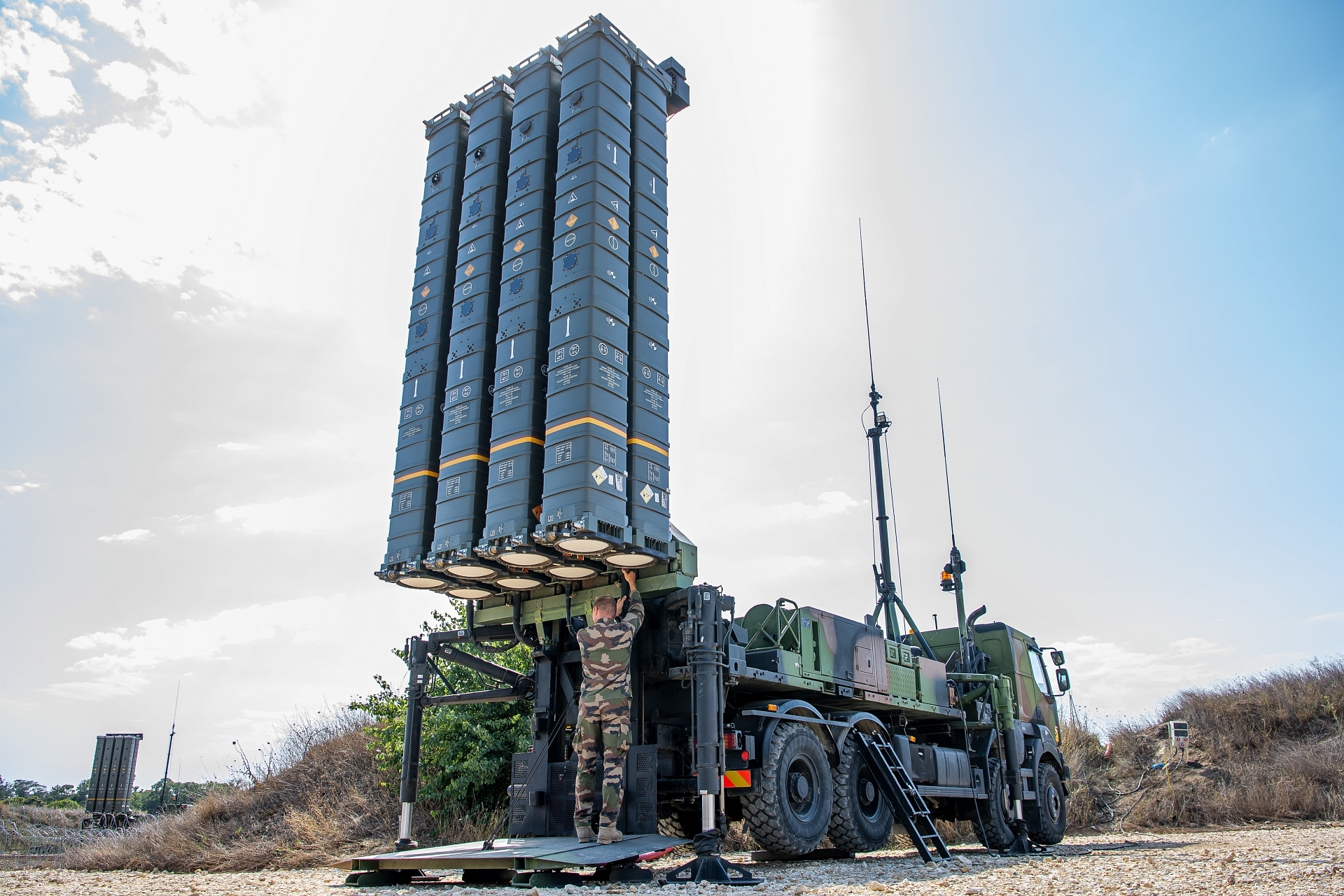
Advanced warning is a mission in its own right, requiring an extremely fast chain of command to characterize the origin and nature of the launch and inform the political leadership. The second component is expanded air defense, which we mentioned: a multilayer defense, from anti-drone to very short-, short-, medium-, and long-range ground-to-air systems, such as SAMP/T; the fighter and helicopter layer that is part of our permanent air security posture; and finally the new layer we will invest in, very high altitude. The third component of this strategic backing, of course, is deep strike—the very purpose of the Air and Space Force. It is fully embodied by the nuclear raid, conducted thousands of kilometers into enemy territory. I would add that with a new theater ballistic capability, at 1,000, 2,500 or 4,000 kilometers of range thanks to our reach, there will be no sanctuary left for our adversaries.
Hybrid operations are proliferating in Europe, but remain very difficult to attribute. How to respond?
The adversary exploits all the possibilities offered by the gray zones: these are hybrid operations. In this domain, we must urgently adapt to demonstrate resilience, then proportionality and responsiveness in our responses, because hybridity must not be a pretext for inaction. It acts on our societies in an increasingly corrosive way, with drone overflights across Europe, clandestine sabotage actions that are ever more difficult to attribute. Yet, even in doubt, we must act. Hybridity is the targeting of intervals. Cognitive interval for the decision-maker: should we take off or not to intercept? Geographical interval: am I in sovereign space or not? Temporal interval: the cargo or oil day, the drone-bearing night. Finally, the interval between our own maritime and aerial alert chains – fortunately well coordinated. In Russian doctrine, hybrid maneuvers are the precursors to action, with the backdrop of a maximal deterrence narrative that blends conventional and nuclear, and action amplified in the information domain, which extends to our children’s smartphones by triggering universal and terribly effective levers: fear, anger, indignation.
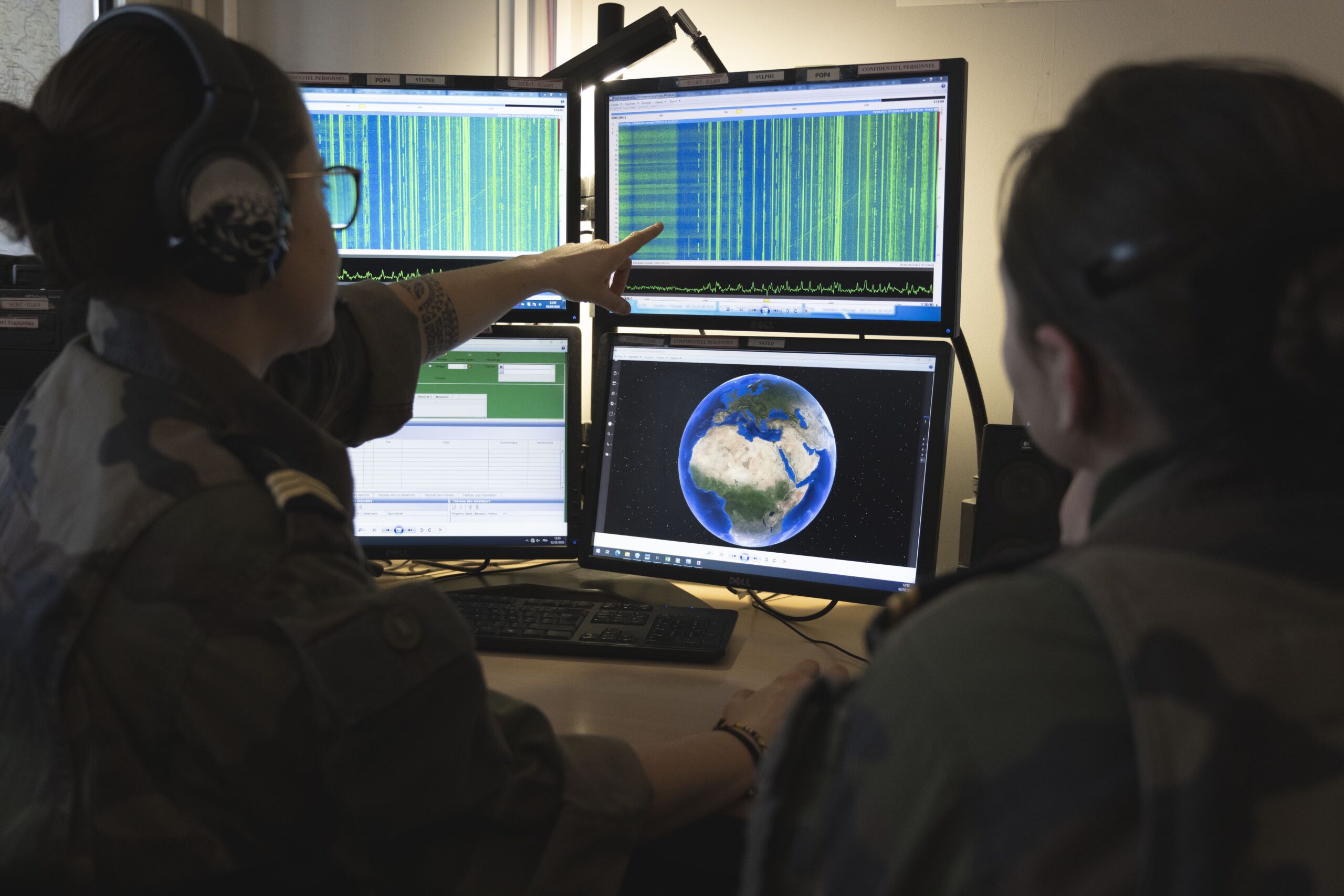
Hybrid actions proliferate also in the cyber domain, which is undergoing a revolution: traditional modes of action are boosted by artificial intelligence. AI enables cyberattacks that are increasingly massive, precise, and rapid. Every week, a new organization is targeted: first the Ministry of Finance, then the Ministry of National Education, and a few weeks ago the refrigeration facilities of major industrial groups.
With its highly connected platforms, is the Air and Space Force more exposed to cyberattacks than other armies?
No more than others. As soon as you multiply connected objects, whether maritime, land or air, you present vulnerabilities to cyberattacks. It’s as simple as that. When these attacks were artisanal, because they had to be built from scratch, they were few and detectable by their trace. Now that they are generated by AI, there is no telltale signature. And you can, as I mentioned, attack en masse, quickly and precisely, because you know the enemy system’s weaknesses very well.
In the race for military artificial intelligence, can France compete with the American giants?
We have winning cards to stay among the leaders. Data is the mother of all battles. Our sensors generate a vast amount of it. This data used to be contained in our weapons systems and exploited after a mission; now it must circulate and be processed continuously to our command centers.
Hybridity is the targeting of intervals. Cognitive interval for the decision-maker: should we take off or not to intercept?
Jérôme Bellanger
Our priority is to develop use cases for intelligence and high-intensity targeting, with artificial intelligences capable of fusing multisource intelligence and speeding up, for example, the production of target dossiers. The Americans benefit from the full power of tech leaders and try to impose their standards. But the Ukrainians showed us that with a few building blocks and a lot of agility, remarkable results can be achieved. The dynamic, closely coordinated with the Ministry Agency for Defense AI (AMIAD) and the DGA, opens the door to real progress in interlinking our command centers: air, nuclear, and conventional centers, space center, and territorial center. In the digital realm, indeed, we have learned from past missteps, and the French technological and industrial ecosystem is currently being structured to meet our sovereignty needs. It offers a credible alternative to the American giants. The only European company that sovereignly controls the entire value chain – data centers, computing power, and AI models – is Mistral AI. It is valuable to be able to rely on such innovative and competitive private enterprises.
The conflict has now extended into space. Has France taken the measure of this militarization?
In this domain, we have acted as pioneers. As early as 2019, we were the first in Europe to adopt a defense-space strategy and, in its wake, a Space Command. Since then, the Toulouse space-capable air base has grown and now hosts NATO’s only space center of excellence. This rapid awareness, coupled with all our orbital capabilities, has made the Air and Space Force France’s principal partner for the American Space Force. But this assessment should not mask the speed of ongoing evolution: China is advancing relentlessly on the technological front and is multiplying maneuvers and close-approach operations, up to demonstrating the ability to resupply its satellites or to deorbit them. Russia is deploying co-orbital hunter satellites that strongly indicate they are now equipped with true kinetic weapons, and not only secondary payloads. Any static or predictable object in space is becoming increasingly vulnerable.
In this context, should we safeguard a portion of the defense budget for space? And for what purpose?
Given the critical importance that space services have taken on, for both military operations and daily civilian uses, one can understand the case for safeguarding a substantial portion of our defense budget to act toward, in, and from space. Act toward space by preserving autonomous access via the European launcher Ariane 6, while seeking more responsive access with smaller launchers, such as HyPrSpace or MaiaSpace. Act in space by accelerating the deployment of patrol-watchers capable of deterring by their mere presence, of characterizing any hostile act and, if necessary, defending our satellites: in low Earth orbit with Toutatis, in geostationary orbit with Paladin, then Égide. Act from space by renewing our optical and electromagnetic sensors and above all by addressing the connectivity need, which can only be met by deploying the IRIS² constellation in low Earth orbit, the keystone of our autonomy in this area.
The European IRIS² constellation must guarantee connectivity autonomy, but Germany is developing its own purely military constellation. Can the project still come to fruition?
IRIS² is central to the collaborative combat of the future. It is a low-Earth-orbit constellation of around 290 satellites that will communicate with one another and ensure connectivity between manned and unmanned platforms. There is very strong political will to push this project forward. Since this will take time, we are reinforcing the OneWeb constellation to provide this connectivity in the meantime. The Germans, for their part, also want to develop a purely military constellation, while IRIS² is dual-use.
Very high altitude, this slice of atmosphere between 20 and 100 kilometers, has long been kept apart from military strategies. Why invest in it today?
In very high altitude as well, events confirm our intuition. Historically, this layer of the atmosphere was a sort of No Man’s Land, a Far West, as illustrated by the Chinese balloon that overflew the United States in 2023. Now, more and more is happening there. By creating a high-altitude squadron before summer 2027, we declare ourselves pioneers in this domain.
Concretely, what will be the mission of this very high altitude squadron? Can balloons at 25 km altitude really weigh on a battlefield?
It is a return to the roots—think of the Battle of Fleurus: balloons are not foreign to the Air and Space force. But these balloons bring new capabilities, in a altitude band around 25 km. They will enable us to perform reconnaissance—i.e., carry a payload with sensors, and not only for military purposes—, but also signals intelligence, to listen and characterize. You will also be able to place munitions there. Having such stratospheric balloons over an enemy territory is to place a Damoclean sword over the adversary, all the more since it is extremely difficult to reach balloons above 25 km altitude, as shown by the Chinese balloon incident.
It opens up numerous possibilities, with the first equipment starting to appear: stratospheric balloons, Zephyr-type flutter wings, but also captive balloons, which we tested at Saint-Dizier as part of anti-drone warfare. These capabilities are, all things considered, reasonably priced given the missions we can entrust them with. We will launch this first very-high-altitude squadron hand in hand with CNES, which has real expertise, as we did for space. Then, when we gain experience and these capabilities reach the market, we will be able to conduct our missions not as experiments, but as operational ones.
France alone in taking this bet?
We underappreciate the advantage we have in this area. We published a strategy at the Paris Air Show in 2025. When I looked toward my American counterparts—my three counterparts, since there is one for aviation and two for space—it was hard to know who would own this subject. It was, in fact, unclaimed territory. They published their strategy this year, and we have worked a lot together to explain our vision of very high altitude. We do not want to create a new domain, like space; we simply want to raise the ceiling of the aerial domain, i.e., move from 50,000 feet to about 330,000 feet, or 100 kilometers, and apply roughly the same rules there.
At this stage, no European country has a strategy or an actual very-high-altitude squadron, or even plans to create one. But that will come very quickly, once the capabilities are mature and all possible applications of these stratospheric balloons become clear. The most telling example is the Chido cyclone in Mayotte, where we had to rely on Starlink, whereas deploying three or four balloons over the island with a satellite relay would have given us sovereign communications to manage the crisis.
The United States remains an ally, but a less and less predictable ally. How do you balance, from the Air Force perspective, the scale of the Atlantic Alliance, that of Europe, and that of France?
Given the stance of the United States, particularly toward Europe, it is essential to strengthen the European pillar of defense within NATO. After President Trump’s statements, I found some of my European air force counterparts flustered, because they do not share France’s position at all. When we wanted to create the Coalition of Volunteers, we managed, with my British counterpart, to bring around the table about twenty European and non-European countries, and we agreed on what we would do if we had to provide security guarantees in the Ukrainian sky to ensure a ceasefire. It was the first time we achieved this in Europe, without the United States and without NATO, which is appreciable. They came to us because we are credible enough to take the lead of such a coalition.
We therefore wanted to go further: to continue, we also needed to strengthen our interoperability. It is essential. If you cannot communicate—the links between F-35s and Rafales, for example, are not yet fully integrated—it is a catastrophe: we fight side by side, not together.
The Coalition of the Willing showed that Europeans can organize without the United States. But do the industrial blockages you describe doom this dynamic?
This Coalition of the Willing is unprecedented, but it is still very young. It now has to be carried forward and pursued with European countries, but also non-European ones: New Zealanders, Australians, Japanese, Canadians and Turks had joined the effort. They came because we have a certain operational credibility, which we have again demonstrated in the Middle East by respecting our defense pacts with the Emirates, or by placing French Rafales at Poland’s disposal six hours after Russia’s invasion of Ukraine—we were among the first. This credibility is historical. It is carried, as I mentioned, by our two permanent missions: the airborne nuclear component since 1964, and the permanent air security posture, i.e., the protection of our national airspace and its surroundings. It gives us a privileged position, with our British ally, and a certain trust from European countries.
It is hard to see a number of European countries continuing to buy the F-35, a aircraft that, I remind you, is not just a fighter jet. Buying the F-35 is like buying an iPhone: you then need the Apple Watch, the iPad, etc. You end up building your country’s air defense around American systems over which you have no sovereignty.
MBDA used its own funds to present the One-Way Effector – the Deluge you mentioned – at the Paris Air Show last year. Are the major defense industry players not too wary to keep pace?
That depends a lot on each House’s policy. Overall, with budgets swamped by special conditions laws, major companies have advanced funds to avoid any rupture. Take Safran, which designs the T-REX engine for the Rafale F5: it could not afford to wait and thus first funded its developments with its own funds.
Acheter un F-35, c’est comme acheter un iPhone : il vous faut ensuite l’Apple Watch, l’iPad, etc.
Jérôme Bellanger
We are incredibly fortunate to have such an aerospace and defense industry in France; it is quite unique. This sovereignty is precious. It should not translate into exclusivity—far from it. We must properly identify the areas where sovereignty is indispensable; that is why I cited nuclear weapons and artificial intelligence. Alongside that, yes, the defense industry needs to transform to remain competitive and responsive to our operational needs.
In a constrained budgetary and political environment, is this transformation effort sustainable?
The Air and Space Force redoubles its efforts to accelerate its transformation, and sometimes to anticipate the evolutions of modern warfare. These efforts go hand in hand with those undertaken by the Nation, even though the country’s budgetary and political situation is far from simple. It is essential to preserve the current consensus around these topics because, ultimately, the greatest lesson of recent conflicts is that national cohesion remains the foundation of the spirit of defense.
To adapt to the new character of war, we must invest in many domains: space, cyber, artificial intelligence, droneization. With the update to the Military Programming Law (LPM), a further effort is planned for 2026–2030. But is that enough given the ambitions? Will choices have to be made?
This updated LPM is, I believe, coherent overall in the capabilities it encompasses. Some domains are, of course, priorities; we have listed them. Droneization is one of them. But we must take a step back: this is genuinely the future collaborative war, which also includes drones, with the high-low mix between mass and high technology. There is also the modernization of our nuclear deterrent, which is our lifeline: it is well taken into account, and that was important. Then artificial intelligence and cyber, which I mentioned. Finally, there remains work to do in space, in particular in our on-ground intervention capabilities, whether for space surveillance or for means of neutralizing certain satellites. But these are topics for the next LPM.
What has most struck you since you took office?
What has struck me most over the past two years is the speed at which things are evolving; acceleration touches all domains. This speed shows up in decision-making, in the interplay of effects across different platforms, in our capacity for regeneration—i.e., the combat maintenance I want to develop to quickly reuse slightly unstandard equipment that cannot always be repaired immediately, but that fly safely and allow us to complete missions. This speed must also be reflected in our production tools and in our innovation cycle. Faced with this acceleration at all levels, we truly need to change our mindset, because that is what will enable us tomorrow to achieve operational superiority over our adversary.