
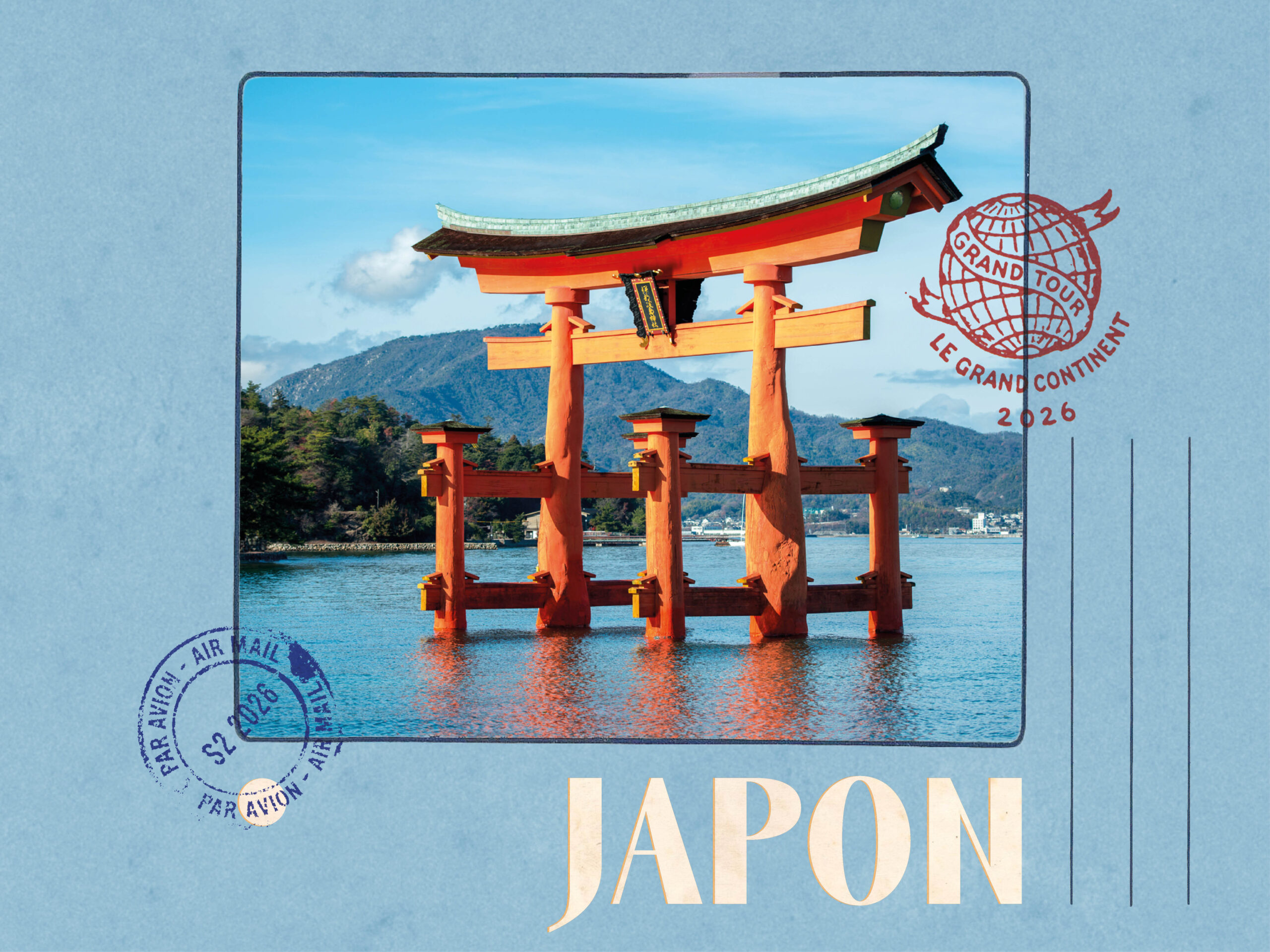
When you were asked to pick a site for our Summer Series Grand Tour, you immediately suggested Japan. Did your interest in this country trace back to childhood? Had you long dreamed of Japan before going there?
Not at all. As a teenager, I mainly dreamed of India. That fascination persisted until I entered the École normale supérieure, where the first thing I did was learn Sanskrit. The other country I was most drawn to was China. I read a lot of Taoist Chinese philosophers. Then I spent two years in the United States, near Boston, in New England. Nothing truly preordained me to turn toward Japan. It was mainly my mother who spoke of it: she read about the country and had even had a Japanese correspondent when she was younger. When I had the opportunity to live there, she urged me to take the plunge. I fulfilled a maternal wish, in a sense.
Once in Japan, what struck you the most?
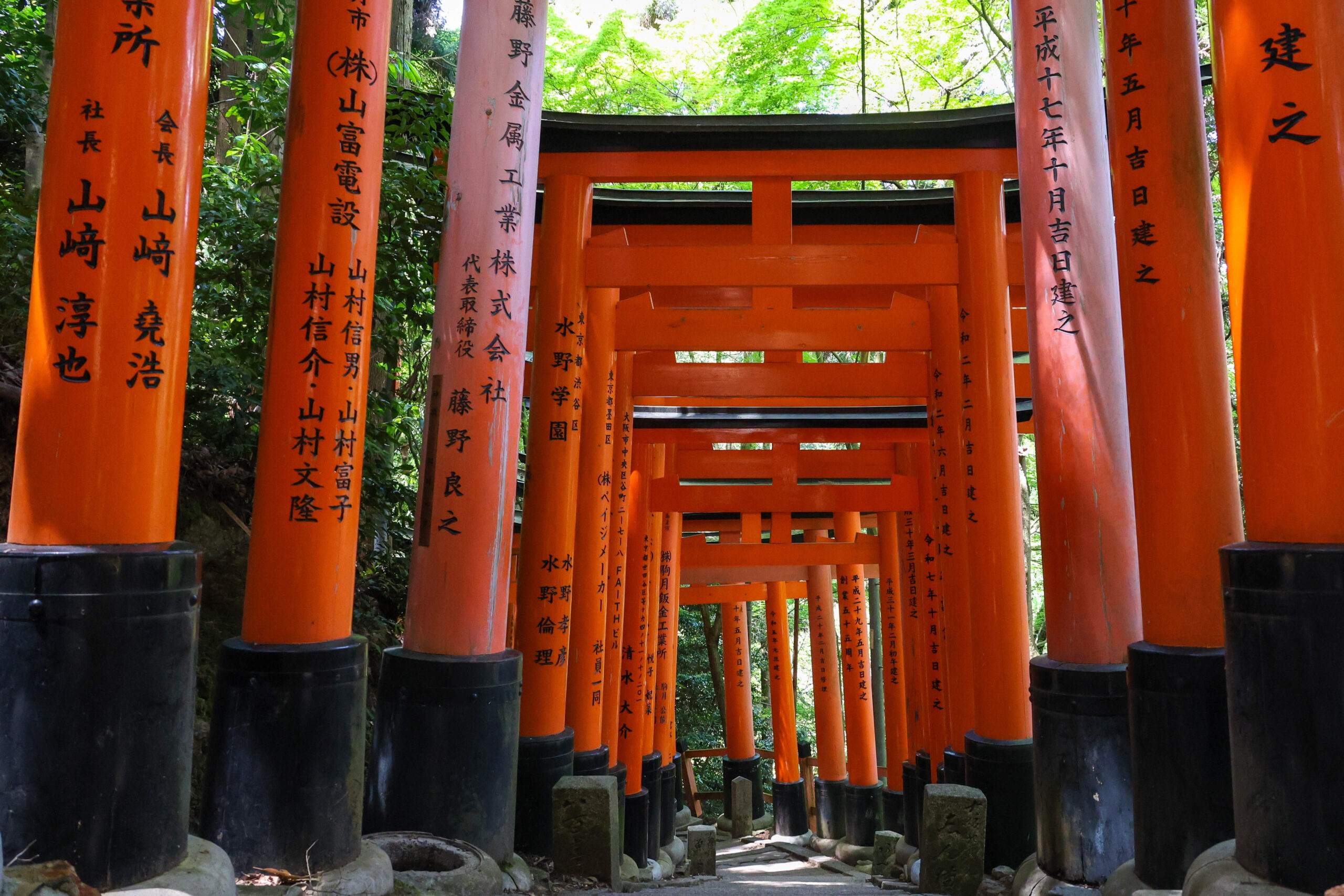
Undoubtedly, my discovery of Shinto. Considered an indigenous religion, whose main deities are the Kami, Shinto is above all a celebration of space and nature as sacred entities. It has no place in cloistered sanctuaries or in delineated spaces: one simply needs to walk anywhere, for example in the mountains, to come upon a tree or a rock adorned with a garland. One may sometimes find, on a small altar of striking simplicity, offerings. This attention to the environment, its sanctuarization with humility and dignity, struck me deeply. It is a radically different vision from the popular Buddhism also practiced in Japan, with its idea of salvation to be attained.
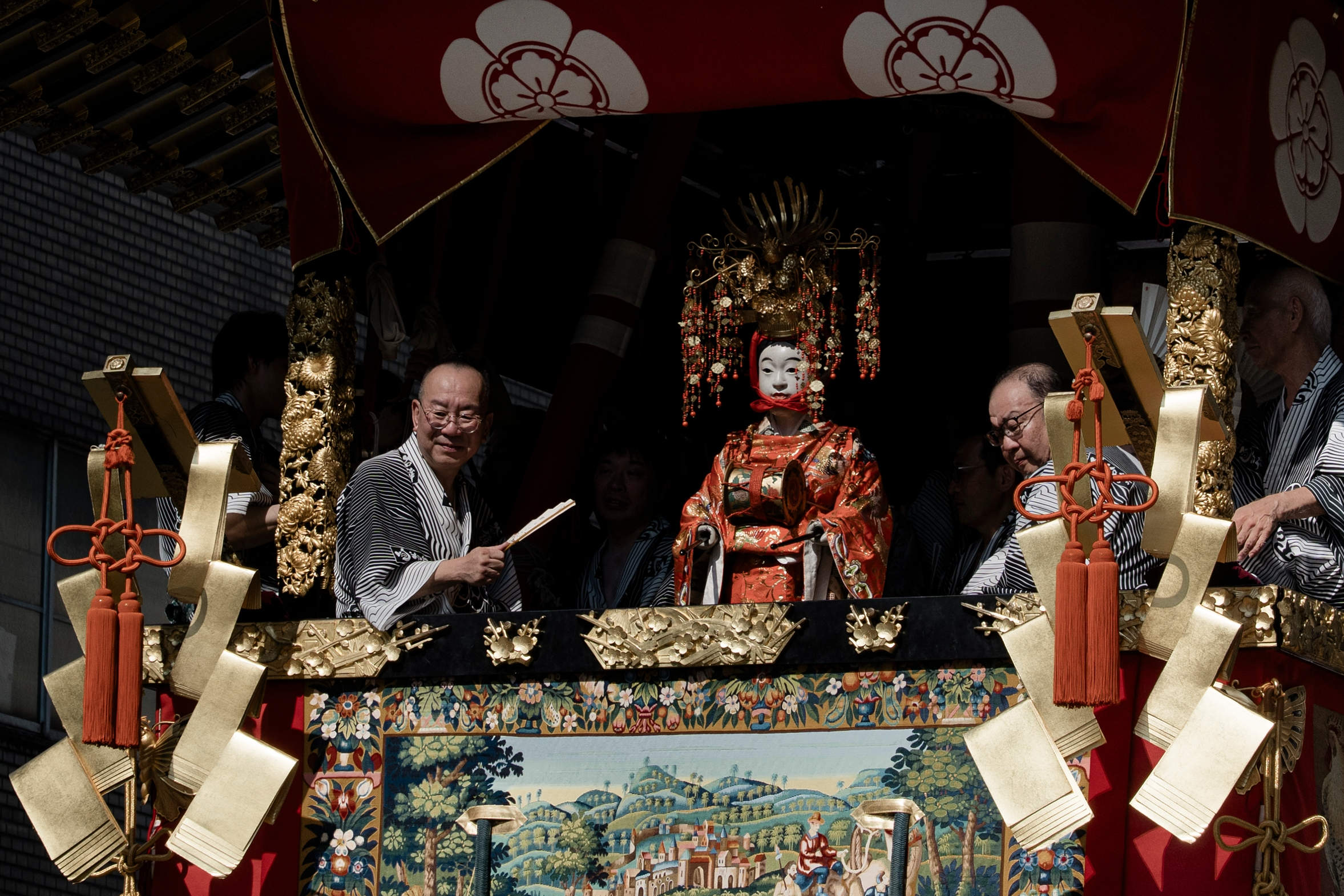
Shinto evokes to me religion as it was practiced in ancient Rome: it is also a religion of the genius, of the sacred, and of the divine presence that can be found everywhere, at every street corner. It evokes the purity of archaicism, in the noble sense of the term, with the respect paid to the forces of life, to its breath. This primacy of nature is strongly felt in Japan, a country that is very humid and hot in summer, where vegetation is lush: bamboo is particularly invasive, and one often reads news about wild boar incursions in cities, such as Kobe.
Is this respect and this particular attention to what surrounds us reflected in Japanese society itself, in the way it is organized?
It is certain that, compared with our Western, highly individualistic societies, the Japanese give priority to the common good, to the proper functioning of society. In Europe, especially since Rousseau’s theses on society as an aggregate of initially isolated individuals who preexist it, we tend to see this primacy of society as a form of domination that is unnatural or unjust. In Japan, contrary to what Rousseau writes in his universalist writings, it is quite the opposite: society comes first and the individual has less of a relationship of oppressed to oppressor with it than a relationship of creation. The individual is not alienated: in Japan, it is simply his duty to ensure that everything around him functions, in the name of responsibility rather than emancipation, of concern for others rather than freely celebrated liberty. Seen from Europe, the phenomenon may seem strange, even worrying.
This attention to others is reflected in the way Japanese people move through space. For example, in train stations and in public transport there is a large crowd, yet no one touches one another. Japanese excel in the art of not impeding others. Yet one cannot call this a society of modesty as Westerners conceive it: there is a tradition there of going weekly to public baths. The Japanese go there like to a café, except that they are entirely naked. The most enjoyable are the onsen, these public baths in the countryside fed by volcanic hot springs. It is perhaps there that I experienced most clearly this kind of radical difference that characterizes Japanese society compared with ours.
Does this attitude toward the body have an impact on certain cultural practices, such as the performing arts?
That is probably due to my training as a comparativist and my habit of always putting things side by side, but indeed this almost total otherness determines a shift in perception in the realm of the arts, such as theatre. It is not only the literatures, the texts that are different, but the very conception of the human being, of his social role, of his way of moving through space. I moved from a purely textual, strictly comparative view to a more anthropological one.
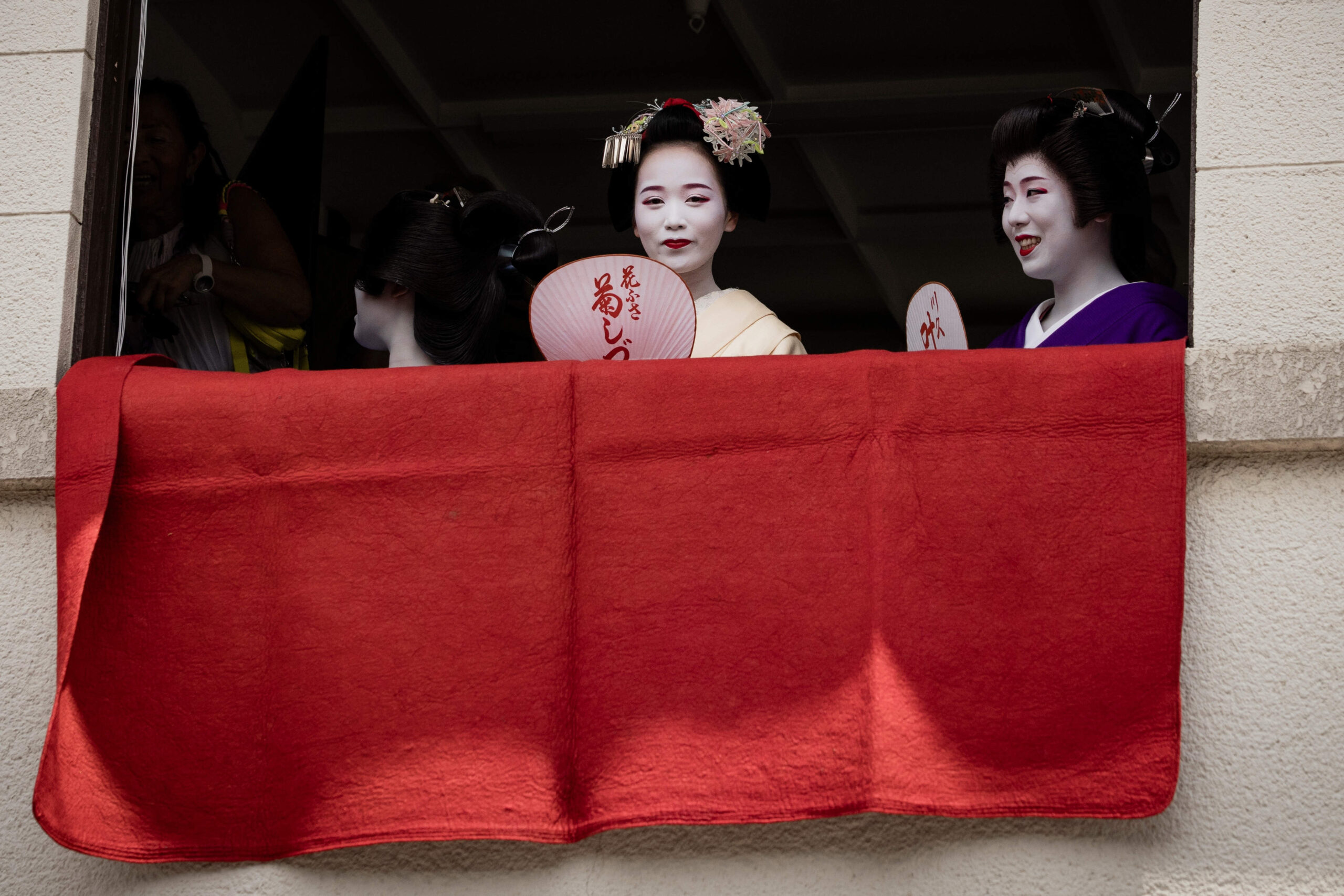
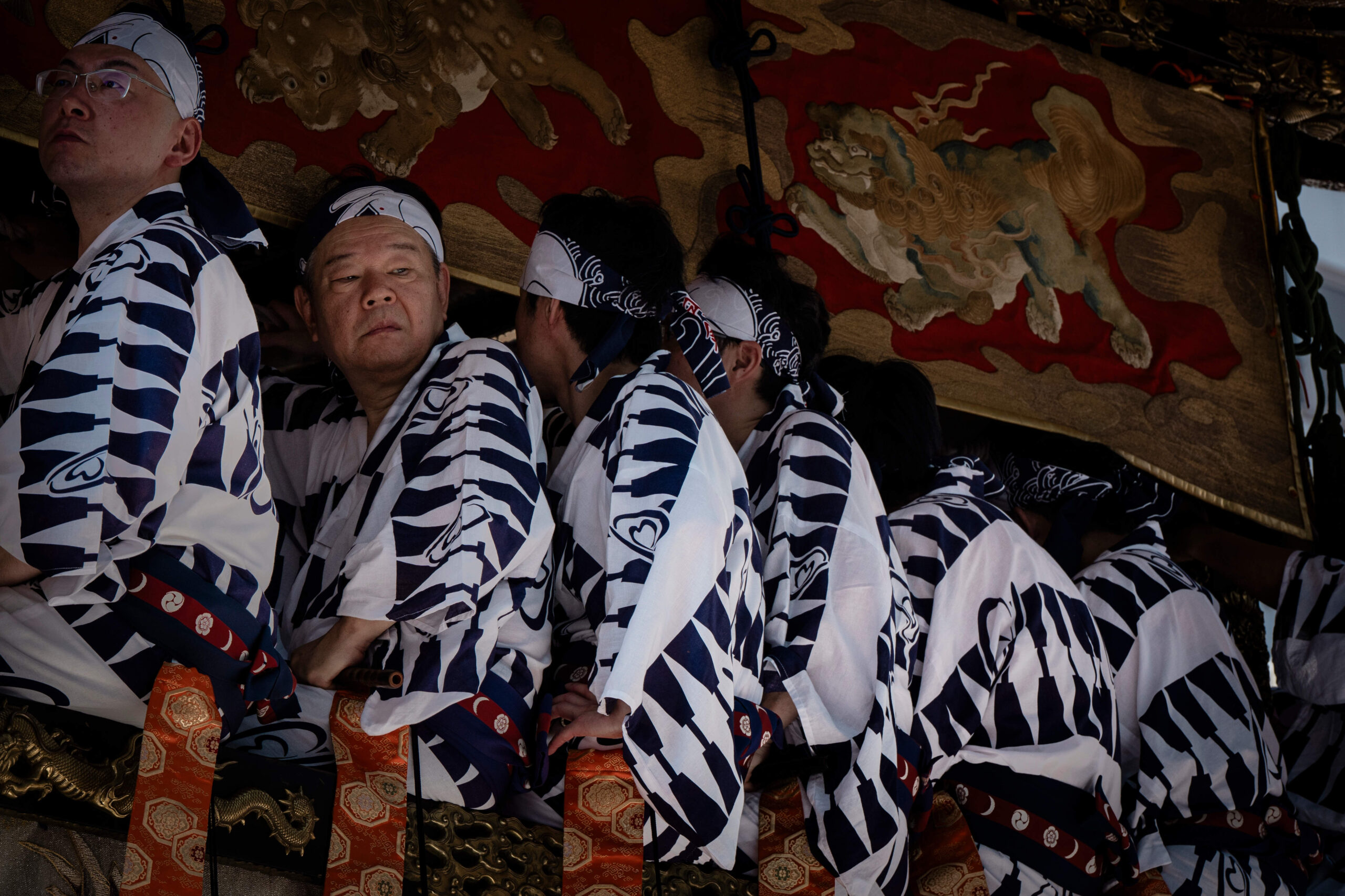
One day, a Japanese friend invited me to attend a Noh theatre performance. It wasn’t in an institution, behind four walls, but in the open air: the show took place in a Shinto shrine. The stage had been set up in the middle of the altars, and the actors entered the scene as dusk fell, lit by torches. I felt I was witnessing an event or a ritual that was very ancient, perhaps the most immemorial of all. It was magical.
Has that had an impact on your work?
Yes, I have drawn a lot on this experience for my work on Greek tragedy.
It was even the starting point of my book The Tomb of Oedipus. In an unexpected way, Japan allowed me to think about what will always be unattainable to me, what has already been lost in the night of time: the earliest rituals, the earliest theatrical performances.
What is your favorite Japanese city?
I really love the Tokyo suburbs, its peaceful neighborhoods, with young children going to school in uniform.
For example, in the western part of the Shinjuku district there are rows of small, particularly charming houses. What I love about these places and everywhere in Japan are the train stations. Japanese public transport is extraordinary. There are also many shops, small supermarkets, which are not only well stocked but also very beautiful. It’s a unique experience. Japan is a country where nothing can disturb you.
You speak of Japan as a land of plenty and of Japanese society as a champion of savoir-vivre. But as the foreigner you are, are you really subject to the same social constraints as Japanese people?
As a foreigner, I have never suffered the pressures that Japanese people can endure, whether at work, in family life, or in public space. Foreigners, especially Europeans or Americans, enjoy a strange prestige that spares them from submitting to certain very strict social codes.
But the flip side of this exemption is that you can never fully assimilate. You will forever remain a foreigner, and it is not the aim of the Japanese for you to become like them, nor even to settle permanently in the country. It is not unusual for mixed-race children to suffer racism at school, for example. This situation can create misunderstandings within mixed couples: generally, the French partner (since it’s quite rare for a French woman to pair with a Japanese man) is in love with Japan and wishes to live there; the Japanese partner, she tends to see in this encounter with the foreigner a means to gain more freedom, to break free from that constraint, and thus to leave Japan. These couples face a real spatial chiasm: the French want to settle in Japan, while the Japanese partner wants to leave.
You yourself lived in Japan. In what framework did that experience fall?
Indeed, I lived there for two years, to undertake the first two years of my doctoral thesis in literature. At the same time, I had the opportunity to teach as a lecturer at Kyoto University. Not long before, I had been very generously invited to Japan to participate in a conference on Paul Valéry, one of the authors I would later study in the context of my thesis.
This leads me to a discovery that fascinated me there, besides Shinto: the Japanese Valéry school is one of the best in the world. In France, very few researchers still care about Paul Valéry and devote studies to him. Where research on his work is active, it is in Italy and Japan. Paul Valéry is not the only French author involved: the Japanese study Pascal, Paul Claudel, Mallarmé…
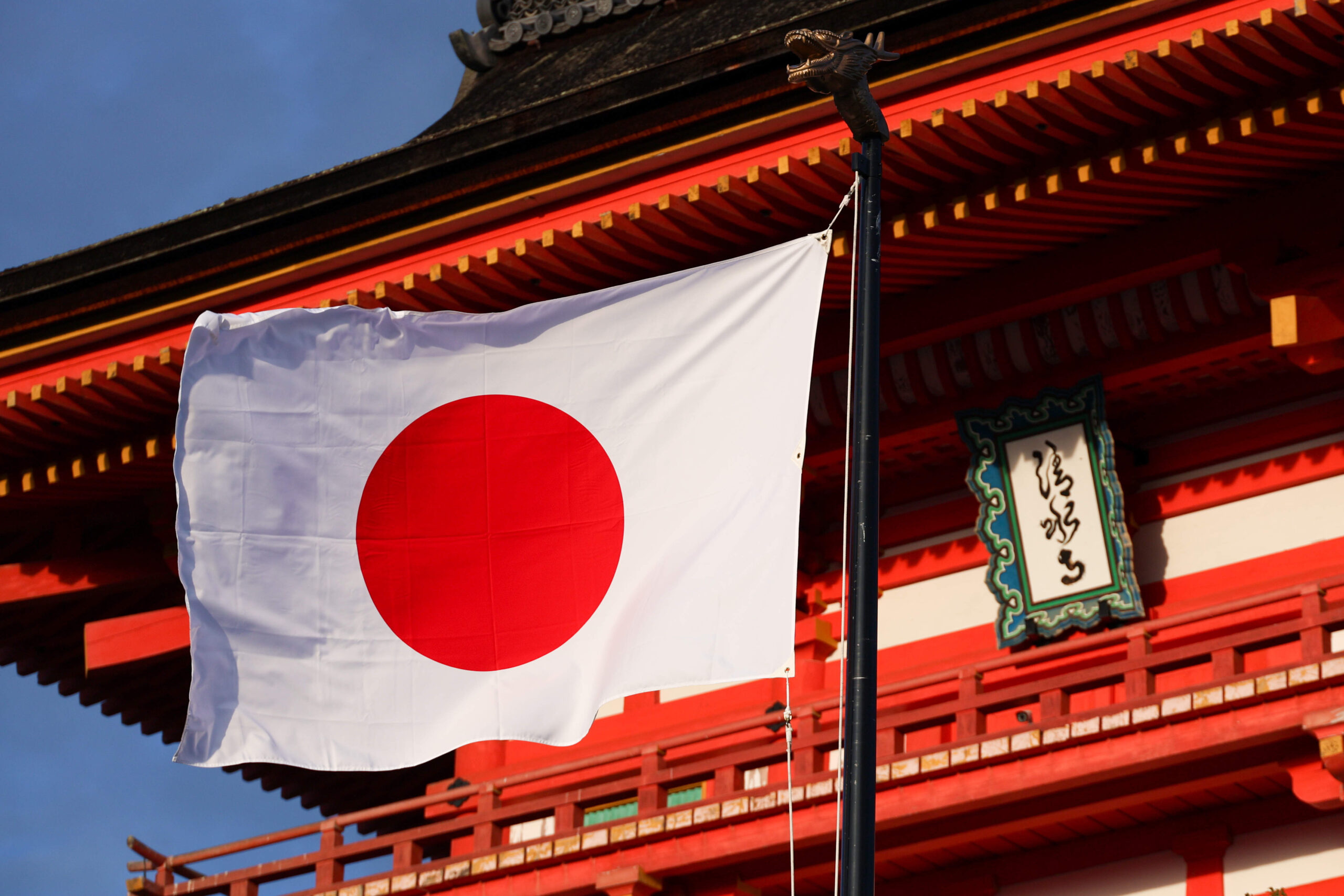
Je suis profondément convaincu que le Japon excelle dans cette attention à l’étranger, avec cette idée très forte que, même si le pays est une île, il doit s’efforcer d’emprunter ailleurs ce qu’il y a de mieux, de se l’approprier pour se développer. Pour ce qui est de la politique et du droit, les Japonais ont beaucoup étudié la production anglophone. Pour les sciences dures, ils se sont tournés vers l’Allemagne. Enfin, dans le champ littéraire, c’est la France qui s’est imposée comme grande inspiratrice.
That is to say?
If Japanese literature enjoyed such success in the 1960s in France, as Mishima’s works did, it is partly because it built on a French method and tradition: 19th-century naturalist literature. It is striking to see that France holds a special place in Japan, in words as well as in the cultural imagination. More generally, foreign cultures are very present there: an alphabet, called Katakana, was even invented to specifically transcribe foreign words, used as such by the Japanese.
How would you explain this meeting point between French literature and Japanese literature?
Natsume Sōseki, one of the greatest Japanese writers of the Meiji era, had read Zola’s novels. Japanese literature is steeped in European references because the West fascinated it: one could speak of reversed exoticism, still palpable today.

Beyond Naturalism, the Japanese were also nourished by the French Symbolist and Decadent movements of the late 19th century: the idea that art stood above life, that life itself could be conceived as an aesthetic creation, resonated with the taste for detail, the Japanese Zen art. This encounter is astonishing.
Which Japanese authors do you recommend the most?
Mishima is undoubtedly my favorite Japanese author. He is one of the most famous, and yet only a portion of the work of this gifted polymath is translated into French. I recommend the tetralogy The Sea of Fertility, which traces a man’s journey from the pre-World War II era to the 1970s. It is a very beautiful entry into the history of Japan. The principle is original: a character dies at the end of each volume, but is reincarnated in the next, according to a Buddhist view of life and death. The first volume, Spring Snow, is a masterpiece.
If I had to name a more contemporary author, I would cite Haruki Murakami, whose popularity is now worldwide. His style has nothing to do with Mishima’s, but it is also a very interesting way to become familiar with Japanese society.
Are bookstores still vibrant in Japan or do they suffer, as in France, from dwindling readership?
Bookstores are still very present in Japan. One of the most beautiful districts in Tokyo, which I recommend visiting, is the Books District, Kanda, not far from the University of Tokyo. There you will find many booksellers. Of course, most of the books sold are in Japanese. But there are also prints.
My greatest wish is that this district does not disappear: like in France and everywhere in the world, indeed, people read less and less. We must hope that this literate Japanese culture finds the strength to survive.
To accompany these readings, what culinary dish do you recommend? Do you have any Japanese culinary precepts you could reveal?
I first discovered Japanese society on screen, in Woody Allen’s films, where the characters were decidedly ahead of everyone: as early as the 1990s, they were already eating sushi, which had arrived on American soil via California.
But the art of good sushi is as subtle as can be, and it is only in Japan that one can experience its authentic freshness. I love Japanese noodles, of course, whether buckwheat-based soba, eaten mostly in Tokyo, or rice-flour udon, a Kyoto specialty. They can be eaten hot or cold, depending on the season, just as rice wines (sake) are enjoyed differently in winter or summer.