
All summer long, Le Grand Continent will stay in motion. Each day, wherever you are, we will bring you ideas you won’t find anywhere else (but which will be everywhere by September), texts that are hard to find or refreshing with our Sundays. To receive them directly in your inbox and support this momentum, consider subscribing to the magazine
To describe the mutations of the world order after Donald Trump’s return to the White House, Stacie Goddard and Abraham Newman proposed the concept of neo-royalism. International relations would now resemble less exchanges between sovereign entities, modeled on the Westphalian nation-state, than negotiations between factions in power, and networks of political and financial elites, where diplomacy serves the personal interests of leaders. This analysis illuminates especially Trump’s personalized diplomacy, whose transactional and national-populist foreign policy is now driving the liberal order’s transformation.
The fundamental difference between Westphalian nation-states and neo-royalist cliques lies in the horizontal distribution of power among institutions, as opposed to the vertical distribution around a single man practiced by the latter. This structuring of policy and diplomacy aptly describes a world gripped by demagogy, with Trump as its most visible example. Other leaders exert outsized influence over their political system and personalize their country’s foreign policy, such as Erdoğan in Turkey, Modi in India, or Orbán in Hungary until recently.
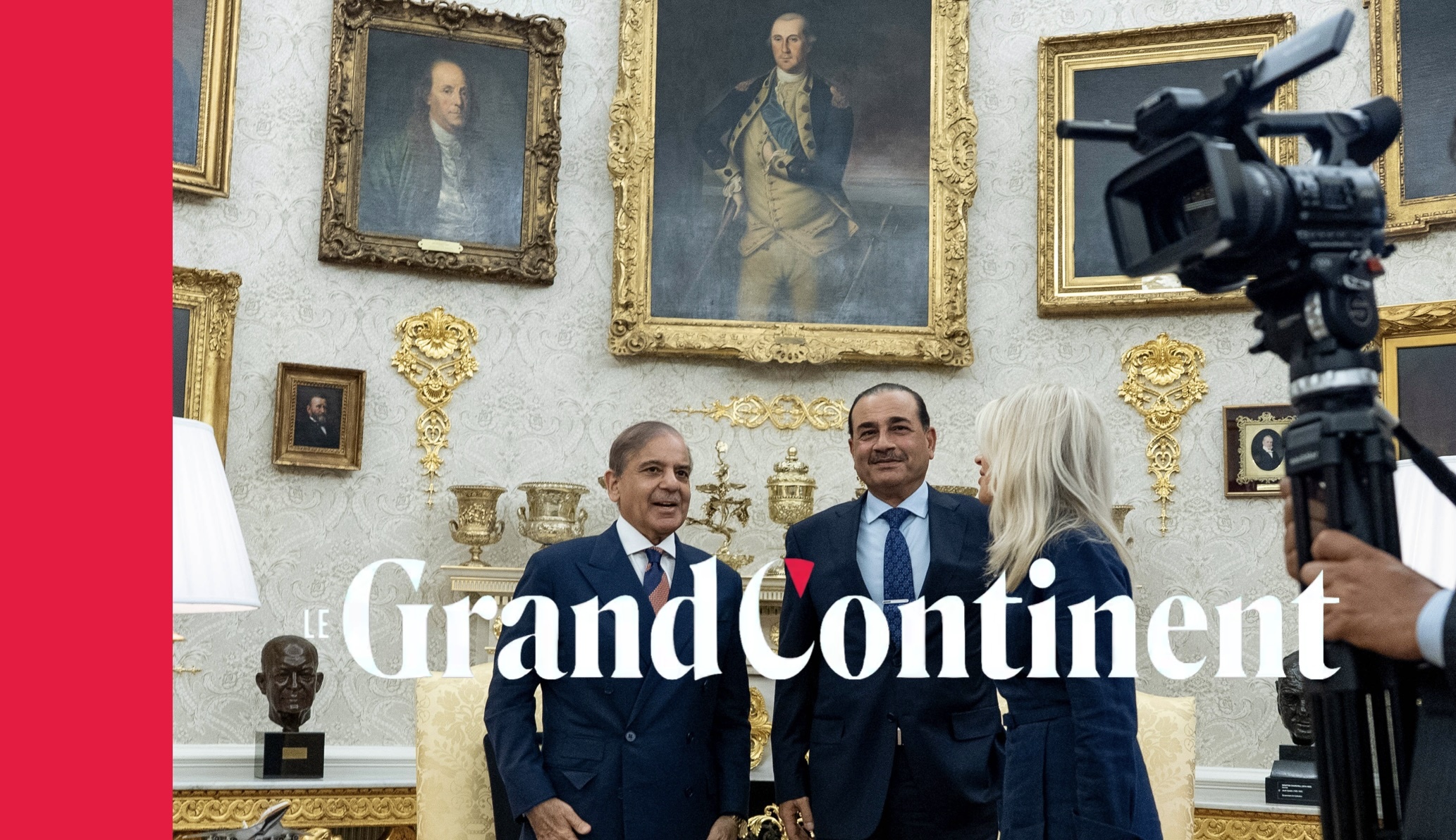
Given the recent proximity between the United States and Pakistan, and the close ties between Trump and Pakistan’s army chief, Marshal Asim Munir, one might be tempted to see this as a neo-royalist affair. In December 2025, the American president is said to have publicly praised him at least ten times, calling him “my favorite marshal.” But is this really an interaction between cliques, and a break with traditional patterns of American-Pakistani diplomacy?
In Pakistan, the clique is the state
Nothing could be less certain. Pakistani leaders are exploiting radical shifts within the American administration, but in service of the state’s interests as they conceive them—a distinctly Westphalian move. Their military chiefs have long maintained excellent relations with Washington, especially under Republican administrations. In the 1960s, General Ayub Khan, the first military ruler of the country, titled his memoirs Friends Not Masters. In the midst of the Cold War, he already rejected the image of a pawn maneuvered by the United States. That pattern has repeated since. President Zia ul-Haq, who ruled from 1978 to 1988, made Pakistan the preferred conduit for American aid to Afghan mujahideen. He thus obtained substantial sums from Reagan and continued the nuclear program that Washington claimed to want to curb. His successor in the early 2000s, Pervez Musharraf, joined the war on terror in the wake of 9/11, which allowed him to secure sanctions relief and the status of major ally, while maintaining his Afghan conduits.
The neo-royalism debate has focused on certain characteristics of the Trump administration, presented as a model for other illiberal regimes. But Pakistan, for its part, has a long history of struggles for democracy, and scholars classify it as a hybrid regime. In Freedom House’s 2026 report, Pakistan scores 32 out of 100 and is described as “partly free.” Elections have been held regularly since 2008, and the assemblies have almost always completed their five-year terms, which is not always guaranteed in such an unstable political context.
Pakistan thus belongs to a “third wave of autocratization.” It illustrates the model of “establishment-dominated democracy,” in which the military sits at the center of politics: through direct rule (seventeen years), through the extension of military tutelage over civilian life (sixteen years), or through a hybrid system that leaves parties weak. Since 2018, the governments of Imran Khan and Shehbaz Sharif have claimed to be “on the same wavelength” as the army, and the country’s political history confirms this military preeminence, alongside other unelected institutions—such as the bureaucracy and, at times, the judiciary.
Yet these elites differ from the neo-royalist cliques described by Goddard and Newman. They are institutions, and the army derives its authority from the position it occupies within the state.
Between Washington and Islamabad, a certain idea of friendship
Pakistani military leaders are notable for maintaining cordial ties with American presidents. Under Ayub Khan (1958-1969), Zia ul-Haq (1977-1988), and Pervez Musharraf (1999-2008), security cooperation—first during the Cold War, then in the war on terror—formed the basis of this closeness and earned the country military aid and financial support. These relations, however, have always operated in the shadow of two others: Washington’s ties with India and Islamabad’s with China.
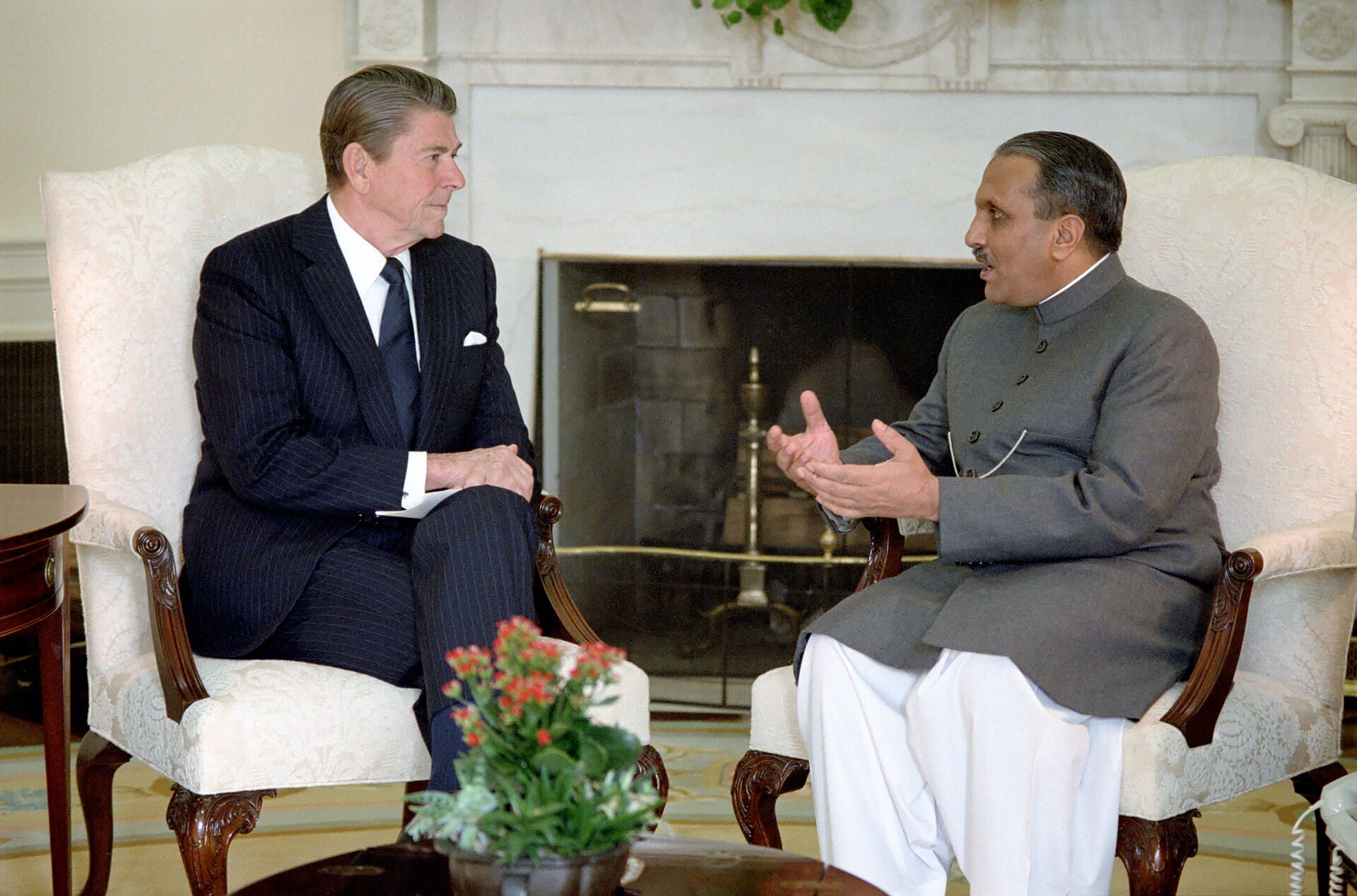
The closeness, therefore, is also the product of a complex relationship. Official ties between Pakistan and the United States were established in 1949, two years after the independence of the British Raj in 1947, when Prime Minister Liaquat Ali Khan chose Washington over accepting a Soviet invitation. This visit set the tone for the decades to come: Pakistan joined security alliances led by the United States, first SEATO, signed in Manila in 1954, then CENTO, signed in Baghdad in 1955, and served as an intermediary in 1971 for the Sino-American rapprochement sought by Nixon.

The shift in China’s status opens a new context. Since the 1960s, Islamabad and Beijing have maintained close ties, cemented by a shared rivalry with India. Born from a military cooperation begun in the early 1960s, this relationship expanded into the economy, culminating in the China-Pakistan Economic Corridor launched in 2013. Pakistan must therefore balance its increasingly deepening alliance with China and its partnership with the United States, a balancing act made all the more delicate as grievances have accumulated. In early 2025, Donald Trump had indeed accused Islamabad of colluding with terrorist groups, and the relationship had already deteriorated since the former cricket star and prime minister Imran Khan blamed Washington for the fall of his government.
If the rapprochement between Trump and Islamabad’s clique is to be understood in this context, the current mode of exchanges between the American president and Pakistani leaders is, at heart, not novel. Washington has always maintained relations with authoritarian regimes, particularly in the Global South, and its discourse on democracy and human rights has served less as a brake than as legitimacy, even to justify regime changes in Iraq and Afghanistan. Trump’s break rests on this point: shedding any pretense and simply asserting a policy based on pure interest calculations, whether those of the American state or the Trump clan.
Trump’s maximal-pressure method
America’s foreign policy under the Trump administration rests on a principle one can name “coercive extractivism,” defined as turning an asymmetric power relationship into immediate, measurable, and monetizable concessions. While classical diplomacy sought to stabilize relations through shared rules, this approach treats each tie as a transaction to be maximized, with no distinction between allies and adversaries.
Europe provides the most striking demonstration. Its security dependence on Washington, inherited from 1945 and never resolved since, is precisely the lever the American administration wields. Tensions within NATO and repeated ambitions toward Greenland fit into the same logic: a structurally dependent ally is a partner all the more exploitable.
This shift can be summarized in a formula: a rules-based order is replaced by an order based on asymmetrical agreements, deals, renegotiated at each deadline, for the benefit of the stronger. Diplomacy exits the realm of diplomats to become a perpetual bargaining where special envoys, often family members, use the United States’ economic and technological advances to obtain personal advantages for the Trump clan.
Tariffs are the preferred instrument of this mutation. By turning them into a neo-royalist diplomatic weapon, they allow Washington to inflict unilateral costs, modulate them at will, and lift them in exchange for concessions often unrelated to trade.
It should be noted that while the decision-making process of this new mechanism is highly centralized, it is also deeply disorganized. A parallel diplomacy has taken hold, relegating traditional channels to the background. Whether it is to conduct hard-hitting negotiations with NATO allies or to draw closer to Pakistan, the pattern remains the same. The Trump era offers a curious blend of transaction and coercion.
In this context, Pakistani leaders had every incentive to court Trump and his entourage directly. And that is precisely what they did.
The May 2025 war and the Nobel Peace Prize
Since the partition of the subcontinent, India and Pakistan have clashed over Kashmir, which the first Indo-Pakistani war of 1947-1948 left divided between them. Nearly eighty years later, this mountainous region remains the symbol of their rival nationalisms.
In May 1998, the nuclear tests conducted by one and then the other made them armed powers, and the limited conflicts that followed have repeatedly brought the region to the brink of atomic confrontation. In May 2025, accusing Islamabad of orchestrating attacks in Indian Kashmir, New Delhi launched strikes; during this aerial war, Pakistan claimed to have shot down six Indian aircraft, a toll India disputed.
The hostilities ended after a discreet mediation by the Trump administration, which New Delhi never acknowledged but Islamabad warmly welcomed, going so far as to officially propose Trump’s name for the Nobel Peace Prize.
Clan interest or state interest? Cryptocurrencies and rare earths
Since June 2025, the relationship between the United States and Pakistan has extended beyond the security framework to encompass cryptocurrencies and critical minerals—a development sums up in the three Cs: critical minerals, cryptocurrencies, and counterterrorism cooperation.
In March 2025, Islamabad launched the Pakistan Crypto Council to regulate and integrate crypto-assets into its financial system. The portfolio was entrusted to a State Minister, Bilal Bin Saqib, previously adviser to World Liberty Financial and who led the Pakistani Authority for Virtual Assets until March 2026. In January 2026, the government signed a memorandum of understanding with the same company, owned by the Trump family, to explore the use of its USD1 stablecoin for cross-border payments. On that occasion, Asim Munir and Prime Minister Shehbaz Sharif welcomed Zach Witkoff, the son of Trump’s special envoy, who had been following negotiations with Iran and Ukraine.
The second domain concerns rare earths and critical minerals. After Beijing weaponized them in the trade war, Washington seeks alternative suppliers, and Pakistan aims to play that role. In September 2025, Asim Munir handed Trump a sample of critical minerals during a visit to the White House. A few days earlier, Frontier Works Organization, Pakistan’s leading miner of critical minerals and the army’s engineering arm, signed with US Strategic Metals an agreement envisaging a $500 million investment to export antimony, copper, gold, tungsten, and rare earths to the United States. In December, the Export-Import Bank approved a $1.25 billion loan for mining in Baluchistan, while further accords were anticipated. The rebellion led by the Baluch Liberation Front, however, is progressing: its attacks—already targeting Pakistani security forces and Chinese engineers working on CPEC projects—could soon become an obstacle.
Pakistan, at the origin of the indispensable parallel channel of Iran’s war
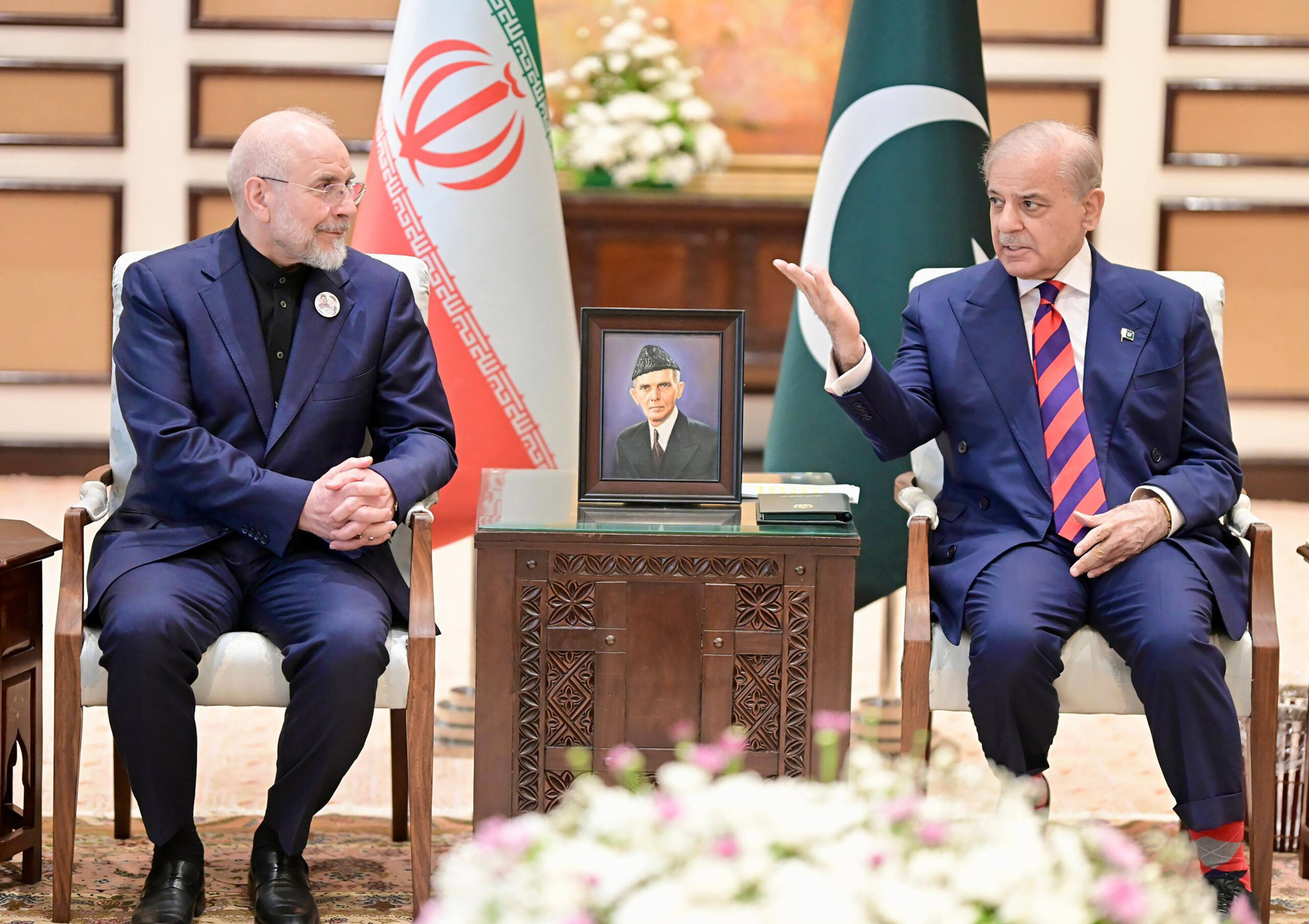
With the outbreak of the American-Israeli war against Iran, on February 28, Pakistan established itself as a key mediator between Washington and Tehran. In April 2026, this led to the first in-person meeting between Iranian and American diplomats in Islamabad, and in June, the signing of a protocol between the two countries. Alongside Qatar and Oman, Pakistan played a leading role in these complex negotiations, significantly boosting its international standing: a spectacular reinvention of its image abroad, far from the tensions that prevailed during Trump’s first term.
This Pakistan’s interest in a peaceful solution is explained by its vulnerability. Its energy supply heavily depends on the Strait of Hormuz, while 99% of its liquefied natural gas comes from Qatar and the United Arab Emirates, and supply disruptions have already dealt serious blows to its economy.
Its 900-kilometer border with Iran also exposes it to instability. A regime change in Tehran would benefit the Baluch insurgents first.
Finally, the country hosts a significant Shia population whose mobilization can prove deadly, as the violent demonstrations that erupted in several cities at the start of the conflict to denounce the assassination of Ayatollah Ali Khamenei showed. All these internal and regional variables help explain its eagerness to see the conflict resolved.
Westphalian states are not all dead
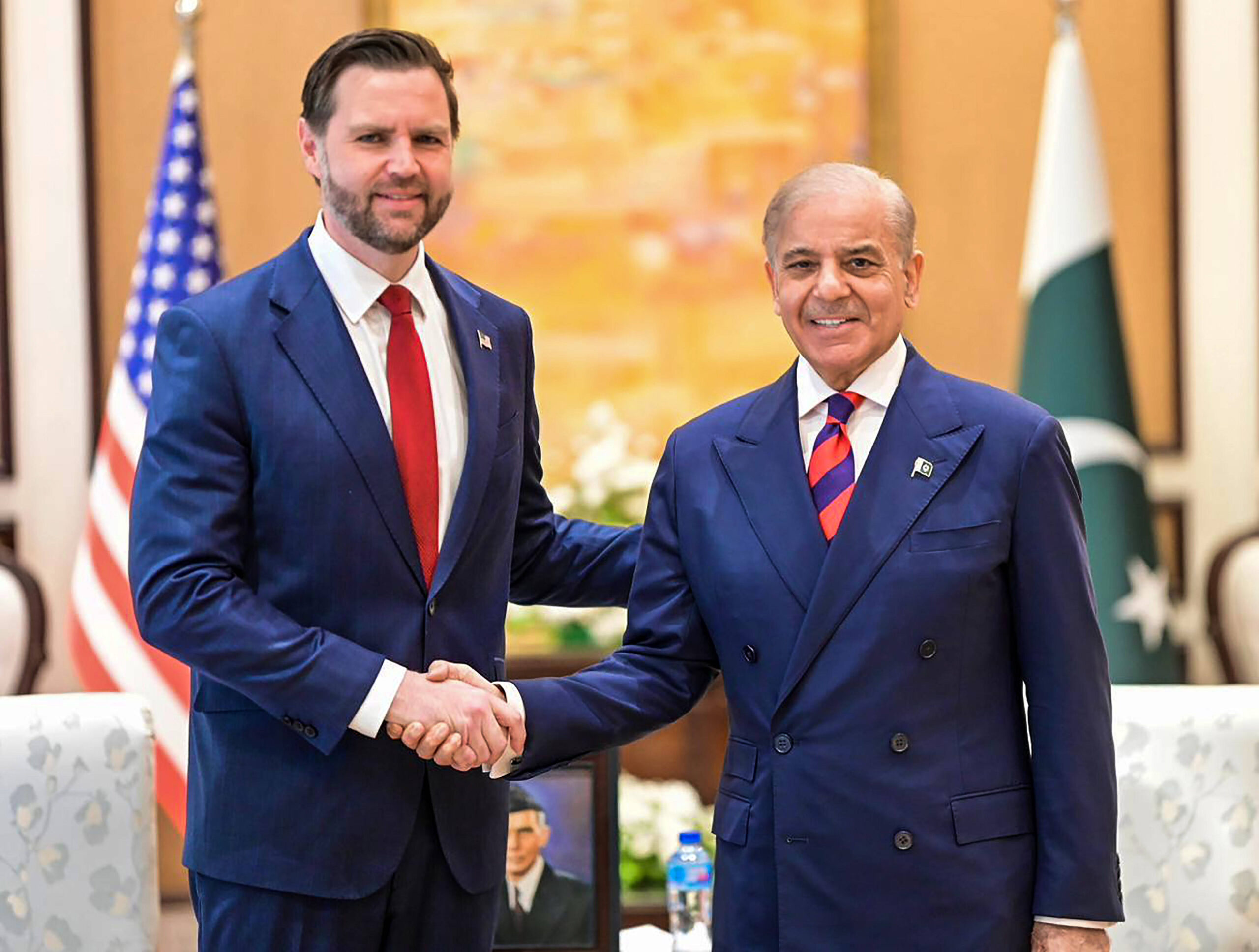
Relations between Pakistan and the United States are passing through the friendliest phase in their history, embodied in the personal links that Marshal Munir and Prime Minister Shehbaz Sharif have forged with Trump. Yet these friendships remain subordinate to interstate relations, dictated by strategic, security, and economic considerations. Will this understanding last? History invites caution: periods of cooperation have always given way to ruptures, such as when Washington sanctioned Islamabad after Pakistan’s nuclear tests in 1998.
More than a mere neo-royalist affair, this relationship is very likely to be guided by Islamabad’s national security imperatives.