
To prepare for your return, try Le Grand Continent. The ideas and analyses you won’t find anywhere else. But you’ll see them everywhere soon. In your inbox from 8 euros per month
Shortly after taking office as General Secretary of the Vietnamese Communist Party in July 2024, General To Lâm proclaimed “a new era of national prosperity.” He pledged to push the country’s economic growth into double digits by 2030, up from the current 8%. Even more striking, he quickly translated these statements into concrete measures, promising to chart a new course for Vietnam, faithful to his own motto: “Time does not wait for us.”
His initial steps aimed at streamlining the country’s administrative and political machinery. Several ministries were dissolved or merged. All district administrations were scrapped, and their officials were reassigned to provincial levels, redeployed to communal posts, or urged toward retirement. While regions have traditionally been the backbone of factional influence within the Party, the sixty-three provincial and provincial-level units were consolidated into thirty-four new entities, a near-halving of the administrative footprint in just a few months.
Breaking with his predecessor, To Lâm urged that the private sector be positioned as the economy’s principal engine. He greenlit the launch of large-scale infrastructure projects, such as high-speed rail and nuclear power plants, with some of these awarded to privately run conglomerates with strong political connections.
He has also been highly active on the international front, visiting around twenty countries over the past two years. Under his leadership, Vietnam has lifted its diplomatic relationships with several nations to the highest levels. The economy seems to be thriving, and despite tariffs imposed by Trump, Vietnam’s trade surplus with the United States continued to widen.
Who is General To Lâm?
The Economist characterizes To Lâm as “a tough guy, a capitalist, and a hedonist.” These labels may be accurate in some respects, yet they only scratch the surface of the man. Born in 1957 in Hung Yen Province in the Communist North of Vietnam, he reached adulthood in 1975, when the North triumphed in the war against the South.
To Lâm’s father, Colonel To Quỳên, was an officer in the security services who spent most of the war years in the South, far from his family in the North, to support the communist revolution. He would later become director of the penitentiary department within the Interior Ministry (the predecessor of today’s Public Security), overseeing the expansive prison system that stretched to the most remote corners of the country.
Scholarly training at the Public Security School marked To Lâm’s youth, and he spent his entire career within the security apparatus, attaining the rank of major general at 50 and minister at 58. Family background is a major driver of ascent for Vietnamese officials, and he is no exception. Little is known about his private life, as is often the case with the country’s leaders. Although he has held power for decades, the Communist Party continues to operate in secrecy, as it did when it was still a clandestine revolutionary group. Meanwhile, the regime extols collectivism and treats individualism as a vice afflicting bourgeois, decadent capitalist societies. Ambitious officials learn to stay silent and feign humility if they hope to reach the top.
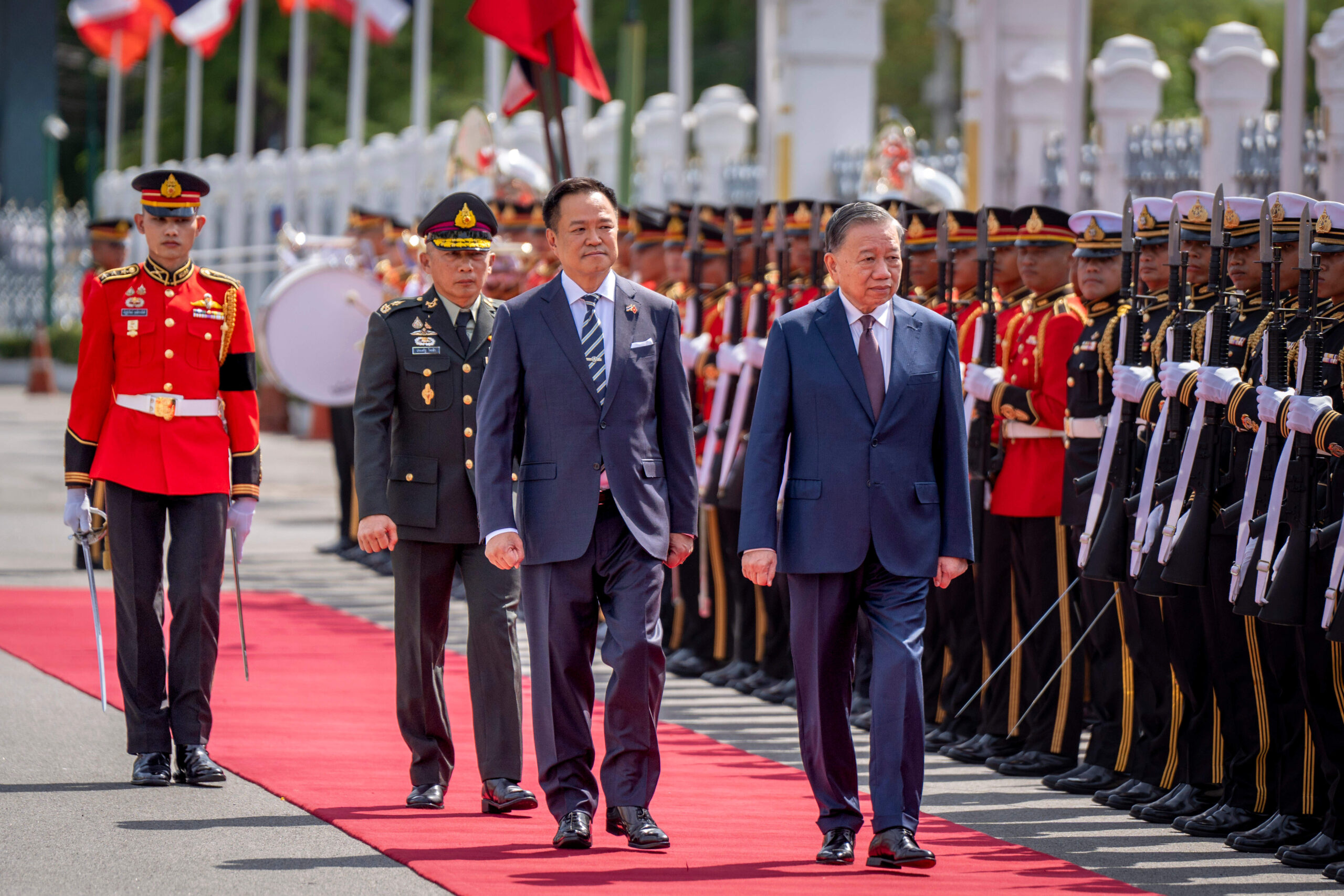
To Lâm’s life, however, has been more flamboyant than that of most colleagues: he divorced his first wife after having two children, then remarried—a rarity among officials of his generation. His second wife, Ngô Phương Ly, is thirteen years his junior and the daughter of an artist and an actress. She studied painting, worked as a television presenter, and became Vietnam’s youngest First Lady. He is also known to be a passionate collector of antiquities.
As Public Security Minister, he oversaw the construction, in 2023, of the luxurious, ultramodern Hoan Kiem Opera House in downtown Hanoi. It remains unclear whether Ngô Phương Ly wielded influence, but this grand cultural venue is managed jointly by the ministry and the city, and is likely to showcase state-sponsored or at least taste-aligned “arts.”
Another less well-known episode occurred in 2017, also under his watch: the installation of a bust of Félix Dzerzhinsky, nicknamed “Félix the Iron,” at his alma mater (now renamed the Popular Academy of Security Services). Dzerzhinsky, a close associate of Lenin, founded and led the Cheka (the predecessor of the KGB) and played a key role in the creation of early concentration camps that would later become the Gulag.
Can one be both capitalist and an admirer of Dzerzhinsky?
To answer that, one must examine the political, social, and economic trends in Vietnam since the onset of market reforms more than three decades ago. The tensions in To Lâm’s profile align quite well with these evolutions.
From a Severe Crisis to a Tepid Reform
The Soviet model, which the Vietnamese Communist Party adhered to faithfully until the mid-1980s, precipitated a severe economic crisis and threatened mass famine. It was then that a new generation of leaders drew inspiration from Mikhail Gorbachev’s reforms in the Soviet Union and implemented an economic program of “renovation” (Đổi Mới) beginning in 1986. After witnessing the collapse of the communist regimes in Eastern Europe in 1989 and then the USSR in 1991, Vietnamese leaders turned principally to the Chinese model, favoring economic reforms without political reforms.
They liberalized prices, permitted commercial activity and private enterprises, abandoned the agricultural cooperatives that had doomed Vietnamese farmers to chronic hunger for decades, opened the country to trade and investment, allowed Vietnamese to travel abroad, and welcomed diaspora members back to the homeland.
Yet the government retained public ownership of land and kept control of the major economic sectors. It allowed neither a free press nor private, privately run organizations—social, cultural, or political. As the economy liberalized, the state—with its constitution, laws, and institutions such as the army and police—adopted the most modern surveillance technologies to monitor society. Vietnam may appear capitalist from the outside, but its internal workings remain fundamentally communist.
More than three decades have passed since that crisis, and the country has undergone a profound transformation. It is no longer the poor, defenseless state it once was. Each year foreign investors pour tens of billions of dollars into the economy, employing millions of local workers. The better standard of living has given rise to an urban middle class and a nascent civil society, developing under tight police oversight.
Vietnam’s annual export value now equals its gross domestic product. Besides natural resources and agricultural products, manufacturing constitutes a sizable share of exports, creating the impression that the country is rapidly industrializing and will soon become an Asian tiger. In reality, Vietnam’s manufacturing exports rely on a low-skilled workforce that mainly assembles products whose components are largely manufactured abroad—in China, South Korea, and Taiwan. This places Vietnam in the global value chain as a low value-added production hub. To Lâm publicly lamented this situation, and his policies aimed at accelerating growth through greater centralization of power appear to reflect a desire to imitate Xi Jinping’s China.
The Era of Strongmen
To understand General To Lâm, we must look a bit further back. Since the 1990s, the government has tolerated private enterprises, but, with few exceptions backed by political support, it prioritizes state-owned enterprises as symbols of the country’s “socialist orientations.” After long internal debates, the Party permitted its members to run profitable enterprises, a move once deemed “exploitative.” Because the state still owns all land—whose value continues to rise—Party members and their families exploited their political connections to obtain land-use rights for nominal sums. Once development had been unlocked, they could reap enormous profits. Political connections became valuable assets, and government and Party roles became commodities regularly bought and sold for sums ranging from thousands to millions of dollars. Corruption permeated every level of government, eroding much of its legitimacy. If Vietnam’s leaders share a desire to monopolize power and preserve the Party regime, a parallel system of rival personal networks emerged, built on power and wealth, fiercely contesting control of key positions within this Party-State.
It is in this climate that Nguyễn Phú Trọng emerged in the mid-2010s as an ideologue determined to purge the Party. He gradually tightened the center’s grip and launched an anti-corruption campaign inspired by Xi Jinping’s in China, dubbed the “furnace to burn the stove” (đốt lò). To expose corrupt officials, he depended on the Public Security Ministry, which possesses the authority and means to investigate and prosecute.
Under To Lâm’s leadership, the Public Security Ministry became one of Vietnam’s most powerful institutions, rivaled only by the Ministry of Defense. It supervised local police and the base-level security forces. It employed millions of people, ranging from village cadres to national-level officials, including undercover agents who operated within schools, religious institutions, cultural circles, NGOs, and Vietnamese diaspora communities around the world.
In Vietnamese politics, it is widely known that most officials maintain close ties with certain “private” firms, often—but not always—headed by relatives. These businesses leverage these relationships to obtain land in prime locations, generous state bank loans, business licenses, and lucrative government contracts. In return, they provide funds to officials, funding luxurious villas, the expensive overseas schooling of their children, and lavish gifts for superiors during promotion processes. Officials avoid publicizing these links, but the companies must reveal them to secure favorable treatment, making these ties “business as usual” secrets. It was therefore easy for To Lâm to quietly gather information about potential targets and reveal it when opportune. Simultaneously, he could learn more about his rivals than they did about him.
A Man in the Right Place at the Right Time
The general To Lâm found himself precisely in the right place at the right time and proved to be a valuable ally in the crackdown led by Trong. Arrests, including of law-abiding activists, sowed fear within civil society.
Trong’s anti-corruption campaign removed thousands of high-ranking Party cadres over a decade, including several Politburo members. To illustrate the reach of this purge, consider the case of Trinh Xuan Thanh, a corrupt leader within PetroVietnam who fled to Germany and sought asylum there. To Lâm organized a covert mission that culminated in Thanh’s spectacular abduction in a Berlin park, followed by his repatriation to Vietnam via the Czech Republic and Slovakia.
Despite Trong’s public pledge that no corrupt official would escape accountability, the purge targeted only those he wished to remove, not members of his own network. As head of the security apparatus, the nation’s most corrupt institution, To Lâm was far from spotless. Although there has been no public evidence of his personal corruption, he gained notoriety in a viral video in which the famed chef Salt Bae serves him a piece of beef drenched in gold leaf at a luxury London restaurant.
Perhaps that clip earned him the nickname “hedonist.” Yet it did not halt his career. As Trong’s health faltered in 2023, To Lâm launched a broader offensive against senior Politburo members, some of whom were potential successors. In the first six months of 2024 he managed to push out five Politburo members.
One could almost imagine an imperial-era scene in Vietnam or China, where an usurper blocks access to the palace and forges the will of a dying emperor to seize the throne. When Trong died in July, To Lâm found himself first in the line of succession.
More Power for One Man
To Lâm’s ascent to power was not only unexpected but also unprecedented. He became the first police general, head of the security apparatus, to occupy the highest post within the Party. Contrary to the official Party regulations governing this post, his professional experience was confined to a single central ministry. While he could not have achieved this maneuver without the support of other key leaders, he appears to have outpaced his principal rivals.
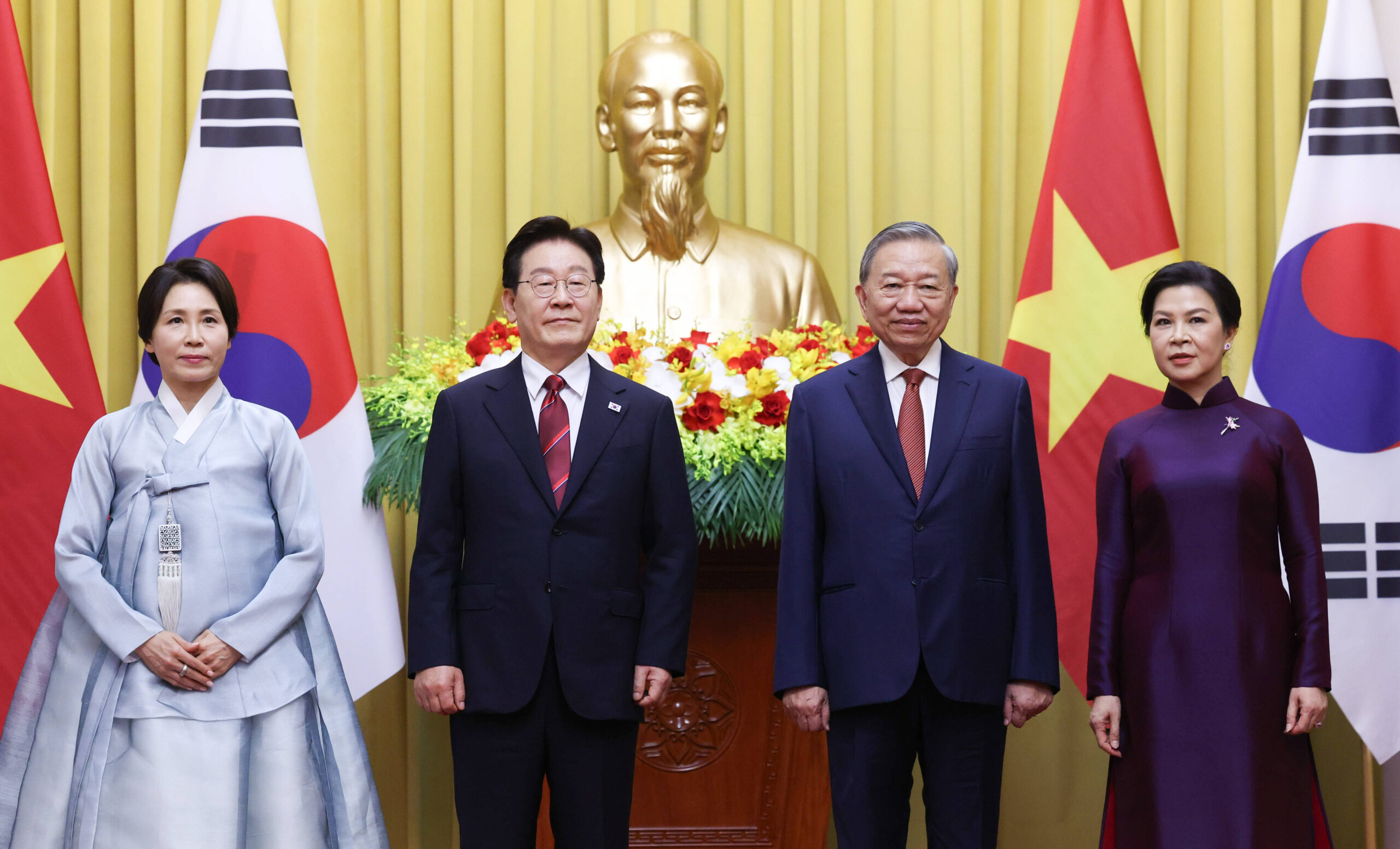
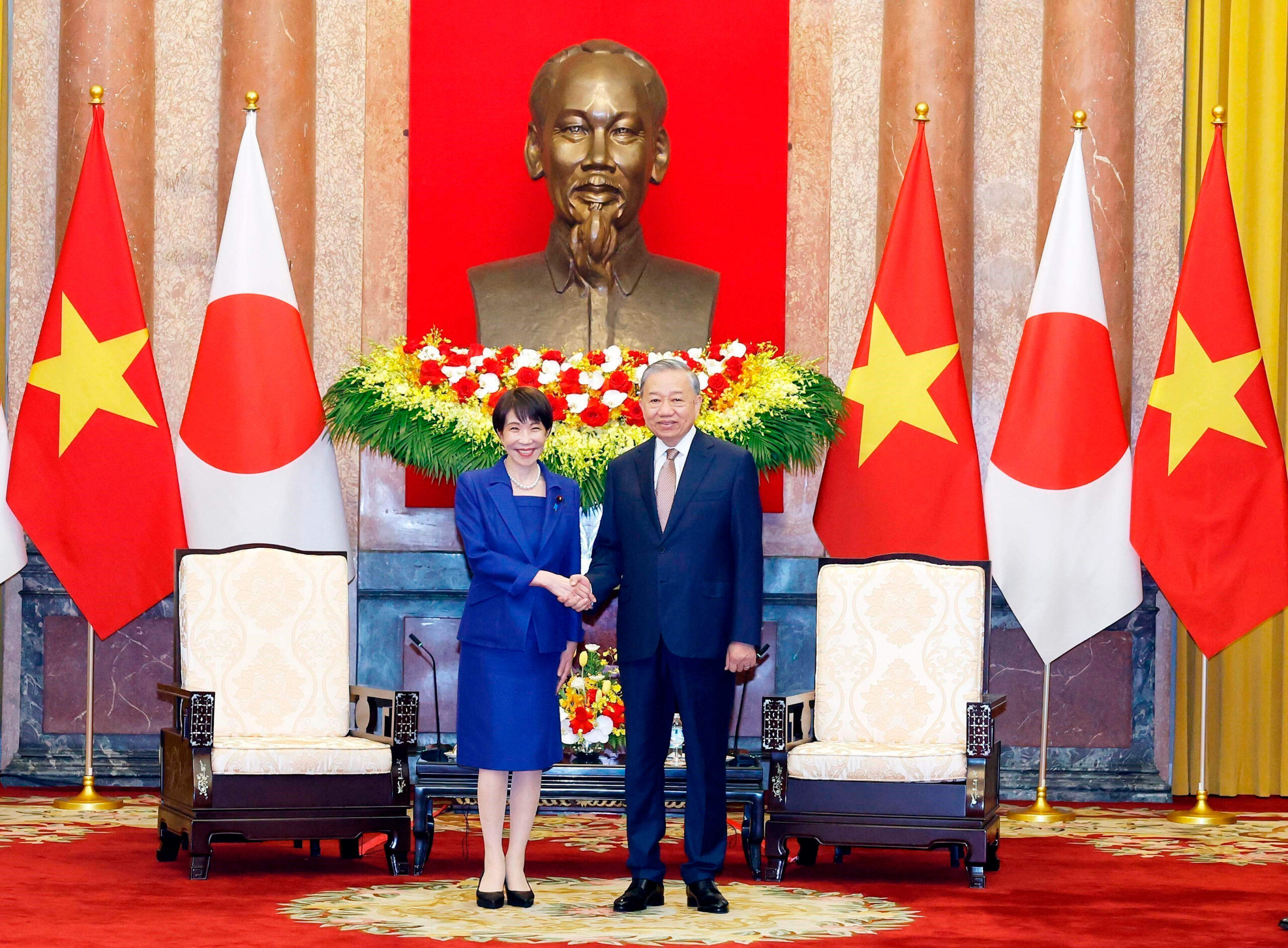
Nevertheless, he did not stop there in his quest for greater personal power. After a brief tenure as President of the Republic from May to October 2024, he ceded the post to General Lương Cường, thus honoring the unwritten rule that the two highest offices be held by two different individuals, ensuring collective leadership. Once his authority within the Party was consolidated, he was reelected General Secretary at the 14th Congress in January 2026, and was elected President in April for the 2026–2031 term. By combining these two roles for an extended period, To Lâm became the most powerful Party leader since its founder, Ho Chi Minh.
Whether one man should hold simultaneously the posts of Party Secretary and State President had been a running debate within the Party leadership for some time, and it may be justified in the name of efficiency. Vietnam’s leadership looks to China, where Xi Jinping holds both roles. However, the measures To Lâm took to place trusted aides—drawn from the security apparatus or from his native Hung Yen—will likely provoke resentment. No fewer than a dozen such individuals—all men—now occupy positions across various state and Party bodies as well as many provinces.
What About the “New Era”?
Politicians love to promise what they may not deliver. But in Vietnam, Communist officials do not ordinarily campaign for voters, nor do they make commitments in the conventional sense.
If To Lâm is an exception, it may be due to the exceptional circumstances surrounding his ascent. The deficit of legitimacy would have been too conspicuous without some extraordinary promises. At the same time, pledging a new era of strong economic growth was probably aimed at securing the assent of political elites to the concentration of his personal power and to his radical policies, such as the administrative rationalization.
Yet To Lâm and the regime take substantial risks. By repressing civil society, Vietnam’s leadership has stifled democratic aspirations that might have emerged peacefully, as in South Korea or Taiwan. Now that peaceful expression is no longer possible, those aspirations could give rise to violent confrontations.
Economically, Vietnam simply does not have the capacity to sustain double-digit growth without fueling inflation and debt. When costly projects are handed to a handful of private conglomerates lacking expertise, corruption, delays, monumental cost overruns, and enormous public debt are hard to avoid. Concentrating power in the hands of one man also poses a significant risk to the regime’s succession. At nearly seventy years old today, the general may not remain in power for more than another decade.
The Communist Party of Vietnam will celebrate its centenary in 2030. Will General To Lâm have brought renewal, or will he merely have accelerated its decline?