

All summer long, le Grand Continent will stay in motion. Every day, we will bring you, wherever you are, ideas you won’t find anywhere else (but that will be everywhere by the rentrée), texts unavailable or refreshing with our Sundays. To receive them directly in your inbox and support this momentum, consider subscribing to the magazine
Dismissing Keir Starmer to bring Andy Burnham to power as Prime Minister of the United Kingdom seems to be a desperate gesture by a Labour Party in search of fresh faces capable of binding a cross-party electoral coalition. The aim is to remain a governing party, both at the national level and locally. Two years after winning a large parliamentary majority, Labour posted a disastrous score in local elections and is being overtaken by Reform UK in the polls. On the right, older voters from the working class are defecting to this far-right identity party, while on the left, liberal middle classes are turning to the Greens and to nationalists.
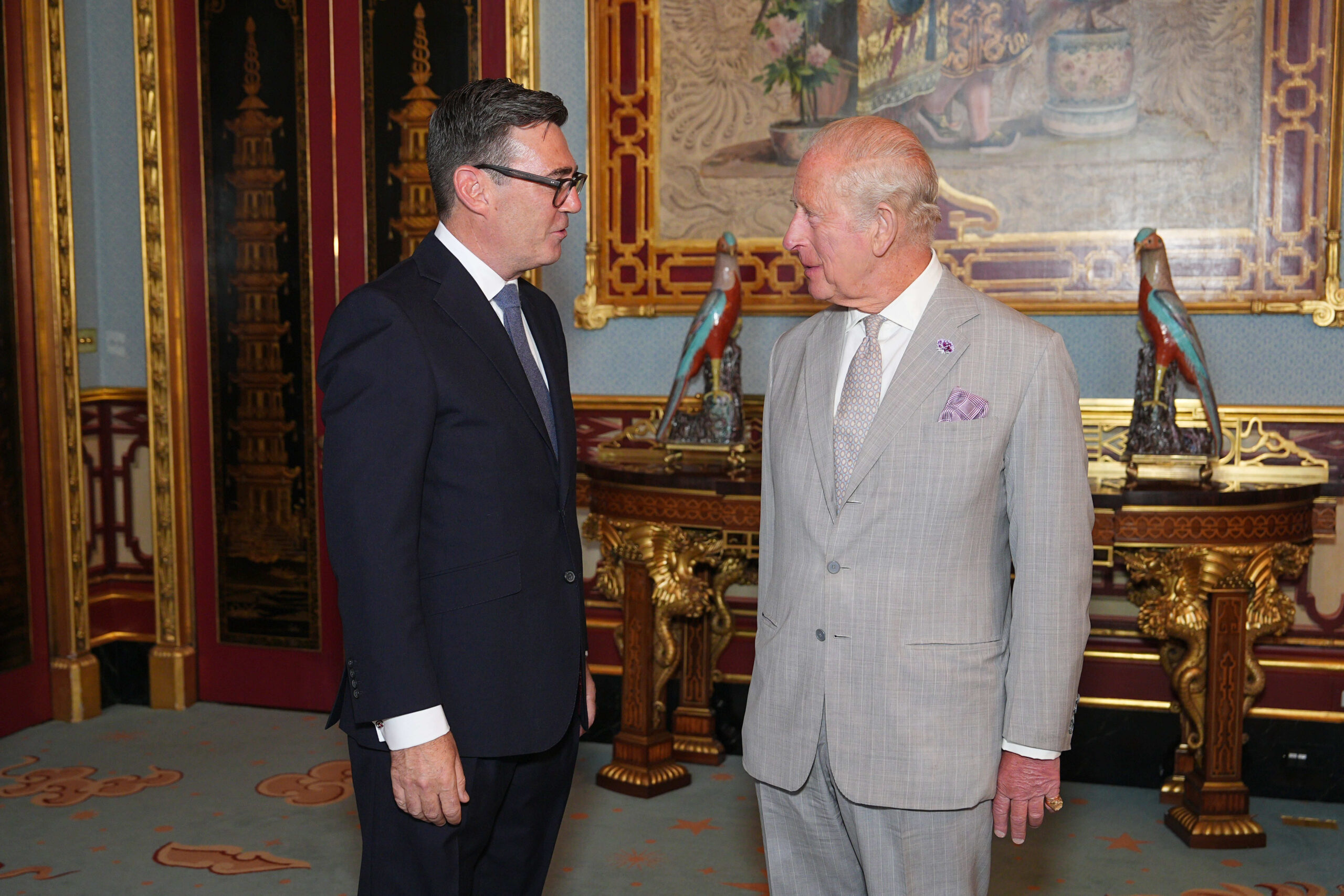
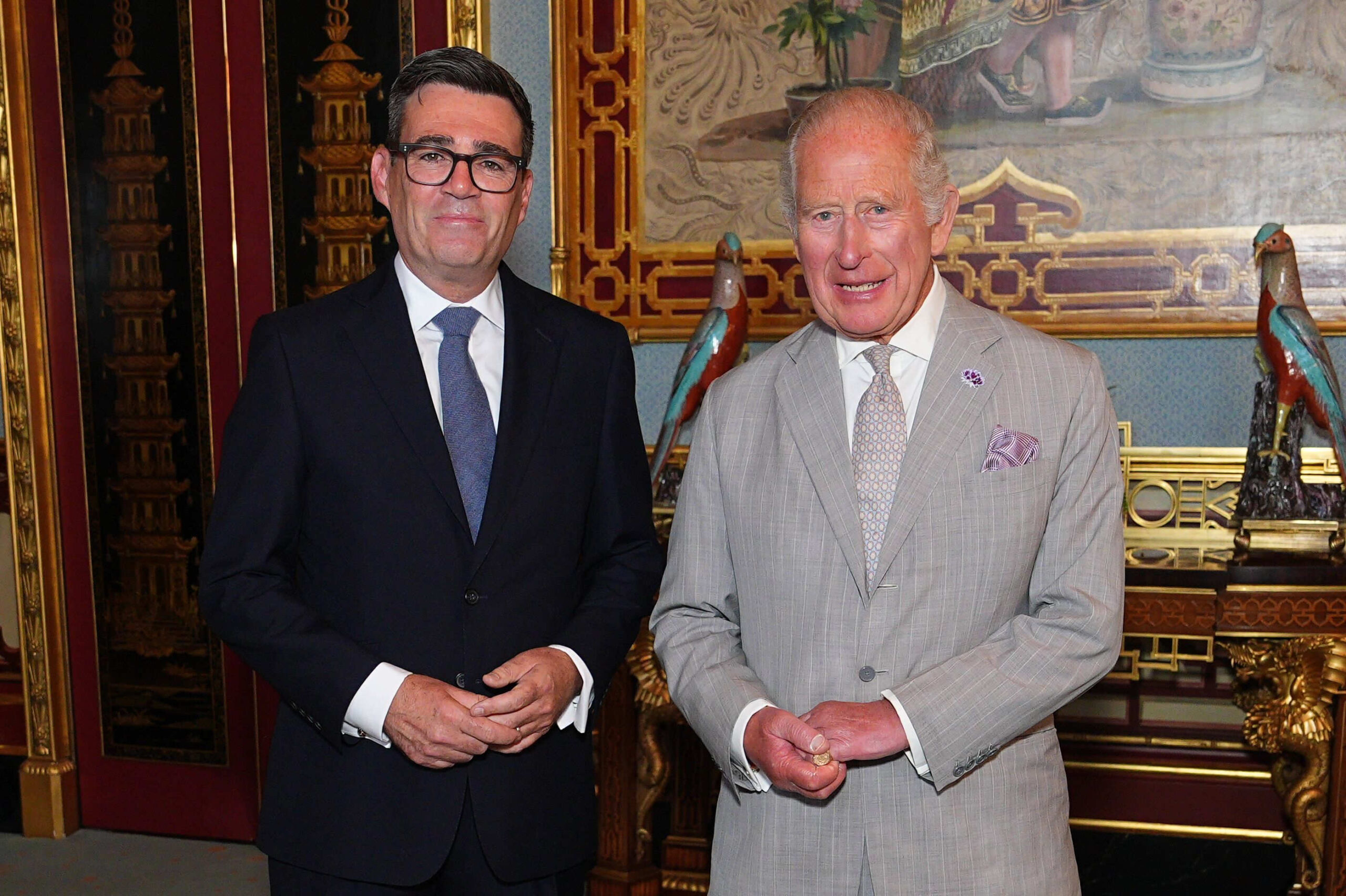
The Labour Party, now facing an existential threat, has therefore chosen this former mayor of a northern English city to take its helm: until very recently, Burnham was not a Member of Parliament, as were most of his predecessors. His rise has been meteoric: at 56, mayor of Greater Manchester from 2017 to 2026 and nicknamed the “King of the North,” it was only on June 18 that he was elected to the House of Commons, by winning the Makerfield by-election. His breakthrough directly precipitated Starmer’s downfall, who announced his resignation on June 22. The sole candidate in the running to lead the Labour Party, Burnham secured the support of about 95% of the 403 MPs in the group and of 11 affiliated unions. This endorsement from the party machinery thus spared him any on-the-ground clash over policy programs.
In his first speech as Labour Party leader, delivered at the headquarters of the trade union confederation TUC in London, Burnham argued for “a new path” for Labour, which begins with a refusal “to be greener than the Greens, nor more reformist than Reform UK.” He pledged an “economic renewal,” rooted in reindustrialization, support for small businesses, and greater public control of water distribution, transport, and the energy sector. He positions himself to the left of Starmer, whose government had been weakened by internal opposition from the party’s left wing over social welfare.
It is the continuity of a new political offering that he claimed throughout his astonishing ascent: “Manchesterism.”
What is Manchesterism?
Manchesterism designates first and foremost a transfer of powers and funding from the center to local authorities, modeled on the experiment at the scale of Greater Manchester.
Concretely, this doctrine covers the full spectrum of powers transferred to a metropolis led by an elected mayor: the public takeover of local transport through franchising private bus operators, the management of the health and social care budget (officially transferred to Manchester in 2016), and the development of a territorial industrial strategy. The project promises, in Burnham’s terms, to “pull power back from the center.”
But Manchesterism is also, according to Burnham himself—especially those remarks he delivered before the think tank Centre for Cities—an ideological project with broader scope. The new British prime minister makes it an instrument that will mark “the end of neoliberalism,” while describing it as “business-friendly socialism.” Finally, he sees it as “a modern and functional response to the trap of deep inequalities and slow growth inherited from the 1980s, which privatized economic power and centralized political power within the Treasury.” In this discourse, Manchester decentralization is thus no longer presented as a simple local institutional arrangement, but as the reversal of a double movement begun in the 1980s: privatization of the economy and centralization of the state.

This ambition is radical within a highly centralized unitary state, where local authorities have only limited fiscal autonomy: only 20% of the resources of British local authorities come from local taxation.
But if Burnham promises decentralization of power, is Manchesterism in itself a scalable, reproducible project across the four nations that make up the United Kingdom? Can decentralization improve social welfare and stimulate England’s economic growth? Can it avert separatist ambitions and prevent the breakup of the United Kingdom? In the three Celtic nations — Wales, Scotland and Northern Ireland — nationalist governments already benefit from decentralization agreements and consider expanding them a necessary step toward independence.
Manchesterism in Manchester: what results?
Manchesterism remains a rather hazy concept. When one attempts to illustrate it, one example keeps returning as its sole success to date.
Between 2021 and 2025, Burnham waged a battle against private operators, so that local buses would come under public control, with cheap and subsidized tickets. Everything is now operated under franchising. The decision, taken in March 2021, withstood a legal challenge, dismissed in 2022, before the scheme was rolled out in stages, from September 2023 to January 2025.
However, this success must be weighed against two caveats. First, the Greater Manchester mayor was far less bold with motorists: after proposing the creation of a low-emission zone, he backed down in the face of opposition. Second, the success of the municipal takeover of buses is unlikely to be transferable to other sectors: this model of public management is not applicable to capital-intensive services such as water or rail. In these two areas, revenues are not enough to cover the costs of the investments needed to maintain infrastructure, nor to repay borrowed capital, whether public or private.

What Burnham has achieved in the social domain has also been largely constrained by national frameworks and funding limits. The management of the health and social care budget, devolved to Manchester in 2016, ended in disappointing results: an independent evaluation published in 2024 indeed found results that were positive, negative, and some effects with no clear significance. Notably, two decades of decentralized NHS service management in Wales and Scotland have not yielded notable improvements in hospital care for acute illnesses, nor major innovations in prevention. So, decentralizing budgets and their management does not guarantee, in health terms, better steering of this vast and complex system.
Voicing the image of a Burnham ready to revolutionize Manchester, full of innovative ideas, is also a somewhat simplistic simplification. The franchised bus network model existed in London before being adopted in Manchester. As for the 2019 industrial strategy, it simply drew on existing forms of municipal governance: like all City Deals and Growth Deals, it relies on high technology and incubation in future strategic sectors, rather than developing ordinary city activities. Built around five development pillars — advanced materials and manufacturing; digital, cybersecurity and AI; innovation in medicine and life sciences; creative industries; low carbon — it promises, on this basis, to build an economy that “leaves no one behind.”
Yet it is precisely the residents of the peri-urban zones that Greater Manchester’s policies have not sufficiently considered, who now find themselves left behind. The engine of Manchester’s development over the past thirty years has always been real estate investment tied to the city center’s tall towers, where one-bedroom and two-bedroom flats are rented to young workers. An independent study describes Manchester as a “centripetal city”: demographic growth and productivity gains concentrate in two central boroughs, Manchester and Salford, while the eight peripheral boroughs are kept out of this growth. Moreover, the rise in office jobs located in downtown Manchester contributes to draining the business district of the neighboring city of Liverpool.
Thus, Manchesterism is not so much a large-scale political project as a screen on which the Labour Party’s many internal factions now project their hopes. Burnham publicly promises “good growth in every postcode and hope in every heart” across the United Kingdom. But if local political action under Manchesterism cannot produce satisfactory results, as we have shown, how could it succeed now that its implementation depends on the central state and its expanded powers, which Burnham now wields? Since July 20, he has dictated national budgetary and monetary policy, indicated the path for incentive and subsidy powers, and manages the entire set of regulatory levers.
The thorny problem of growth in the United Kingdom
It is to be expected that, under Burnham, as under Starmer before him and under their Conservative predecessors, this state machinery will be used for centrist, consensus purposes at the heart of the British political spectrum: to restore growth in production and productivity that has stalled since the great financial crisis of 2008. This priority—note the environmental deadlock so long as growth and emissions remain coupled—seems ill-suited for several reasons. The first, practical, is that sustained British expansion is unimaginable through the sole use of traditional economic policy levers. The second, political, is that growth matters to the ruling class and remains one of its principal obsessions, but not to ordinary households, for whom this objective is no longer as relevant.
The traditional British economic policy cannot deliver sustained growth because it cannot counterbalance environmental and structural constraints. Internationally, the UK is part of a multipolar and geopolitically unstable world, whose supply chains have been disrupted by the Covid-19 pandemic, by wars, and by unpredictable climate shocks. Domestically, the country’s dominant service sectors—the finance industry and higher education—are in the late stages of expansion, and the 3% share of global R&D that the UK accounts for has little chance of allowing it to regain global leadership. Ordinary manufacturing is unattractive in a country where industrial electricity is among the most expensive in the world, not to mention exchange-rate risks and post-Brexit supply chain complications.
Nevertheless, for reasons tied to governing, restoring growth remains a central concern for the Labour Party and other British political formations—except for the Greens, who have made it a point of division. The payoff of steady 2% growth in output would indeed raise tax revenues, greatly aiding the balancing of competing public expenditure priorities such as health, welfare, and defense. At the same time, policymakers claim or assume that productivity gains will translate into a slow rise in real wages, without considering the possibility that, in today’s financialized capitalism, any surplus is more likely to be captured by capital in the form of higher profits.
For ordinary households, knowing whether real wages rise or fall matters less and less. Putin’s war in Ukraine, launched in 2022, has driven energy costs up and food inflation by around 30%. The current conflict in the Middle East will likely have similar effects, but on an unpredictable scale. The question, therefore, is not whether wages will rise, but whether the growing imbalance between incomes and expenditures is here to stay. There is also the question of the squeeze on residual income caused by the rising prices of the four essential market goods: housing, energy and network services, food, and transport. This yields what Britons call the “cost of living crisis” and Americans call the “affordability crisis.”
As we have detailed elsewhere, in the United Kingdom and other wealthy countries, many households live far below their expectations. The poorest endure daily absolute deprivation and are forced to choose between heating and eating, while the middle classes experience deprivation that is relatively more modest, but which makes home ownership more distant and other forms of social participation harder to access. As anger and frustration accumulate, these households are increasingly inclined to believe that “nothing works,” and when called to vote they abstain or vote for radical parties. Culture and material conditions are of course intertwined in these processes. Tackling the cost of essential market goods is surely a necessary, if not sufficient, condition for centrist parties to competently challenge the left and right flanks that are the most radical.
A group of Burnham supporters, concerned with this crucial cost of living issue, exists in Parliament as well as in think tanks. Their parliamentary voice is led by former Secretary of State Miatta Fahnbulleh, supported in her work by Mathew Lawrence of the Common Wealth think tank. Fahnbulleh argues that Britons have endured excessive economic pressure and that they urgently need relief, while Lawrence maintains that everyday goods have reached prices far too high due to a loss of state control over what used to be the foundations of a decent daily life and ordinary economic activity.
Yet, does Burnham truly have a free hand to tackle the cost of living issue? From the outset of his term, one should expect spectacular announcements of the “immediate action” type, aimed at shaving a few hundred pounds off electricity and gas bills, which currently run at about £1,850 per household. The announced measures could include scrapping the green taxes proposed by the Nesta think tank, i.e., an immediate relief of £130 per bill. Yet such changes will remain modest, and will be far from sufficient if the Hormuz Strait reopens in the autumn: if it does, a rally in gas prices is likely next winter, with the seeds of a lasting food inflation.
Andy Burnham, a Prime Minister Hamstrung from the Start
For now, it is difficult to predict what Burnham will accomplish—or, rather, how quickly he will fail. He became party leader without having to put forward precise policies that would be judged by voters, whether in a general election or an internal party competition. It is only words that have emerged, for instance about his desire to break with “40 years of neoliberalism,” combined with a heterogeneous set of largely familiar or recycled buzzwords: decentralization, public control, growth and reducing the cost of living, to which his longstanding concerns for elderly care and electoral reform in favor of proportional representation are added. In the United Kingdom, wielding power has come to resemble the tough tasks of cooking shows, where contestants are given a basket of ingredients and must, within a time limit, cook a dish that will please the jury. In Burnham’s case, constraints are as much financial and administrative as they are temporal.
A large part of what Burnham wants to do requires higher public spending. The budget framework he inherits is, however, exceptionally constrained: net public debt is close to 95% of GDP, and the March budget recorded a deficit of 4.3% for 2025-2026, with a path to reduce it to 1.6% by 2029-2030 — subject to adherence to the fiscal rules set by former Chancellor of the Exchequer Rachel Reeves, which require balancing current spending and revenue. The room for additional debt is all the more constrained as the UK already bears the highest borrowing costs among the OECD rich countries, with bond markets demanding a risk premium.
Tax increases are also constrained by Burnham’s explicit acceptance of Labour’s 2024 pledges not to raise income tax, VAT, or social security contributions, which together account for about two-thirds of revenues. With revenues capped, competing demands for extra spending—health, welfare, defense—are abundant, and the IMF already recommends that any increase in one area be offset by cuts in another. What the UK needs is not tax hikes but tax reform, including a land value tax and a household income tax. But none of these can be implemented before the next general elections, which must take place no later than August 2029.
The other type of constraints, less discussed but equally powerful, is administrative and legislative. Take water, where the electorate rightly demands public control of private companies. Ending untreated wastewater discharges into rivers requires increased investment, funded by a much larger revenue pool, which implies reform of the regressive pricing system that cannot be achieved quickly. At the same time, the existing special administration regime complicates the public takeover of Thames Water, which is insolvent: the state will become the new owner of the company only if it is the highest bidder and after debt is erased. Other companies are heavily indebted, so all major water investment projects must now be done off the balance sheet, under the Private Finance Initiative (PFI), which disadvantages the public but can only be replaced if the state can find the investment funds.
The financial constraint and these granular complications mean that, in many areas, the results of policies are likely to be modest and inconclusive. The Burnham government will not end—to avoid misquoting T. S. Eliot’s famous line—either with a bang or with a whisper, but in a clash of narratives between Labour and its many opponents.
A prediction is therefore possible. The United Kingdom currently has three Celtic nationalist parties and five English parties, each drawing 10–25% of voting intentions. Whatever he does, it is unlikely that Burnham will bring Labour back to the 34% of votes obtained in the 2024 general elections, and it is inconceivable that he will lift Labour’s share to the 43% Blair achieved in 1997. Likewise, under a first-past-the-post system with five English parties in tight competition, almost any outcome is possible in the 2029 general elections. This will disappoint Labour MPs who elected Burnham hoping to hold onto their seats. But a new majority could be amenable to some form of proportional representation that recognizes new realities and the end of the Labour/Conservative duopoly.