
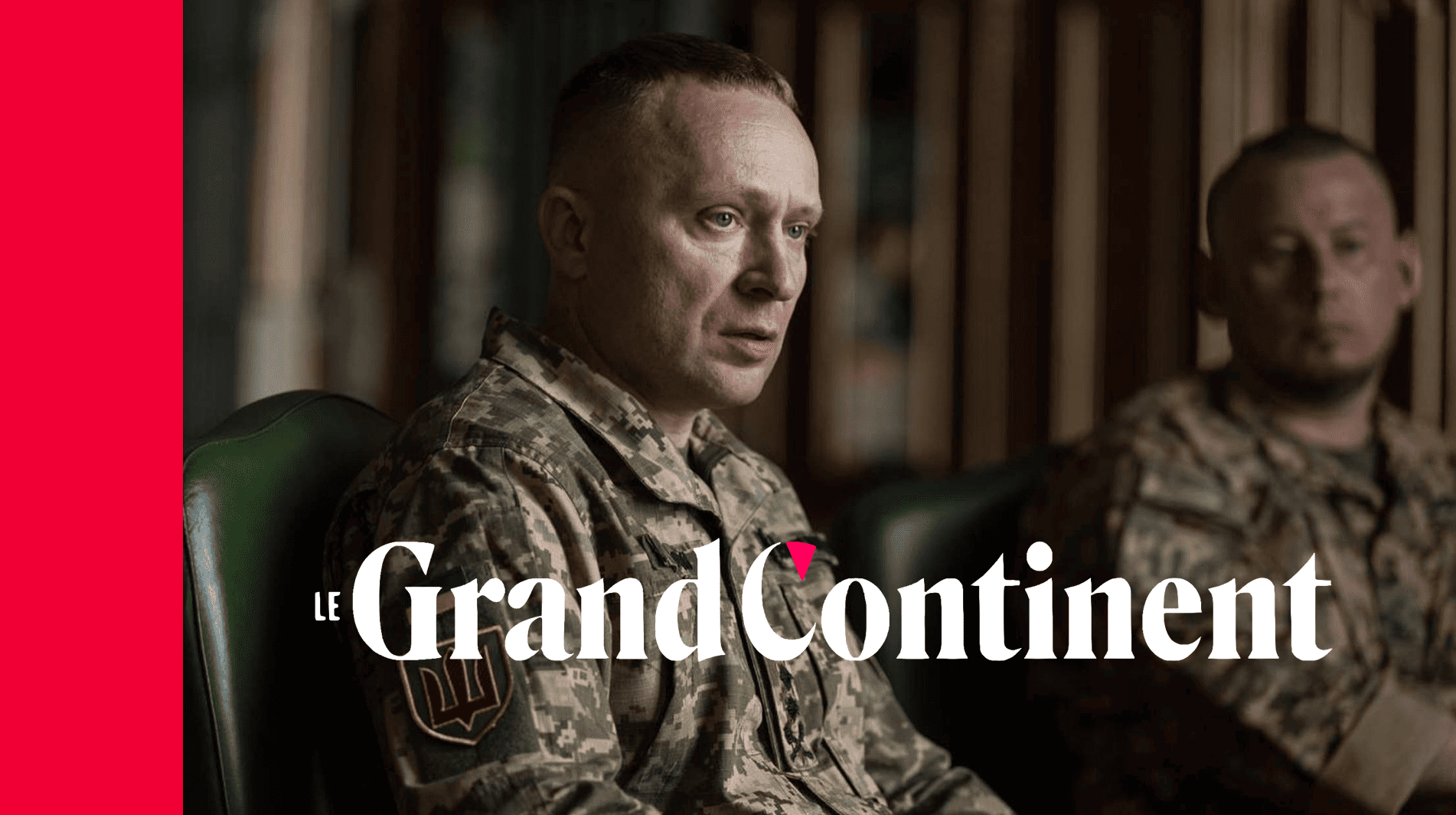
The replacement announced yesterday, Tuesday, July 21, of the Commander-in-Chief of the Ukrainian armed forces, Oleksandr Syrsky, who had himself succeeded Valeri Zaluzhny in 2024, by Mykhailo Drapatiy occurs in a context of political crisis sparked by the dismissal of Defense Minister Mykhailo Fedorov on Wednesday the 15th.
- The following day, Thursday the 16th, Fedorov said he had urged the Ukrainian president to end Syrsky’s tenure, a move Syrsky had refused.
- While Syrsky denies any internal rivalry with Fedorov, analysts and Ukrainian sources have seen in the minister’s dismissal the influence of the army’s old guard.
- The decision, highly unpopular, triggered a significant wave of protests across the country, one of the two main demands being the replacement of Syrsky.
Aged 43, Drapatiy is part of a new generation of Ukrainian-trained officers, breaking with the cadres who came from the Soviet army, just like Syrsky, whose tactical approach, much criticized, is inherited from his training at the Moscow Higher Combined Arms Command School, and from his years spent in the Soviet motorized rifle units.
- Mykhailo Drapatiy became a hero in 2014 for having crossed with his BMP a barricade erected in Mariupol by pro-Russian separatists.
- The images of the infantry fighting vehicle piloted by Drapatiy, who at the time commanded the 2nd Battalion of the 72nd Mechanized Brigade, were broadcast on television channels around the world.
Since 2022, Drapatiy has played a key role in the liberation of the right bank of Kherson, helping to stop the Russian advance toward Kryvyi Rih. In 2024, he was sent to the Kharkiv region to slow a Russian offensive, and in November 2024 he was appointed commander of the Army’s Ground Forces. He took command in autumn 2025 of the Joint Forces Group, which operates in the Kharkiv sector.
His appointment sends an important signal to Ukraine’s younger generation, both military and civilian, who believe that the war cannot be won by clinging to methods inherited from the Soviet Union.
- Drapatiy belongs to a young generation of officers trained since 2014 by the war against Russia and, like Fedorov, advocates for a greater role of drones and other unmanned systems within the army.
- In 2025, after a Russian missile strike on a training ground that killed 12, Drapatiy had offered his resignation, a decision which, according to analyst Rob Lee, “demonstrated his leadership qualities.”
- He stated: “An army in which commanders are personally responsible for the lives of the men is a living army. An army where no one is responsible for losses withers from the inside.”
However, Drapatiy will face several challenges.
- The first—and potentially the most important—will be to rally the support of officers who, in exchange for favors and command posts, had shown loyalty to Syrsky. They may view Drapatiy as a threat, given that he is likely to promote younger officers to positions of responsibility.
- The second will be to reform Ukraine’s mobilization system. As Mick Ryan explains: “Frontline units are exhausted and understaffed, and the average age of soldiers on the front is well over 40… It is now urgent to adopt a more sustainable approach to recruitment, especially in the event of a new mobilization in Russia after the September elections.”
- Finally, his appointment comes at a turning point: the Russian army’s advance is slowing, and Ukraine’s short- and medium-range strike capabilities are putting considerable pressure on Russian rear areas. Drapatiy will need to maintain this momentum while modernizing and reforming the army.