
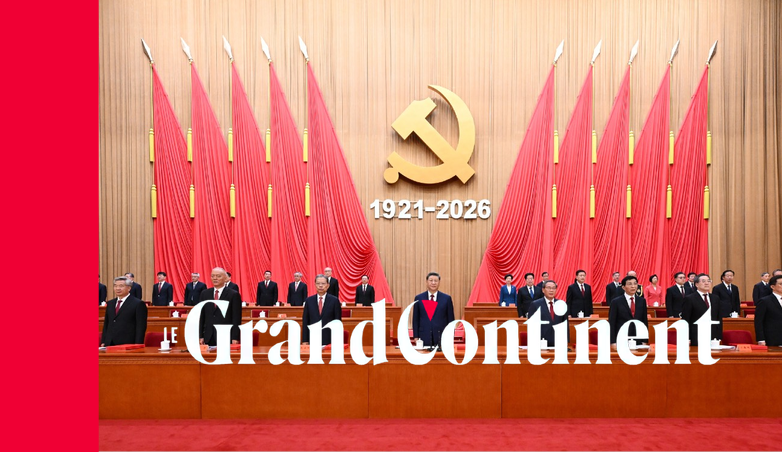
Wang Huning is often regarded as the leading ideologue of the Chinese regime. He is also a member of the Standing Committee of the Political Bureau, the highest ruling body of the Chinese Communist Party (CCP), which comprises seven members, including the Chinese president Xi Jinping. Here we translate the first part of one of his most important articles, published in the summer of 1990 in the journal Fudan Journal (复旦学报) and titled “The Link Between the Total Volume of Resources in Society and Social Control: Implications for China?” (社会资源总量与社会调控:中国意义). In 1990, Wang Huning held a position as a professor of political science at Fudan University in Shanghai. He had also recently completed an academic stay in the United States. At that time, China stood at a political turning point following a decade of reforms. While the ineffective Maoist model was criticized, any challenge to the Party’s leadership was now proscribed. A year after the Tiananmen crackdown and a year before the collapse of the Soviet Union, the CCP was in search of a new ideology: this would be officially adopted in 1992 under the name of “socialist market economy” (社会主义市场经济).
This text by Wang Huning helps to understand why Xi Jinping’s ideology, the supreme leader of China since 2012, is in fact not new. Since the 19th Party Congress in 2017, China has officially entered a “new era” (新时代 xin shidai). Behind this vague term lies a simple principle: the CCP’s doctrine remains grounded in historical materialism, which holds that material conditions determine consciousness, and thus also the form of the political system. Democratic elections and the rule of law, according to the official ideology, belong to a “superstructure” specific to developed countries, determined by an advanced “infrastructure” made possible by those countries. By contrast, since China is a country still undergoing modernization and whose economy lags behind that of advanced countries, it must retain, for many years to come, a highly coercive and centralized system.
Above all, this Wang Huning article shows how a Chinese university professor can reformulate the official discourse by mobilizing theories from American political science and economic data, thereby legitimizing the Party’s Marxism. Wang Huning summarizes here the determinist conception of the CCP doctrine, which already, at that time, served to legitimize the regime’s authoritarian form. Since the “total volume of resources of society” in China is “low,” the CCP has but one mission: to close China’s economic gap with Western countries and postpone political evolution. More importantly, this long-term political evolution promised by Wang Huning — and, officially, by the CCP today — is not that of liberal democracy, but of Marx’s communism: a system in which “everyone contributes according to their abilities and receives according to their needs,” and where the coercive form of social control — the state — gradually withers away as productive forces develop. This determinist approach aligns with the current Chinese emphasis on technological development and new energy sources, which are among the “advanced productive forces.”
The Link Between the Total Volume of Resources in Society and Social Control: What Implications for China?
1)
The development of any society depends on several parameters: history, politics, economy, culture, geography, psychology, and so on. The growth of societies is generally governed by objective laws of historical movement, laws that stand outside human will. Yet, in reality, there are certain factors that can influence the development of societies.
In this article, the question concerns the influence of what we call the “total volume of resources” on social development, and the means by which individuals seek to influence society’s evolution. From the earliest ages through the era of large-scale modern production and new technologies, and through the emergence of a market economy in the 15th century, the evolution of any human society has obeyed two principles. On one hand, it is guided by a deterministic principle: it has its own laws, and in this sense, society’s evolution tends to exclude anything that does not meet the demands of history. This process strongly influences people’s consciousness. At the same time, individuals strive to steer the course of history to align with their expectations and their subjectivity. Whether human will coincides with the objective historical process or not, people always seek to act in this way. When human will aligns with the historical process, human intention often achieves its aims, even if the path is winding. Conversely, when it does not align with the course of history, human will is doomed to failure, even if individuals sometimes feel they are approaching the goal.
It is in fact impossible to steer the development of society solely from our subjective standpoint. This is the lesson of the theory of historical materialism. The principal constraint humanity faces is its material condition, and more specifically the level of development of productive forces and the relations of production. The productive forces themselves rest on two elements: the degree to which humans master nature and the level of humanity’s creative capacities. The theorists of historical materialism clearly emphasized this: “The premises from which we start are not arbitrary bases or dogmas; they are real bases that cannot be abstracted from except in imagination. They are real individuals, their action and their material existence, those conditions that they found already ready, as well as those born from their own actions.”
It is on the basis of this definition that we develop here the concept of the “total quantity of resources in society.” These resources correspond to both the level of human mastery over nature and the level of human creative capacity. This implies that the means used by individuals to control the development of society are in fact determined by the total quantity of resources, even though this determination is largely implicit. In the case of China, it is crucial to analyze the issue of the total volume of resources. The modernization process and external pressures push the country to advance rapidly. Understanding the concept of the “total volume of resources” will help us better grasp the form of social control best suited to our nation.
2)
Social control — which can also be called social regulation — here refers to the adjustment and management by the societal governing bodies of the diverse forces at play, in order to maintain a balance among them and to prevent contradictions and conflicts from jeopardizing society as a whole. In this article, we mainly analyze the forms that social regulation can take. These forms can be institutional or operational. The institutional form of social regulation concerns systems; for example, political and economic systems fall into this category. The operational form of social regulation concerns behaviors. The exercise of power and the mechanisms of regulation fall into this category.
The main thesis of this article is that it is important to think about the forms of social regulation in relation to the total volume of resources. Any society, in its development, confronts the transition from an old system to a new one, and when the old equilibrium is broken and a new equilibrium forms, society must test the validity of regulatory forms and sometimes redefine them. The forms of social regulation are part of the superstructure, and any change in the superstructure during historical development thus also implies a change in the forms of social regulation. As societal resources increase, change in the form of social regulation becomes inevitable. Conversely, if the total volume of resources in society remains unchanged, there is then no objective need to alter the regulation mode, or in other words, the conditions for change are not met. An increase or decrease in the volume of resources in society escapes human will: it results from an objective historical process.
3)
The actions of public authorities take on institutional and operational forms of regulation that vary according to the system in which they operate. The regulatory forms differ considerably depending on whether one looks from the perspective of a capitalist or a socialist system. Among the major differences between these two systems is the total volume of resources.
When a society enters a modernization process — as is the case for China and other societies — the link between the total volume of resources in society and social control becomes even more important. During modernization, one of the most important functions of social control is to rely on public power to extract and distribute society’s resources. The objective of social control is to promote societal development and to mitigate conflicts through a rational and efficient distribution of resources. Resource distribution is not the same across all forms of regulation: society’s resources are allocated according to principles, methods, means, and aims that differ depending on the forms of regulation.
It is possible to view every emergence of social conflict as a specific demand on a portion of the total resources in society. If society manages to mobilize enough resources to meet the demand, the conflict can be alleviated. The functioning and longevity of the various realms of society — political, economic, social, cultural, religious, military, medical, educational, etc. — essentially depend on the demand for resources. Of course, sectors that consume resources can sometimes also produce them, but in all cases there is a strong pressure when a demand for resource consumption appears.
From this phenomenon one can draw a fundamental conclusion: if the total volume of resources in society exceeds the aggregate of demands, public authorities can operate under relatively flexible and efficient conditions. If, on the contrary, the total volume of resources is less than the aggregate demands, public power may face greater difficulty in sustaining itself. Finally, if the total volume of resources in society equals the total needs, public power will occupy an intermediate position between these two situations. Of these three scenarios, the second and third (resource volume below or equal to demands) impose an objective constraint on public power: they require greater skill from the latter, and they tend to broaden the scope of regulations that go beyond ordinary procedures. In the first scenario, where resource volume exceeds demands, public authorities face less constraint, making regulation easier and enabling the continued use of ordinary procedures in conflict management.
Take here a simple example: in a group of 25 people who have 50 apples — that is, when the total quantity of resources in society exceeds the needs — the role of public power is simply to establish rules and procedures ensuring everyone a fair share. Assuming the principle of equal rights and supposing apples are indivisible, each person should receive an equal portion of the resources. In this setup, public authorities can perform their function with relative ease. By contrast, if the same 25 people only have 10 apples — again assuming equal rights and indivisible apples — the conflict among the 25 will inevitably be more intense than in the previous case, and public authorities will have to make a choice anyway, even though it is impossible to satisfy everyone. In this second case, the functioning of public power will, far from alleviating tensions, generate new tensions. Public authorities will have no choice but to resort to coercion. Obviously, in the first case they must also apply some constraint, but it will be less intense than in the second case. The example we employ here is admittedly abstract and simplified, but in the real world the link between the total volume of resources in society and social control often works in this way.
4)
In the opening pages of his work The Origin of the Family, Private Property and the State, Friedrich Engels cites a sentence from the book Ancient Society, written by American anthropologist Lewis H. Morgan (1818-1881): “All the great epochs of human progress coincide to a greater or lesser extent with periods of expansion of the sources of sustenance.” Karl Marx also noted this quotation in a summary of Morgan’s book, and he also highlighted another important sentence: “the entire question of humanity’s supremacy on Earth depended on its skill in this field [the arts of subsistence].” Friedrich Engels himself analyzed in detail how clan-based societies evolved as productive forces developed and wealth increased. The Marxist vision of the future society — the disappearance of the state and the establishment of a genuine social democracy — also presupposes a high level of development of the productive forces.
The theory of historical materialism acknowledges that the capitalist mode of production has enabled a tremendous expansion of productive forces: “The bourgeoisie, during its domination of a class barely older than a century, created more productive forces than had all previous generations together.”
Building on this total volume of resources, Marx asserted that after the abolition of private property, when production is concentrated in the hands of associated producers, the public power will lose its political character. In other words, once resources are sufficiently abundant to meet society’s needs, once human morality is sublimated, any system of coercion would become unnecessary. This is where Friedrich Engels’s famous statement in The Origin of the Family, Private Property and the State comes from: “the society which re-organizes production on the basis of a free and egalitarian association of producers will thus relegates the entire machinery of the State to the museum of antiquities, alongside the spinning wheel and the bronze hatchet.”
The theory of historical materialism has always emphasized that human emancipation would take two forms: liberation from social constraints on man, and liberation from natural constraints. If humanity fails to master nature efficiently enough to provide the means of production and subsistence, and to ensure a sufficient circulation of goods, it will ultimately find it difficult to enter the “realm of freedom,” with the “realm of necessity” continuing to demand coercive systems. Mastery of nature by humans corresponds to an increase in the total volume of resources in society, which depends on the level of development of productive forces. In other words, the link between the total volume of resources and social control not only helps us understand history but also enables us to anticipate our future.
5)
We regard the “total volume of resources in society” as a relatively broad concept that designates the factors capable of ensuring effective social control. However, it is composed mainly of material resources, such as natural, economic, financial, human, and scientific-technical resources. Material resources, however, are not an autonomous category; their existence is inseparable from the level of productive forces of a given society. This is especially true for natural resources: in the absence of productive forces capable of exploiting and fully utilizing them, natural resources can only be passive resources, not active resources. Passive resources refer to resources that exist in nature but do not participate in society’s functioning and development, and are not actively used by people to master nature or, more generally, to improve living conditions and to reduce conflicts in society. Active resources, on the other hand, are fully integrated into the production process: they are associated with human activity itself.
Beyond purely material resources, the “total volume of resources of society” can thus also include cultural resources, resources related to values, intellectual resources, and resources connected to power. In terms of social control, although it is ultimately material resources that play a decisive role, one should not underestimate the role of immaterial resources. Many contradictions that arise in social control cannot be resolved without material resources, but some contradictions can be mitigated by immaterial resources. In general, cultural traditions, religious spirit, civilizational orientations, and value preferences all have a role to play.
When Max Weber, in The Protestant Ethic and the Spirit of Capitalism, discusses the role of Protestantism in the development of Western society, he shows that Protestantism is not merely a spirit but is also fully part of the total volume of social resources. Without this component of Protestantism, the pressure from the scarcity of material resources would have been far greater on the society of that era.
Chinese society has always been a society where the total volume of resources in society has been insufficient; it has consistently been difficult to meet social needs. Yet the social control systems of many Chinese dynasties historically drew on an important resource — the “five principles governing human conduct” central to Confucianism: benevolence, righteousness, propriety, wisdom, and fidelity.
It is clear, however, that relying on these immaterial resources does not suffice to satisfy demands in society, and in the social control of that era these resources often resembled pure repression.
In the context of an absolute shortage of the total volume of resources in society, the use of coercion becomes an ordinary mode of exercising social control. The question is not whether the historical existence of Confucian culture is desirable or not; the historical existence of Confucian culture is a factual reality. Confucian culture could only decline when the volume of resources in society increased in the modern era. It is only thanks to this rise in resources that the Chinese will eventually be able to preserve the positive elements of Confucian thought while discarding its negative aspects. To this day, however, these conditions have not yet been met. In short, the total volume of resources in society varies with development; it can correspond to material resources in a narrow sense, but it does not consist solely of material elements.
6)
The total volume of resources that different countries can control varies across historical periods. There are two underlying trends: there are rich countries and there are poor countries. The abundance or scarcity of social resources can be considered in absolute terms or relative terms. In absolute terms, it refers to the total volume of resources available to a society. In relative terms, it depends on the relationship between this total volume and specific factors particular to that society.
The notion of the total volume of resources encompasses many aspects, including principal industrial and agricultural outputs. These are but a few examples: essentially, they are material resources. If one compares China with developed countries, the total volume of social resources in Chinese society is relatively small. In absolute terms, many indicators are indeed far below those of developed nations, such as Gross National Product (GNP). In 1987, China’s GNP stood at $270 billion, the United States at $4,524 billion, the Federal Republic of Germany at $898 billion. France at $724 billion, the United Kingdom at $504 billion, Canada at $367 billion, India at $246 billion, and Brazil at $250 billion. Due to differences in statistical methods, the actual gap between China’s GNP and that of other countries is likely somewhat underestimated, but it remains substantial.
This situation regarding GNP clearly informs us about the level of the total volume of resources in Chinese society. There are absolute gaps in many other areas as well. One can already draw a first conclusion: for a long period during China’s modernization, the total volume of resources in Chinese society will remain relatively limited. This fact imposes specific constraints on social control in China.
7)
If we turn to a relative criterion, the total volume of resources in Chinese society is still even lower. Several indicators, taken in absolute numbers, place our country among the top in the world. As soon as they are considered relative to population, these indicators become very low. In most domains, the per capita total volume of resources in Chinese society is below that of developed countries, and even below those observed in several developing countries.
To understand the true meaning of the concept of the “total volume of resources in society,” one must therefore view it in relation to the population. This situation is especially decisive in countries undergoing modernization, where the entire population is involved in the modernization process. In ancient or non-modernized societies, where autarky persists and individuals live in a certain degree of self-sufficiency, needs remain relatively modest. People’s expectations stay limited and do not undergo a sudden rise, as is the case in societies entering modernization. In such a context, the total volume of resources in society does not yet appear as a major constraint. Much of the population is outside social regulation, continuing to live relatively autonomously in a subsistence economy, while the resources captured by public authorities are allocated to a relatively small group of individuals.
In a state just entering modernization, these conditions no longer exist and can even disappear suddenly. In a society on the path to modernization, the entire population — or at least the absolute majority — is taken into account in modernization policy. Once modernization begins, it requires an expansion of society’s mobilization, which leads to a further rise in expectations and needs among its members. Therefore, the larger the population, the greater the absolute volume of resources required; but at the same time, as modernization deepens and spreads, the overall demand for resources also increases. This growth in overall societal demand can have two aspects: first, a demand characterized by its breadth; second, a demand characterized by its depth. Chinese society is currently experiencing rapid growth in both dimensions, further exacerbating resource shortages. And when demands are numerous and a portion of them cannot be satisfied, social control naturally becomes more difficult to ensure.
8)
China has the world’s largest population, making our society a gigantic one. This configuration imposes on China constraints that do not affect many other countries. Any reflection on China’s problems cannot be detached from this setup. But another important factor exists as well: the level of wealth accumulation in society, i.e., the base from which society increases its total volume of resources.
The level of wealth accumulation corresponds to the total volume of resources acquired over generations, and this level of accumulation often plays a decisive role in how social control operates. Returning to the earlier example, suppose two groups of 25 people each. If, in prior distributions, the first group consistently received 3 apples, while the second group consistently received only one, and we imagine that 50 apples were distributed in total, there is a temporal inequality. The level of equality in distribution for the first group has been achieved, but the wealth level of the second group remains lower than that of the first.
The same is true in real societies. Many societies rest on centuries of wealth accumulation. Others are younger, with naturally weaker historical wealth accumulation. How a society mobilizes its resources to meet people’s needs cannot be understood solely from the present situation: it must also be viewed in the light of historical processes. For centuries, capitalist societies accumulated substantial resources through primitive accumulation, plunder and conquest, as well as the stimulation of productive capacities by mercantile societies. These social resources are not only controlled by society as a whole; they are also distributed among individuals. This situation created certain favorable conditions for the forms of social regulation characteristic of capitalist societies.
In contrast, China’s history has been different. For more than 2,000 years, China has been a natural-resource-based, agrarian society, and it has always been a very large society with a historically modest level of resource accumulation. There are many reasons for this situation in China. Yet there is broad scholarly agreement on three main causes. First, population density in China has historically been high, and rapid population growth further weakened the basis for relying on traditional resources. Second, policies necessary to promote urban concentration were not implemented, leading to a dispersed economy. Third, Chinese society relied primarily on family-centered structures, and there was a lack of intermediary organizations capable of acting as counterweights to family structures, which further dispersed resources across the country. Of course, this is one perspective, and other interpretations of China’s lag exist. But it is clear that after the 1911 Revolution, China also endured internal turmoil and war. Foreign invasions destroyed the society’s capacity to reproduce its resources. It was only after 1949, with the establishment of the socialist system, that the total volume of resources in Chinese society began to rise progressively under stable conditions. However, for a long period, economic development had been neglected, and the Cultural Revolution pushed the national economy to the brink of collapse. The total volume of resources in Chinese society did not experience a meaningful increase in either time or space.
The reform and opening-up policy launched in 1978 by Deng Xiaoping ushered in the most prosperous period in China’s economic history, and the total volume of resources in society has since experienced rapid growth. Several reasons explain why this increase cannot immediately satisfy China’s extremely important social needs. From the perspective of the strategic development of society, to effectively raise the total volume of resources one must prioritize developing resource-generating sectors before those that consume resources. That is why China’s economic strategy allocates most of society’s resources to productive sectors, to the production of means of production, or what Marxists refer to as the “first branch” (Wang Huning here refers to the Marxist theory of the “production of means of production,” such as machinery, equipment, and raw materials). Individual needs cannot yet be fully satisfied in the short term. This latter part of demand — roughly consumption here — is limited by structural and historical factors, leading to an imbalance between supply and demand.
The insufficiency of the total volume of resources in Chinese society is an indisputable fact, and this insufficiency profoundly shapes the modalities of social control in our country. In a country as vast and populous as China, rapid change is not realistic. Although the total volume of resources in society continues to grow today, the form of social control in China cannot evolve as long as the resource volume has not sufficiently met the society’s needs.
9)
The structural-functional approach to social control views the regulatory system — primarily the political system — as a system. In this system, there are four main types of activities: extraction, distribution, control, and symbolic activities. According to the logic of this theory, the two most important aspects of social control are extraction and distribution.
Extraction consists of gathering society’s resources. Distribution involves directing the extracted resources toward specific domains. The prerequisite for resource extraction is that society possesses a sufficient quantity of resources to extract. There is also a prerequisite for resource distribution: the society must be able to extract enough resources. Here one must distinguish two types of activities: the circulation of the total volume of resources within society as a whole, on the one hand, and the resources of society that are taken by the regulation system, on the other. In general, this second category of activities depends on three criteria: the absolute amount of resources a society can collect, the total population of that society, and finally the share of the portion taken relative to the total volume of resources in society.
The larger the total volume of resources in society, the higher the share that can be taken. The more significant the share taken, the more needs in society can be satisfied, and the more maneuvering room the regulation system has in terms of power. This is not automatic, of course, but if the total volume of resources in society is large, even a relatively small percentage extraction will yield a larger absolute amount than would be obtained in a society with a smaller resource base. In a society with a small total volume of resources but with high stated needs, the regulation system must extract and centralize the necessary resources to preserve balance in society. There is therefore a paradox: the larger the resource volume, the less the social control system needs to centralize resources; yet in practice the resources it can centralize are abundant. Even with a fairly low extraction percentage, the amount of centrally allocated resources will be greater than in a society with a smaller total resource volume.
For example, the United States’ GNP stands at $4,524 billion, while China’s is $270 billion. Thus, a 1% extraction in the United States corresponds to $45.2 billion, whereas an equivalent extraction in China would represent 16.75% of GNP. Consequently, the lower a country’s total resource volume, the more the regulation system must centralize large-scale resources, and the higher the percentage needed. The higher this percentage, the more coercive the regulation form becomes. Indeed, even if the total resource volume is small, the regulation system is forced to levy substantial resources, otherwise social control risks collapse.
10)
One can examine the evolution of Western political systems in light of the relationship between the total volume of resources in society and social control. It is generally considered that Western social control systems reached their current form after roughly four centuries. American political scientist Gabriel Abraham Almond (1911-2002) divides this process into three phases. There is first the so-called era of despotism, which extends roughly from the early 16th century to the 19th century. Almond thus highlights that monarchic dynasties in Western countries could expand and retain power because they developed effective military and police forces, centralized under controlled governance, and possessed the necessary economic means to support these forces. In this first phase, Almond especially stressed the role of economic development, “from which societies drew the force needed to maintain and extend a certain type of control.” The second phase, beginning in the mid-19th century, was marked by the establishment of a national, state, commercial, and industrial economy. Finally, the third phase began with the emergence of centralized political power and publicly shareable material resources: phases of political participation (power sharing) and redistribution (social protection) then developed rapidly.
Western countries experienced more than two centuries of despotism, a century and a half of “democratization,” and a century of “social protection.” From the social control perspective, this development can be summarized as despotism — democratization — participation. Of course, in reality this transformation was not perfectly realized, and in some respects it was only a formality. Nevertheless, the form of the system did change. From the viewpoint of the total volume of resources in society, this was a process that went from primitive capital accumulation to the industrial revolution, then to the rise of modern technologies.
In this long process, the total volume of resources in society rose rapidly to a level never before reached. The welfare state and participation became inextricable; though they give rise to many contradictions, and even crises, the increase in the total volume of resources in society created the conditions conducive to such a form of social regulation. The welfare state is a social-control policy intended to mitigate conflicts in society: it is a means used by Western countries to ease the fundamental contradictions of capitalist society. The social resources needed for this form of social control are substantial: without significant development of the total resource volume in society and without a certain system of distribution, social control could not adopt this welfare-state form, paired with participation. The welfare state entails the use of substantial resources to ensure social control. In this form of regulation, the classical form of social control, which corresponds to political and administrative control, becomes more moderate and nuanced, while preserving its fundamentally political nature.
11)
Once modernization has been set in motion, the total volume of resources can appear even more insufficient from the perspective of society’s members, because mobilization of these resources is then very sudden. Developing countries today face this difficulty. Unlike Western countries, whose evolution stretched over more than four centuries, developing nations do not have such a time frame: they must condense into a single step the three phases that Western countries traversed over four centuries.
Developing countries must both strengthen their political system, centralize dispersed powers, and achieve the political integration needed in a modern state, while developing a form of democratic regulation and providing social benefits to their population. This presents a formidable challenge for any developing country, but even more so for very large societies. This modernization process involves two fundamental difficulties. First, there is a contradiction between economic development and the distribution of wealth. Second, there is a contradiction between centralization and decentralization of power. Ultimately, this concerns the link between the total volume of resources in society and social control.
China is not exempt from these difficulties. In a society whose social control is participatory and decentralized, the system has abundant resources. Yet when the total volume of resources in society is small, centralized social control is necessary, otherwise the limited social resources could not be allocated to the areas where development is most urgent. A resource distribution that does not meet the overall needs of society can lead to chaos and disorder. If we examine China’s course since the start of modernization, we see that much of the social conflicts originate in the resource volume problem. With modernization, Chinese society, economy, and population have embarked on a development path that has never been as rapid. The demands related to economic growth, cultural promotion, living standards improvement, urbanization, and social protection have all imposed substantial requirements on the total resource volume, creating acute shortages. This shortage, in turn, determined the form of social control.
When demand pressure is strong, if the social-control system is powerful, it can stabilize the different relationships and opposing forces within society, even under intense pressure. Conversely, if the social-control system is not sufficiently strong, it cannot stabilize relationships and opposing forces, and this situation can lead to disorder and imbalance. If the social-control system is too weak, it risks losing overall control of society. In some cases, social control may even resort to creating fictitious resources, for example by increasing the money supply, which can have even more serious consequences.
That is ultimately why the forms of regulation of societies cannot be identical in resource-poor versus resource-rich societies. It is impossible to transpose regulation forms from one society to another. Each society has its own mode of regulation, which varies according to the total volume of resources, and each mode of regulation has its own coherence.
12)
As explained above, the forms of social control are linked not only to the total volume of material resources in society but also to the total volume of non-material resources. Non-material resources are subordinate to material resources, but they can also act independently and specifically on the forms of social control.
Non-material resources of society include morals, sentiments, public opinion, law, beliefs, education, customs, ideals, religion, rites, art, personality, values, ethics, and many other aspects. As Edward Alsworth Ross (1866-1951) noted: “Therefore, before approaching the study of social factors of order, we must inventory the moral capital of the individual.”
Bertrand Russell also added, in his Principles of Social Reconstruction: “All hope of social reconstruction requires confronting questions about education as a political institution.”
Certain non-material resources of society are both part of social control and resources of society. It is not difficult to highlight the links among various social factors. In this regard, one can mention the role played by newspapers, television, radio, the number of students educated, and the number of teachers. Based on these indicators, one can carry out an analysis that encompasses both material and non-material resources. From the perspective of political socialization, these elements fall under non-material resources.
If we rely on comparative statistics for these indicators, we see that China has many gaps. Among all the compared countries, China has the lowest rate of university students. It has the lowest high-school enrollment rate, and the number of university teachers relative to population is also the lowest. The absolute number of university students is already not high, but it is even lower relative to the population. The absolute number of televisions and radios is not very low in our country, but again it is negligible when viewed per capita. For televisions, the per-capita rate is 0.08171 in China, 0.6001 in the United States, 0.3410 in the Soviet Union, 0.2593 in Japan, 0.3267 in France, 0.3937 in the Federal Republic of Germany, 0.3329 in the United Kingdom, 0.8130 in Canada, 0.01220 in India, and 0.2601 in Brazil.
These resources are important aspects of a society’s quality; they testify to fundamental elements such as the population’s civility, the level of communication channels, the mechanisms of control, and the means of identifying individuals. Each of these aspects plays a significant role in social control. We do not need to go into further detail here: the main idea is that these elements are decisive for the form social control takes.
13)
One can finally draw a fairly clear conclusion from all this analysis: the forms taken by social control cannot lie ahead of the total volume of resources in society. The choice of social-control forms in a society confronts the objective constraint posed by the total volume of resources. Of course, this choice is also subject to subjective constraints, but even if these are sometimes overcome, the objective constraint remains decisive in the end. It happens that subjectivity can sometimes allow one to overcome the constraint of the total volume of resources in society, but in the long run, this generally leads to even more difficult problems to solve.
A correct understanding and evaluation of the notion of “the total volume of resources in society” can help us better determine the forms of social-control regulation to adopt in China. But the question then arises: where is the resources boundary? By this boundary we mean the maximum amount of social needs that resources can satisfy. Beyond that amount, and regardless of the distribution or organizational modalities, the total volume of resources in society is already fully allocated. It is this resources boundary that ultimately determines the choice of the form social control must take.
If we consider all of our societies worldwide, and even if many countries have achieved a high level of development, the total volume of resources is not sufficient to do away with social control. In other words, no society has yet reached the stage where “each contributes according to their abilities and receives according to their needs.” A vigorous system of social control remains indispensable. This is even more true for developing countries. Because their societies have a low total volume of resources, they fail to implement effective social control: this is what gives rise to so many social disorders. The total volume of resources in Chinese society remains relatively modest, but it is relatively abundant compared with many developing countries.
Chinese society needs strong and effective social control. If this control is not strengthened, the structure on which we rely risks weakening. From a relative standpoint, the boundary of resources for Chinese society determines the form of social regulation: we must maintain a global balance with limited resources. This requires the regulation system to be highly efficient. We can thus finally question one of Samuel Huntington’s theses (1927-2008). According to him, the degree of institutionalization of a political system depends on four indicators: adaptability, complexity, autonomy, and coherence. In the Chinese case, these four indicators are generally applicable. The problem is that Huntington neglects the question of the total volume of resources in society and overemphasizes the criterion of adaptability. He also bases his reasoning on criteria such as age, succession, and the functions of the political system. His view is that the higher the adaptability of an organization or procedure, the higher its degree of institutionalization; the lower the adaptability, the greater the rigidity, and the lower the level of institutionalization.
In reality, a high adaptability is possible only if the total volume of resources in society is sufficient. It is not possible to consider regulatory forms as an autonomous factor. Social control certainly concerns the control of individuals. But in a society with a sizable volume of resources, the regulation process merely involves satisfying the population’s demands with these resources; in a resource-poor society, it can only be about controlling or directing the population’s demands to fit more limited resources. These two cases are fundamentally different.
14)
Drawing on these general considerations, we now observe China’s case. The fact that China is a resource-poor society is no longer up for debate. Several factors explain why this situation should persist into the future. First, China’s large size as a society. As noted earlier, China is the world’s most populous country, and if it is to reach the level of developed countries, its GNP would have to reach $19,575 billion. To reach the level of middle-income countries, China’s GNP would need to reach $10,000 billion. In a poor country with a large population, that would require several generations of strenuous effort. The population of China is therefore our heaviest burden. Second, China’s level of historical wealth accumulation is very low. Since the reform and opening-up policy began, the pace of China’s economic growth has been solid, but the lag accumulated before the reforms and opening-up was considerable. It is not realistic to expect a near-term improvement. Third, there is a burden related to the fact that modernization is recent in China. Large-scale modernization has significantly increased resource demand in society, while the growth rate of the total volume of resources in society cannot keep up with this sudden rise in demand. Again, this phenomenon is likely to persist for a fairly long period. Fourth, the introduction of modern values into social life has also led to a sharp rise in people’s expectations and demands. These needs, psychologically constructed, contribute to a negative perception of the resource level in society. Add to that the fact that everyday consumption competes with productive consumption. Today, a significant portion of resources must still be allocated to the production sector, which reduces the amount of resources available for everyday consumption. There are of course other factors explaining why China is a resource-poor society, but the above are the most important ones.
As a result, China has, for a certain period, to adopt the first resource-distribution model — the “strong” extraction-and-redistribution model — in order to contain social contradictions and maintain social equilibrium. China must, through public authorities, centralize the limited total volume of resources to foster rapid societal progress. If China chose the opposite path, if it used a “weak” or “moderate” redistribution system, it would trigger a disorderly race for resource access among individuals, social groups, and geographic regions, and could lead to chaos and instability across Chinese society as a whole.
That is ultimately why the fundamental system of socialism and the leading role of the Communist Party respond to our country’s development needs and historical conditions. It is clear that a regulation form based on a strong extraction-and-redistribution model presents numerous concrete challenges for China — for example in terms of organization, structure, and functions of the regulatory system, methods and mechanisms of exercising public power, and the development of science, rationalization, and democratization of social regulation. Many questions remain about the appropriate degree of openness and transparency of the regulation system, and about how such a system can be deployed within a country as large as ours. These topics must, of course, be considered seriously. However, social control cannot reach its maximum effectiveness until every detail has been optimized. The different forms of social control, applied in each society, do not exist in abstraction; nor is there a question of ranking them. The most important thing is simply to determine whether they are appropriate for the specific historical, social, and cultural context in which they are applied.
16)
In this article, we have thus explored the link between the total volume of resources in society and social control, and we have also explored the meaning of this link in the Chinese context. Once again, the structure of the variables themselves is not the subject of this study; we are primarily concerned with how they function. It should be noted that this article does not adopt a pessimistic view; on the contrary, it is optimistic. It is possible to increase the total volume of resources in society through the efforts of all humanity. Large modernization projects, a determined political direction, the involvement of the entire population in this project, and the maintenance of favorable external conditions will contribute to increasing the total volume of resources in China.
Within an optimized social-control framework, this total volume of resources will inevitably rise. The increase in the total volume of resources will, in turn, serve as a prerequisite for optimizing the form of regulation. These two elements will reinforce each other. This situation also holds from a historical perspective. The various forms of social regulation, whether they stem from a “strong” or a “weak” extraction-and-redistribution model, each have their own merits. In certain historical, social, and cultural conditions, the “strong” extraction-and-redistribution model does not necessarily imply that the regulatory system is not democratic. Conversely, the use of a “weak” extraction-and-redistribution model does not necessarily mean that the regulatory system is democratic. It is entirely possible for a democratic model to exist while applying a “strong” extraction-and-redistribution model.
All in all, democracy is an evolutionary process. The democratic systems that formed over history in Western countries do not constitute the only possible form of democracy, and each country should be free to choose its own democratic path. This is particularly true for a country as vast as China. The core question is how to adapt the form of democracy to the social-control model. Social control is primarily a matter of macroeconomic management. In China’s case, any analysis of problems must be situated within the framework of socialist democracy. Deviating from this principle would fail to reflect Chinese reality. The challenge is to implement a social-control system that is appropriate to the total volume of resources of our society.
We must promote economic and political development by aligning our social-control system with a socialist democracy.