
All summer long, le Grand Continent will stay in motion. Every day, we will bring you, wherever you are, ideas you won’t find anywhere else (but which will be everywhere come fall), texts unavailable or refreshing with our Sundays. To receive them directly in your inbox and to support this momentum, consider subscribing to the magazine
Since July 30, analyses circulated in Europe suggesting that Moroccan authorities may have played a role in the Ceuta migration crisis, either by letting it happen or by being the source of the movement of more than 50,000 people that caused at least 80 deaths. Drawing on your work as a sociologist and cross-referencing open sources you have studied in recent days, you challenge this interpretation. Why?
Most of these analyses stem from a deep misunderstanding of Moroccan reality. Journalists and political analysts who know their stuff should go to the field rather than reason from images shared on social media, lest they slip into conspiracy thinking.
What happened on the Throne Day and the royal speech day weakens Morocco and its leaders more than anything.
On what front?
Internally, anger is running high at the moment, with calls for the government to resign, especially since no one within the power structure knows how to mourn our more than eighty dead. A national tragedy.
Then, on the international stage and more precisely with regard to the European Union. France and Spain are our main allies and economic partners, far ahead of the United States or Israel.
The Union is also the main destination of Moroccan migration, with five million nationals, dual nationals included, the famous “MRE” who are essential to Morocco and its economy. These figures are stubborn. What interest would a state have in sabotaging that on the day of its national celebration?
Your main argument rests on the coincidence between the Ceuta crisis and Throne Day, a celebration whose scope is not well known in Europe. Could you explain what it entails?
To understand it, one must start from the foundation on which the Moroccan political system rests: what was early on after independence named the “revolution of the king and the people.”
The modern state was built on these two faces: on one side the millennial Alawi system, from which Mohammed VI descends, the oldest reigning dynasty in the world; on the other the civil forces of Moroccan modernity, organized during the colonial period around parties, unions, and newspapers.
Since 1943, even before independence, it has been etched in marble that Morocco would be a constitutional, parliamentary, democratic, and social monarchy. The political game of the Kingdom since independence has been about preserving this balance, even if the imbalance tends to tilt toward the monarchy rather than the people.
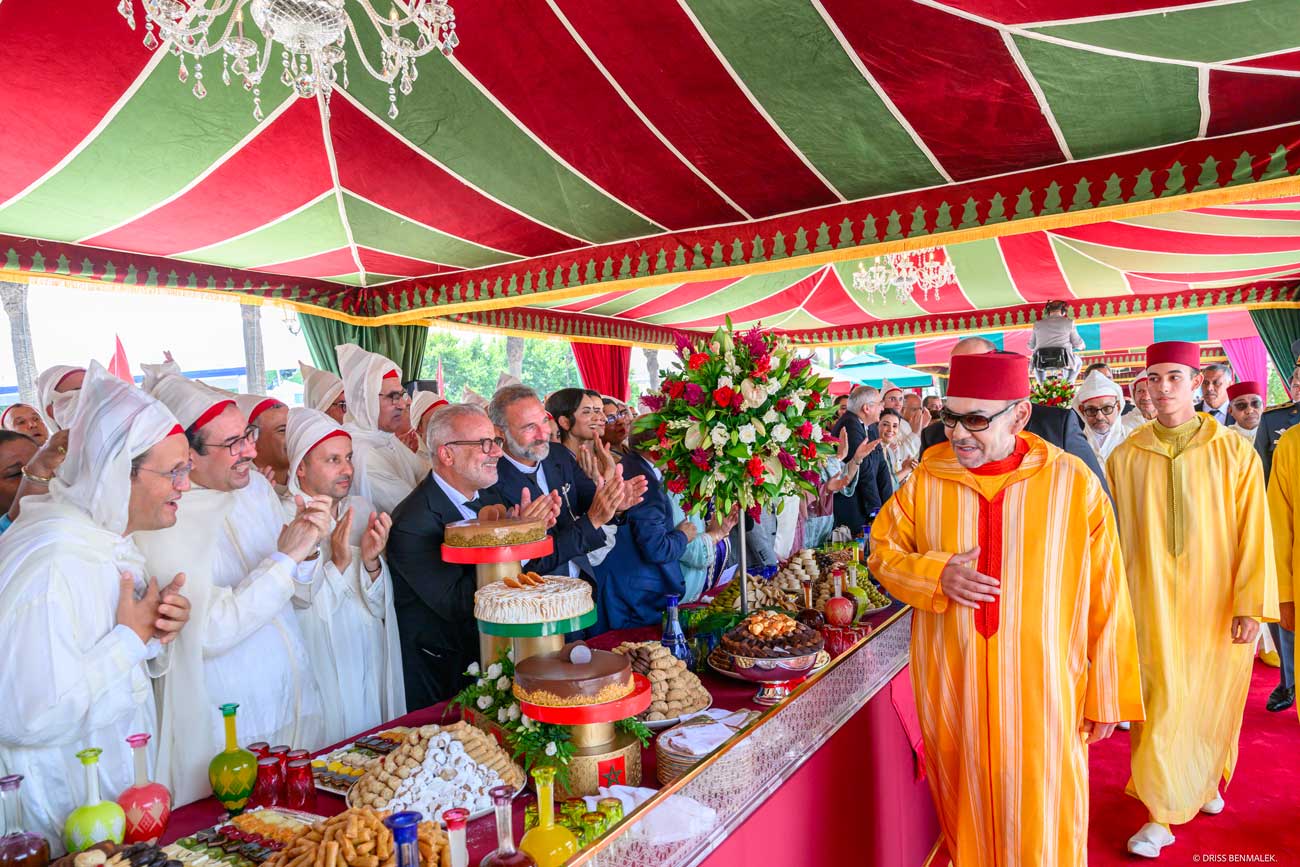
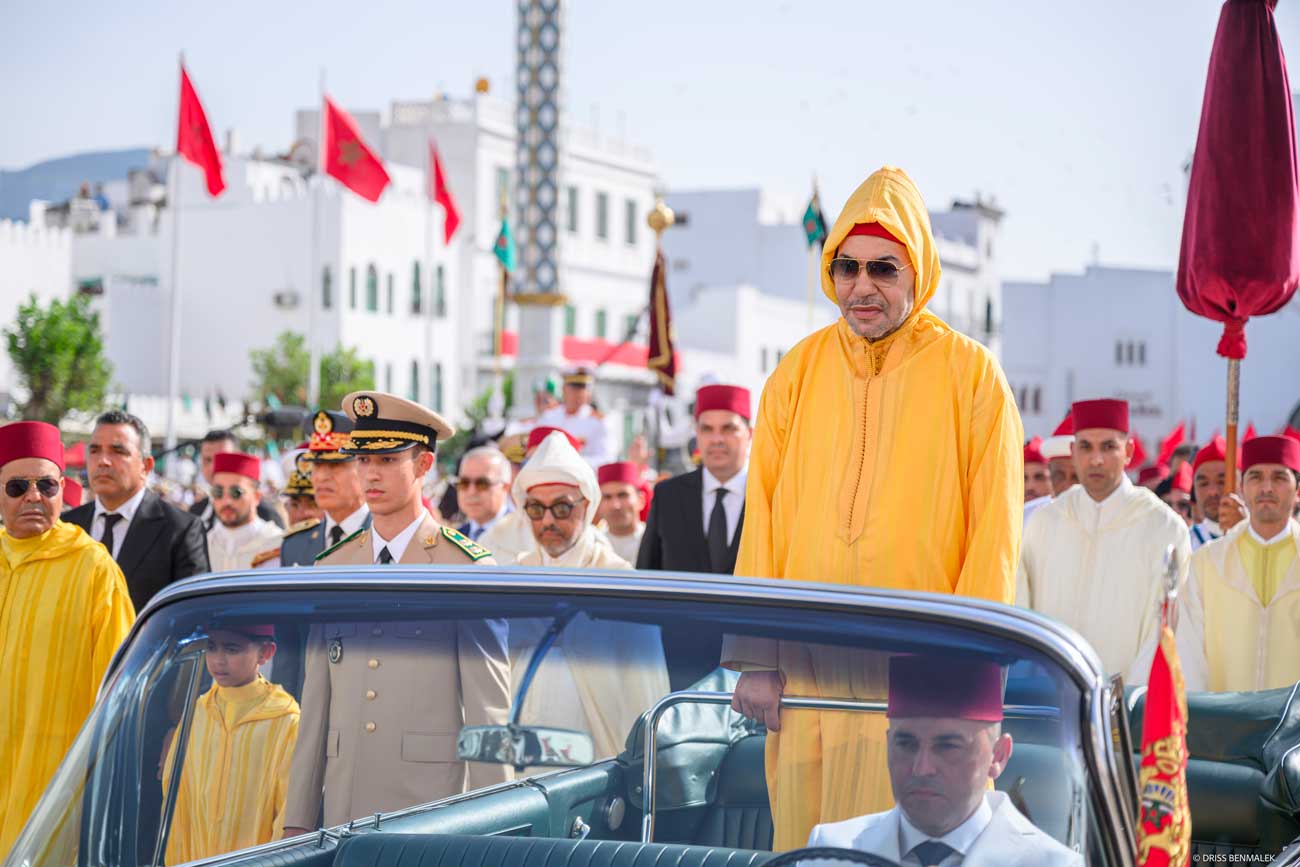
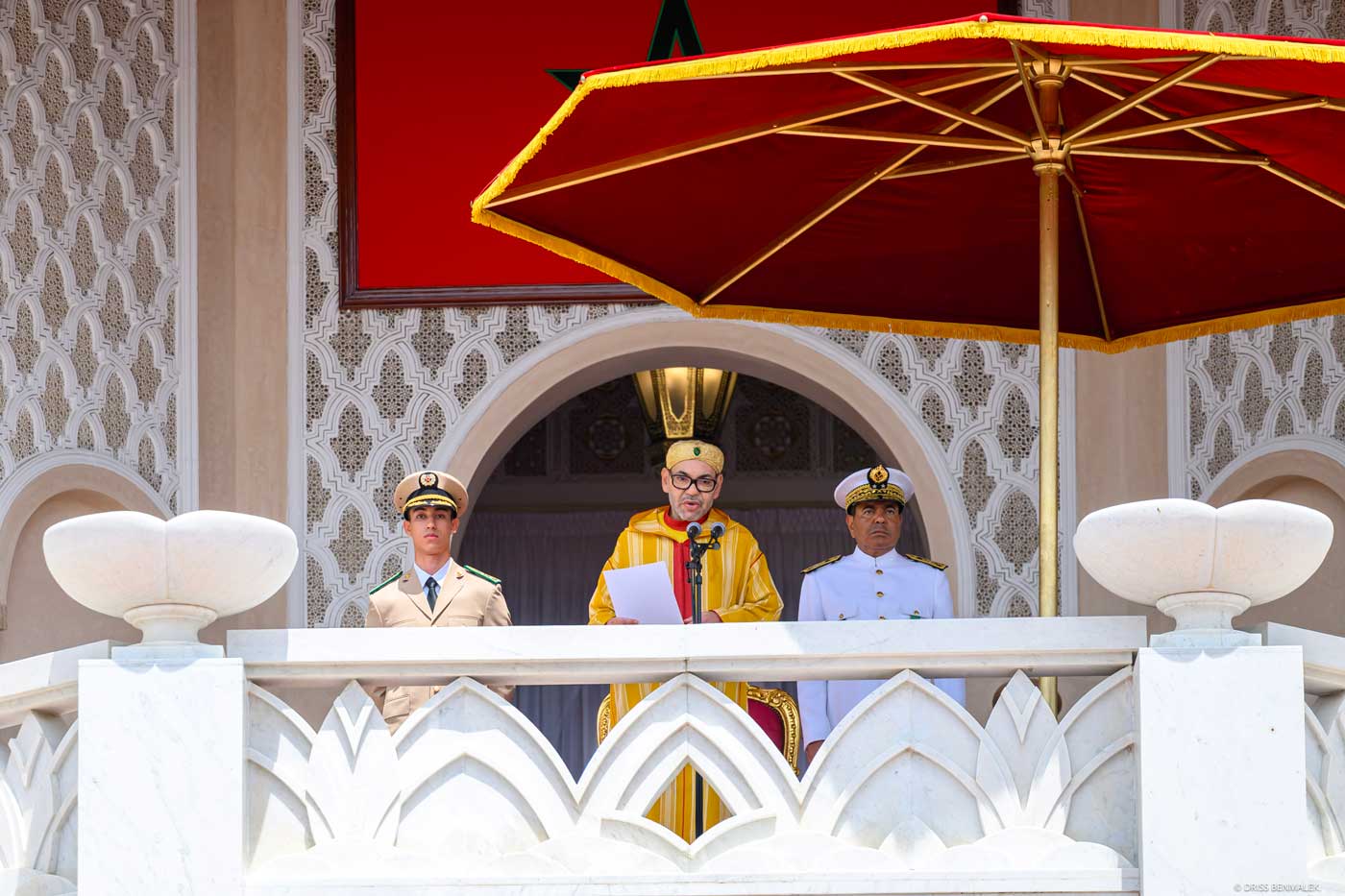
Throne Day is the grand symbolic moment of this system. Every July 30, it marks the enthronement of Mohammed VI, which occurred after his father Hassan II’s death on July 23, 1999. The king delivers a national address there that specifically speaks to this link: head of state and final arbiter who lets the political game unfold, but who intervenes when necessary.
The following day is the Bay’a, the allegiance ceremony, more traditional, considered archaic by a somewhat minority of Moroccans, but relatively accepted across society. There one sees the army and the major state bodies pledging allegiance to the king.
It is a very old, filmed, entirely codified ceremony, essential to the symbolic power of the palace and for a large portion, if not the majority, of Moroccans. And it is essentially for this that security services are deployed these days.
So the blind spots that allowed this crisis to occur come from mobilizing most of the symbolic resources and the state’s infrastructure?
Quite so. First, July 30 is a holiday that marks the start of holidays. Moroccan workers left in massive numbers between Saturday the 25th and, for the later ones, the evening of Wednesday the 29th. Their destination? For most of them, the “strait beaches,” the country’s largest seaside town, a stretch of about 40 kilometers that runs right along Ceuta.
Then, and this is a point I do not see in the press though it seems decisive to me, the July 30 and 31 ceremonies were not held at the Rabat palace. Tradition has it that the king celebrates Throne Day in different cities of the kingdom, and in recent years he has liked doing it in the north of the country. Coincidentally, the whole arrangement—the various ceremonies, the procession, with all the security they entail—took place this year exactly beside the exclave near Tetouan.
In this enormous crowd, made up of millions, it was impossible to distinguish those heading to the beach, those cheering the royal procession, and those attempting to cross the land border of the colonial outpost.
The press noted that no crisis meeting was held during the two days of ceremonies, from Thursday’s garden party to Friday’s allegiance ceremony, while information was coming from all sides. How to understand such a grave dysfunction in a state that appears so organized, especially in terms of security?
The alarm was sounded very late, which astonishes everyone. The Moroccan state is, in fact, capable of reacting much faster in a crisis. This openness to suspicion—sometimes conspiratorial—stems in part from that delay.
How do you understand the authorities’ silence?
To understand it, one must return to Morocco’s institutional machinery. The Interior has become a supervisory ministry again, after not having been so since the country’s democratic advances when it drew from ballots and parliamentary coalitions.
Since 2017, the minister is a wali, a high-ranking official with no partisan label, directly appointed by the king. The management of domestic affairs is once again in the hands of the senior public administration up to the top. There is practically no longer any difference with the palace’s voice.
By institutional respect, as long as it remained silent, no one dared to speak. A chilling muteness thus surrounded the deaths of dozens of young men and women who drowned, until the first official statements appeared on Sunday evening and then Monday.
So you think it’s an overwhelmed state that cannot understand what is happening, which explains why the security forces did not react to such a large influx of people?
Yes, my hypothesis is simple. The authorities were overwhelmed, which led them to take a long time to understand where the security breach came from. As for why the security forces could not intervene, it mainly stems from the geography of the area.
Could you return to this geographical aspect, which is also largely absent from the debate?
As we have seen, during the summer season, millions of people concentrate on the 40 kilometers of coastline around Ceuta. They are mainly Moroccan tourists from all social strata who go to beaches stretching from Fnideq, the border town of the colonial outpost, to Martil.
Added to this are the returns of Moroccans from Europe, amounting to 2.2 million passengers between the ports of Tangier Med, Tangier City, and Ceuta in less than three weeks, precisely between the last week of July and the first of August, as well as international visitors and the freight of global trade passing through this narrow territory.
Is it this concentration of people that would have made border control more difficult?
In such a bottleneck, no rapid deployment of security forces into the midst of a crowd is possible without risking bloodshed. You don’t send parachutists against bathers… Since Mohammed VI’s reign, Morocco has also renounced indiscriminate maintenance of order: it is not a state that brutalizes its population. The repression that exists and that is less democratically regulated than in Europe remains, above all, “soft,” consisting of imprisonments and legal pressures meant to silence. The agents are trained in de-escalation.
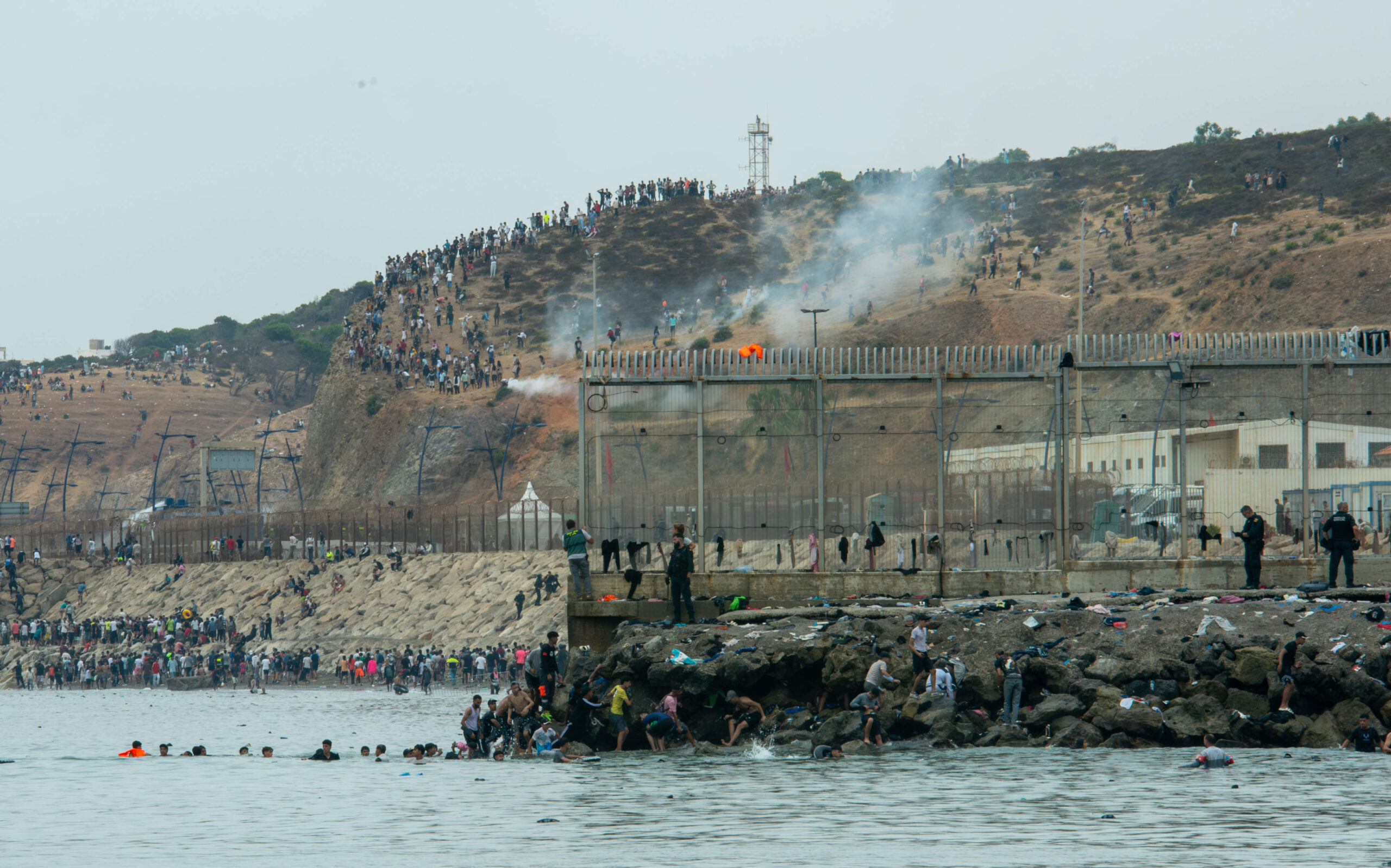
When several thousand people swam across and a huge mass gathered on the beach, the only alternative to the worst — to crush them or to see them fall into the sea — was to crack the land border open, in coordination with the Spaniards. Nothing would have served to add more deaths to the deaths.

That is where the numbers exploded. The regain of control then occurred with water cannons and tear gas, with severe, sometimes very severe injuries, cars and shops set on fire. In a situation that was turning into a riot.
Who is trying to cross, and how in normal times?
Mostly Moroccans, joined in smaller numbers by people coming to Morocco from Algeria, Senegal, the DRC, Egypt, Sudan, Mali, Ivory Coast, Guinea, and sometimes from Asia.
These attempts, repeated day and night without pause, are made by boat, in a dinghy or small raft, with fake or real visas, but with forged identities. They also happen by hiding in cars, trucks, and containers, attempting to swim, through tunnels, or by climbing fences. Either out of ignorance, as it is nearly impossible to reach Europe from this outpost, or as a defiance to cross a border that most Moroccans consider colonial. But often out of despair.
How do you explain this exceptional rush? Who entered Ceuta and why between July 30 and 31?
We must distinguish two moments. If we do not, we do not understand the scale of the event.
The first group comprises those who wanted to reach Europe and had information probably manipulated or erroneous. It includes many unemployed graduates, this youth who played the meritocracy game in Morocco without accessing the decent life they deserve.
Massively educated thanks to development policies under Mohammed VI — 70% of young people reach high school and the country counts 1.6 million students, compared to less than 100,000 when I began my studies —, they are offered only underpaid jobs, often undeclared, in a country where only 2.2 million workers are affiliated with Social Security and where nearly one and a half million young people aged 14 to 24 do nothing: neither studies, nor training, nor work.
If extreme poverty has receded, precariousness remains: this is a true social crisis, and a rebuke to a capitalist and liberal development model, deprived of a social state, whose impressive record since the 1990s has left the majority of the population on the sidelines. These young people say it, and their elders told me the same in 2004, during my thesis research: “We are not afraid to die, we are already socially dead.”
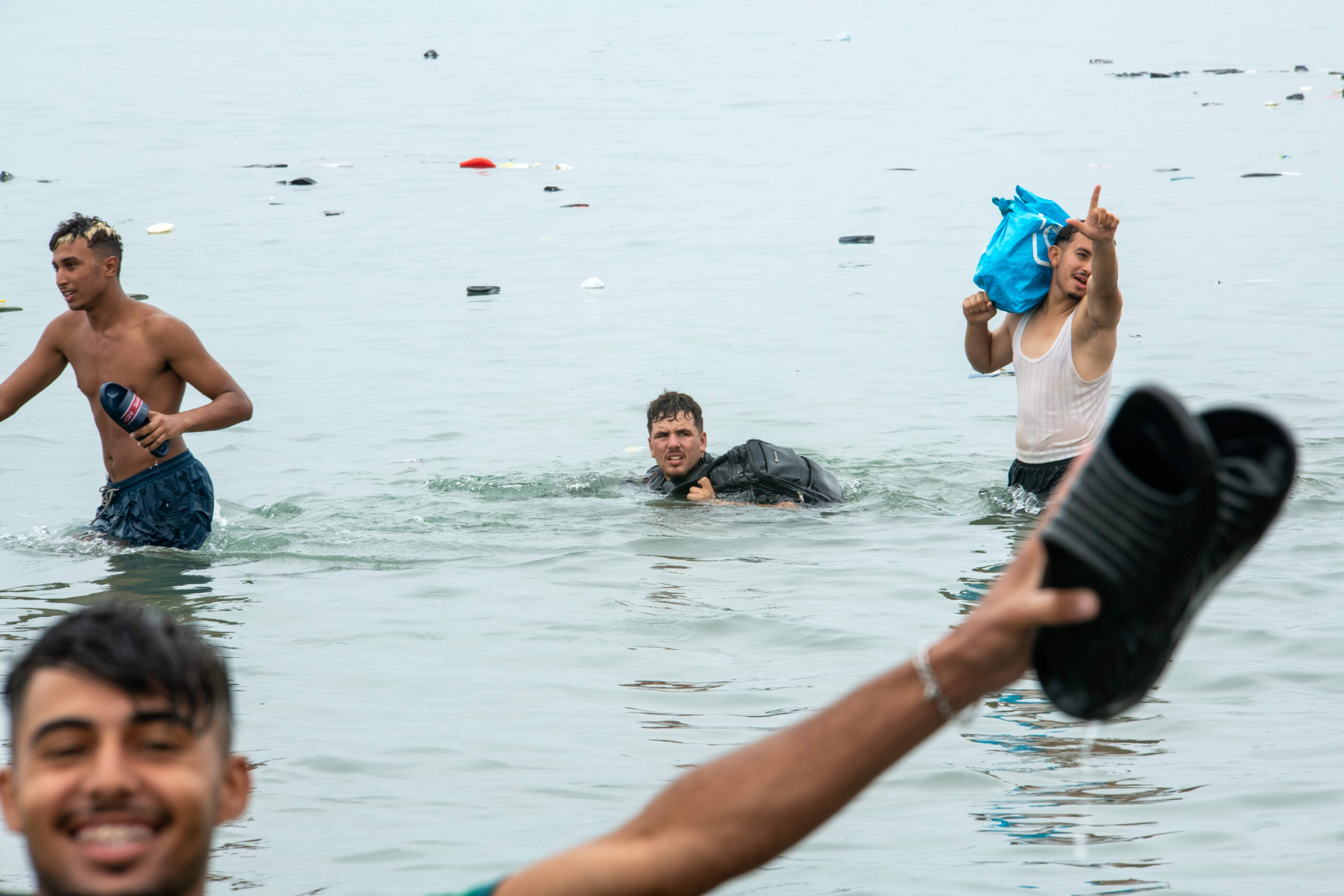
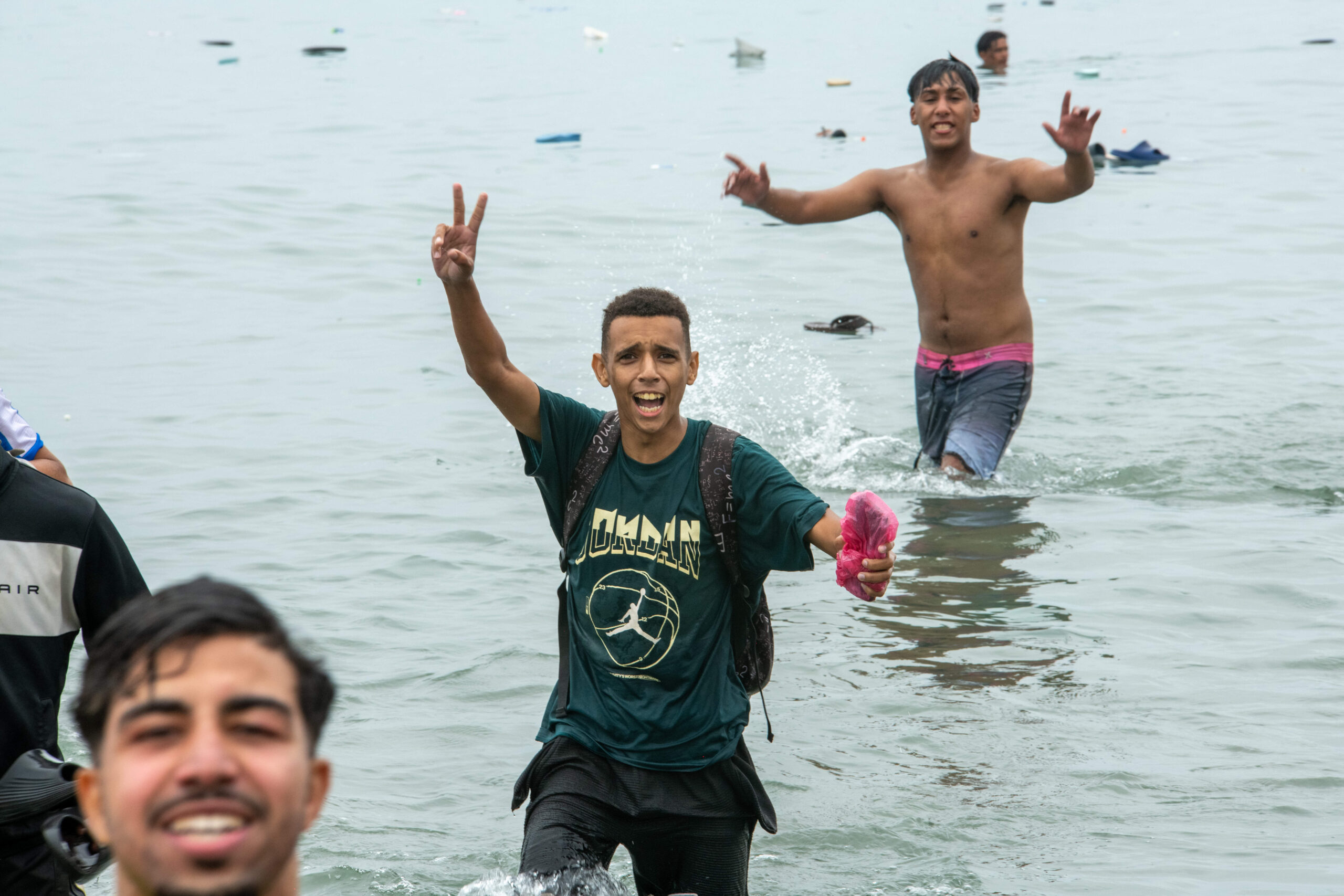
The second group is a crowd movement. The city of Ceuta resembles a blend of the Promenade des Anglais, La Grande-Motte, and Palavas-les-Flots. vacationers and nearby residents, joined by people warned that “it was passing,” crossed the border on foot as soon as it opened, like invading a football field. At first a few, then the stewards let it happen, the field is overrun, and everyone leaves. The images show bathers laughing under the gaze of Moroccan forces, barely restrained by the Guardia Civil. It is more of a challenge than a migratory project, a youth expressing its distress, in the manner of a spontaneous demonstration, and one directed at a colonial border that distorts the littoral continuity and prevents Moroccans from moving freely. Many left immediately: in less than two hours, 48,000 people had already returned to Morocco.
Two years after “TikTok Rush” on Ceuta, which led to nearly 4,500 arrests, the July 30–31 crisis seems to have a new algorithmic dimension. What is your reading of this digital dimension in the migratory phenomenon?
First, we must revisit the decision of the Spanish Supreme Court, which lit the fuse. This border has not always been what it is. It was built from the late 1990s, then hardened after the Amsterdam (1997) and Tampere (1999) treaties, with the outsourcing of European border management, then the creation of Frontex.
The hardening of external borders, the counterpart to the removal of internal borders, became a true European obsession whose logic sometimes defies common sense: you strengthen a border while regularizing millions of undocumented migrants in ten years, as Spain and Italy did long before Pedro Sánchez.
Associations have been pursuing a legal fight for twenty years against hot returns practiced in the two enclaves, before Spanish courts and up to the European Court of Justice. The ruling does not fall from the sky. Why does it fall in the middle of July, when crossing attempts are the highest? Is it pure calendar coincidence, the culmination of a legal effort conducted apart from the political reality of the moment? Or should we see it as the move of a court with conservative positions, which has never been seen as an ally of the Spanish left, and whose decisions that run contrary to its own side embarrass the Pedro Sánchez government?
In any case, it signaled to would-be crossers who are for the most part urban, educated, and connected. The persistent difficulty remains, inherited from colonial anachronism, that of controlling a line drawn in the middle of millions of people in motion and which, through a strange reversal, has become Europe’s external border on African soil.
What should be done?
It is time to rethink the status of these colonial outposts that Ceuta and Melilla are. A Moroccan-Spanish co-governance, and therefore Euro-African, seems the most interesting solution. This is an old conviction. Dramas keep recurring. One or two deaths never make headlines, but in summer they are almost weekly, and every two or three years, forty or fifty people die at once. Between 48,000 and 70,000 crossings, according to figures, is unprecedented, but the phenomenon itself is not new.
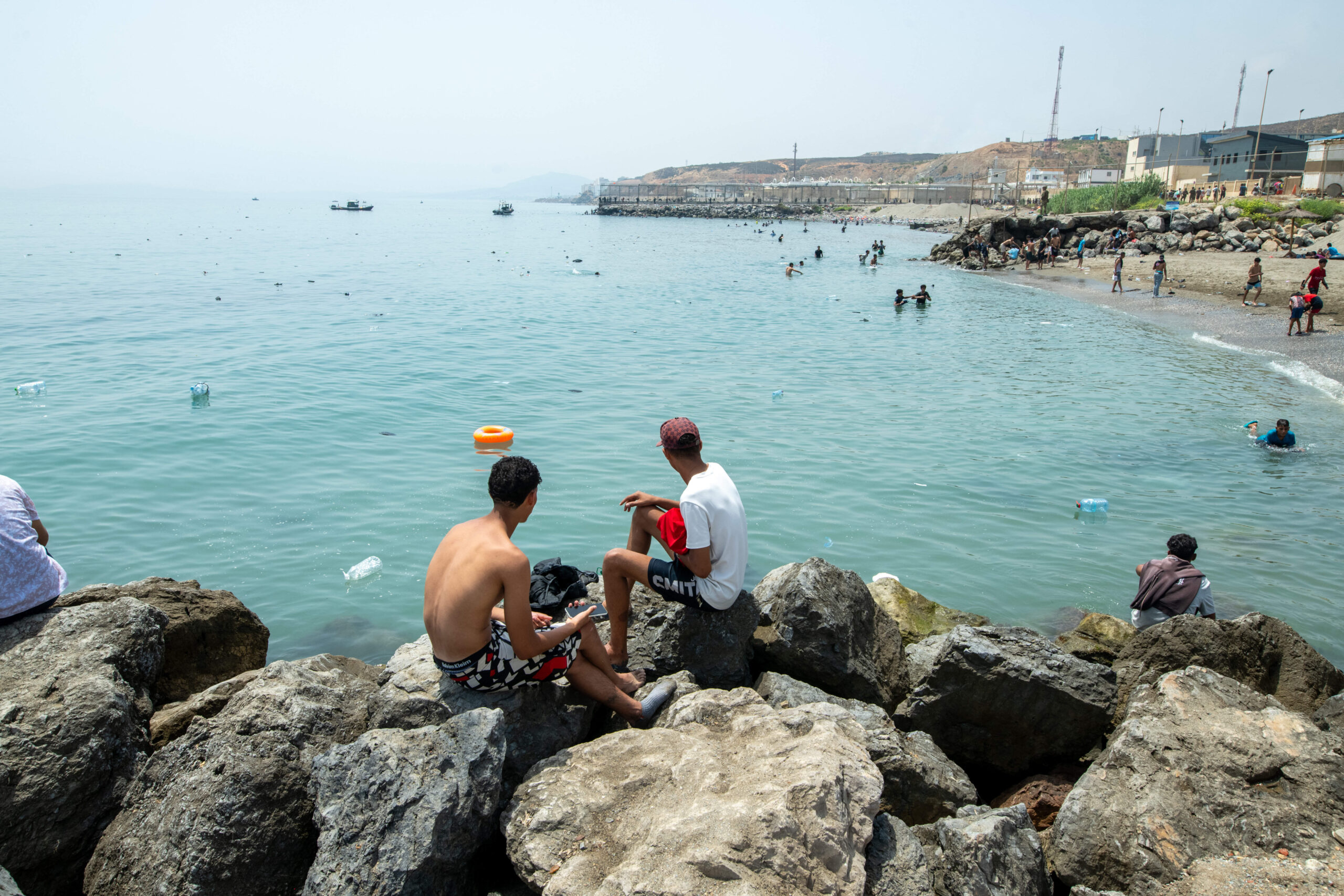
These enclaves are an anachronistic remnant of European colonialism in Africa, which began precisely with outposts. Ceuta was first Portuguese, then Spanish, and Morocco, which recovered the other towns (El Jadida and Essaouira), has long demanded their retrocession. But these cities have a history and a population. Of Ceuta’s 80,000 inhabitants, half, or even two-thirds, are Muslim. Some feel Moroccan-Spanish, others Spanish and Muslim, and others again neither.
The most peaceful solution would be to remove the fences. We are not really in the Schengen area anyway; entry is often sporadic and asylum is a mirage, while preserving the status of an autonomous city under Moroccan-Spanish co-sovereignty.
What governance model would you propose?
We can draw inspiration from Andorra, with its two co-princes, its autonomy, and its own rules. Beyond the Morocco-Spain dyad, it would be a wonderful example of Mediterranean and Euro-African cooperation, which would bode well in the current geopolitical context.
In March, an American Enterprise Institute analysis urged Morocco toward a “new Green March”: to send bulldozers and enter Ceuta and Melilla unarmed to “return the Spanish colonizers” to Cadiz, arguing that Article 6 of the Washington Treaty excludes these territories from NATO protection. How do you respond to this weaponization of Moroccan history?
This text does the opposite of what we must pursue. In fact, it invites us to war. The Green March, as its name indicates, is a peaceful march. Green is the color of peace in Islam. When Moroccans march, it is not to chase anyone away, but to peacefully reclaim a territory. We are no longer in 1975: it is entirely possible, in 2026, to find agreements that suit everyone.
The Trump administration seems to have moved beyond mere rhetoric. In April, the House Appropriations Committee described Ceuta and Melilla as “cities located on Moroccan territory” under “Spanish administration.” How does Moroccan diplomacy— which recently named the “Donald J. Trump Highway” the expressway from Tiznit to Dakhla, linking the kingdom to Western Sahara—interpret this doctrinal shift?
That change may not be desired by Rabat, I cannot say, but I do not see it and as an analyst I do not think it desirable. I understand the convergence of interests with the Trump administration since American support for the Sahara dossier. But we Moroccans need European cohesion — the very thing the Maghreb lacks, with neither free movement nor a diplomacy that can calm relations between Morocco, Algeria, Tunisia, and Libya.
We do not need Washington to add fuel to the fire by imagining turning the kingdom into an American protectorate to gain influence over the Strait of Gibraltar. Hassan II said it, Mohammed VI wrote it in his thesis: the future of Morocco is Euro-African. Alliances with China, Israel, or the United States are normal, but only an Euro-Mediterranean, or Euro-African, relationship will solve the Ceuta and Melilla question.
You wrote that criticism of the Moroccan state is legitimate in the face of this crisis, but that it targets the wrong target. Where should it be directed?
On choices of multi-speed development, which favor a minority of “winners” in growth and exclude a majority of “losers” who wait for their turn, a turn that never comes. On the repression of social movements, essential to social cohesion. On the imprisonment of intellectuals and artists who criticize these development choices. All of this must be denounced, and it is. Precisely because all of this feeds the despair at the root of all these border dramas.
Facing this social crisis in Morocco, it is time to rethink political organization and the implementation of social policies. Elections are coming: we must vote accordingly.
In this regard, some speak of the interest of certain parts of the state, or even Islamist groups, in precipitating chaos. Do you think this hypothesis is credible, or is it the causes and effects that are reversed?
Divergent tendencies exist within the security apparatus, as in any complex nation-state. The bureaucracy of a centralized state is made up of individuals, some of whom believe themselves all-powerful, which could explain the Interior Ministry’s slow communications. Yet at this stage, no objective element supports it.
Manipulation of Islamist parties is even less plausible. The Justice and Development Party has at most tried to recover by speaking first, on Sunday evening.
As for a foreign hand, Algerian as Moroccan reflex would have it, it is fiction, because you cannot manipulate a population that is already ready.
The remaining scenario is an internal maneuver taking advantage of the king’s health issues. I do not believe that either; societies are stronger than that.
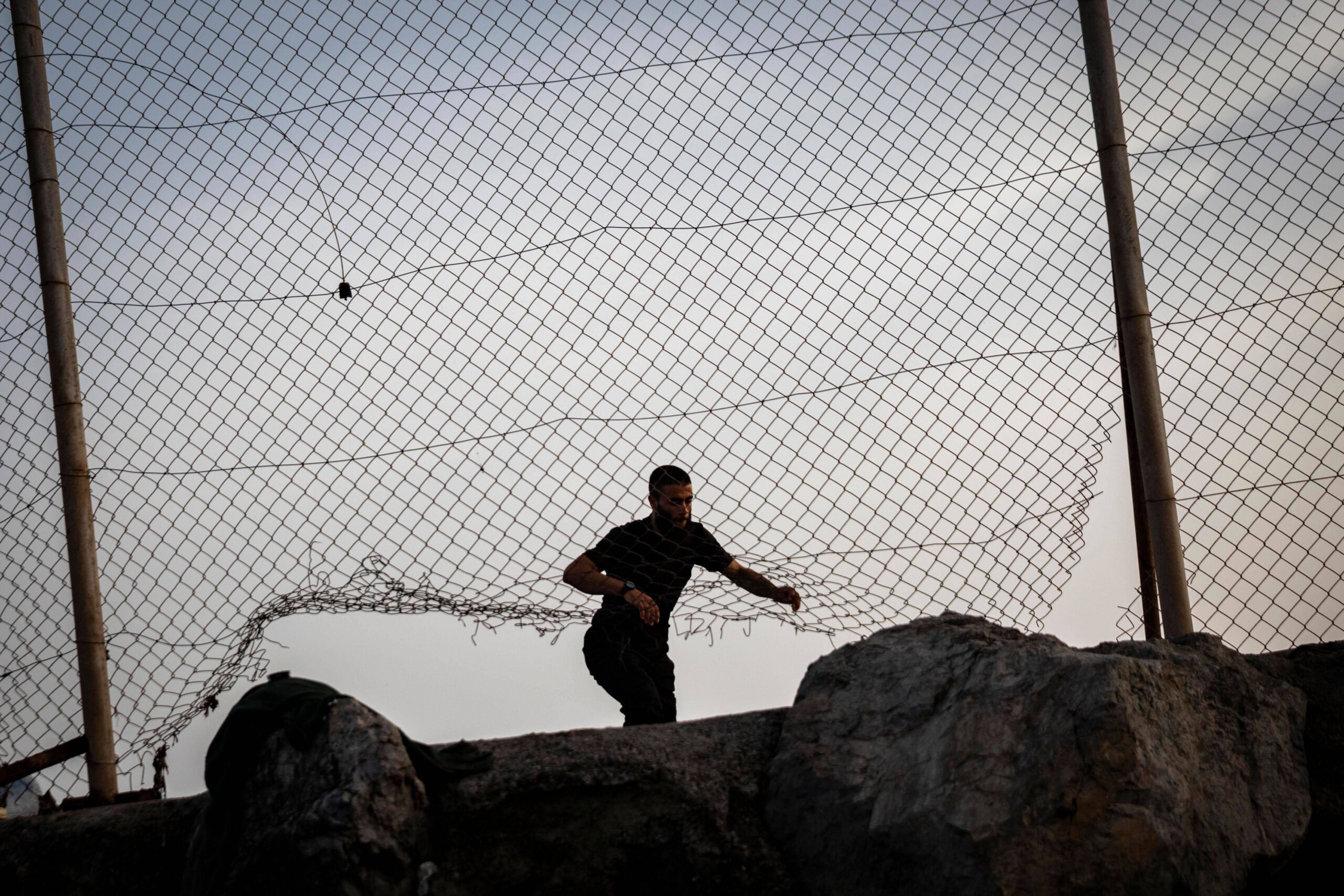
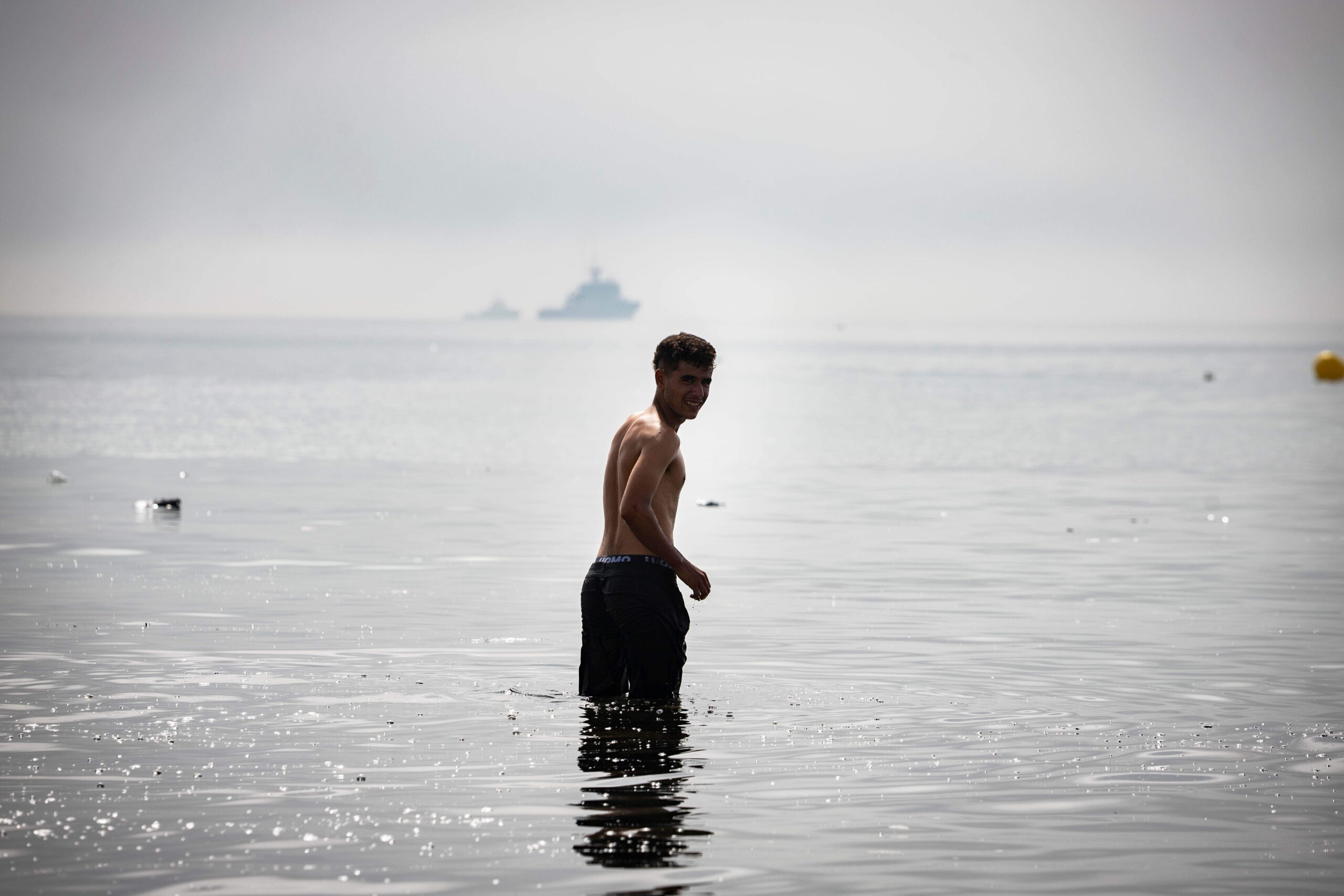
Here we find what crowd psychology has taught since Gustave Le Bon, and even more so since Robert Ezra Park and the Chicago School. A crowd movement is never rational, but its starting point always is: the fear of losing a norm necessary for the group’s survival, or the will to establish a new one. It is this initial rationality, the hope of no longer being expelled upon entering Ceuta after thirty years of waiting, that set people in motion, irrationality only joining later. There is no need for a manipulator where an expected norm seems finally within reach.
So we invert the causes and effects in the analysis of the Ceuta crisis?
Yes, I think so. The cause is Morocco’s social crisis. Economic development without social development yields repeated crises, and the latter is lacking due to the absence of democratic debate.
The solution lies in greater democracy, which implies rethinking the social contract inherited from the king-and-people revolution. This is what the young people demand when they seek their economic, social, and political place and are imprisoned when they raise their voices too loudly.
This problem must be addressed cooperatively and calmly, because we share a future. The fourteen kilometers of sea separating us from Europe compel us to write a common history.