
Testez le Grand Continent. The ideas and analyses you won’t find anywhere else. But you’ll see them everywhere soon. In your inbox from 8 euros per month
Rebecca Shriver, A Feminine Federation: The Interwar Campaign for Peace and European Integration, Cambridge University Press
“In this history of European federalism in the 1920s and 1930s, Rebecca Shriver highlights a surprising phenomenon. Beyond the usual narrative centered on male-elite intellectuals, the women and feminist activists of the Pan-European Union, the Group of the New Europe, and the International League of Women for Peace and Freedom shaped new visions of a united Europe.”
These organizations imagined a continental federation that privileged cooperation, reconciliation, and individualism — qualities they associated with female leadership. By reframing the failures of the nation-state as products of “man-made” systems, they proposed alternatives rooted in peace concepts imbued with a gendered perspective.
Relying on rich archival research, this study questions conventional narratives of European integration and demonstrates the central role of women in its intellectual foundations. It engages with debates about democracy, polarization, and international cooperation that continue to resonate today.”
Publication on October 1
Read more
Tobias Becker, Heimweh nach gestern. A History of Nostalgia in Germany, Suhrkamp

“Ah, the good old days! Fashion, music, economic growth… Everything was allegedly better back then. Today, nothing seems to travel as much as the nostalgia for a better past. Politics is even accused of playing the nostalgia card to win votes. Yet nostalgia is neither as new nor as bad as its reputation would have us believe.”
Tobias Becker traces the history of divided, then reunited Germany through its relationship with the past. How the youth of the 1960s rediscovered the “roaring twenties,” how the youth of the 1970s rediscovered the rock ’n’ roll of the 1950s, and how, in parallel, the Nazi past resurfaced. If, until 1990, nostalgia was considered on both sides of the Iron Curtain as a “Western capitalist phenomenon,” it thereafter seemed to exist only in East Germany. But why does the Dictionary mention Ostalgie (nostalgia for the East) and not Westalgie (nostalgia for the West)?”
For Tobias Becker, nostalgia is the key to understanding German society. Indeed, this concept tells us more about those who use it than about those it describes. Whether it concerns retro trends in popular culture or the political history of populist parties: it is by looking to the past that we see who we are today — or who we want to be.”
Publication on October 1
Read more
Juan Francisco Fuentes, Marie-Angèle Orobon and José Carlos Rueda Laffond (eds.), Diccionario europeo de símbolos políticos y sociales, Taurus
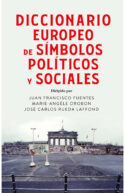
“If humans are, as the philosopher Ernst Cassirer put it, symbolic animals, Europe is a melting pot of symbols and myths that have helped forge its identity and history. This dictionary dwells on the figures who shaped the political and social imaginary of the last century, consisting of images, songs, rites, and places such as May Day, Stalingrad, the Berlin Wall, the swastika, the hammer and sickle, or the Internationale.”
Among the fifty entries in this volume, there are also analyses of how movements and currents like feminism, socialism, fascism, liberty, revolution, globalization, or progress were represented. The result is a conceptual, visual, and sonic map of contemporary Europe through its political and social symbols, as well as the dreams and traumas reflected therein.”
Publication on October 1
Read more
Vincent Duclert, The Philosophy Against Antisemitism, Puf
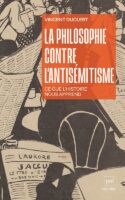
“Arriving at the end of the 19th century in France, the Dreyfus Affair marks a decisive break in the hatred of Jews. Political arbitrariness, attacks on individual freedoms, and threats against this stateless people then reached their peak.
But this Affair was also the stage for an unprecedented fight against antisemitism, made possible by the actions of a rare but courageous minority of free minds, who faced consequences of public interventions, ready to reveal and repulse a mortal danger. In the Dreyfus Affair were accomplished early battles, models for the future and the survival of democratic societies.”
If the history of antisemitism has been much studied, the history of the battles against antisemitism remains largely unknown. Focusing on the Dreyfus Affair at the turn of the 20th century, this book also questions our time, dominated by the challenge of fighting once again, with undiminished resolve, this scourge. The importance of these old struggles lies in the philosophical underpinnings that energize them. It is all the more urgent to recover the history, to write it, and to enact it.”
Publication on October 1
Read more
Nicolas Mariot, Kill: How to Explain Mass Violence, Gallimard
“Total wars, mass killings, genocides: mass violence is one of the defining legacies of the twentieth century. For at least three decades, it has been the subject of renewed scholarly interest. The challenge it poses to historians and to each of us can be summed up thus: how can we explain why seemingly “ordinary” people participate in such episodes?”
Drawing on a dozen case studies ranging from World War I to the genocide of the Tutsi in Rwanda, this inquiry examines the answers that historians, sociologists, or psychologists have offered to the question. How do they formulate the problem? What empirical materials and methods do they mobilize? What topics spark debates or controversies? Each chapter is devoted to examining a specific puzzle: why do some executors add cruelty to murder? And why do others kill even while recognizing their victims’ humanity?”
Taken together, these studies provide a critical assessment of research into understanding how human societies slip into the most extreme violence.”
Publication on October 1
Read more
Ignacio Sánchez-Cuenca, Tied and Bound: The Suicide of the Francoist Cortes and the Transition, Catarata

“November 18, 2026 will mark the fiftieth anniversary of the adoption of the Law on Political Reform (LRP), which enabled the transformation of the regime toward democracy. This law was the key element of the Transition, but also its most striking feature from a comparative perspective. Democracy did not arise from a rupture, but from a reform of the fundamental laws that acted as a Francoist constitution.”
One of the great enigmas of the Transition has been the behavior of the deputies of the Francoist Cortes, who voted in favor of a law that, in practice, ended their hold on power and opened the path to democratic elections and a constituent period. At first glance, one might say they voted against their own interests, which at the time gave rise to talk of harakiri and suicide. This work reconstructs the political situation of 1976, analyzing the balance of power between the opposition and the regime, and the reforms carried out first by the government of Carlos Arias Navarro, then by Adolfo Suárez, to explain the paradoxical behavior of the deputies.”
Publication on October 5
Read more
Kevin Roose, The AGI Chronicles: The Inside Story of the Race to Create an Artificial Superintelligence, Farrar, Straus and Giroux
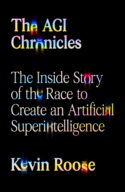
“For about a decade, a handful of AI-focused companies have been racing to develop the most powerful technology in history: artificial general intelligence (AGI), a computing system capable of surpassing humans in nearly every domain. Some hope AGI will cure diseases and save the planet. Others fear it will kill everyone on Earth. Yet they have decided to push ahead regardless.”
Kevin Roose’s book is the behind-the-scenes account of this frenzied race. Drawing on more than 150 interviews with players at OpenAI, Anthropic, and Google DeepMind, as well as company documents and never-before-seen research notes, Roose traces the decade’s most consequential era in technology. He takes us into the rooms where researchers watch large language models learn to talk, reason, and code at superhuman speeds. He brings us to the White House, where senior officials grapple with a technology evolving too quickly to be understood, and even less regulated. He reveals new details about the rifts that led Anthropic’s founders to leave OpenAI, and new information about the spectacular firing — and equally spectacular rehiring — of Sam Altman as CEO. He offers the inside story of Google’s frantic rush to catch up at the edge of AI. And he plunges us into the San Francisco AI scene, where accelerationists in hacker houses and the AI-safety summit “pessimists” clash in pursuit of supremacy.”
Publication on October 6
Read more
Rana Foroohar, Sea Change: America’s New Great Game in the Arctic Circle, Crown

“As polar ice melts and new sea routes open, the Arctic has become the most consequential — and least understood — theater of geopolitics in the world. In Sea Change, Rana Foroohar takes readers aboard the only active US icebreaker in the Arctic and behind the scenes in Washington, Beijing, Moscow, and regional capitals, to reveal how climate change is redefining global trade, national security, and industrial policy.”
Based on unprecedented access to Coast Guard missions, senior officials across multiple administrations, union leaders, and international partners, Foroohar shows how vital it is for the United States to be a major maritime power and how Washington struggles to catch up in the Arctic.
She also explains how control of Arctic sea routes, shipbuilding capacities, undersea data cables, and untapped natural resources will determine economic and military dominance in the decades ahead. Sea Change argues that the future prosperity and security of the United States may well hinge on the summit of the world.”
Publication on October 6
Read more
Matthew Botvinick, AI and Political Freedom: The Risk to Democracy and How to Respond, Princeton University Press
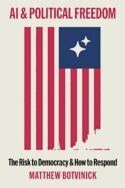
“AI is poised to destabilize our democratic institutions, strike at their most vulnerable points, and provide a useful tool to leaders with authoritarian ambitions. Yet, despite the potential threat posed by the collision of AI and democracy, Matthew Botvinick argues that there are ways to safeguard our political freedom.”
He notes that concerns about democracy’s retreat emerged at the moment public attention turned to AI safety. Fears about the spread of deepfakes and AI-generated misinformation, as well as the expanding political power of tech companies, circulated widely — but were rarely linked to concerns about the erosion of democratic institutions.
Botvinick makes the connection by examining the potential effects of AI on our political life. Mass unemployment driven by technological advances makes the public more receptive to authoritarian rhetoric; security crises could enable governments to abuse emergency powers; and the use of AI in intelligence creates a risk of politicized surveillance. To halt this rollback of democratic values, we must strengthen democratic institutions and, in the long run, rethink how democracy functions, implementing richer and more engaging forms of citizen participation.”
Publication on October 6Read more
F. Darrell Munsell, Architects of Authoritarianism: The Claremont Institute and the Making of the MAGA New Right, University Press of Kansas
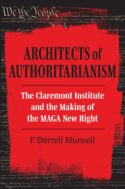
“Historian F. Darrell Munsell reveals how the Claremont Institute, once a haven for learned political philosophers, became the base of operations for the January 6 insurrection, ‘Project 2025,’ and the authoritarian program of President Trump.
Private think tanks have long been the hidden intellectual engine of conservative politics. But the Claremont Institute remains the most influential organization in shaping the MAGA agenda. Founded in Southern California in 1979, Claremont’s original mission was to “return to the founding principles of the United States the legitimate and preeminent authority they deserve” within American society.
The institute’s political engagement began with its support for Donald Trump in the 2016 presidential election, quickly followed by its entry into cultural battles against the Black Lives Matter movement, multiculturalism, critical race theory, and the push for diversity, equity, and inclusion programs in public universities, government agencies, and corporate enterprises. By the end of Trump’s first term, Claremont viewed “wokeness” as an existential threat to the Constitution, and fought to win the culture war at all costs — including attempting to overturn the 2020 results.
In the wake of Trump’s 2020 defeat, Claremont shifted even further to the right, toward populism, Christian nationalism, and illiberalism. Led by John Eastman, Charles Kesler, Thomas D. Klingenstein, and a new generation of young conservative activists — some from the farthest edges of the far right — the Claremont Institute shapes the national conservative movement by aiming to replace constitutional democracy with an authoritarian system of government. Claremont partnered with the Heritage Foundation and other groups to draft the “Project 2025,” the now infamous plan for a second Trump administration.”
Publication on October 6
Read more
Alexandra Prokopenko, From Sovereigns to Servants: How the War Against Ukraine Reshaped Russia’s Elite, Hurst

“When Moscow launched its large-scale invasion of Ukraine, the West imposed crushing sanctions on Russia. Many expected the country’s elite—prominent liberals and international business leaders—to defend their holdings and cosmopolitan lifestyle by pressuring Putin to end the war. Instead, the liberal-minded leaders redirected the economy toward the war; businesses complied with the new rules; and only a handful resigned or spoke out. Why?
Drawing on dozens of interviews conducted since the mid-2010s with senior officials and business elites, this book analyzes their moral reasoning and how the limits of what they deemed ethically acceptable expanded over time, in line with their superiors’ expectations. Although the Russian ruling class retained the formal attributes of power, it essentially lost autonomy, becoming mostly a mere instrument of governance.”
Alexandra Prokopenko highlights the key moments of the war: Western sanctions, general mobilization, the annexation of four Ukrainian regions, and the aborted mutiny of Yevgeny Prigozhin in 2023. She meticulously traces how rival factions, from technocrats to hawks, justified each clash and realigned their allegiances. She places this process within an inside-the-regime history of Putin’s rule, analyzing shifts in attitudes both at the individual and sociological levels. Because these people will continue to influence global politics, we must understand how they think and act.”
Publication on October 8
Read more
Maud Quessard, Power Without Principle: The New American Empire, Le Seuil
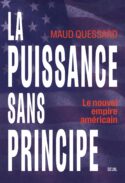
“With universalist ambitions and the promise of a desirable future that the United States claimed to carry for the world after the Cold War, there follow more transactional and conflictive logics. Alliances become conditional, economic tools are transformed into instruments of pressure, digital platforms become fully-fledged geopolitical actors, and information wars rage in international competition. And if Donald Trump’s second term did not only embody a brazen populism but acted as an accelerator of an American civilizational shift?”
Blending history, geopolitics, culture, and analysis of influence strategies, Power Without Principle retraces the genealogy of the new American empire. Today’s empires (the United States, China, and Russia) no longer merely dominate territories; they seek to impose their own world narrative. And perhaps that is where the future of Europe and the Global South will be decided: in the ability to jointly produce strong ideas, desirable visions, and inclusive imaginaries to resist them.”
Publication on October 9
Read more
Elisabeth Braw, Undersea War: The Battle to Control the Cables and Pipelines That Connect Our World, PublicAffairs
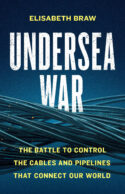
“The world relies on a tangle of undersea cables laid across the ocean floors. Each day, submarine cables carry almost all global data, while intercontinental gas and oil pipelines move two-thirds of the planet’s oil and gas. They fulfill their function with such reliability that hardly anyone imagines that the ‘cloud’ lies underwater, or that global economic stability rests on pipelines at the bottom of the seas. But as Elisabeth Braw reveals, an invisible battle over these cables and pipelines is intensifying.”
Undersea War tells the story of the underwater infrastructure that underpins our daily lives. In 2022, after decades of apparent underwater harmony, two Baltic Sea gas pipelines exploded mysteriously. In months, the severing of data links between Matsu, Taiwan, and the rest of the world, as well as the destruction of other Baltic cables and a gas pipeline, marked the end of harmony in the ocean depths. The superpowers are now engaged in a race to protect themselves, as the seabed itself becomes a battleground.
Undersea War shows that the next battle for global supremacy could well unfold at the bottom of the oceans.”
Publication on October 13
Read more
Kim Ghattas, The Best Kind of American: A True Story of Murder, War, and America’s Undoing in the Middle East, Henry Holt

“On January 18, 1984, Malcolm Kerr, president of the American University of Beirut, was killed by two gunmen outside his office. His murder, following the bombing of the U.S. Marine barracks, the Palestinian guerrilla attacks, and the Israeli invasion of Lebanon in 1982, was only another shocking event in a city ravaged by nine years of civil war. No inquiry was conducted. Four decades later, the question of who killed Malcolm Kerr and why remains not fully clarified.”
In The Best Kind of American, Kim Ghattas embarks on a quest to shed new light on Malcolm Kerr’s forgotten assassination, weaving his family’s story with that of Lebanon’s warlords and peacebuilders, Hezbollah hostage-takers, and Iran’s Revolutionary Guards, as well as American presidents, from Reagan to Trump.
She also recounts how Beirut became the cradle of policies and personalities that shaped the Middle East for decades, from Israeli Prime Minister Benjamin Netanyahu to Iran’s Supreme Leader Ali Khamenei, who was later assassinated in a joint American-Israeli strike at the outset of their 2026 war against the Islamic Republic.”
Publication on October 13
Read more
Emily Feng, Our Hearts Burned for Home: Uyghur Militants in Syria’s Civil War, Columbia Global Reports

“What drove several thousand men and women to leave the western deserts and cities of China to join the front lines of the war in Syria? Emily Feng reveals the little-known story of Uyghur exiles who fled China’s expanding police state, ultimately becoming a decisive force in the collapse of Bashar al-Assad’s regime. At the heart of this narrative lies a striking paradox: Beijing’s repression, aimed at crushing dissent, has instead dispersed and radicalized an entire generation.
Tracing their journey from the repressed 1990s protests in Xinjiang to the Islamist battlefields of Idlib, Our Hearts Burned for Home reveals how a campaign of surveillance and cultural erasure, along with the turmoil in the Middle East, gave birth to a Uyghur militant movement far from home.”
Publication on October 13
Read more
Arnaud Orain, Qui contrôle la mer contrôle le monde ?, Flammarion

“For more than five hundred years, sea routes have been controlled by rival powers or dominated by one hegemonic power: Britain in the 19th century, the United States after 1945.”
But as American supremacy falters and China asserts itself more and more at sea, a new maritime era unfolds. Because, at the same moment, international law, designed to regulate the war of all against all, reinforces it by dividing and privatizing the ocean, and in these tensions add warming, acidification, and biodiversity loss. A striking finding in this brilliant essay: you cannot both possess and control the sea, without ultimately losing it forever.”
Publication on October 14
Read more
Ulrike von Hirschhausen, Frozen Conflicts: Focal Points of the Present Between War and Peace, C.H. Beck

“We are witnessing a multiplication of territorial and state-related conflicts that seem insoluble, whether in Ukraine, the Caucasus, Palestine, Kashmir, or Taiwan. Almost all these conflict theaters were born from the vestiges of great empires, and the legacy of these empires profoundly marks their present. Ulrike von Hirschhausen explains why these conflicts freeze, how populations live within these spaces, and what possibilities exist for unfreezing these conflicts around territory and sovereignty.”
This work offers an overview of the frozen conflicts of our era, in which opponents fail to find a solution and, precisely for that reason, oscillate constantly between war and precarious peace. It dives into the daily lives of these societies, follows human destinies in these spaces, and explains the role of external actors, often former empires, who seek to determine the course of the conflict.”
Publication on October 14
Read more
Christophe Jaffrelot, L’ambition indienne. Les paradoxes d’une nouvelle puissance, Tallandier
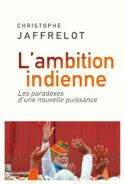
“With 1.5 billion inhabitants, India has become the world’s most populous country. Yet we know it poorly. Christophe Jaffrelot, a leading regional expert, analyzes its will to power under Narendra Modi and the external and internal challenges it must confront.”
Since independence in 1947, India had the prestige of a non-aligned power with a strong soft power. In a radical shift, Narendra Modi, at the helm since 2014, is building a multi-faceted strategy: civilizational with a religious nationalism and his slogan “India First” long before Donald Trump; diplomatic with his concept of “plurilateralism”; and strategic, aiming to equip the country with an unprecedented military capability.
Its objective? To become an international power. But can it compete with China and even resist it? If the IT sector drives growth, the rest of the economy struggles, failing to complete the industrial transition of a still largely rural society. The country’s development is held back by class and caste inequalities as well as religious tensions and regional contrasts.”
Publication on October 15
Read more
Robert Boyer, The Era of All Dangers: Causes and Consequences of Trumpism, La Découverte
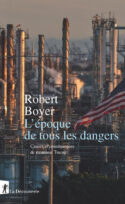
“The systematic, unpredictable, and almost delirious excesses of Donald Trump seem to defy political analysis. Robert Boyer argues otherwise by placing the emergence of Trumpism within the long history of American capitalism. In doing so, he illuminates the transformations that made his rise possible and documents the scale of political, economic, and social risks that the United States is today posing to the entire world.”
Is Trumpism an historical accident with transient effects, or does it herald a long period of global instability? According to Boyer, as dazzling as Trump’s election and the erratic decisions of his second term may seem, his ascent can be analyzed as the conjunction of structural transformations and a personal trajectory.
After the long prosperity of Fordism, marked in particular by wage growth linked to rising productivity, the American economy has continued to transform under his open economy, deindustrialization, and financialization, which led to a sequence of crises. Society, long stabilized by a middle class that integrated, was fractured by rising inequalities and polarized between two social groups with increasingly irreconcilable interests and worldviews. By focusing on identity claims, the Democratic Party left behind a portion of precarious wage earners. Through demagogic messaging spread by social networks, Trump exploited this fault line.
Using tools from economics and social sciences, this work moves from explaining the causes to exploring the foreseeable consequences of Trumpism. It highlights the contradictions that run through it, economically, socially, and politically, in the United States and internationally. The history is not entirely predetermined, but the analysis yields a diagnosis: in the absence of European renewal, American decline — whose hegemonic exuberance is its paradoxical sign — and the rising role of China, which Trump unwittingly encourages, threaten the global economy and the system of nations.”
Publication on October 15
Read more
David Colon, Infodémie. How to Fight the Virus of Misinformation, Tallandier

“Disinformation kills. In February 2020, in Iran, hundreds died after drinking methanol: a rumor claimed it neutralized the coronavirus. In the United States, it is estimated that vaccine misinformation cost at least 232,000 lives. In Southport, in 2024, a false assassin’s name turned England upside down — and brought as much as £30,000 per day to the accounts spreading the information.”
What if falsehood spreads like a virus? David Colon makes it a method of analysis. Reproduction rate, super-spreaders, herd immunity: he applies epidemiology tools to misinformation and traces the contagion back to its source: states, influential groups, social media (Instagram, Facebook, YouTube, TikTok…), for whom falsehood is not an accident but a highly profitable business model.
Based on years of investigation and interviews, this book recounts the internal war, with those who wage it, and shows that there are also antidotes to this virus: prebunking, criminal accountability for leaders, the creation of public-interest social media…
At a time when AI manufactures tailored disinformation, this book is a manual for democratic resistance.”
Publication on October 15
Read more
Andrea Daniele Signorelli, Storia umana dell’intelligenza artificiale. Sogni, battaglie e illusioni da Turing a oggi, Laterza
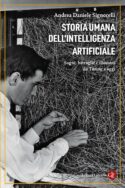
“Artificial intelligence burst into our daily life with devastating force. In just a few years, chatbots, software, and intelligent algorithms have become familiar to us. Yet few know the history and ideas of those who, over a century, quietly prepared this sudden explosion. From its beginnings in the 1940s, the scientists who founded this field pursued a remarkably varied path toward one shared objective: to reproduce the workings of the human brain. A profoundly ambitious dream that repeatedly generated inflated expectations, sparking endless debates about the very concept of “intelligence.”
Andrea Daniele Signorelli traces the most important figures, philosophical approaches, decisive moments, and dead ends encountered in this relentless quest to endow machines with thought: from Alan Turing’s insights to the rivalry between Marvin Minsky and Frank Rosenblatt, creator of the first neural network; from the Dartmouth Conference to the AI “godfather” Geoff Hinton; from ELIZA, ancestor of ChatGPT, to the computer-vision revolution with Fei-Fei Li. Along the way we traverse the technological confrontation among the United States, the Soviet Union, and, today, China; the defeat of Garry Kasparov by Deep Blue; the rift between Elon Musk and Sam Altman; Google, Anthropic, and other tech giants’ initiatives.
AI is a true adventure, born within university walls to conquer the world; a turbulent story, full of hyperbolic enthusiasms and brutal setbacks. A past from which we can still draw many lessons for the future of this technology.”
Publication on October 16
Read more
Charles A. Kupchan, Bringing Order to Anarchy: Governing the World to Come, Yale University Press
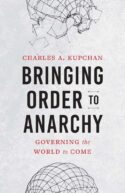
“The stable and open international order built under American leadership is now fraying. Democracy is losing ground to autocracy; globalized markets are fragmenting; and the era of perpetual peace anticipated at the end of the Cold War has given way to great-power rivalry. This fracture occurs at a moment when many of our greatest challenges — climate change, pandemic threats, and rapid technological evolution — demand collective action.”
Charles A. Kupchan analyzes the causes of global disorder and offers a guide to constructing a new order suited to the emerging multipolar world. Drawing on the European Concert as a model that preserved peace among major powers after the Napoleonic Wars, he proposes a global system of “concerts” — high-level steering groups transcending ideological divides — to anchor a regionalized and polycentric world.
The task of building a new world order must begin with renewing American democracy and maintaining steady leadership abroad. It is only when democracies can outpace illiberal and autocratic alternatives, Kupchan argues, that they will be able to guide the world through the coming transition and, in the long run, move history’s arc toward freedom.”
Publication on October 20
Read more
Antonio Scurati, Storie di donne e uomini in lotta per la democrazia, Feltrinelli
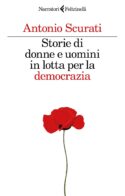
““What would I have done in their place? That is the dilemma. No other question truly makes sense when we begin a correspondence with a distant, tormented humanity, a foreign life, when we resonate with an era in which a few solitary people found the strength to invoke justice amid ravages, to witness their faith in democracy in the face of dictatorial triumph, their attachment to truth in the reign of lies.”
It is from this dilemma, which questions the most significant and dramatic moments of twentieth-century Europe, that Antonio Scurati tells the extraordinary lives of women and men who, by resisting fascisms, totalitarianisms, and the violence of power in all its forms, defended the values of democracy and, by reaffirming them, gradually asserted new rights: those of workers, women, homosexuals, the sick, students, and the environment.
From Sandro Pertini to Anna Politkovskaya, from Franco Basaglia to Livia Bottardi and Manlio Milani, from Gisèle Halimi to Alexander Langer, these are women and men who broadened the democratic horizons to the point where, in some cases, their steadfast fidelity earned them imprisonment, exile, or even death. Through their gains — especially those that are imperfect or betrayed — democracy returns as a living, everyday struggle. After asking ourselves, “What would I have done in their place?”, we now ask: what can I do today, in my place?”
Publication on October 20
Read more
Teemu Ruskola, The Unmaking of the Chinese Working Class: How Communism Built a Capitalist Superpower, Verso
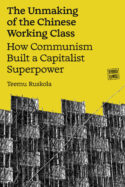
“Since the reforms of the late 1970s, China has experienced extraordinary growth. This transformation did not signify a retreat by the state from the economy. In fact, it was the communist foundations of China that made this astonishing development possible. Yet, at the same time, these reforms saw China renounce the idea of equality, dismantling the working class that the revolution had forged. Teemu Ruskola’s narrative emphasizes the organization of land and labor as the key to understanding China’s rise, explaining how their commodification reshaped not only the nation-state of China but global capitalism itself.
Questioning prevailing developmental narratives, this book demonstrates how the evolution of state capitalism in China diverges from the English transition from feudalism to capitalism and from post-socialist transformations in the Soviet Union. Highlighting the planetary limits of development, the work is a urgent call to rethink our relationship to work and land, production and nature.”
Publication on October 20
Read more
Nicholas Mulder, The Age of Confiscation: Making and Taking Property in the Creation of the Modern World, Allen Lane

“Expropriation — the forced transfer of property rights — is typically associated with dictators, unstable countries, and violent revolutions. Yet, in reality, it has been an integral part of Western political and economic history, enabling both the abolition of serfdom and slavery as well as industrialization, the rise and decline of colonial empires, and the expansion of the welfare state. For better or worse, much of our modern world has been built on the coercive acquisition of goods.
In this novel international history of expropriation, Nicholas Mulder traces a captivating arc from the eighteenth century to today, spanning the French Revolution to the Russia-Ukraine war, from colonial companies to railway empires, from the sale of church lands to the nationalization of oil, and from the confiscation of patents to the freezing of assets on the eurodollar market. He shows how all kinds of political movements — liberal and nationalist, socialist and fascist, imperialist and anti-colonial — dissolved and redistributed property rights. The success of state-building did not depend on eliminating confiscatory state power, but on mastering its powers and redirecting them toward new ends.”
Publication on October 29
Read more
Credits
Unless otherwise indicated, all texts are taken from the back covers of the publishers.