
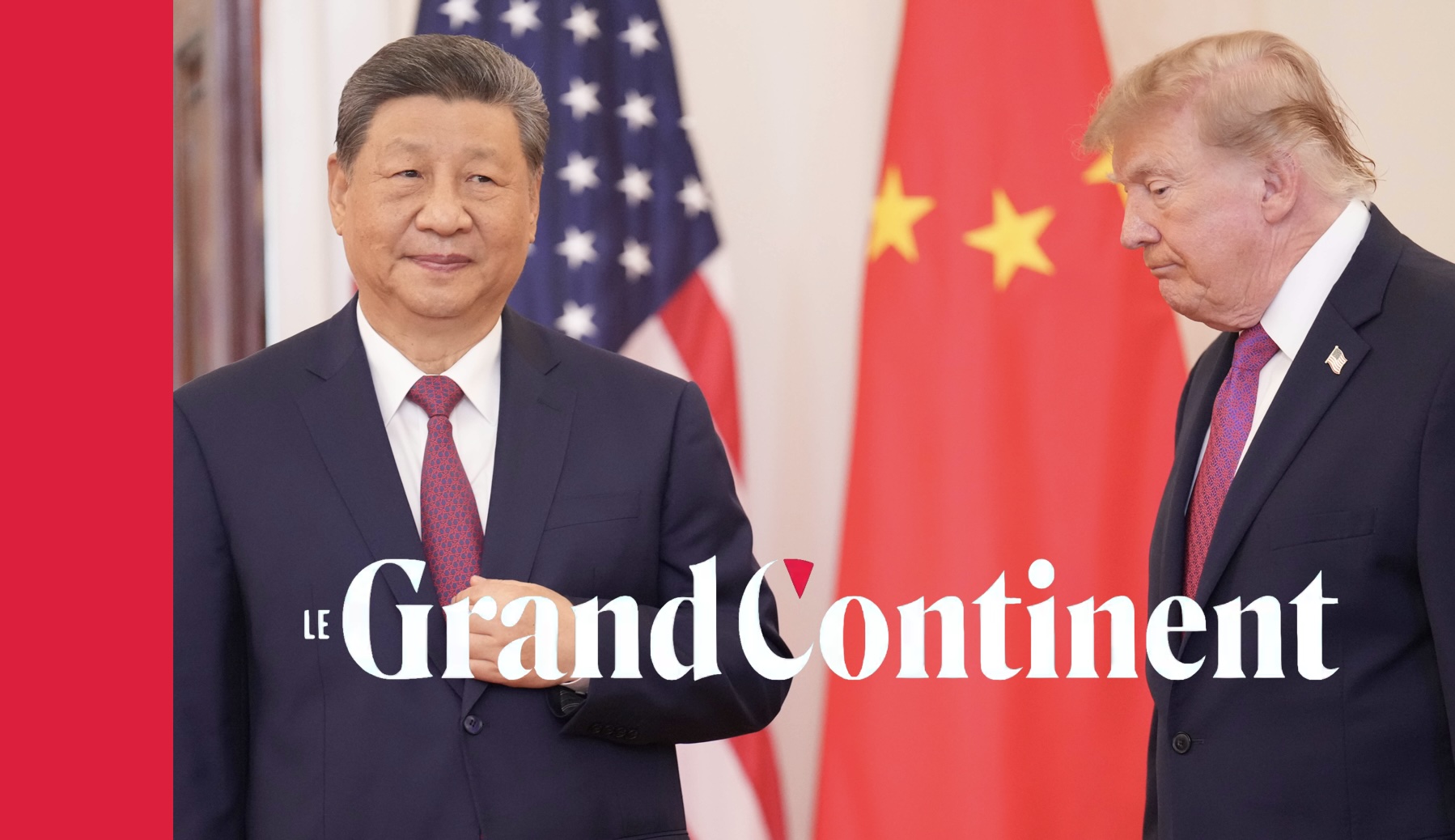
AI is now at the heart of the Sino-American confrontation. The question of how the two powers might agree to continue advancing the technology while drawing a framework to manage its risks is one of the central issues surrounding Xi’s state visit to the United States, which concludes today, Friday the 25th.
Although their motivations differ, Beijing and Washington tend to place security in a secondary position.
- The Trump administration has typically treated the race to develop AI as a matter of national security: a Chinese victory would grant Beijing a substantial strategic advantage.
- In China, some researchers believe that securing the most advanced models is less urgent, given that Chinese laboratories lag behind their American competitors2:
- First, incidents could occur at a lower level of capability for Chinese models, notably due to the diffusion of open-weight models.
- Their nature and severity could also vary depending on how the models are exploited by users. American models could more frequently undertake actions without authorization, while Chinese models might exploit faults in their reward systems rather than completing the assigned task.
- We must also consider how the two countries might handle the disclosure of security incidents.
- Unlike the United States, where METR has been able to test the surveillance systems of Anthropic, there is no instance of third-party evaluators embedded within Chinese companies.
- Thus, fewer reported incidents would not automatically mean fewer incidents.
- Finally, the question remains how China would respond to a major incident linked to an AI model, and in particular what threshold would lead the Chinese authorities to deem that a “problem” worthy of intervention.
- In an article published on September 13, the party secretary and minister of the State Security Department, Chen Yixin, specifically raises the risk that “malicious individuals” could use the technology to “fabricate political rumors, spread malicious information, incite conflict and inflame tensions in public opinion,” and do so “on a large scale and at very low costs.”
https://datawrapper.dwcdn.net/66ziA
Beyond economic considerations, the Communist Party is concerned about the implications AI could have for its hold on the political process.