
Tout l’été, le Grand Continent restera en mouvement. Chaque jour, nous vous apporterons où que vous soyez des idées que vous ne trouverez nulle part ailleurs (mais qui seront partout à la rentrée), des textes introuvables ou rafraîchissants avec nos Dimanches. Pour les recevoir directement dans votre boîte mail et soutenir cet élan, pensez à vous abonner à la revue
In what circumstances did your first visits to the island begin?
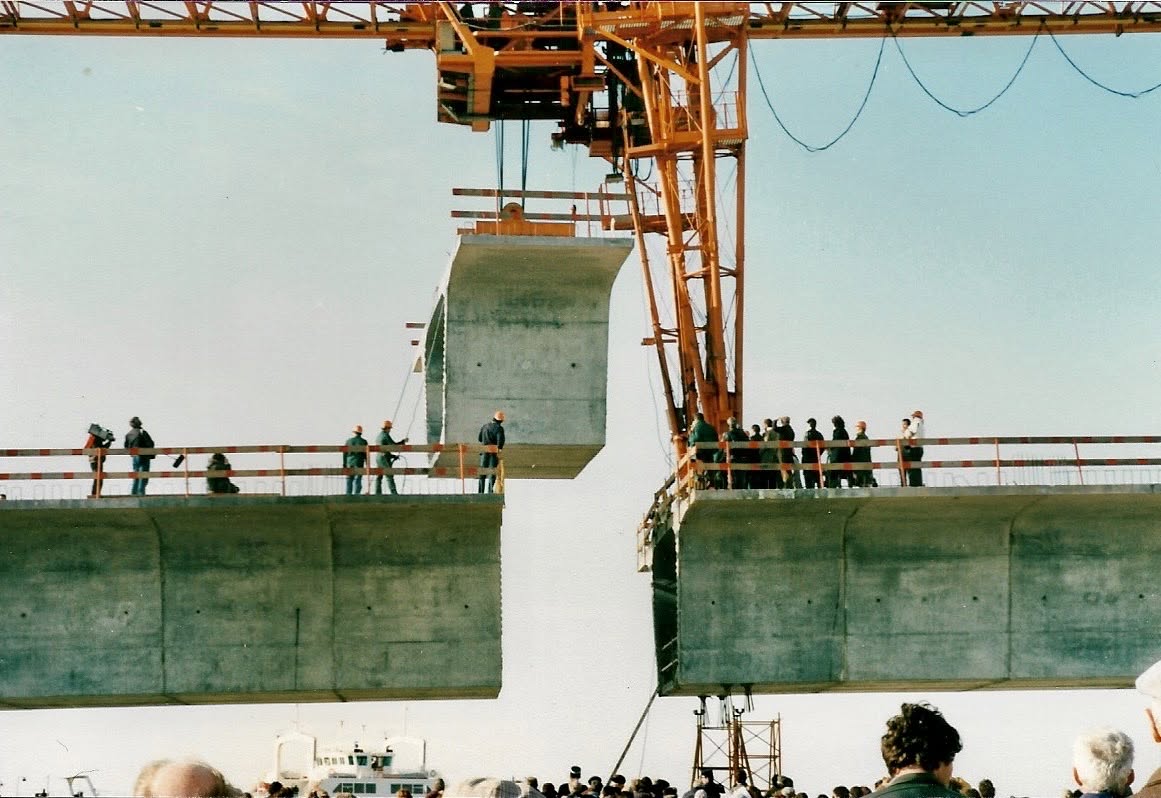
A friend took me there in 1987. The bridge dates from 1988; we had taken the ferry to reach the island from La Rochelle. Later, when our children were small, my husband and I discovered that cruising around the island by bicycle with a trailer they could ride in was very pleasant. Our daughters were probably two or three years old. We rented houses or stayed at hotels in various places around the island. When it came time to look for a house, we found one in the second-to-last village in the north, Saint-Clément-des-Baleines.
These different “places” on the island—how do they distinguish themselves from one another?
The further north you go, the further you are from the mainland, and the wilder the island becomes.
The most exclusive village is the last one, called Les Portes-en-Ré. I would say the north begins at the legendary village of Ars-en-Ré, the place where Lionel Jospin spent his vacations. From there, there are fewer hotels and restaurants, and the social circle is more closed. Saint-Clément-des-Baleines is less chic than Les Portes. There you’ll find a grocery store that’s open only part-time in winter, a tobacconist, two restaurants, a bakery that opens only in the morning, and a morning-market in summer. There’s no shop where you can buy a swimsuit or a dress. Whereas the closer you are to the mainland, in the south of the island, the more developed the territory is. The villages are more built up, infrastructures, restaurants, shops, covered markets and carousels are more numerous.
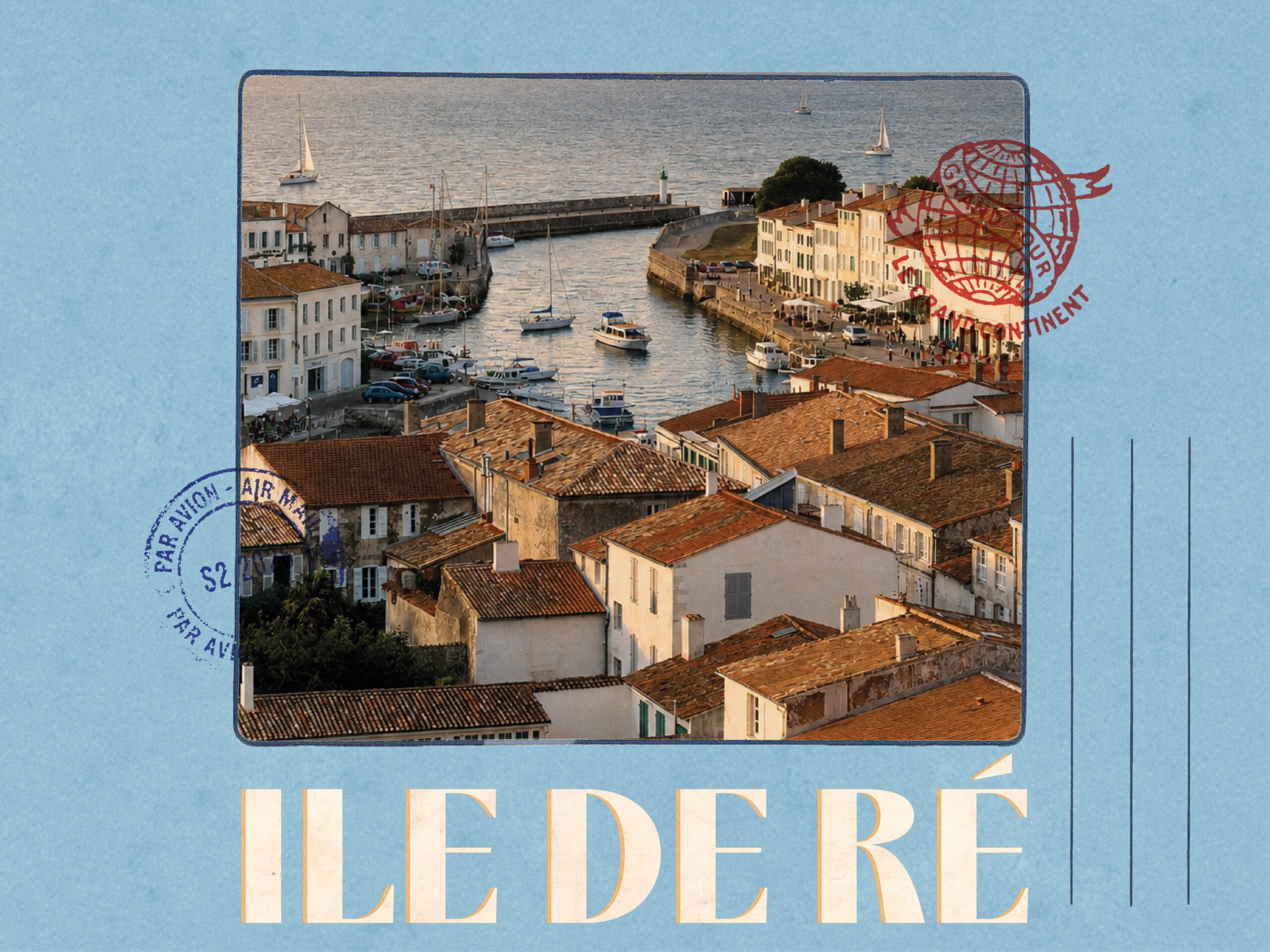
There you find all the charm of a seaside resort; the population is somewhat less bourgeois than in the north, and the island is more open to the residents of La Rochelle who come to spend the day there by crossing the bridge.
You mentioned Lionel Jospin; Philippe Sollers was also linked to Île de Ré. In the collective imagination, is the island a very worldly place? Is that your experience of it?
It’s true you can experience it that way. People used to say Ars-en-Ré was the haunt of the caviar-left, and Les Portes-en-Ré the haunt of the Versaillais right.
Today, the division is a bit blurred; the boundaries are less clear. Many people who work in cinema have settled in Les Portes-en-Ré, and they aren’t all right-wing. You’ll see them on the beach. Nicole Garcia lives in Ars-en-Ré, Nathalie Baye used to come there as well. François Ozon, Sandrine Kiberlain, Vincent Lindon, Suzanne Lindon also spend their holidays there. We stay on the fringe of all that. Perhaps we aren’t chic enough, certainly too intellectual. A friend’s husband calls us “the band of the agrégés.”
There have also been intellectuals on Île de Ré.
Indeed, there have been several eras. In the 1970s, a group of very beatnik Parisians settled there and opened restaurants. Land was cheaper then. It concerns a family named Frigière. They’re quite well known on Île de Ré because they spread out, had children, and are now locals.

At the beginning of the 20th century, there was a period when a few intellectuals would come to Île de Ré. Gaëtan Picon, in particular, had a house there and my village was inhabited by people like him. All of that disappeared. Madeleine Chapsal (1925-2024), David Servan-Schreiber (1961-2011) (the son of Jean-Jacques Servan-Schreiber (1924-2006), who was Madeleine Chapsal’s husband, etc.) and Régine Deforges (1935-2014), who were also very prominent, used to come to Île de Ré.
The island is also known for the fortifications Vauban built there.
Yes, they are located in Saint-Martin-de-Ré. It’s quite far from us, about twenty kilometers. It is the island’s capital, and a magnificent town, with 17th-century townhouses. To my knowledge, the fortifications are only in Saint-Martin. There is also a prison at the edge of the town. Alfred Dreyfus spent thirty-six days there in 1895, before being sent to Guyana. There are still prisoners there, one can sometimes hear their cries. Saint-Martin is very busy, with ice-cream shops, clothing and decor stores.
Who did you know when you arrived on the island?
In the beginning, I didn’t know anyone, whereas the other homeowners knew each other well. But over time, people came up to me and introduced me to others with whom I became friends. This place of leisure thus became the continuation of my life in Paris. We have a true circle of friends there. They are characterized by never having had a family house, a second home, or any anchor somewhere in France. For all of us, it was a first. There is a pioneer spirit in coming to a place populated by people who have frequented Île de Ré for several generations and who have their habits.
You describe an island populated by French people attached to tradition. Are they practicing Catholics?
It isn’t obvious, even though the mass on August 15 is celebrated quite solemnly. It’s true that at Les Portes-en-Ré there is a Versailles-like side. You hear only first names like Apolline, Victoire or Amaury. At the start of each summer I felt small jolts and thought: “But I have nothing to do here, really.” One of my friends, who bought her house before me, told me she had the same syndrome and fought it. Coming to and returning to Île de Ré thus became a kind of revanche for us, people without a family home, who bought ours between 45 and 50 years old.
Have you managed to create a sense of familiarity in this place of adoption?
Yes, it’s even very strong. We remain mostly among ourselves, but we sometimes bring new people into the circle.
What do you do in Saint-Clément-des-Baleines?
Same as in Paris: I work every day, but my hours vary with the season. In winter, I work in the morning, then I take a bike ride through the marsh. In summer, I go swimming in the morning or afternoon, depending on my mood, and it takes me two or three hours a day.
The rest of the time, we are all busy with our work and we often meet in the evenings. My friends are teachers, either at the university or in preparatory classes. I also have a friend who, starting July 1, keeps telling us: “I have classes to prepare.” We also engage in a lot of physical activities: we swim, we run, we cycle. We are very active (mostly women). Used to this kind of vacation, I find it hard to picture myself in a paradisiacal place like Corsica, where I am overwhelmed by sun and heat and where I can do nothing but swim and lounge. Île de Ré is a sort of perfect blend that suits me.
What do the island’s villages look like?
The houses are low because the climate is very windy. There is a very strict and binding urban plan: you cannot do whatever you want. The color of the shutters is codified, for instance. You cannot paint them pink; they must be blue or green. These rules give the villages a certain uniformity. The façades of the houses are rather hidden, as if they were shy about their beauty. You never see sublime villas, even though they exist. Some even have private access to the beach, but it’s not Saint-Tropez: it’s not ostentatious, these houses aren’t visible from the street.
What is the vegetation like?
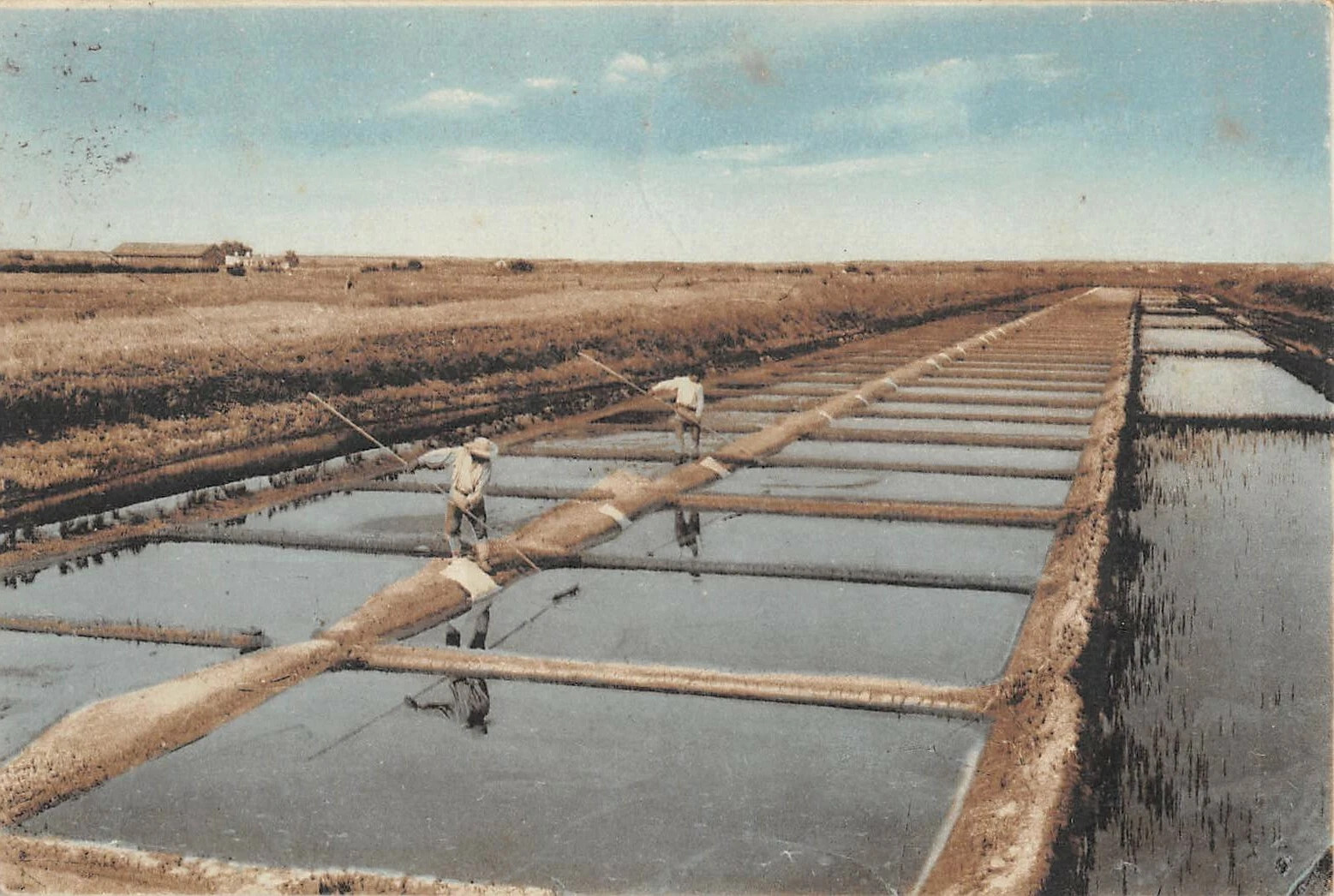
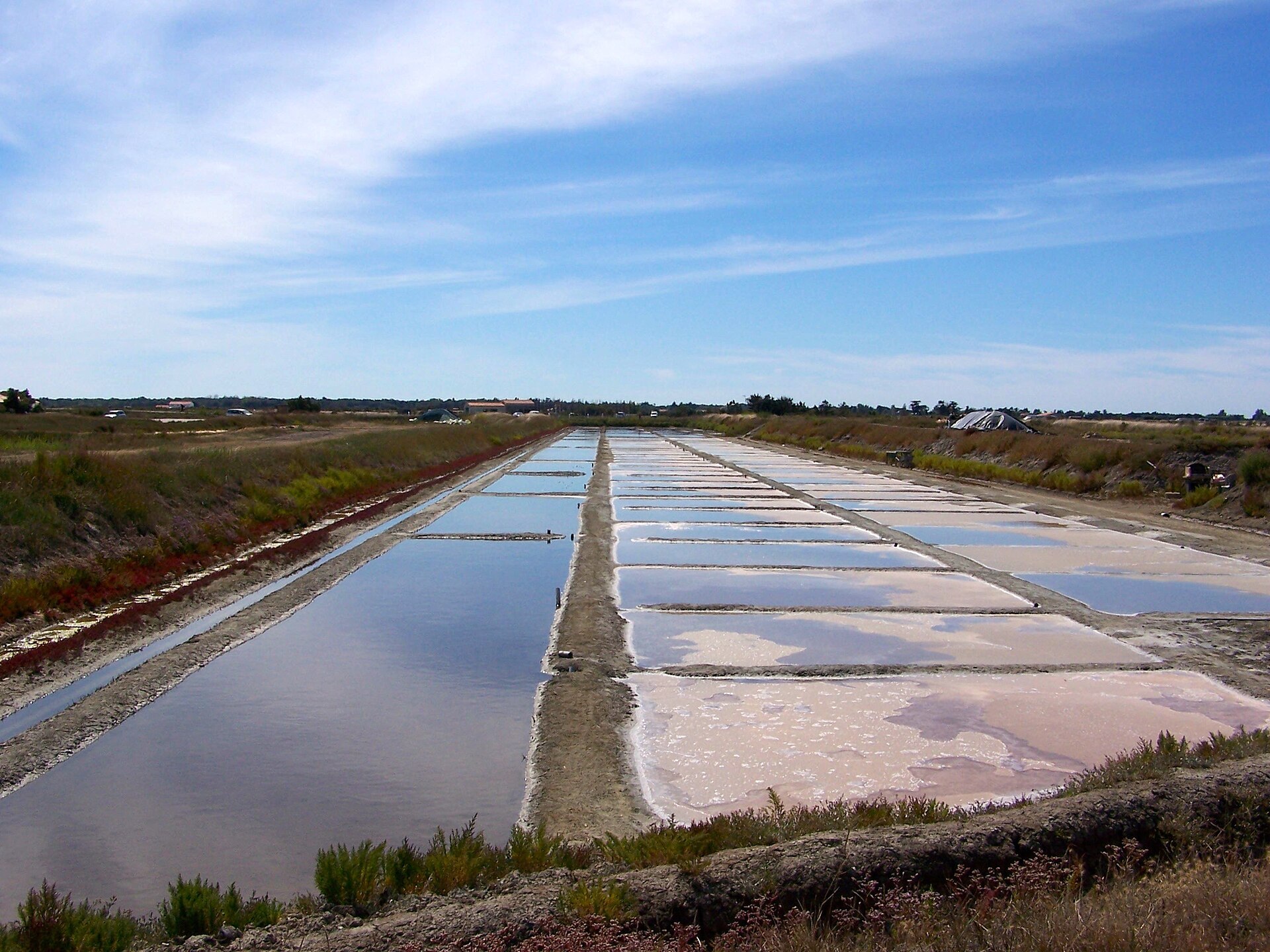
The pine forest, located along the coast, is very beautiful. It gives off a pleasant scent and can be traversed thanks to bike paths. My village is close to the salt marshes and to a blooming natural reserve populated with birds whose migrations are tracked. In spring, it’s fantastic: everything is yellow. Whenever I arrive on the island, no matter the season, I take my bike and ride through the salt marshes. This 5-kilometer crossing is long. At that moment, on a happiness scale from 1 to 10, I’m at 10, and only then do I reach that peak. It gives me a jolt, then the effect wanes. It’s invigorating, energizing. The island is very flat, even pregnant women can ride a bike.
Do the salt marshes give off a smell?
They can smell a bit of fertilizer and emit scents more or less pleasant, but I love all this diversity. It isn’t wild nature; it isn’t Brittany. It’s less rugged, even though you can smell the sea air and the island is whipped by winds in winter. Those who love Brittany don’t particularly appreciate Île de Ré because it’s flat and the nature there is rather tame. It’s an island that pleases those who aren’t used to living in the heart of nature. It’s no accident I love this place: I developed a relationship with nature late. In my childhood, I went to very domesticated places. My husband even gets bored on Île de Ré; he prefers the mountains.
Do you see the mainland from the island?
Yes, even in the north you can glimpse it from certain beaches on very clear days. The landscapes are very varied. There are very Atlantic beaches, with dunes and big rollers that attract surfers. But it’s not Biarritz—the waves aren’t that powerful. Others are more sheltered, tucked into bays. Sometimes you feel like you’re in the Mediterranean because of the scenery, not because of the water, which is cold and affected by tides. Right now it’s 22 degrees due to the heatwave, which is a record. Under normal circumstances, it never exceeds 18 degrees. And opposite, across the sea, lies America.
Does this climate make you feel the summer enough?
Yes, it’s wonderful, because I only need my bike, my towel, and my swimsuit. I can go to the beach whenever I want and come back late. I love July, when the days stay light until 10:30 p.m. For me, vacation is material ease and the freedom of movement. What saddens me most when I have to leave is losing that lightness and freedom.
Is there a cultural life?
I recall a funny anecdote. One day, while I was lunching with a friend in a bistro, the restaurateur told us: “You should go to the village called Sainte-Marie-de-Ré. It’s really the island’s cultural center.” This friend was a prep-school teacher and said to me: “Let’s go there tomorrow!” In truth, there was nothing: a pizzeria on the square and, vaguely, a library. We don’t really seek culture on Île de Ré, because there isn’t much. There is a cinema in La Couarde-sur-Mer and an outdoor cinema somewhere in the summer, but we never go. There is the Jazz festival Jazz au Phare, where fairly well-known artists perform, but I don’t go there either. In reality, what I love is being at home, doing the market in the morning because it’s 50 meters away, then cooking and hosting friends. I buy a lot of fish and experiment with cooking. I regularly invite friends who are excellent cooks. Sometimes I offload a bit onto them. I invite them, but they participate by cooking in my place. And since that doesn’t bother them, I make things even easier for myself. When the children are here (they’re between 20 and 30), we play Code Names and have a lot of fun. My friends’ children have become friends with each other.
Do you dine on the beach?
No, although on the less upscale beaches people come with coolers to spend the day or dine there in the evening. Starting this year, we enjoy nibbling chips in the early evening and a friend even opens oysters for us in front of the sea. We only know two beachside restaurants. There are, however, small rudimentary oyster shacks that don’t attract everyone. They’re situated on dunes overlooking what is called the Fier, a branch of sea that forms the great marsh of the island’s north. You can go canoeing there and watch the sunset; it’s very beautiful. I forgot to mention there is a golf course, because traditional tourism on the island also loves that!
Do you write better when you’re on Île de Ré?
The nice thing is that I have a large room and, since my husband isn’t there often, I have it to myself. It’s a small house with a floor above. Even when children or friends are there, they stay downstairs and I am very quiet upstairs. I can work all morning while the others live their lives.
Do you have a desk in your room, on which you write?
No, I work in my bed, like in Paris, or on a sofa. I work well in Paris too. There, there are fewer temptations.
As soon as the weather is nice, I want to go swimming, especially at the start of my stays: I have a bit of a craving. I want to go to the beach, to the market… It is exciting to rediscover the ordinary things. Then I settle down. I love this village life that you don’t have in Paris, where you have to schedule meetings with people. There, people say: “I’m coming!” I also hear church bells; I like that. I feel I am in a dimension of life I have never known: I am discovering proximity.
Have any texts been inspired by Île de Ré?
Some scenes were inspired by incidents I lived there. I bike a lot and I listen to a lot of podcasts on bike paths. It’s very enriching and it gives me ideas. Being outside, observing nature, the flowers, the lichen, all of that gives me visions. There is, for example, a spot in the salt marshes that, for me, plays the role of the little yellow wall in Proust’s In Search of Lost Time for the narrator. No one sees it, but to me it is important, because one day I saw colors there that reminded me of Proust’s little yellow wall. Since then, when I am alone, I stop there and look at it. Ideas come to me, not necessarily lasting, but this contact with nature feeds me.
Do you ever go to La Rochelle?
No, it happened once that I stayed almost two months on Île de Ré. With a friend who had a car, we said: “Let’s pretend we live here and go to the cinema in La Rochelle.” There were too many people, especially because the harbor draws crowds in summer. We did not repeat that experience and we remain truly tucked away in our small villages.
What do you think of the expression “bel été,” increasingly used as “I wish you a bel été”?
It horrifies me. If someone wishes me a bel été, I reply deliberately: “Bon été.” I hate formulas like “belle année,” “belle nuit,” “belle journée.” It’s an unnecessary affectation. Those who use it think it sets them apart, whereas it has become a cliché, even a matter of taste, in my view. It’s the way it is with language: it always needs hyperbole, as if “bel” were stronger than “bon.” But once they take root, we need others. It’s hard to be content with the words we have.