
All summer long, Le Grand Continent will stay in motion. Each day, wherever you are, we will bring you ideas you won’t find anywhere else (but which will be everywhere come the new semester), texts that are hard to find or refreshing with our Sundays. To receive them directly in your inbox and to support this momentum, consider subscribing to the magazine
Before you went to Warsaw for the first time, what did the city evoke for you? Did you think you could live there?
Before my first trip there in 2011, Warsaw was a city that frightened me. It was a place marked above all by the memory of the war and the Shoah, where the very idea of touring there seemed audacious. It wasn’t exactly that I didn’t want to go, but I certainly didn’t want to stroll around there. Warsaw, for the historian that I am, was the city of destruction.
But once there, I had to face the reality: Warsaw is also a city of the present, with its students, its tourists, its green spaces, its trendy neighborhoods. The Vistula, that vast river that lends much of the city’s charm, gives the capital its natural energy. When I was a visiting professor at the University of Warsaw, I had the opportunity to live there for a while. I met extraordinary people and I liked it a lot, but I did not really resolve the tension I have always felt: Warsaw is at once one of the dark hearts of European history and a city where everything changes very quickly, where large modern towers and luxury hotels rise from the ground as if they were attributes of a highly consumerist society.
Despite these mixed feelings, were you able to love Warsaw? Which places are dear to you and what sensory impressions do they evoke?
I love Warsaw for its spring, which is particularly splendid in Poland. The whole city is dotted with flowering linden trees, releasing a honeyed, very heady scent. Nature, in general, is very present in Warsaw, especially in the Praga district on the right bank of the river.
I am deeply attached to the city center market around Hala Mirowska, where I go to revive the imagined family memory of Polish cooking that I inherited from my maternal grandmother. In another life, I could have been an anthropologist of food. I cherish the rustic aspects of Polish culinary art, with its sour, tart flavors: rye bread, beet soup, herring and pickles, the scents of dill and fresh garlic. There you find the somewhat idealized image of a very lush Central Europe. Not to mention the mountains of cherries.
But, in this heatwave period, I would rather recommend a chłodnik, a cold beet soup.
What about the Polish language? Did your grandmother’s family continue speaking it after settling in France?
The parents of my grandmother came from Kraków, in a part of Poland that belonged then to the Austro-Hungarian Empire. My grandmother was born in Paris before World War I, but her mother tongue was Polish. She married my grandfather, who came from a family from the Russian Empire, in present-day Latvia. My maternal great-grandparents ran a jewelry shop, then a leather goods shop, on rue des Écoles, opposite the Collège de France. Family tradition says that Marie Curie sometimes came to visit them to speak their native language together. For my part, it was mainly my academic work at the EHESS that led me to reconnect with the language and with Poland.
On what occasion?
When I went to Warsaw for the first time, it was as part of my research on written testimonies of the Shoah. I became particularly interested in the role of literature within the camps and ghettos, and then in the status given to these “literary documents” in the early historiography of the Shoah. The early genocide historians, who were often survivors themselves, could collect literary and poetic works produced on site and incorporate them into their studies. To develop this research, I could rely on scientific networks woven by the EHESS in the countries of the former Eastern Bloc, particularly Poland. These networks date back to the 1990s, after the fall of the Berlin Wall. The aim was to foster exchanges among social science researchers through workshops.
There were also some in Prague, Budapest, Bucharest. For the sociologist Rose-Marie Lagrave, who originated this bridge between the West and the East, it was about strengthening a fellowship with intellectual figures who, for many, had been dissidents in their country, and then creating new generations of researchers who were firmly open to Europe. She called it the “Tour of Central Europe”.
Is Warsaw a city inhabited by the memory of its own history?
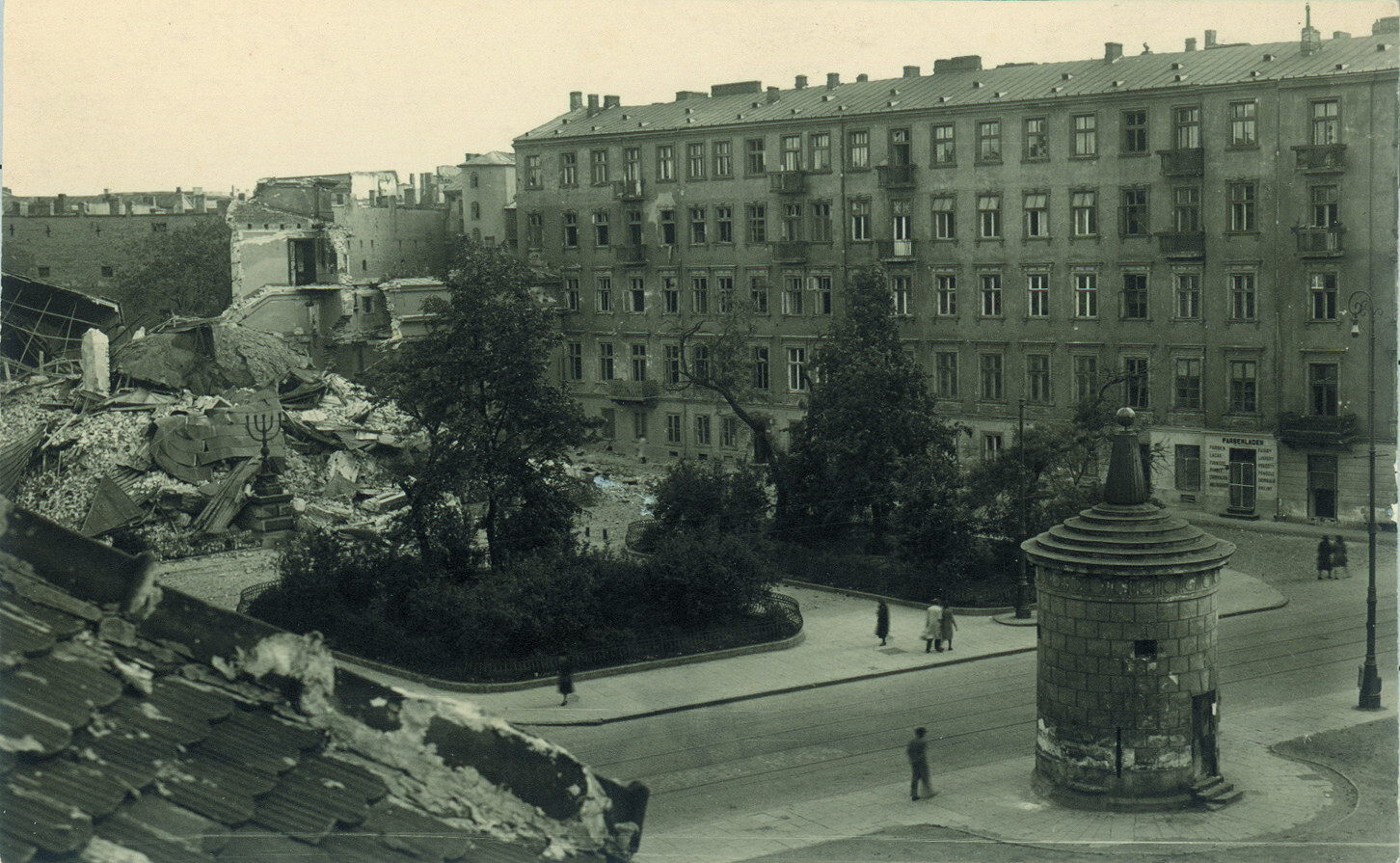
Warsaw is somewhat the city of a lost world. I refer here to the ghetto, which housed as many as 450,000 people, on an area roughly the size of a Paris arrondissement. Yet there are almost no remains onto which one can project melancholy, ideas of the past, or memories. Nevertheless, when I walk there, I know I am treading on thousands of lives and objects destroyed.
Warsaw has the peculiarity of not having undergone its “Berlin turning,” meaning the Polish authorities did not really choose to integrate the memory of the city into the urban fabric through artworks or highly developed memory routes. One sees a city growing on top of another, that of the postwar era, which had itself grown on the ruins.
The feeling is all the more strange because, even if there is no trace of these destructions, since everything was rebuilt, the prewar urban layout endured. Aside from a few major avenues from the communist era, the streets kept their location and their names. It is the only thing that remains of these places of life: aside from these street names, there is almost nothing that can remind us of their memory before the war. You have to search for it, know how to guess it, decipher it. And it is becoming less and less visible.
Can you give us examples of these surviving streets?
Among the poets of the Warsaw Ghetto I studied was Władysław Szlengel, whose January 1943 text, intended to encourage Jewish fighters, lists the names of the streets where the revolt brews: Niska, Dzika, Pawia, Mila, Ostrowska. He calls them “our forests of partisans.” These names, which endure today despite the near-total destruction of these spaces during and after the ghetto uprising in April 1943, thus symbolize simultaneously Warsaw before the war—the picturesque streets depicted, for example, by Nobel laureate Isaac Bashevis Singer—, the urban guerrilla undertaken by the fighters during the German occupation, the destruction of the ghetto, but also postwar Communist Warsaw and Warsaw today. This layering is quite unsettling.
This interest in the Warsaw street almost constitutes a tradition: it is through the street that one understands a city’s history most clearly. One of the greatest historians of Polish literature, Jacek Leociak, produced what he calls “street biographies” of the ghetto, in the form of very beautiful albums. His work spans visual history and historical cartography.
Rachel Auerbach’s diary is another literary and historiographical source you helped bring to light. Who was she?
Rachel Auerbach is one of the figures who gathered around the historian Emmanuel Ringelblum to assemble the clandestine archives of the ghetto, beginning in 1940. This collective, called Oneg Shabbat, brought together historians, sociologists, and journalists who gathered documents about life in the ghetto. Everyone wrote and encouraged those around them to do the same.
Auerbach, a journalist before the war, began keeping a diary to describe her daily life in the canteen where she worked. She recounts the deterioration of living conditions, both physical and moral, of the inhabitants. She also records her own mental states in the face of famine, violence, spoliation, up to the great deportation of July 1942 when the ghetto’s 350,000 Jews were taken to Treblinka. She managed to escape and found temporary refuge in the Warsaw Zoo, more precisely in the director’s villa, who was known for sheltering persecuted people. Together with Audrey Kichelewski, we wanted to introduce the public to Rachel Auerbach’s diary, which had been beautifully edited in Polish by Karolina Szymaniak and, thanks to the translator Alexandre Dayet, the text is now available in French from the Presses universitaires de Strasbourg publisher.
Did the Oneg Shabbat collective also preserve other writings and many objects? Can they be seen today in Warsaw?
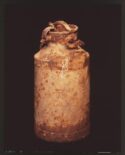
Indeed, Emmanuel Ringelblum’s team gathered writings and objects from the ghetto, later hidden in milk cans and iron boxes. After the war, these archives were found buried on Nowolipki Street, where there is today a square and a small, very beautiful and sober memorial site. All these remnants—diaries, ghetto press, ration tickets, theater programs, school notebooks, photographs—hold for me the treasure of a memory that resists humanity.
 <
<
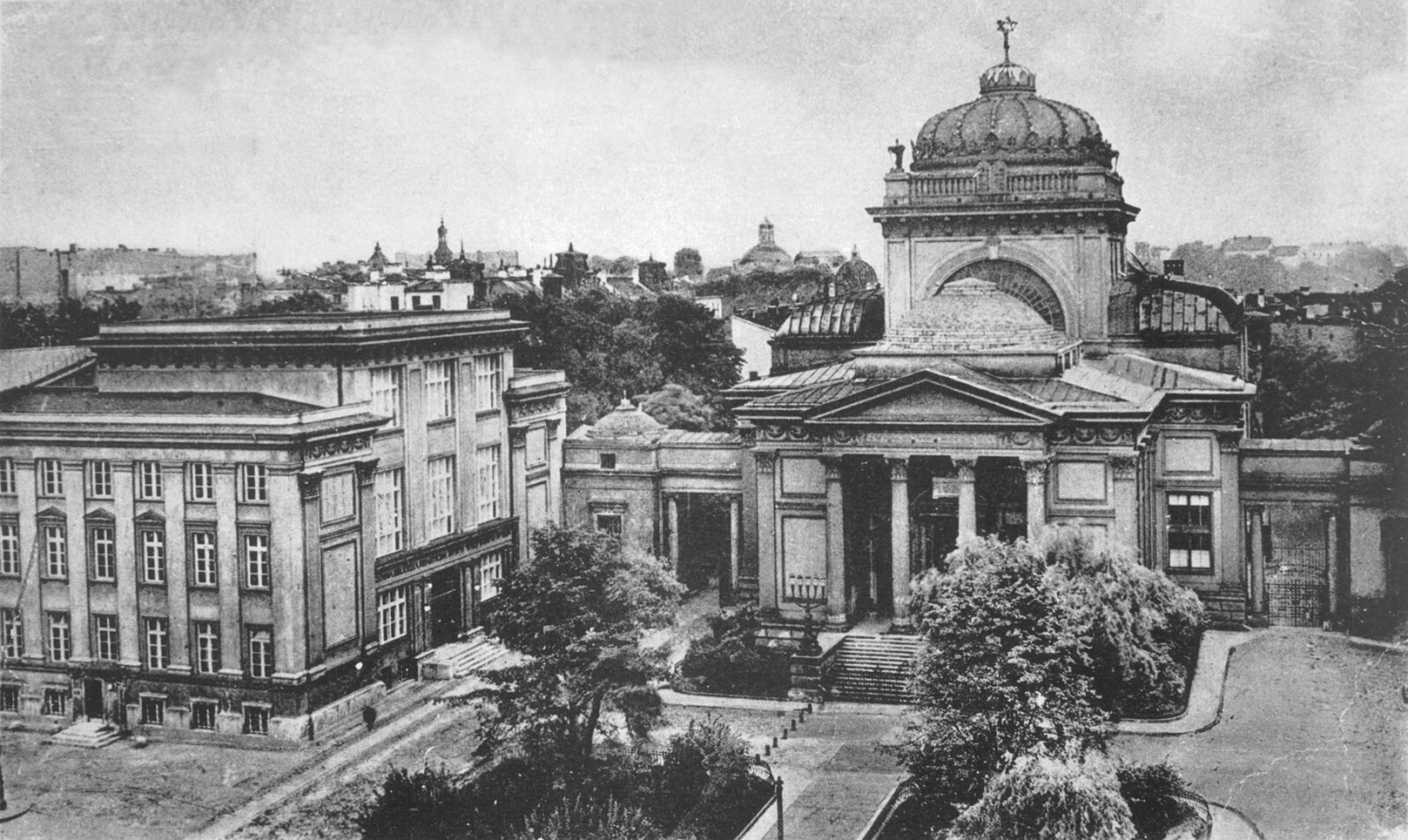
All of these collections are today kept in one of the few buildings not destroyed during the war: the former Great Jewish Library of Warsaw, now the Jewish Historical Institute, a major research center and a museum. It is a singular place, which I highly recommend visiting. At the entrance, there was a marble floor, which burned completely during the Nazis’ destruction of the ghetto. Under the heat, the floor darkened and warped. The decision was made to preserve it as is, with the waves of fire still visible on site, as traces of mutilations.
Can we speak of a material history of life in the ghetto?
Indeed. Rachel Auerbach wrote two texts which she called respectively “The Lamentation of the Inanimate Things” and “Lacrimae rerum,” the latter borrowed from a line of Virgil in the Aeneid: “the tears of things.” These are writings that honor the victims of the Shoah through the objects, both deprived and abandoned, that belonged to them. Her writing is magnificent, very modernist, and she uses language to craft what she calls the “still lifes” of the ghetto. In addition to these texts, she also made recordings to preserve the “soundtrack” of this history, such as the songs of children begging in the street. Rachel Auerbach is the sensitive chronicler of this life that was not a life, of a world that was not a world, but that nevertheless was. She set about capturing them as such.
Are memory quarrels at work in Warsaw’s urban space? Where do they crystallize most?
Even though things have calmed since Karol Nawrocki came to power, I have witnessed, over the past fifteen years, genuine historiographical battles.
Under Andrzej Duda, the Polish government promoted a memory policy centered mainly on a highly positive national narrative, which claimed that Poles did not participate in the destruction of Poland’s Jews and, on the contrary, that the latter had even benefited from heroic help from their non-Jewish compatriots. In this regard, the historian Jan T. Gross, with his work entitled The Neighbors, which dealt with the massacre of Jews carried out by their Polish neighbors in a small town, triggered a fierce controversy in 2001.
An anecdote reveals quite well the complexity of these memory disputes within Warsaw itself. I got it from a friend, a connoisseur of ghetto history, Piotr Laskowski. In the early 2000s, the mayor of Warsaw was Lech Kaczyński, the future president. He wanted to seize control of the ghetto uprising memory and center it, not on the heroism of the best-known Jewish fighting group, the Jewish Combat Organization, with its famous figures such as Mordechaj Anielewicz, but on a minority right-wing group, the Jewish Military Alliance, which would have maintained excellent relations with the Polish resistance (a claim more than contestable). It was a way for the mayor to reclaim the ghetto’s history through the lens of anti-communism: there was no question of honoring socialists and even less Marxists. It is thus in the name of a certain Mieczysław Apfelbaum that he had a small square renamed in 2004 on the territory of the old Warsaw ghetto. To those with Polish ears, the name of this supposed soldier of the Jewish Military Alliance is ironic, with its typically Polish first name and a typically Jewish surname.
Was his name thus entirely in line with the narrative the city authorities wanted to foreground?
That was counting on the claims of several historians, who discovered that this character did not exist at all. He would have been manufactured by a non-Jewish Polish resistance member who, after the war, wanting to promote himself, would have claimed to have helped a certain Moryc or Mieczysław Apfelbaum. This Polish resistor could thus obtain the status of Righteous Among the Nations in 1964. The story has had several twists, and it was only in 2023 that the square was renamed: it became Rachel Auerbach Square.
Do these memory tensions also appear in the museum space?
A memory far more consensual than that of the ghetto is, of course, the Warsaw Uprising of August 1944.
One finds its symbol—the Kotwica, meaning “anchor”—everywhere in the city. The Warsaw Uprising Museum is probably the place where this unifying patriotic narrative is most vividly staged. It is a ultramodern immersive museum, visited by all Warsaw schoolchildren. Speeches by John Paul II play on a loop in the rooms, and many interactive experiences invite participation: one crawls through faux underground passages; one can shoot at silhouettes of Nazi soldiers, like at shooting galleries; one can taste a coffee substitute to experience wartime rationing restrictions; or enter a field hospital tent that smells of formaldehyde. The museum’s motto might be: “Live the uprising as if you were there.”
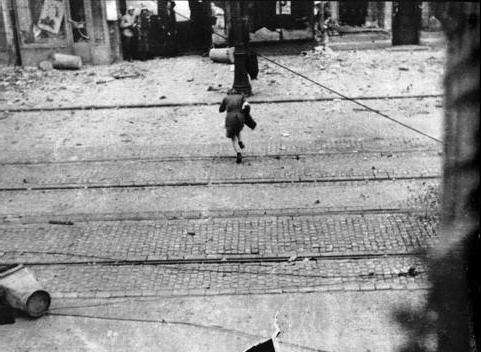
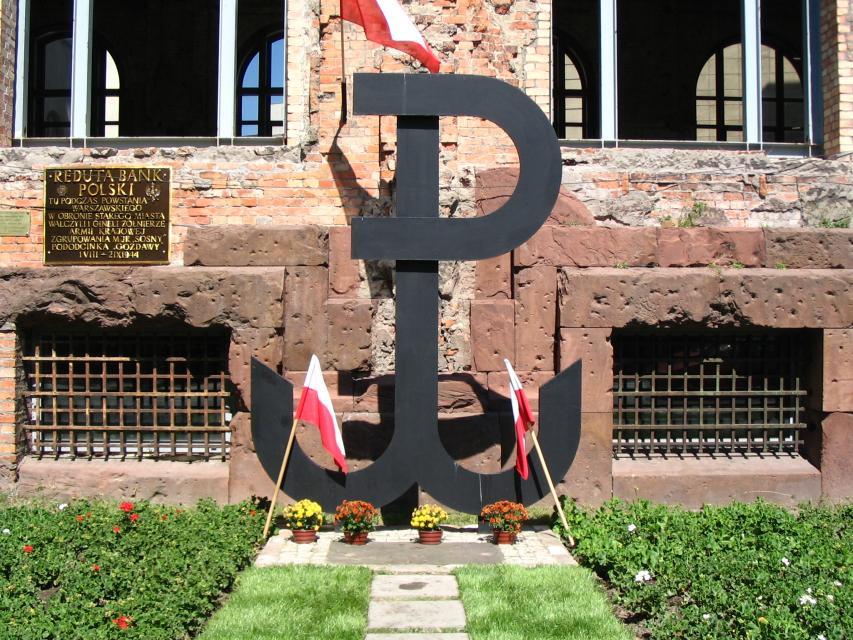
Finally, there is a small corner dedicated to the Warsaw Ghetto, using a method of “history within history,” which raises questions. Moreover, the images shown, because they are disturbing and should not frighten younger people, are projected at the bottom of a well, accessible only to those of a certain height, thus to adults. You peer over the edge as if viewing something forbidden, in a setup one could describe as voyeuristic: once positioned, you can see sequences of hangings, famine, and summary executions. A fellow scholar organized, for a time, counter-tours of the Uprising Museum: we would go there and examine everything with a critical eye, to look at the underside of this Polish memory that seems so glorious and unified.
 <
<
Avez-vous pu faire ces contre-visites avec vos étudiants ? Vous avez en effet eu l’occasion d’organiser des séjours de recherche pour faire découvrir Varsovie à vos doctorants en histoire.
Unfortunately, the museum’s leadership was not very open to this kind of counter-visit. We had rather organized, with Polish historian colleagues, a walk through the old Warsaw Ghetto, even though it has completely been rebuilt. The students were able to discover residential areas that were sometimes quite elegant. But a striking detail: some houses were built above the original ground level, sometimes up to ten meters high, on piles of rubble. These are remnants of the ghetto’s destruction, as not all debris could be removed.
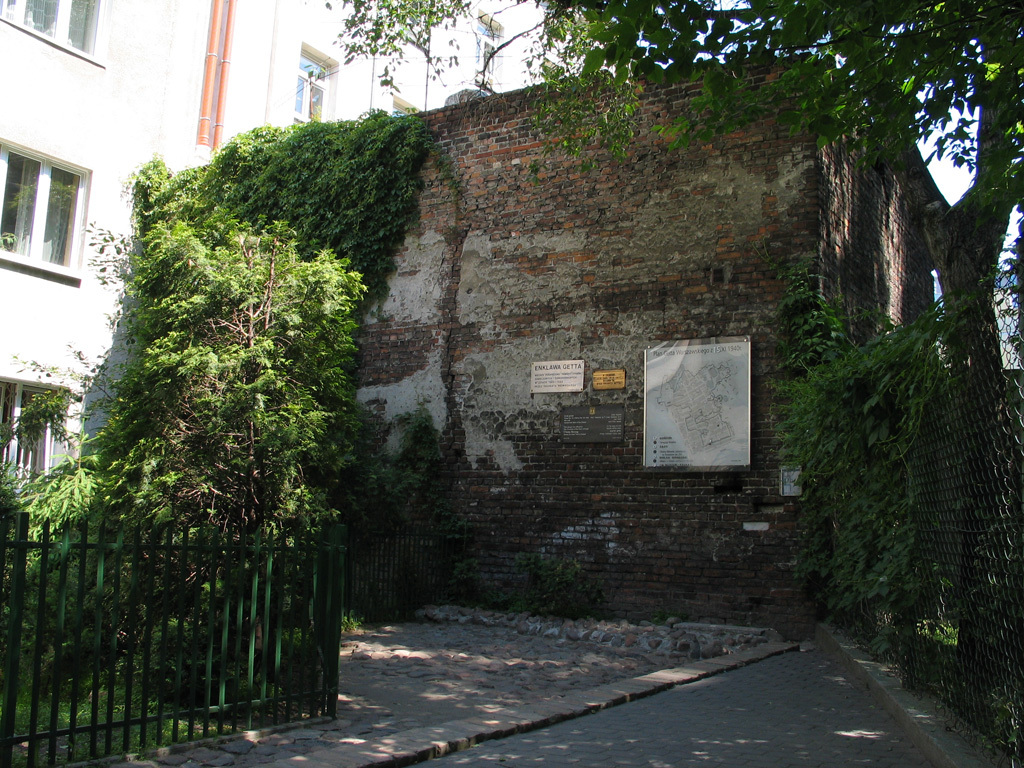
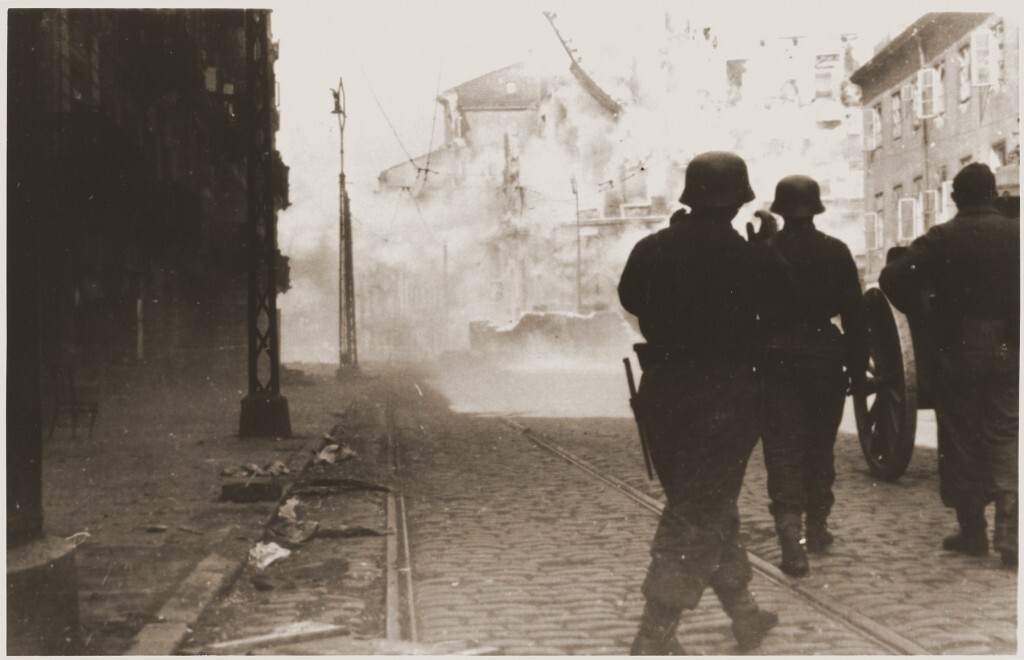
La topographie de Varsovie, naturellement plate, est donc encore porteuse de cette histoire. De même, pour garder la trace des anciennes délimitations du ghetto : là où s’élevaient ses murs autrefois, les trottoirs sont désormais engravés de plaques de métal. Se promener à droite ou à gauche de ces plaques n’a rien d’anodin : cela signifie que vous êtes à l’intérieur ou hors de l’ancien ghetto. On peut n’y prêter aucune attention, et pourtant, c’est là.
Is Warsaw a must-visit city for someone who wants to become a historian?
I think that visiting the city and the Jewish Historical Institute Museum, where the Ringelblum archives are kept, has a lot to teach us—not only about the history of Nazi-occupied Europe and the Shoah, but also about the craft of being an historian.
It is a completely different experience from Auschwitz. We do not commemorate destruction, but resistance and destruction. Ringelblum’s trajectory teaches what a historian can do in times of war, when the world falls apart around you. Ringelblum realized there was an urgency to build archives, not for himself, not for the survivors of the ghetto—as there would be none—but for the world to come. He believed in the document and in what it would signify for historians who would follow him. There is something deeply touching in this real-time archival effort of genocide, which relies on all layers of society, from the writer to the child who sings and draws, via mothers of families, street beggars, or shopkeepers. This lighting up of social history is not without recalling Marc Bloch, whom we have just canonized: Marc Bloch and Emmanuel Ringelblum are two historians, two militants, two leaders who stood up in face of the event. I encourage all young historians to go to Warsaw to experience this very particular way of telling one’s era and its depths.
Recently, excavations were still conducted in the north of the old ghetto, where people awaited deportation to Treblinka. Are there other places in Warsaw where such research should be undertaken?
Warsaw is indeed a city where excavations still take place, on micro-spaces, so that they are as non-invasive as possible. There you find, as in those places where people were deported, cups, prayer books, and, in general, many Jewish religious objects, such as tefillin, but also all sorts of daily life objects, cigarette cases, dishes, bottle shards. Exactly as when archaeologists excavate for Romans or Egyptians. Except that the Shoah is very recent when you think about it.
This type of digging gives me a slight discomfort: on one hand, I find it important to do them, to know what this soil holds and what wants to surface again; on the other, it seems crucial not to simply property memory, not to view the destruction of the Jewish people as an ancient history. It raises fascinating questions: how do you keep memory alive without soaking it in the formaldehyde of commemoration?
How to respond?
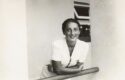
Literary transmission seems to me a good way to revitalize this memory. I would take the example of the poet Zuzanna Ginczanka, Jewish, a resistance fighter, murdered by the Gestapo in Kraków in 1944. She was only 27 years old. One can read her work in French thanks to the very beautiful translations by Isabelle Macor. Ginczanka’s modernity, born in Kiev but of Polish nationality, is striking: her sole poetry collection published in her lifetime, The Centaurs, expresses in a very intense way her longing for freedom, including sexual freedom, through the exaltation of her own body. Ginczanka had been a beloved figure of the Warsaw avant-garde between the wars. A young Polish-born filmmaker, Joanna Grudzinska, recently made a wonderful documentary about her, titled All of Me Won’t Disappear.
 <
<
We see Polish young women marching for their right to abortion in 2020, chanting Ginczanka’s poems. The scene is not only moving: it is also a very beautiful act of bringing literature up to date.
The poems of Ginczanka regain their strength and beauty in the mouths of these women who fight for their freedom. This is quite different from the commemorative enterprises that are the excavations called “archaeological,” the grand museums, or the rewriting of a national epic, which can paradoxically produce a painful effect of stagnation and erasure. Ginczanka’s work, whose life ended tragically in 1944, is a work that is accessible, that offers itself to us and that we can invest with new meanings. It is perhaps this story of feminine transmission that tells the Warsaw I love best.