
Try the Grand Continent. The ideas and analyses you won’t find anywhere else. But you’ll soon see them everywhere. In your inbox from 8 euros per month
As the leading economic power and the most populous country in Latin America, with around 214 million inhabitants, Brazil will vote on 4 and 25 October 2026. First for the first round of the presidential election, to renew the 513 seats in the Chamber of Deputies and two-thirds of the Senate, as well as for the governors, vice-governors and state legislative assemblies; then for a second round of the presidential election that all polls available so far also forecast will be as tight as in 2022 when Luiz Inácio Lula da Silva (50.9%) narrowly defeated the incumbent Jair Bolsonaro (49.1%).
Like a Whiff of Déjà Vu
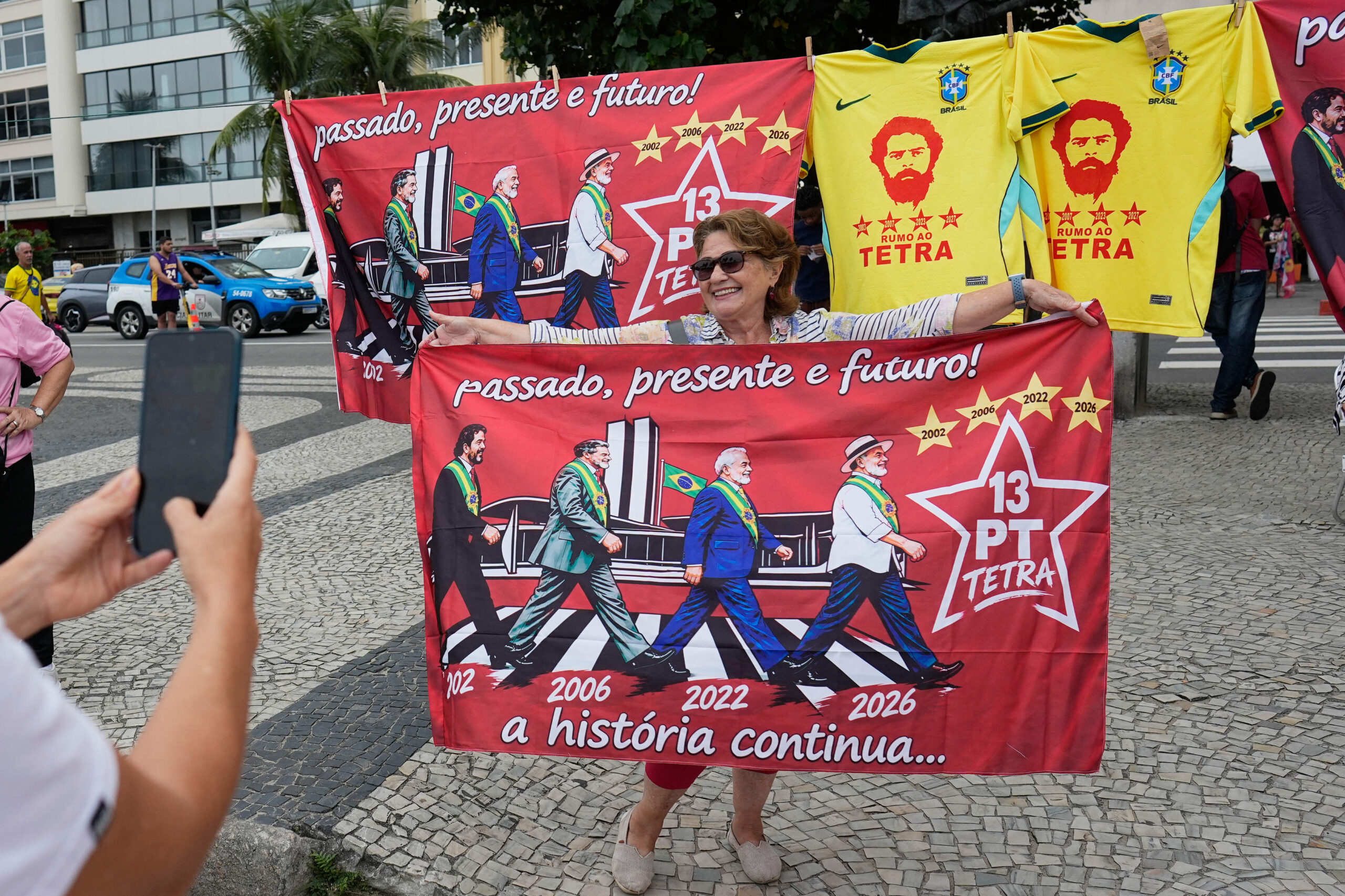
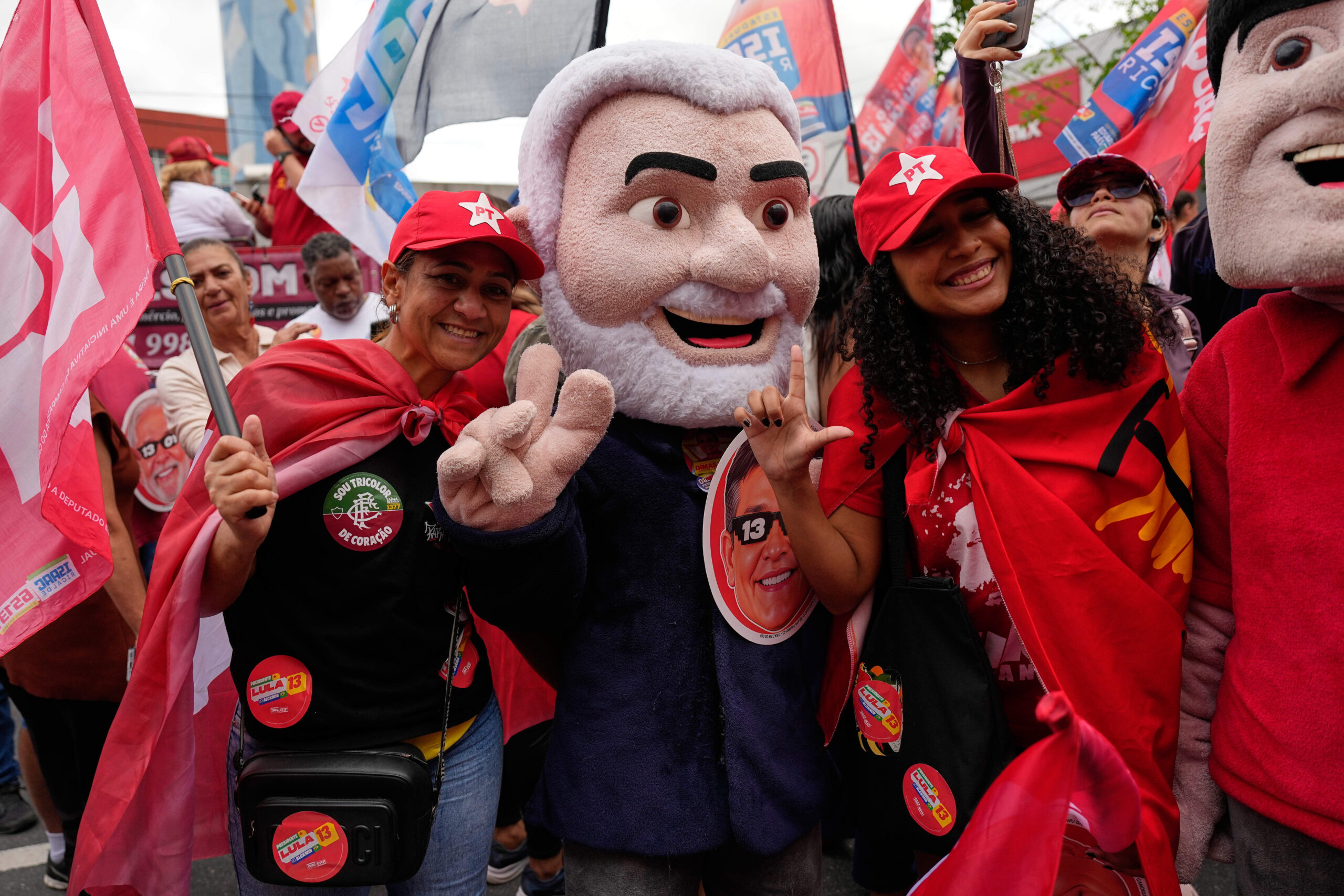
So it’s not surprising that the electoral campaign of the past months sometimes gives the impression of a rerun of four years ago. On one side, Lula embodies a broad coalition whose heart is the Workers’ Party, but which also brings together numerous political formations resolved to ally in the name of defending democracy in the face of the threat of a new far-right taking power. His running mate, Geraldo Alckmin, is none other than the current vice president. And his program follows the continuity of the one that led him to the Planalto Palace in 2022: the fight against poverty and inequality in a country where the Gini index (50.3) remains well above the Latin American and Caribbean average (45.2), though it has fallen substantially over the past four years, the protection of minorities and environmental defense, but also state support for key economic sectors, such as industry or energy, to strengthen the country’s sovereignty.
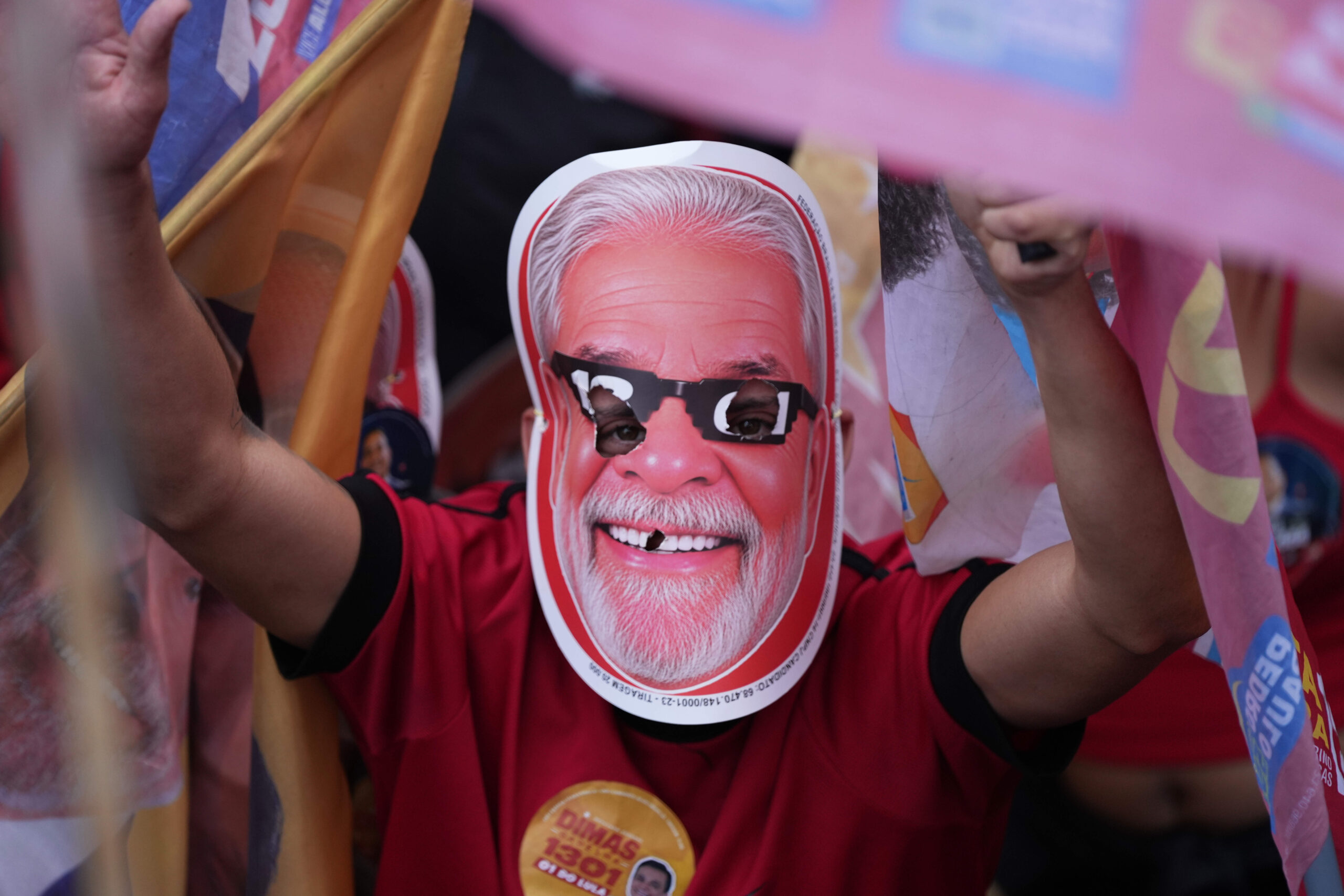
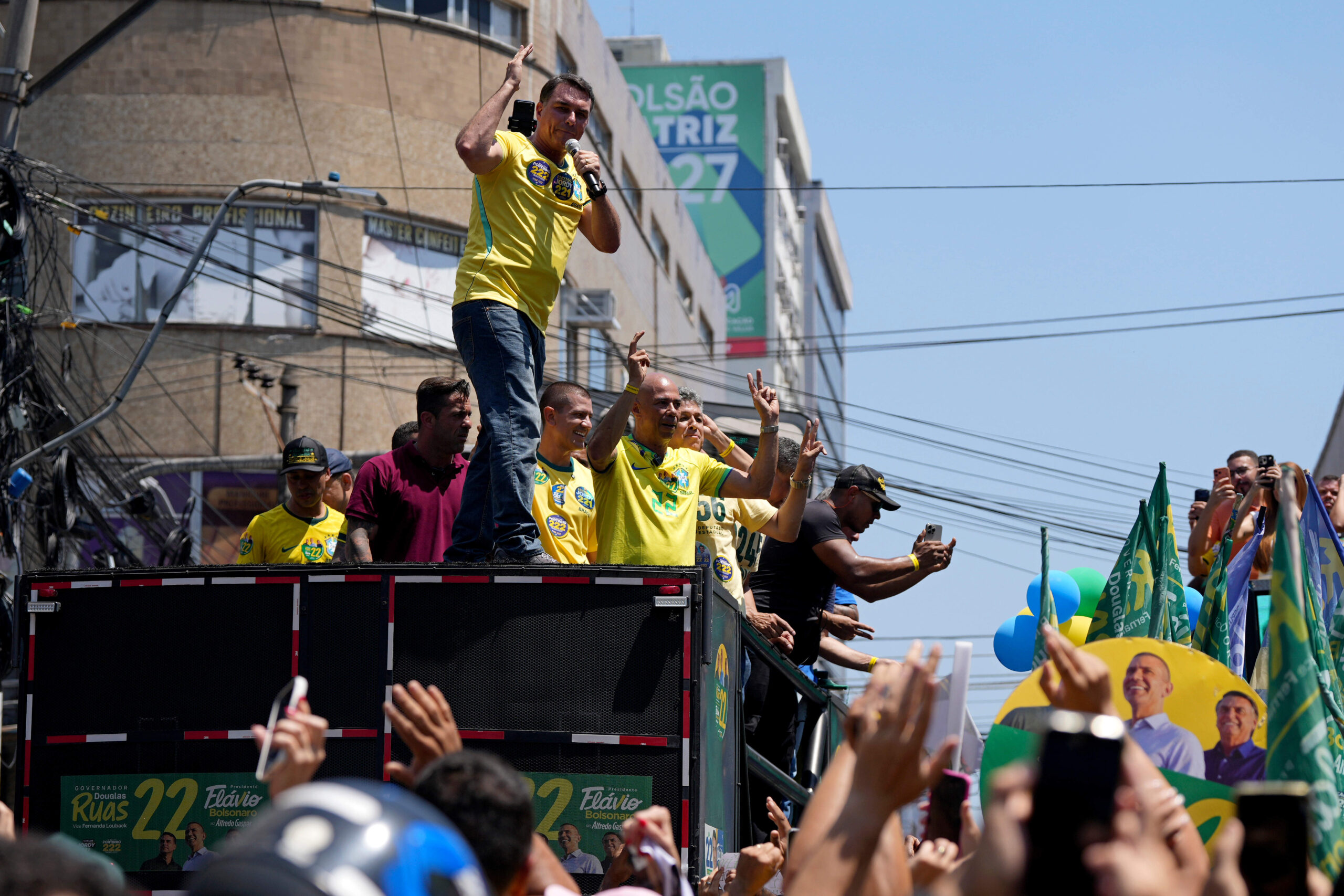
On the other side, Flávio Bolsonaro has taken up the mantle of his father, condemned to 27 years in prison by the Federal Supreme Court (TSF) after the January 8, 2023, attempted coup and the sacking of the Three Powers Square. The elder sibling attempted to present a moderated version of a project that nonetheless remains at the far right, conservative and authoritarian, and whose first objective is to free his father from prison. Flávio pretends to play the card of “institutionally respectful bolsonarism” and of defending democracy against judicial tyranny, but the same forces are at stake. So much so that the son began mimicking his father – with whom he bears a striking physical resemblance – in campaign spots and meetings: the same national-colour t-shirt printed with the slogan “My party is Brazil,” the same video settings flooding social networks, the same rallying places, down to a symbolic return to Juiz de Fora – where eight years ago Jair Bolsonaro received the knife thrust that helped propel him to victory in the 2018 elections.
The New Geopolitical Context
In many respects, however, the vote is also unprecedented. First— and this is a fundamental difference from 2022— because it takes place within a renewed geopolitical context where the question of United States interference is no longer a fantasy held by minds trapped in the old Cold War battles, but a well-documented reality. The Trump administration does not hide it: while Washington had diverted its gaze from the South in the early 1990s, preoccupied with Middle East concerns and thus allowing room for Chinese expansion, the moment has come for reassertion. The time has come to reactivate the Monroe Doctrine in the imperial version it acquired in the early 20th century, the Roosevelt Corollary of 1904 that initially led to the tutelage of much of the Caribbean and Central American space, and then established U.S. domination over the entire continent in the aftermath of World War II, in the context of the Cold War, at the expense of any democratic considerations.
In November 2025, the publication of the document defining Washington’s new national security strategy was explicit: “The United States must occupy a preeminent position in the Western Hemisphere, an indispensable condition for our security and prosperity—one that allows us to assert ourselves confidently, wherever and whenever necessary in the region. The terms of our alliances, as well as the conditions under which we provide any form of aid, must be subordinated to the gradual reduction of hostile external influence—whether it concerns control of military facilities, ports and key infrastructure, or the acquisition of strategic assets in the broad sense.” In effect, after having weighed on the Argentine legislative elections in October 2025 by conditioning U.S. support for the peso on a good result for Javier Milei’s party, instances of interference multiplied: in Honduras in December 2025, in Colombia and Peru in the first half of 2026, to name just these examples. Not to mention, of course, the destruction without trial of numerous boats in the Caribbean suspected of participating in drug trafficking, nor the dramatic kidnapping of Venezuelan President Nicolás Maduro by special forces in January 2026. Launched in March 2026 in Florida, the program named “America’s Shield,” bringing together all radical right governments on the continent to promote military and security cooperation, and which recently met in New York on the sidelines of the United Nations General Assembly, embodies this attempt to rein in the Western Hemisphere and would receive heavyweight backing if the Brazilian giant were to tilt back toward the far right.
“Brazil Is Not Anyone’s Backyard”?
Lula has repeatedly stated that “Brazil cannot be considered anyone’s backyard” in his UN speech on September 22, but the country is no less exposed to the ambitions of the Trump administration given its size and economic weight, as well as its importance to China (now its top trading partner) and its role within the BRICS. The interference attempts began with steep tariff measures in July 2025, when Trump announced a 50% additional tax on all Brazilian goods. The announcement was accompanied by an explicit political component: the Brazilian government had to put an end to the “witch hunt” that Washington claimed targeted former president Jair Bolsonaro—then indicted for attempted coup. A few weeks later, members of the TSF who were about to judge Bolsonaro were threatened. The rapporteur of the case, Alexandre de Moraes, who had suspended the social network X in Brazil for more than a month as part of an investigation into the spread of misinformation, was banned from stay and from any economic and financial transactions in the United States.
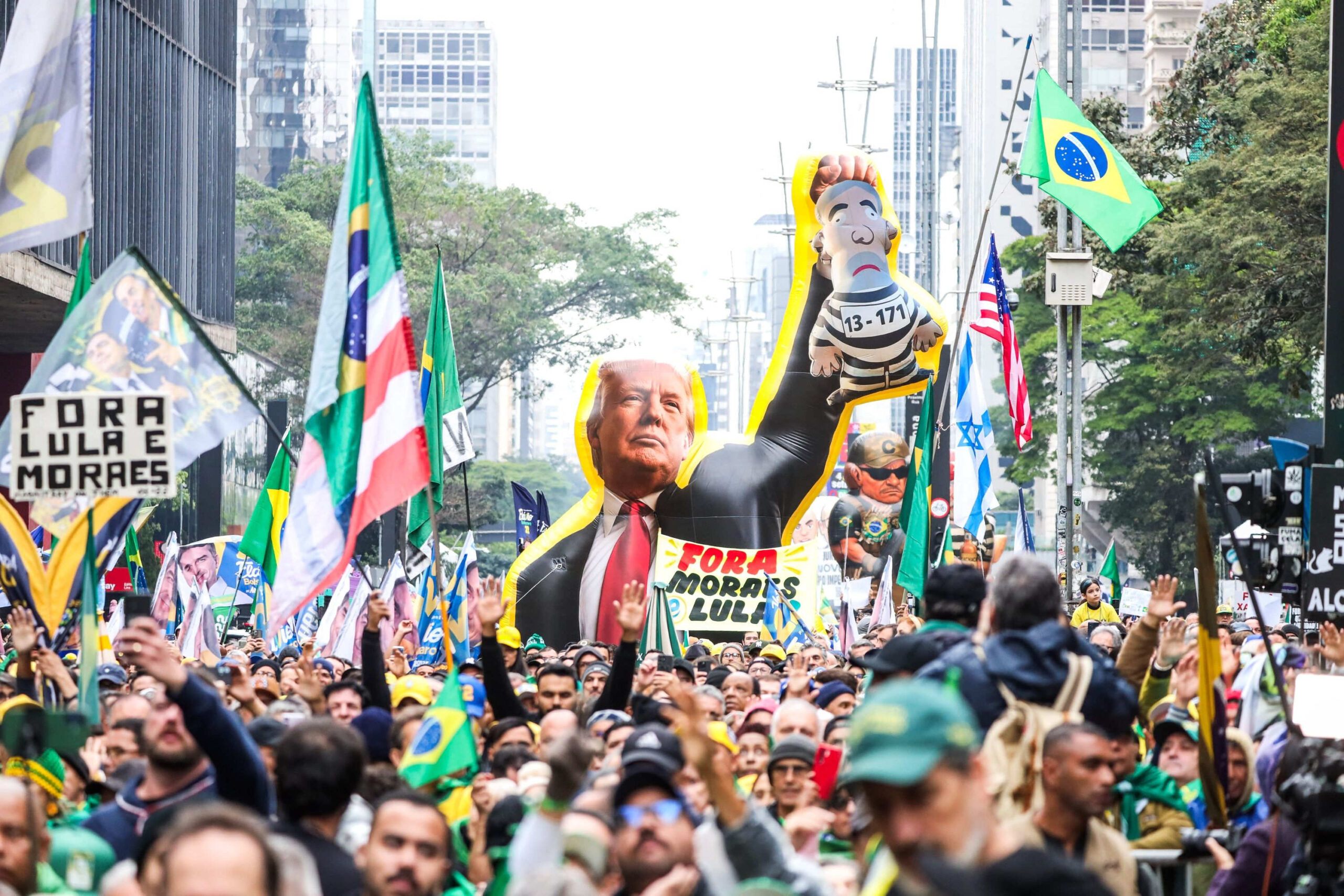
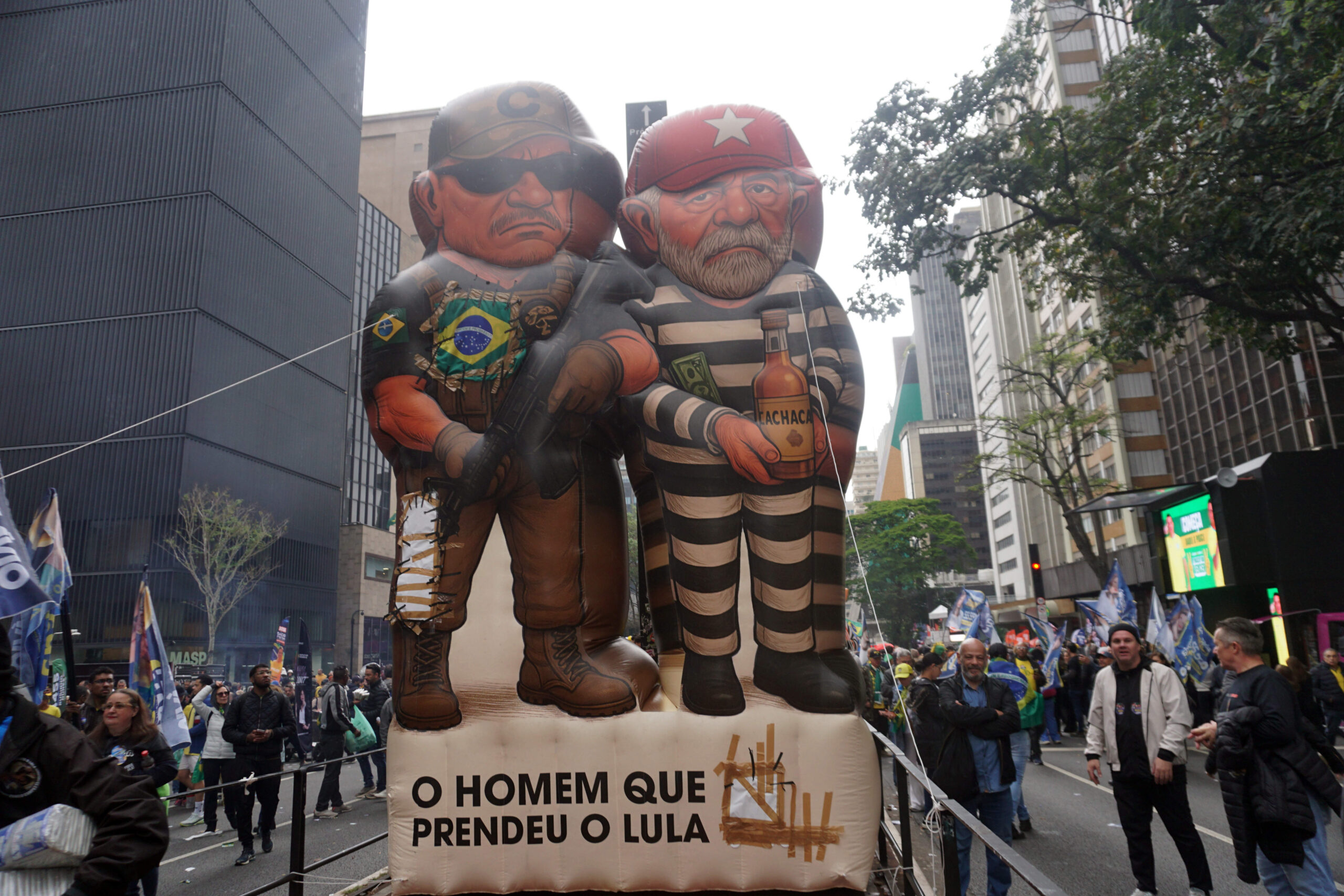
Because of its size and economic weight, but also because of its importance in relations with China (its current top trading partner) and its role within the BRICS, Brazil thus represents a major strategic stake for the United States. After a relatively easing period thanks to the deftness of Brazilian diplomacy and the intervention in tariff negotiations by JBS brothers José and Wesley Batista, the majority shareholders of the world’s largest meat producer, Lula traveled to Washington in early May 2026 for a meeting with Trump, hailed as “productive” by both sides. Yet tensions resumed and intensified from July onward. The United States imposed new tariffs of 25% on Brazilian products and accused Lula of being responsible for these sanctions. A few days later, Brazil’s ambassador to Washington was dismissed by the Trump administration. Lula, now an official candidate for re-election, responded by making the defense of national sovereignty the central axis of his campaign. As for Flávio Bolsonaro, he launched his candidacy in the presence of Javier Milei, thus sealing the alliance of the far-right across the continent. The escalation continued in May when Primeiro Comando da Capital and Comando Vermelho, two of Brazil’s major drug-trafficking–linked criminal groups, were designated as “terrorist organizations” by Washington—i.e., a threat that could justify U.S. military intervention. On National Day, September 7, Bolsonaro supporters brandished a giant Trump figure holding a small Lula prisoner; in the crowd, star-spangled banners mingled with Brazilian flags and the chant roared: “Trump, free Brazil.”
Behind the scenes, other players testify to these new continental solidarities, such as Argentine political consultant Fernando Cerimedo, close to Eduardo Bolsonaro. Arrested in Bolivia in August 2026 for the attempted murder of his ex-partner, he had been cited during Jair Bolsonaro’s trial as a possible accomplice in the attempted coup, for spreading false information about the unreliability of electronic voting. This all-terrain propagandist played an important role in Milei’s campaign team, before working on Rodrigo Paz’s election in Bolivia and Nasry “Tito” Asfura’s in Honduras, hand in hand with Brad Parscale, Donald Trump’s former campaign manager.
According to a late August 2026 report from the Brazilian Intelligence Agency (ABIN) released on September 19, threats of U.S. interference in the electoral process have now reached a “critical level.” If the ideological line of Secretary of State Marco Rubio is not shared with the same fervor by the entire Trump administration, many experts worry about the U.S. president’s posture after the vote. In the event of Lula’s victory, will he acknowledge the result? And if Flávio Bolsonaro wins, what price will Brazil have to pay? Because displays of loyalty are accompanied by economic promises from the far-right candidate—access to rare earths and mineral resources, or the application of a preferential commercial clause for American products.
The Master Bank Scandal
Added to these questions are other uncertainties tied to domestic political tremors. Revelations surrounding the liquidation of Master Bank, one of the largest financial scandals in Brazilian history, continue to splash public officials and undermine institutions across the country. The massive fraud system created by Daniel Vorcaro, the former bank president now in prison, rested on a string of “payments” to “trusted friends” high up the ladder who, in return, invested public funds in heavily overvalued assets and ignored insolvency risks, contravening all control procedures. These “friends” included governors of federal states, members of Congress mostly aligned with Centrão (the “big center,” to the right on the political spectrum) or the far-right, a former Jair Bolsonaro minister, but also Flávio Bolsonaro. The elder heir has been under federal police investigation since July 2026 for the payments of several tens of millions of euros he received from Vorcaro for the making of a biopic about his father. The film, titled Dark Horse, has not yet hit screens, and its producer, Mario Frias, also a deputy and member of Bolsonaro’s Liberal Party, is suspected of fueling a broad system of misappropriation of public funds for its production.
The left is not spared from the Master Bank scandal either. Jaques Wagner, a Bahia state senator, longtime Workers’ Party member, former minister and parliamentary government leader, is also suspected of benefiting from the system. Most notably, judges of the TSF are under investigation, starting with Alexandre de Moraes, whose wife signed lucrative contracts with the bank. Since August, revelations have piled up, casting doubt on the complicity of several judges and, more fundamentally, on the institution that had served as a bulwark against Bolsonaro père’s authoritarian project. The Federal Supreme Court is today torn between Moraes and his supporters on one side and judges appointed by Jair Bolsonaro on the other—these too suspected of having received payments and other in-kind gifts.
The involvement of Moraes, who since Bolsonaro’s trial has been the far-right’s sworn enemy, benefits the latter in large measure. First, because Moraes is publicly associated with defending democratic institutions, and thus Lula, even though he has never been close to the Workers’ Party. Then, because by refocusing on the TSF, the Master affair shifts many far-right parliamentarians into the background, notably Flávio Bolsonaro, who fully benefits from this smokescreen. Finally, because the probable removal of Moraes could allow the future president to appoint four new judges and secure a majority of votes in favor of the TSF, an institution that appears more and more unable to rise above the fray.
The impact of the Master scandal on the small slice of undecided voters who will decide the election is thus difficult to determine: if Flávio Bolsonaro suffered in the polls early in the campaign due to revelations about the Dark Horse film, the crisis surrounding the TSF mainly harms Lula. Polls show a prevailing sense of “confusion” among these voters on the eve of the vote. Projections, meanwhile, converge on a neck-and-neck race in the second round, around 45% for each of the two main candidates.
A Mixed Record
Finally, beyond the Master Bank scandal, Lula struggles to defend his record and to set new directions for the country. More than his age—he will be 81 two days after the second round—the incumbent who is seeking a fourth term and is currently in his seventh presidential campaign carries with him a certain voter fatigue toward the Workers’ Party, helping explain his high level of rejection (between 45% and 50% in recent polls), even among the young. Yet Lula can still point to a meaningful track record, including the safeguarding of democratic institutions after January 8, 2023 and the economic and social rebuilding of the country after the Covid-19 pandemic and four years of Bolsonaro governance as early pillars.
During his third term, extreme poverty and the specter of hunger have diminished, the rate of deforestation in the Amazon has halved in four years to 5,731 km2 per year, from more than 11,000 at the end of Bolsonaro’s term, and bold measures like a five-day workweek have been launched. On the economic front, Brazil posted 2.3% growth in 2025, near the Latin American average but down from the previous year (3.4%), and unemployment remained relatively low. However, inflation and household debt remain major concerns for a large portion of the population. And structural problems persist: inequalities fed by a tax system that redistributes very little; insecurity related to gangs, militias, and the police. In October 2025, a massacre of 122 favela residents by Rio de Janeiro police during a drug operation, with dozens of bodies found by residents in the forest, was among the deadliest episodes in the country’s recent history. According to figures from the Brazilian Public Security Yearbook, police violence hit a painful record in 2025: while the homicide rate continued to fall (40,775 in 2025, down 31% from 2022), the number of victims of police interventions kept rising (6,602 in 2025, 18 deaths per day on average), as did violence against women (femicides, rapes and sexual assaults), disproportionately affecting Afro-descendant women.
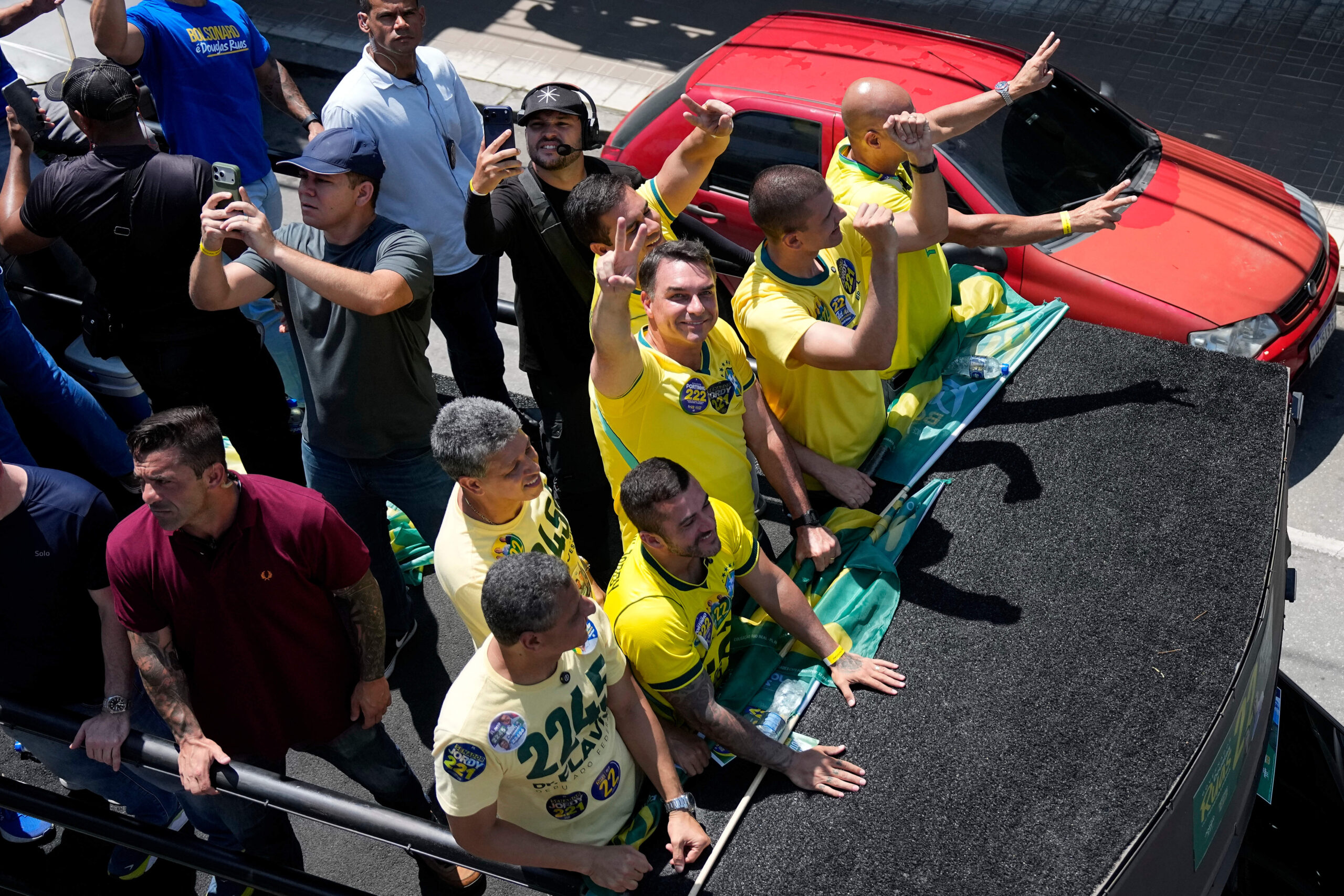
Brazil’s size and economic weight, along with its substantial ties with China (currently its top trading partner) and its role in the BRICS, make it a strategic prize for the United States. After a relatively calm period thanks to the dexterity of Brazilian diplomacy and the intervention in tariff negotiations by JBS’s Batista brothers, Lula traveled to Washington in early May 2026 for a meeting with Trump, described as “productive” by both sides. But tensions resurfaced and intensified from July onward. The United States imposed new 25% tariffs on Brazilian goods and accused Lula of being responsible for these sanctions. A few days later, Brazil’s ambassador to Washington was dismissed by the Trump administration. Lula, now an official candidate for re-election, responded by making the defense of national sovereignty the central axis of his campaign. As for Flávio Bolsonaro, he launched his candidacy in the presence of Javier Milei, thus sealing the continental alliance of the far-right. The escalation continued in May when Primeiro Comando da Capital and the Red Command, two major Brazilian criminal groups linked to drug trafficking, were designated as “terrorist organizations” by Washington — in other words, a threat justifying potential U.S. military intervention. During National Day, September 7, Bolsonaro supporters brandished a giant Trump doll while in their fists Lula, dressed as a prisoner, held a banner: “Trump, free Brazil.”
Behind the scenes, other figures bear witness to these new continental solidarities, such as Argentine political consultant Fernando Cerimedo, a close ally of Eduardo Bolsonaro. Arrested in Bolivia in August 2026 for the attempted murder of his ex-partner, he had been cited during Bolsonaro’s trial as a potential accomplice in the attempted coup for spreading false information about the reliability of electronic voting. This all-terrain propagandist played a major role in Milei’s campaign team, before working on the election of Rodrigo Paz in Bolivia and Nasry “Tito” Asfura in Honduras, hand in hand with Brad Parscale, Trump’s former campaign manager.
According to a report issued by the Brazilian Intelligence Agency (ABIN) at the end of August 2026 and released on September 19, threats of U.S. interference in the electoral process have now reached a “critical level.” If the ideological line of Secretary of State Marco Rubio is not shared with the same fervor by the entire Trump administration, many experts fear what tone the president might strike after the vote. In case Lula wins, will he recognize the result? And if Flávio Bolsonaro wins, what price will Brazil pay? For the turn toward loyalty is accompanied by economic promises—access to rare earths and mineral resources, or the application of a commercial preference clause for American-made products.
The Master Bank Scandal
These questions are added to further uncertainties born of domestic political tremors. Revelations surrounding the Master Bank liquidation—one of the largest financial scandals in Brazilian history—continue to stain politically and weaken the country’s institutions. The massive fraud system devised by Daniel Vorcaro, the bank’s former president now in prison, rested on a chain of “payments” to “trusted friends” in high places who, in return, invested public funds in greatly overvalued assets and turned a blind eye to the bank’s insolvency risks—contrary to all control procedures. These “friends” included governors of federated states, members of Congress mostly aligned with Centrão (the “big center,” on the right) or the far right, a former Jair Bolsonaro minister, but also Flávio Bolsonaro. The elder heir has thus been the subject since July 2026 of a federal police investigation for the tens of millions of euros he received from Vorcaro for producing a biopic about his father. The film, titled Dark Horse, has not yet hit screens, and its producer, Mario Frias, also a deputy and member of Bolsonaro’s Liberal Party, is suspected of having funded a large-scale misappropriation of public funds for its production.
Yet the left is not spared from the Master Bank scandal. Jaques Wagner, a Bahia state senator, longtime Worker’ s Party member, former minister and head of the government in Congress, is also suspected of benefiting from the system. Most importantly, TSF judges are under investigation, starting with Alexandre de Moraes whose wife signed lucrative contracts with the bank. Since August, revelations have piled up, casting doubt on the complicity of several judges and, more fundamentally, on the institution itself that had served as a bulwark against Bolsonaro père’s authoritarian project. The Federal Supreme Court is today torn between Moraes and his supporters on one side and the judges appointed by Jair Bolsonaro on the other—these too suspected of having received payments and other gifts in kind.