
Test the Grand Continent and discover ideas and analyses you won’t find anywhere else. But you’ll see them everywhere soon. In your inbox starting at 8 euros per month
“Either NATO will go to war, and it will be World War III, or it will be the war of the hundred years. That is what I said three years ago. I have not been mistaken, since this war has already stretched on for far too many years.” Marine Le Pen accompanies these three sentences with a stoic, chastened photo of herself. A post published on her social networks on September 24, another clarification of her stance on the Russian-Ukrainian conflict. Earlier in the month, her party’s vice-president and former ally Louis Aliot offered ammunition to her opponents: should she win, the RN “will turn off the tap” of aid to Ukraine, he proclaimed on a television set. Since then, the presidential favorite has swung between a firm line toward Moscow, a plea for sound public finances, and a urgent call for a “grand conference for peace” under high patronage in France, despite the evident failures of French, American, Italian, British, German, and European actions over four years. “The conflict has transformed into a hundred years’ war, an endless conflict that we finance without any return, argues one of her brain trust. The difference with Emmanuel Macron and Ursula von der Leyen is that we speak the same language as Putin or Trump: the language of nations in the face of globalization. Yet, no one can defeat Russia except NATO, which would spell a Third World War. The entire challenge is not to lose.” If it means returning to past missteps, even if that risks reintroducing old patterns.
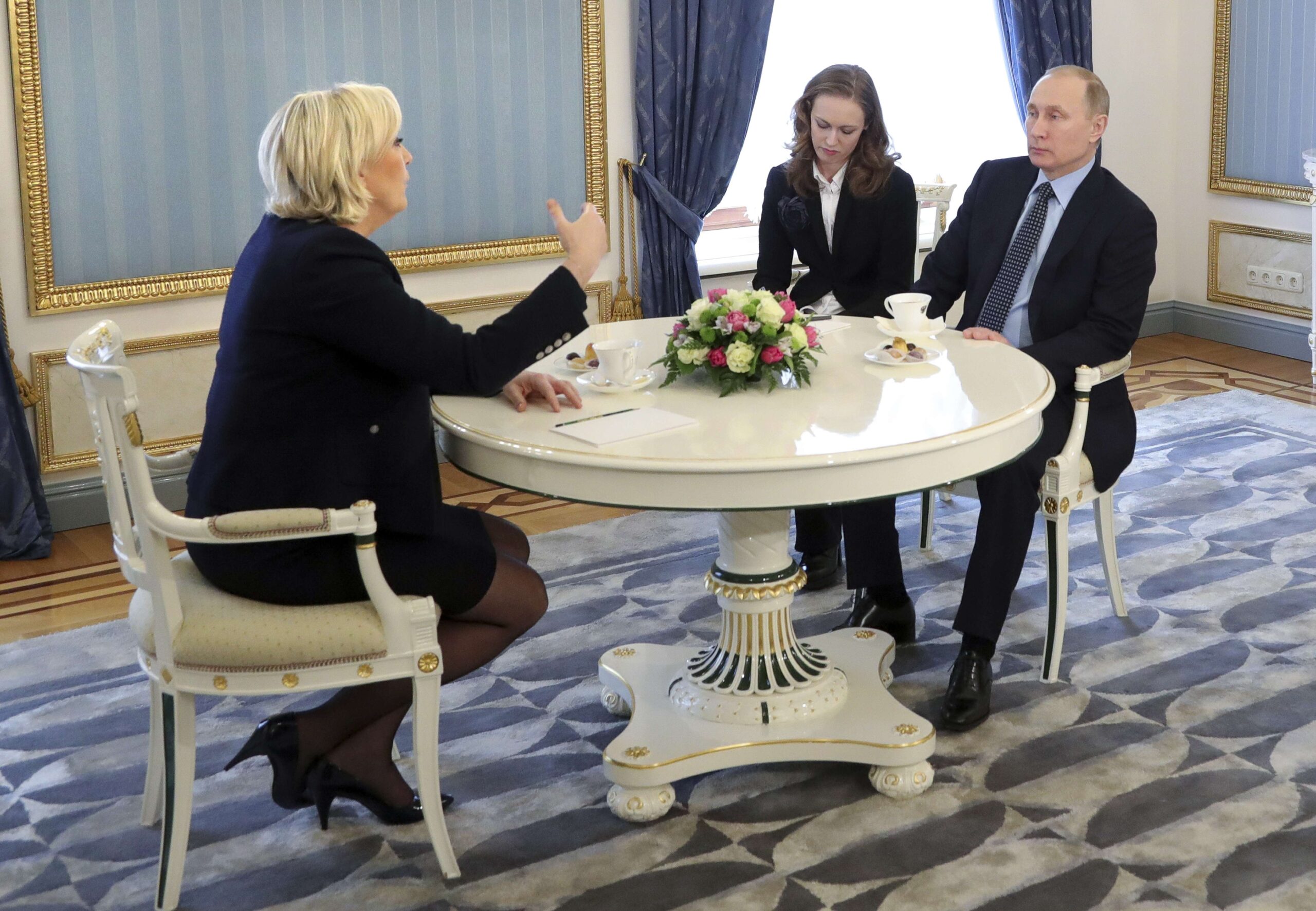
Nine years have passed since the staged encounter between Marine Le Pen and Vladimir Putin, on March 24, 2017. Without diminishing the cliché’s force, which she transformed into a campaign leaflet in 2022, nor imagining how persistently it would haunt her. A decade later, here she is, taking part in her fourth French presidential election. For the first time, she is seen as the likely winner: up to 35% in the first round, and in any case a potential victor in the second. The candidates from the central bloc—Édouard Philippe and Gabriel Attal—are contesting a slender space of less than 20% of the electorate. The left, meanwhile, is fragmented into minor scores, save for Jean-Luc Mélenchon, forecast at 15–17%; modest but enough to aspire to a second round.
On that day in 2017, Putin and Le Pen met for the first time. Their sole tête-à-tête occurred less than a month before the first round. At the time, France was poised, by a rare turn of events, to crown Emmanuel Macron, a political novice, as president. Marine Le Pen knew that, facing the “system candidate,” her second bid for the Élysée was, above all, a legacy of testimony. Yet it still had to enable her to prepare future attempts. So, a month before the deadline, the leader of what was then still called the Front National travels to Moscow to carve out an international stature. There she delivers an unconventional speech to the cameras. If her camp wins, Le Pen would ponder lifting sanctions that are “deeply unfair and counterproductive” toward Russia. “I think he [Vladimir Putin] also represents a new vision,” she declares, advocating for close collaboration with the Kremlin to “eradicate the Islamic State,” after France was heavily struck during the terrorist decade of the 2010s: “A new world has emerged in recent years; it is the world of Vladimir Putin, it is the world of Donald Trump in the United States.”
Crimea was annexed in 2014. What the FN and broad swaths of the French right regarded as a legitimate local choice, given the self-determination referendum that led to joining the Russian Federation, not recognized by international bodies. At the time, for the French right, steeped in a deep Cesaro-Bonapartist tradition in which Gaullism is but a reworked form, Vladimir Putin was a kind of modern Napoleon deserving respect, a guardian of Western integrity against a decadent United States.
In 2014, this attitude within the RN toward the Kremlin was, if not abandoned, then muted after Russia’s large-scale invasion in 2022. The day after the attack—during a presidential campaign—Marine Le Pen condemned the aggression “without ambiguity,” stating that it “ruptures the balance of peace in Europe,” and even that “France should be proud to welcome Ukrainian refugees”: “For my part, I am ready to do so.”
Support for Ukraine and the French Budget Crisis Argument
In truth, the candidate’s line on the conflict became difficult to read clearly. Except on one point: her reluctance to continue funding Ukraine. Officially, the argument centers on purchasing power politics. France’s finances are strained, the institutional system suffers from chronic political instability that underpins the budgetary crisis—and not the reverse, as explained by Mathieu Plane, deputy director of the Analysis and Forecast department at the French Economic Observatory. The surge in energy prices remains puzzling to the French electorate, while France remains the largest European supplier of nuclear energy.
Public opinion has shifted too: by late September, 52% of French people reported not trusting Volodymyr Zelensky. In February 2026, Ifop estimated that 47% of French people favored arming Kyiv, dipping below the symbolic 50% threshold for the first time—18 points lower than in March 2022.
The candidate’s line on the conflict has become hard to read. Except on one point: her reluctance to sustain financial support for Ukraine.
Lou Fritel
This stance is reflected in votes. In 2026, the RN refused to back the European loan of 90 billion euros, arguing the lack of repayment guarantees and obligations for European suppliers to provide Ukrainian matériel. In late 2025, the RN abstained from seizing more than 200 billion euros of Russian assets in Europe, Marine Le Pen fearing a similar treatment for the few French companies still operating in Russia. Citing respect for international law, a view echoed by Emmanuel Macron. The RN also shows reluctance toward some French arms deliveries to Ukraine, especially heavy or long-range weapons, which they argue could worsen the conflict. And like other French political forces, the party opposes European integration for fear it would threaten its agricultural sector.
On September 16, when asked about France’s financial participation in the conflict, Marine Le Pen stated that turning off the tap “would not be an act of hostility toward Ukraine”: “We can continue to train their soldiers, their armies, and we can continue to supply them with equipment to defend themselves. But financially, we cannot. Because we cannot say that there isn’t a single euro… to index pensions, while, conversely, there are billions for net contributions to the European Union. In proportion to what we have already done, which is substantial, we say we cannot do it.”
On September 19, the National Rally published a lengthy press release, striking even in its virulence toward Moscow. In this document, signed by Marine Le Pen and Jordan Bardella, her potential prime minister in case of victory, the RN denounces “the decision by Russian authorities to temporarily place under administration the subsidiaries and assets in Russia of several French and European companies,” describing it as “an act hostile to the interests of France and Europe.”
Pursuing as follows: “In recent weeks, the acts of hostility carried out in Europe by agents operating for Russia have multiplied and intensified. At Leipzig Airport in Germany, a drone carrying explosives targeted Ukrainian transport aircraft. The investigation linked the perpetrators of this operation to the Russian intelligence services. France is not spared by these actions, which target our economic interests and defense industry companies. At the same time, the highest authorities of several European countries, notably Poland, have warned of a risk of escalation in operations against states supporting Ukraine. […] These facts must be treated with the utmost seriousness. While no one can today predict, or rule out in the longer term, the occurrence of higher-intensity operations, the threat we currently face is mainly hybrid actions and campaigns aimed at our companies and our public opinion. […] This situation, of particular gravity, requires us to reaffirm our position with the greatest clarity. […] We will never tolerate a foreign power, in this case Russia, attempting to dictate our country’s policy through intimidation, threat, destabilization, or psychological pressure. […] Any operation of this nature must be met with a proportional response, in accordance with our law, our national interests, and our international commitments. In these circumstances, we support all measures necessary to strengthen the security of our strategic infrastructures, our sensitive facilities, and the companies directly contributing to our national defense.”
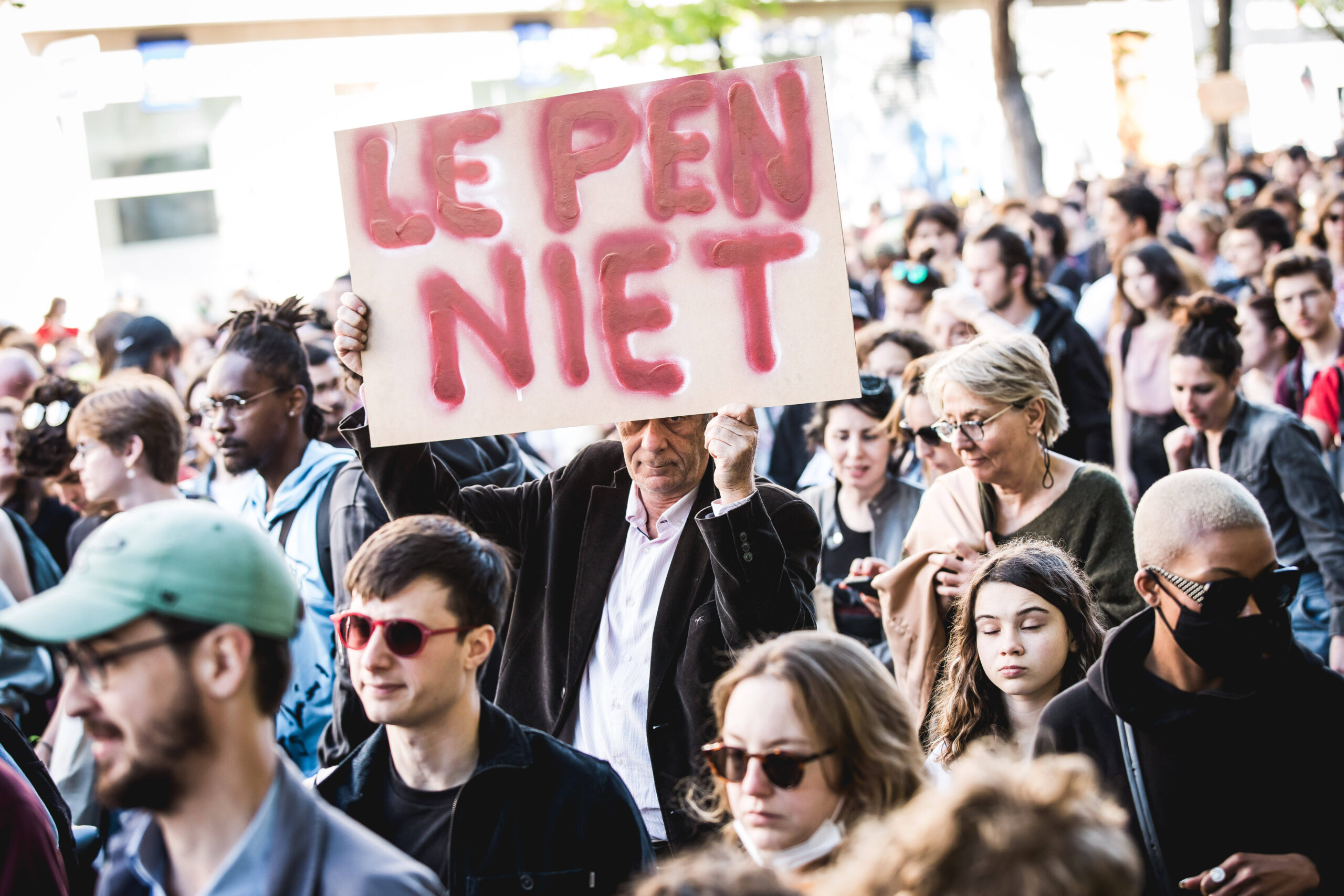
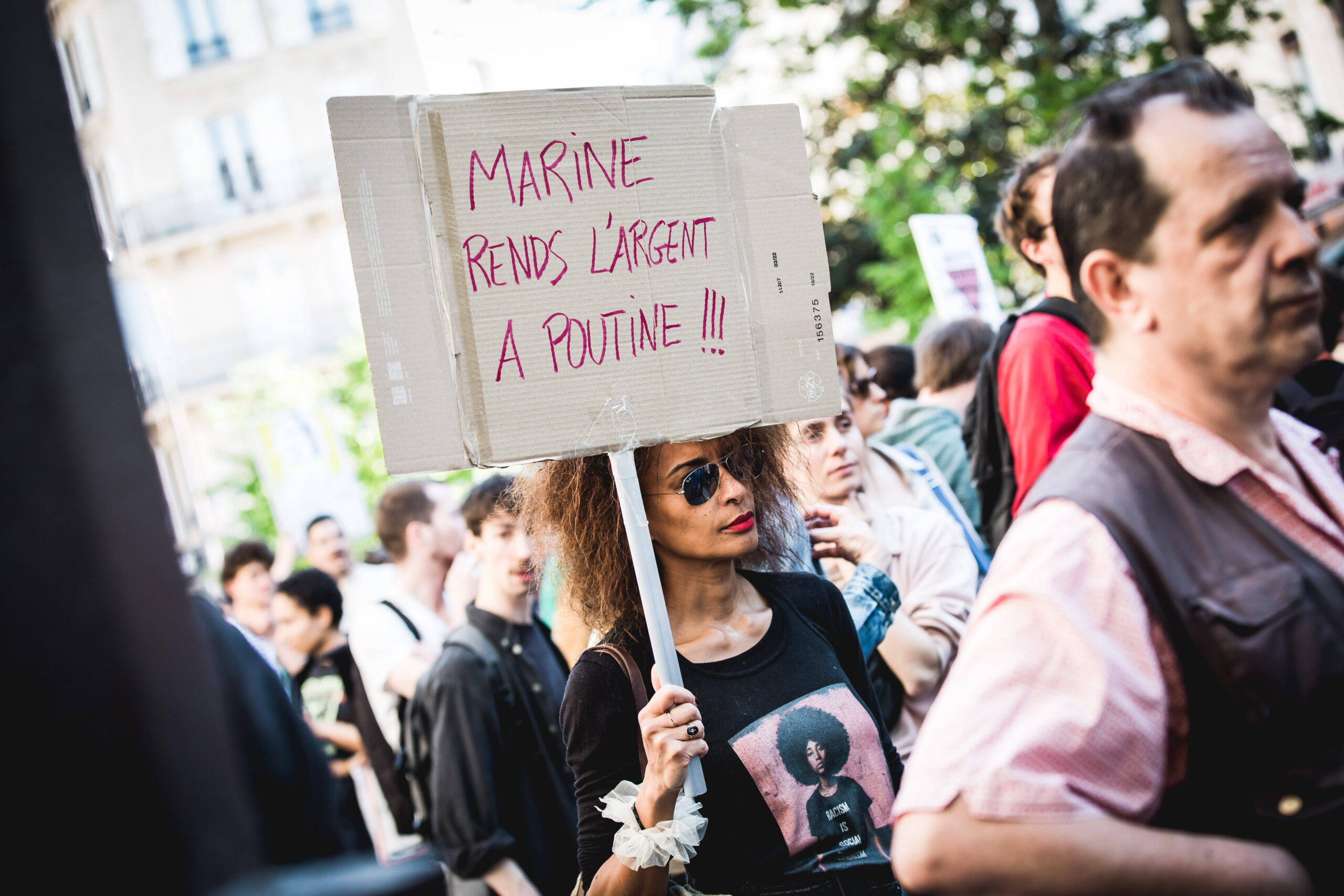
Firm words, certainly, but followed by a renewed call for a debate on funding: “Questioning France’s diplomatic and strategic orientations has its rightful place in democratic debate, especially in the context of a presidential election. It must cover, in particular, the level of financial support granted to Ukraine and the conditions of that support, as well as the inadequacy of efforts to explore diplomatic formats that could help lead to a resolution of the conflict. […] Firmness in the face of hostile actions and pursuit of a diplomatic end to the war are not contradictory. They spring from the same obligation: to safeguard the security of the French, defend the sovereignty of our country, and prevent Europe from being drawn into an uncontrolled escalation. In this period of tension, our responsibility is not to yield to intimidation or to escalation. France must remain master of its decisions, ensure the protection of its territory and interests, honor its commitments, and retain full freedom of diplomatic initiative.”
Eurasians against Identitarians
More than merely fending off Russian attacks, the RN candidate’s statement aims to fuse two opposing visions within the party. In essence, this wavering reveals less a personal fidelity to Vladimir Putin than a long-standing ideological fault line that fractures the entire spectrum of the French right and sovereigntist movements.
Vukovar, the First Fracture
Three major events shaped the nationalist stance toward Russia: the Yugoslav wars of the 1990s, the 2001 terrorist attack, and Russia’s 2022 invasion of Ukraine. They crystallize the division—or even opposition—between the third-worldist, Eurasian, and Slavophile wing, close to the Third Rome of Alexander Douguine, and the paleo-identitarian and anti-imperialist movement—also anti-American in some forms—born in the wake of September 11, embodied by the Bloc Identitaire led by Philippe Vardon or Damien Rieu’s Génération Identitaire.
All opposed communism, then American hegemony, and finally Islam and immigration. Yet the lines sharpened during Croatia’s war of independence in 1991. At that time, Yugoslavia collapsed along with the Eastern bloc, after a decade of rising nationalism in a multi-ethnic and multi-confessional country that united Orthodox Serbs, Bosniaks, Muslim Albanians, Slovenes, and Catholic Croats. By the early 1990s, the region was set ablaze. The Serbs, the country’s largest community under the nationalist and irredentist Slobodan Milošević, attacked Croatia led by the nationalist Franjo Tuđman, newly detached from the Yugoslav federation. Alleging the protection of the local Serbian community, which in turn sought secession.
This wavering reveals less a personal fidelity to Vladimir Putin than a long-standing ideological fault line that fractures the entire spectrum of the French right and sovereigntist movements.
Lou Fritel
In France, the collapse of the Eastern bloc unsettled the nationalist margins, which had previously united in anti-communist enmity. The Bosnian War reawakened in them the instinct of militant campaigning. Yet the generals mostly aligned with the Serbs, due to a long-standing camaraderie going back to World Wars I and II—and also in memory of the Croatian fascist Ustaše who governed the region with Axis support from 1941 to 1945. For them, Tuđman represents this political tradition, while the Serbs stand in direct line with Moscow, historical ally of France from 1892 until the fall of Imperial Russia in 1917, though badly weakened by the post-Soviet era and daily humbled by Boris Yeltsin’s follies.
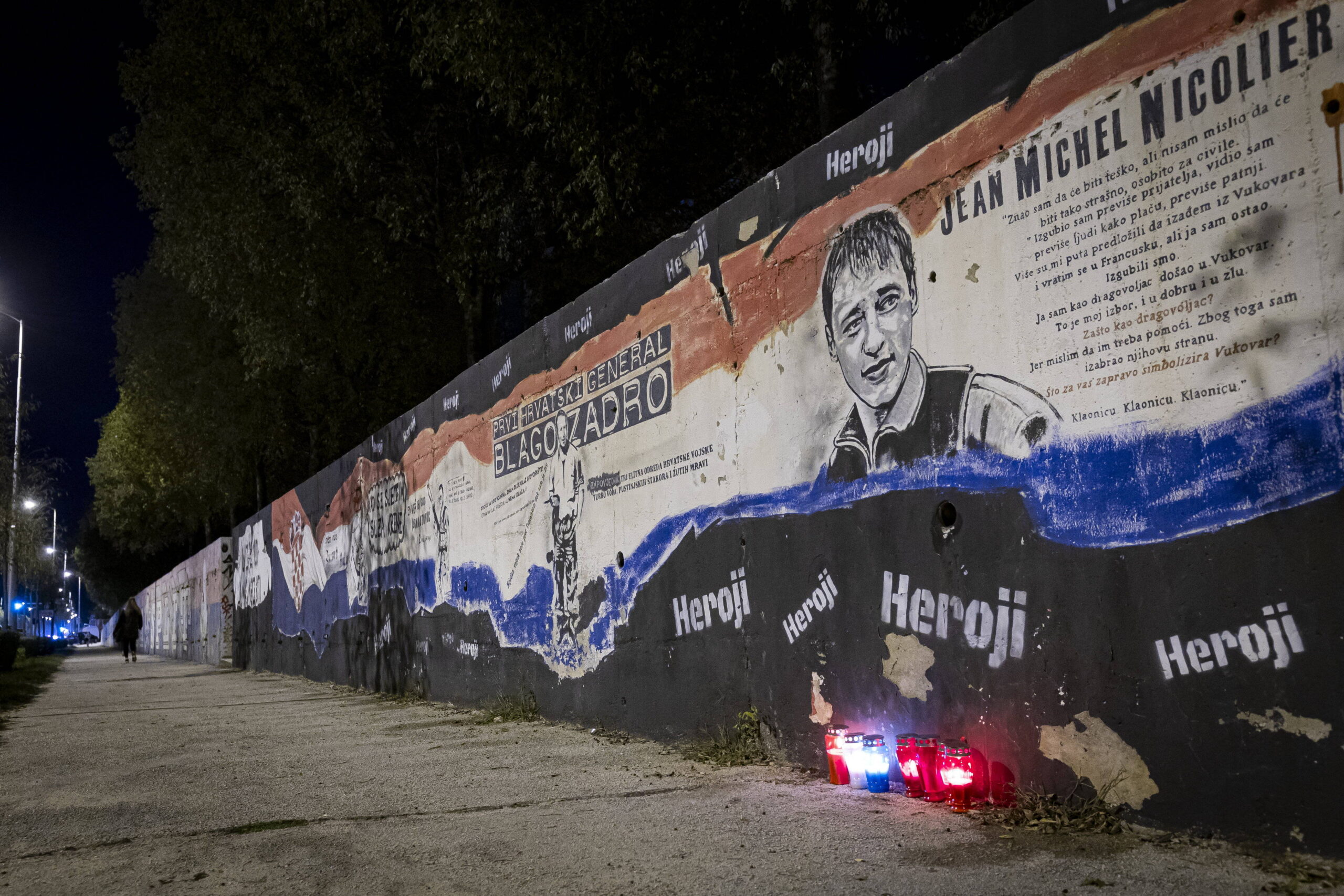
The French nationalist militant base, by contrast, is younger and watches with interest this Croatian nationalist flare aimed at breaking free from the Yugoslav cage to promote a Great Serbia project. Croats are undeniably the victims, and the international community remains hesitant about an outright intervention to prevent a renewal of war in Europe. For these young men, the clash is part of a Europe of nations they advocate for, against the imperialist model, notably American. Moreover, the Croats are Catholics, and the idea of donning crusader trappings against Slavic Orthodox presents a temptation for these would-be fighters. Zagreb becomes, in their minds, the last bastion of the West against the wreckage of communism. Dozens join the HOS, the paramilitary branch of the Croatian Right Party (HSP), which will host Frenchman Jean-Michel Nicolier, killed during the Vukovar massacre, celebrated since as a hero to the point of giving his name to a Croatian bridge in 2014.
Thus it is predominantly the Croatian side that draws a flood of volunteers, drawn from Catholic networks and from the GUD, the Group Union Défense, one of the small groups that helped found the Front National in 1972. Headed since 1992 by Frédéric Chatillon, a well-known RN analyst and close ally of Marine Le Pen, a veteran of nationalist revolutionary circles and originally the promoter of a third way that was “anti-Soviet and anti-American, anti-communist and anti-capitalist” which collapsed on the wars. As with many others, he prefers the Croats to the Serbs, at least until nationalist factions split.
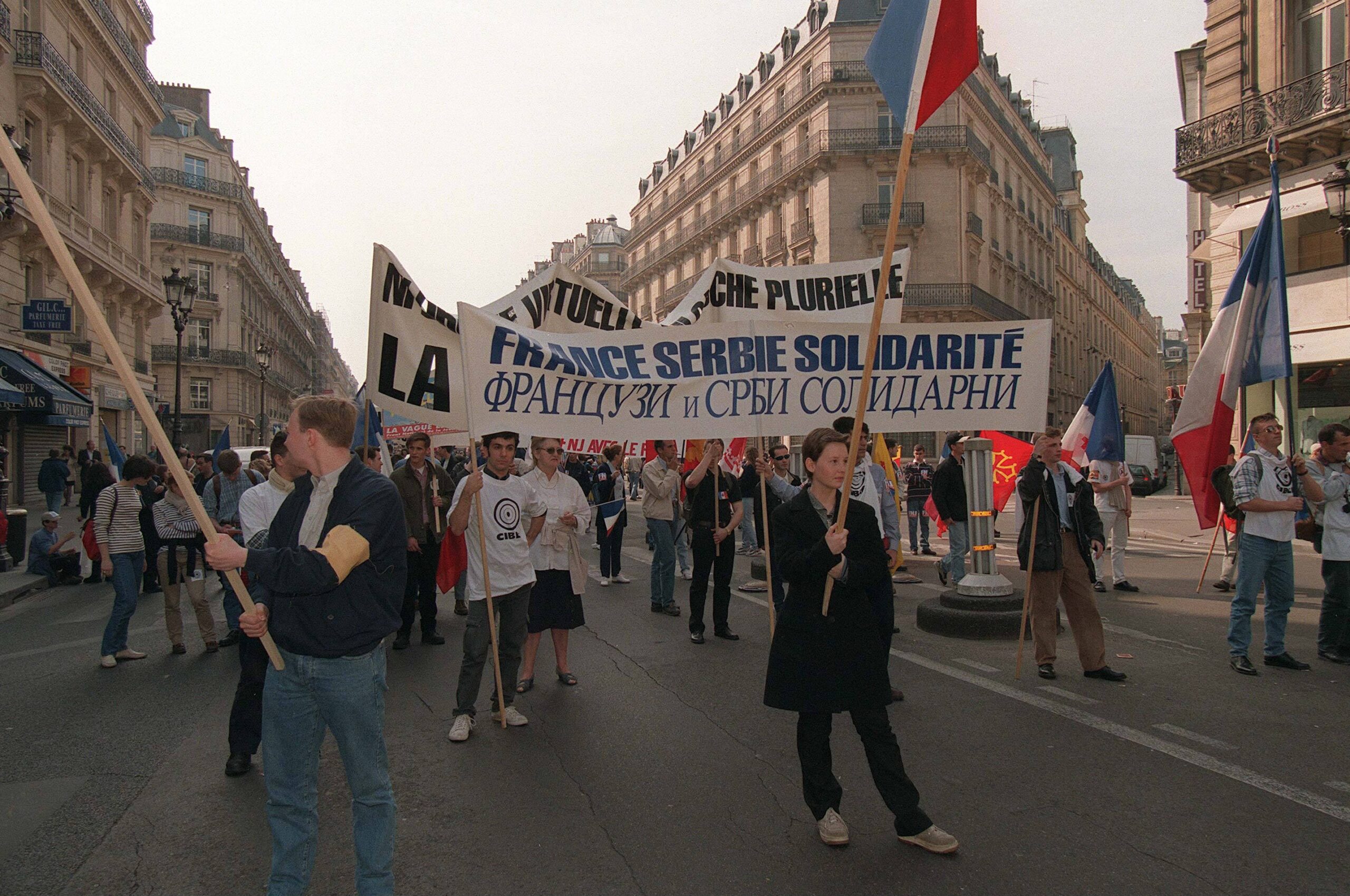
Indeed, a year after the Serbo-Croatian war began, Milošević launched an assault on Bosnia. A war that would claim more than 100,000 lives in three years—compared with roughly 20,000 in four years in Croatia—culminating in the siege of Sarajevo and the Bosnian massacre of Srebrenica. A new reading then emerged, overlaying the old clash between hardline nationalists and pro-Serb sympathizers: a civilizational war, as Bosnian Muslims, lacking Western support, turned to Gulf countries for arms and fighters. Contingents of mujahideen fought the Serbs and Croats, who fought back in Bosnia, seeing an opportunity to expand their territory.
Thus, the divide between pro-Serbs and pro-Croats no longer existed. This situation found its outlet in 1999, during the Kosovo War of independence. After four years of respite, the zone once again slid into extreme violence, the Albanian population of Kosovo facing ethnic cleansing by Serb forces. This time, NATO did not hesitate and bombed Belgrade, taking the side of the Albanians, further strengthening the convictions of French nationalists: the Serbs were then the scapegoats of a Western order, a US-led Atlantic alliance, supported then by mafias, Islamist groups, and instrumented separatists. The old anti-communist nationalism transformed into radical anti-Westernism. Poutinism, nourished by Russia’s humiliation at failing to stop the bombardment of its Serb ally, thrived on this convergence. It drew together right-wingers fascinated by force and order, the martial imagery of parades and empires, but also sovereigntists from elsewhere, Gaullists bruised by Brussels, anti-American Chevenists, nostalgic for French power, preferring Moscow to the European establishment and Washington.
Who is the Enemy?
September 11, 2001, however, reactivated this fracture. The debate polarized around a central question: who is the main enemy? On one side, the emerging identitarian movement, the paleo-identitarian wing—which gave birth to the Bloc Identitaire in 2003—began asserting itself. It marks Islamism and immigration as the true existential threats to Europe. This is Huntington’s “clash of civilizations.” Their resistance to American mass culture mattered less than their choice of Western Europe in the face of immigration risk and the so‑called “Great Replacement” theorized by Renaud Camus.
On the other side, pro-Slavic Third-Worldists, nationalist-revolutionaries, Eurasists, and Alain Soral’s milieu remained faithful to their script: American imperialism and techno-capitalist globalism are the absolute enemy, and the attacks are the result of aggressive U.S. policy in the Middle East, or even a CIA creation. In Douguine’s wake, this bloc advocates a continental geopolitical alliance, European nationalisms with various regimes in the Muslim world, with Moscow as the obvious epicenter to counter Western hegemony.
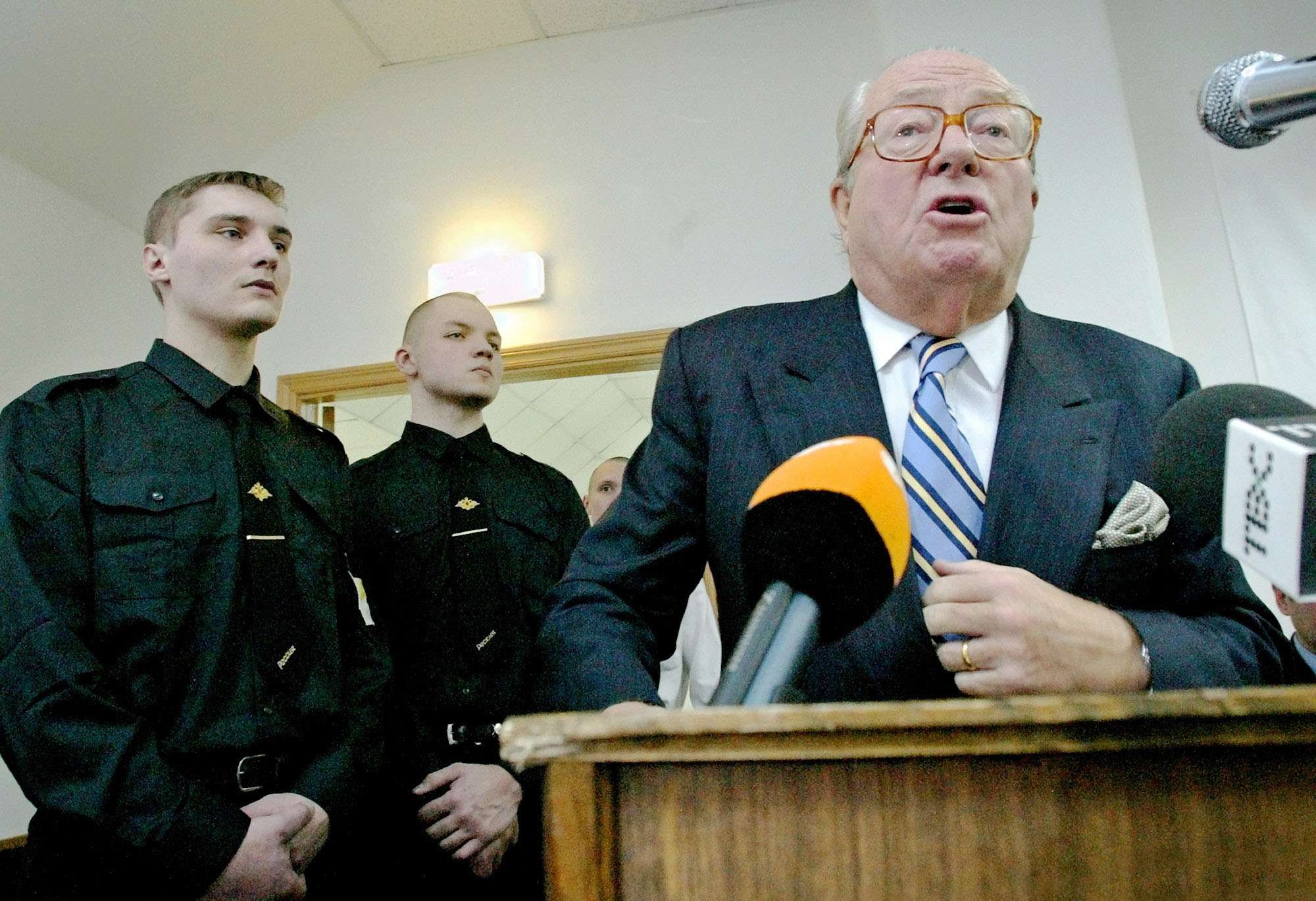
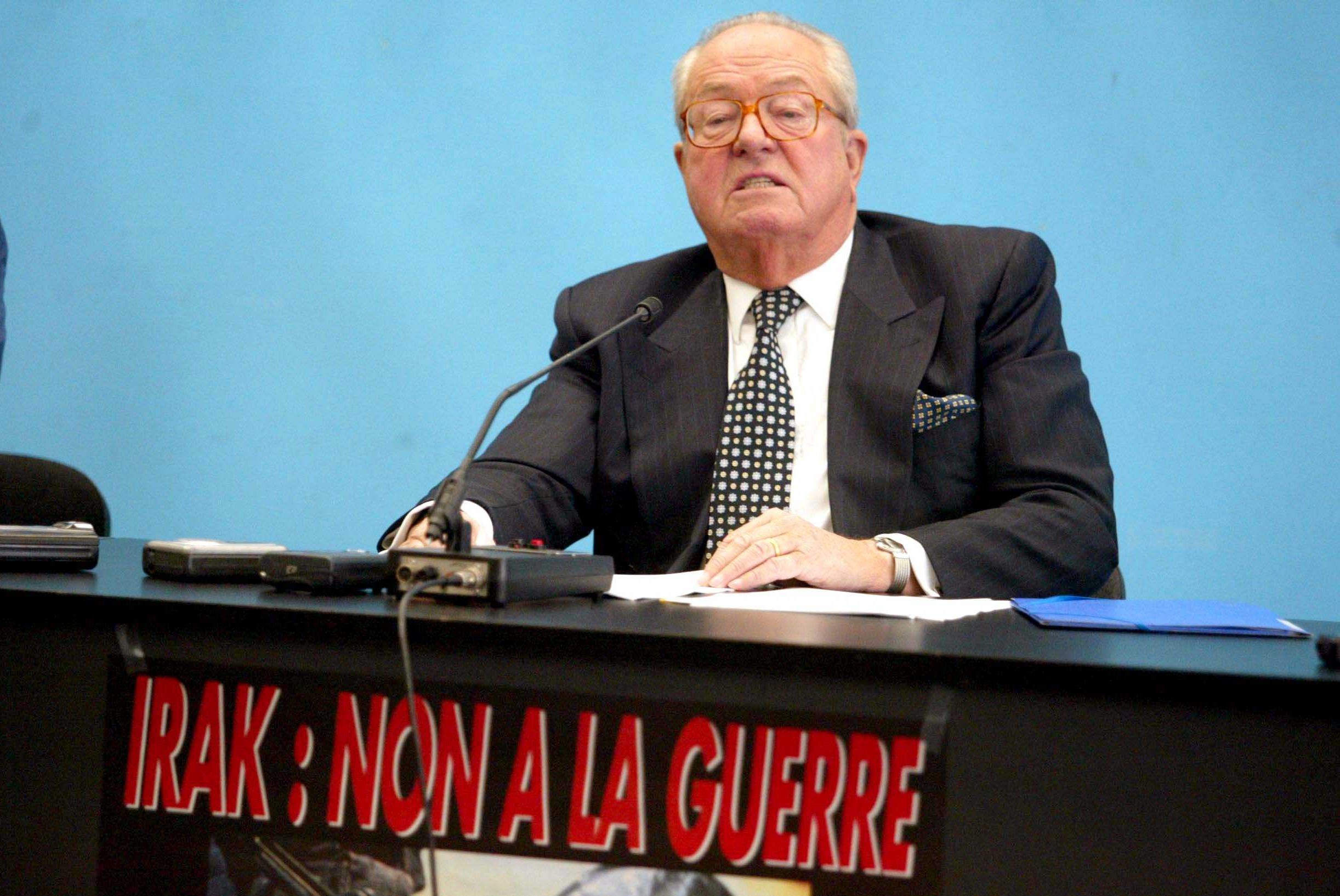
It was a frontal opposition, while the second current drifted toward marginal status. In the FN, where Eurasian influence left a durable mark on cadres who remained after the 1998 split, Jean-Marie Le Pen tried, as his daughter would two decades later, to keep both camps in balance, more to keep control over the emerging identitarian current than out of personal conviction. During a trip to Moscow in June 2005, he launched his idea of a white “European Boreal” and sought to fuse Eurasian imperialism with identitarian sovereignty, excluding Muslim countries to favor a Paris-Berlin-Moscow axis that would protect traditional values against Islam and Western progressivism. He even recast Gaullist rhetoric invoking a Europe “from Brest to the Urals” and replaced it with “from Brest to Vladivostok,” the terminus of the Trans-Siberian, at the border with China and Russia.
The debate centers on a central question: who is the main enemy?
Lou Fritel
Yet it is the Western-oriented current, carried by Bruno Mégret, that seems to be taking hold. Marine Le Pen, whose influence within the FN was growing, is aware of this. But rather than simply adopting the civilizational struggle in its Catholic French form, she secularizes its presentation, arguing not for the Western Christian world but for the Enlightenment philosophy—like Catherine II of Russia during her 1783 Crimean conquest—against Islamist obscurantism. She also foregrounds a social and anti-globalist lens borrowed from Third-Worldists, with friends like Frédéric Chatillon and Axel Loustau serving as exemplars.
This conciliatory stance persisted through the 2010s, amid the Lisbon Treaty, the Subprime crisis, sovereign debt, and Islamist terrorism. It would only again collide head-on with the invasion of Ukraine in 2022. The generation of RN militants and cadres today grew up amid the trauma of attacks, immigration, and Islam criticism. Yet they also evolved within a broader European context, now strongly influenced by former Eastern Bloc countries that joined the European Union in 2004, through a resolutely more Christian-conservative lens than in the West. The Ukrainian cause embodies this evolution, defending sovereignty against a multiethnic, authoritarian, and opaque empire. When the old guard justified Donbas independence, denounced NATO, and accused Western provocations, the younger generation saw the war on social networks, encountered testimonies from an increasingly Westernized, mobilized youth, and witnessed footage of the Bucha massacre, armed resistance, and national defense. Thus, pro-Russian leanings—within the RN and within Reconquête, on the right or among French sovereigntist circles—are perceived by younger members as a matter belonging to the past, confined to online spheres vulnerable to disinformation. By contrast, the current, slender youth militancy organizes its own convoys to the Polish-Ukrainian border, if not beyond. But they do not exceed a few dozen neo-Nazi and hooligan combatants from France, integrated into the “Revanche Tactical Group” formed from ultra-orthodox Ukrainian fascist currents.
The Gaullist Totem
If these two extremes push their agendas to the far ends of France’s nationalist currents, they nonetheless shape the entire public life in the country, especially on the right.
The pro-Russian tendency is seen by younger members as a matter of old men’s business.
Lou Fritel
In 1995, Jacques Chirac, freshly elected president, was the first to break with this Slavophile tradition within his political family by authorizing NATO to bomb Serb positions, going against the Gaullist or Mitterrandian non-alignment. Yet the pro-Russian tendency did not disappear from the right. “The Russians are Slavs. They are different from us. The discussion is always difficult and has caused many misunderstandings in our shared history. Nevertheless, we need them and they need us,” Nicolas Sarkozy declared in August 2023. In December 2025, he was joined by his former prime minister and presidential candidate François Fillon—then member of Zaroubejneft’s board, a public hydrocarbons company controlled by associates of Vladimir Putin, until the war began. Fillon argued that “this war could have been prevented”: “The question now is how to exit a confrontation that could lead to a world war. Russia is the largest country in the world, with substantial resources and a population deeply nationalist regardless of leadership. Ignoring these realities could only lead us to the impasse in which we find ourselves. Worse, this war has coaligned more than half the world’s population with China, India, Russia, or Turkey against the West.”
Such ambivalence is shared; almost everyone hides behind Charles de Gaulle’s doctrine of non-alignment. In 2016, two years after Crimea’s annexation, French right‑wing deputies voted to end sanctions against Moscow. Ironically, their successors in the chamber are now among the strongest pro-Ukraine forces on the French political spectrum. As for the Gaullist immunity symbol, Marine Le Pen has claimed it since 2022. If her party was born precisely from anti-Gaullist circles in 1972, it did not hesitate in 1940 to resist.
The Ukrainian-Forwarding Next Generation
If this conflict has long been a generational one within French nationalism, it is increasingly so within the RN. A portion of the party’s leadership—the younger, or more recently integrated members—believe that Marine Le Pen’s recent positions signal the end of suspicion around their political family’s legacy, whose heavy past is still fuelled by the 9 million euro loan taken from a Czech-Russian bank in 2014 and repaid only in 2023. Thus, the MEP and RN president’s principal scribe, Pierre-Romain Thionnet, a thirty-something former president of Cocarde Étudiante, often rails against the pro-Russian faction in his camp. He celebrated the Russian ex-president Dmitri Medvedev’s anger at the directions of the dual leadership of the RN. “Clearly, Le Pen’s party is now an ordinary European party: russophobia and support for Nazis in Kiev.” For Thionnet, as for others, the verdict rings as a charge: “Our opponents will no longer be able to spread the same dishonest message to various embassies or think tanks to lie about our positions to frighten and build a barrier against us.” He senses the end of the “diplomatic cordon sanitaire” that has bound his party in Europe, including among the conservative allies led by Giorgia Meloni.
The young man, whose openly pro-Ukrainian stance is a rarity within the RN, is accustomed to this sort of exaltation. Even if it triggers internal rebukes, as evidenced by a recent episode. In June, JDNews highlighted a quartet of sovereigntists— Philippe de Villiers, Luc Ferry, Nicolas Dupont-Aignan, and Henri Guaino. “War in Ukraine, rallying call: why France must reconnect with Russia and stop the escalation toward war.” Paraphrasing the Kremlin’s victimhood propaganda and calling for a peace close to the Munich Agreement of 1938. On his social media, Pierre-Romain Thionnet denounces: “The pacifism that has appeared among part of the ‘nationals’ is sometimes nothing more than a contrarian impulse and a tendency to systematically oppose positions labeled ‘dominant,’ even when they align with the national interest. A conversion to pacifism and denunciation of ‘bellicism’ with troubling echoes of the late 1930s.” His post was read as a broader attack, drawing ire from a certain Philippe Olivier. “’National interest,’ is it war? (sic),” he publicly snapped. A special adviser and Marine Le Pen’s brother-in-law, this party insider is also a staunch anti-Brussels voice, a former observer (unofficial and sanctioned by the European Parliament in 2021) of the 2020 Russian constitutional referendum in Crimea—whose occupation he rejects—an event that allowed Putin to claim two further terms. Both posts have since been removed.
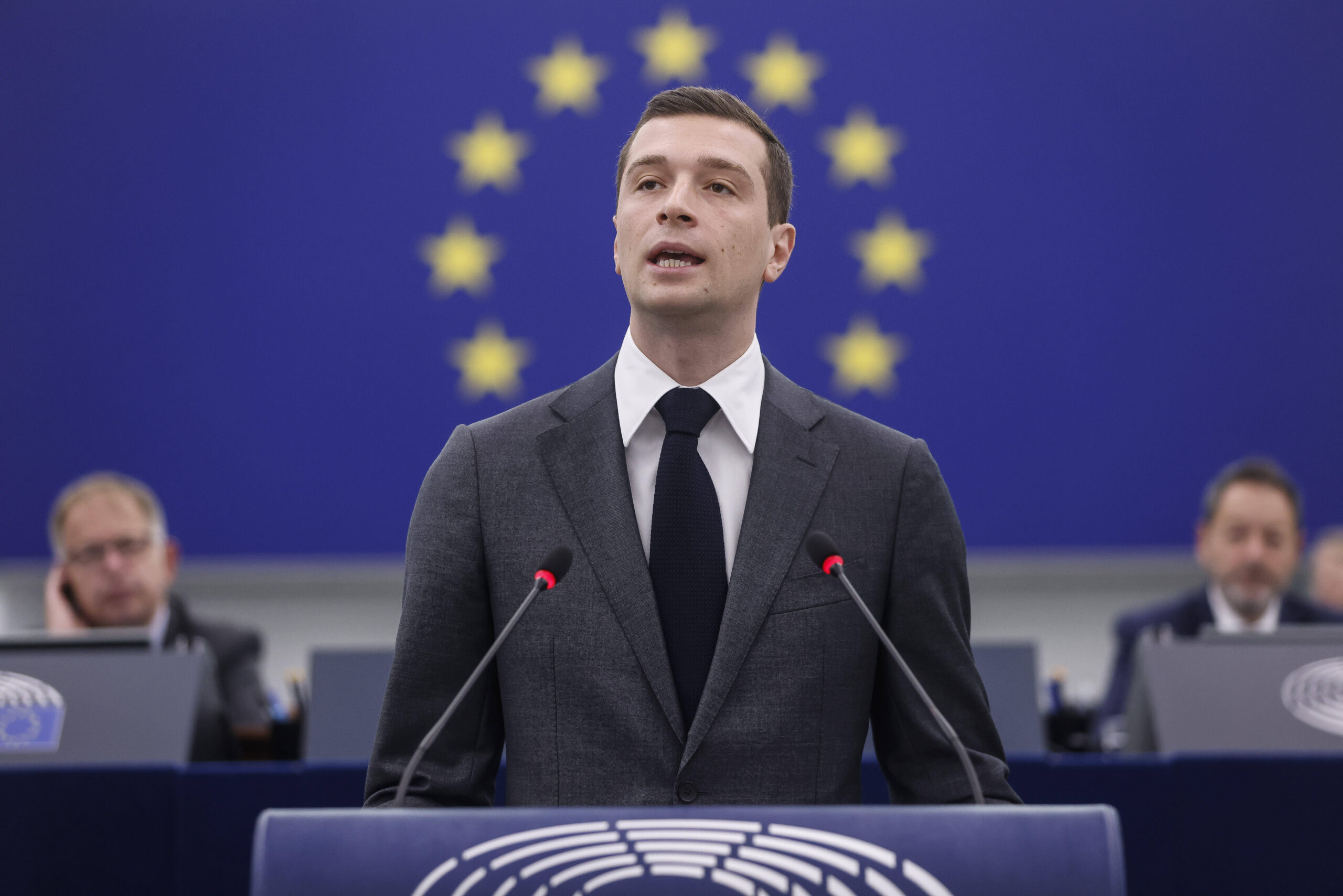
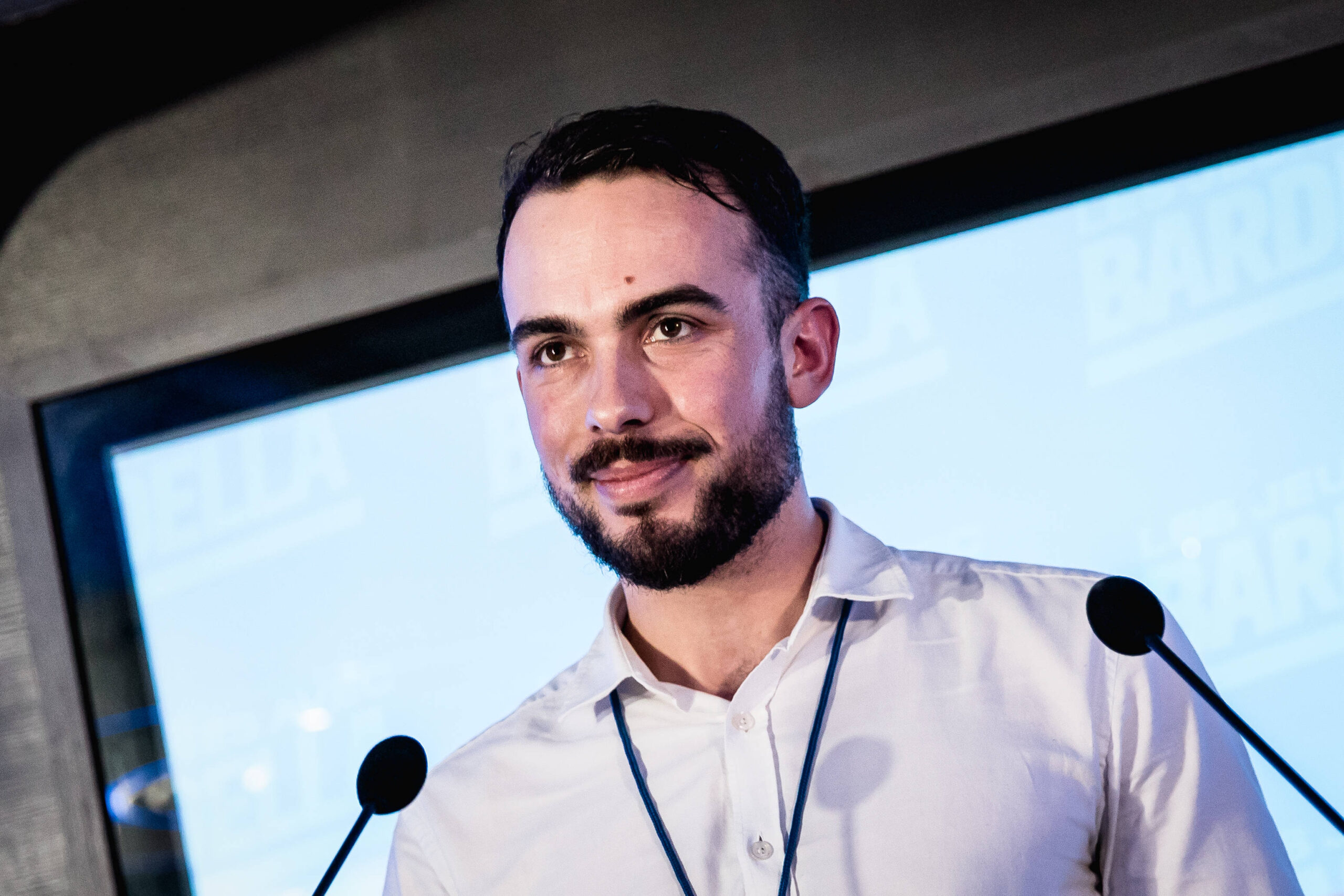
That Pierre-Romain Thionnet, a prominent replacement for the pro-Russian MEP Thierry Mariani on the Foreign Affairs Committee of the European Parliament, orbiting around Jordan Bardella, is not negligible from this standpoint.
A year after the war began, the RN president—27 years old and newly elected to lead the party—gave a long interview: “One cannot be patriotic, sovereigntist, and remain indifferent to violations of sovereignty within a European state.” Internally, this phrasing unsettled more than a few cadres. Especially since Marine Le Pen’s condemnation of Russia’s invasion did not cause her to abandon her past positions. In May 2023, during a parliamentary inquiry into foreign interference in French public life, she reaffirmed: “Crimea was Russian for two centuries. It was Ukrainian for sixty years, given by a dictator on a whim. A steadfast defender of the referendum, I considered that, freely, the residents of Crimea explained themselves by voting to join Russia […]. I said it at the time of the Crimea referendum, I say it again today, I have no difficulty saying it and I believe it perfectly legitimate that others may hold another opinion on this matter. Moreover, I had visited Crimea [in June 2013]. I have personal experience, I have seen many people, and I could only observe that they felt more deeply tied to Russia than to Ukraine.” The irony is that these parliamentary works were driven by the RN specifically to end accusations of collusion with Russia, pulling her back toward her past.