
Do you know three Chinese provinces? To understand Xi’s China, you must go beyond Beijing and Shanghai. Our new series goes to meet the spaces where another figure of the future is being built. To receive this series, subscribe to the Grand Continent.
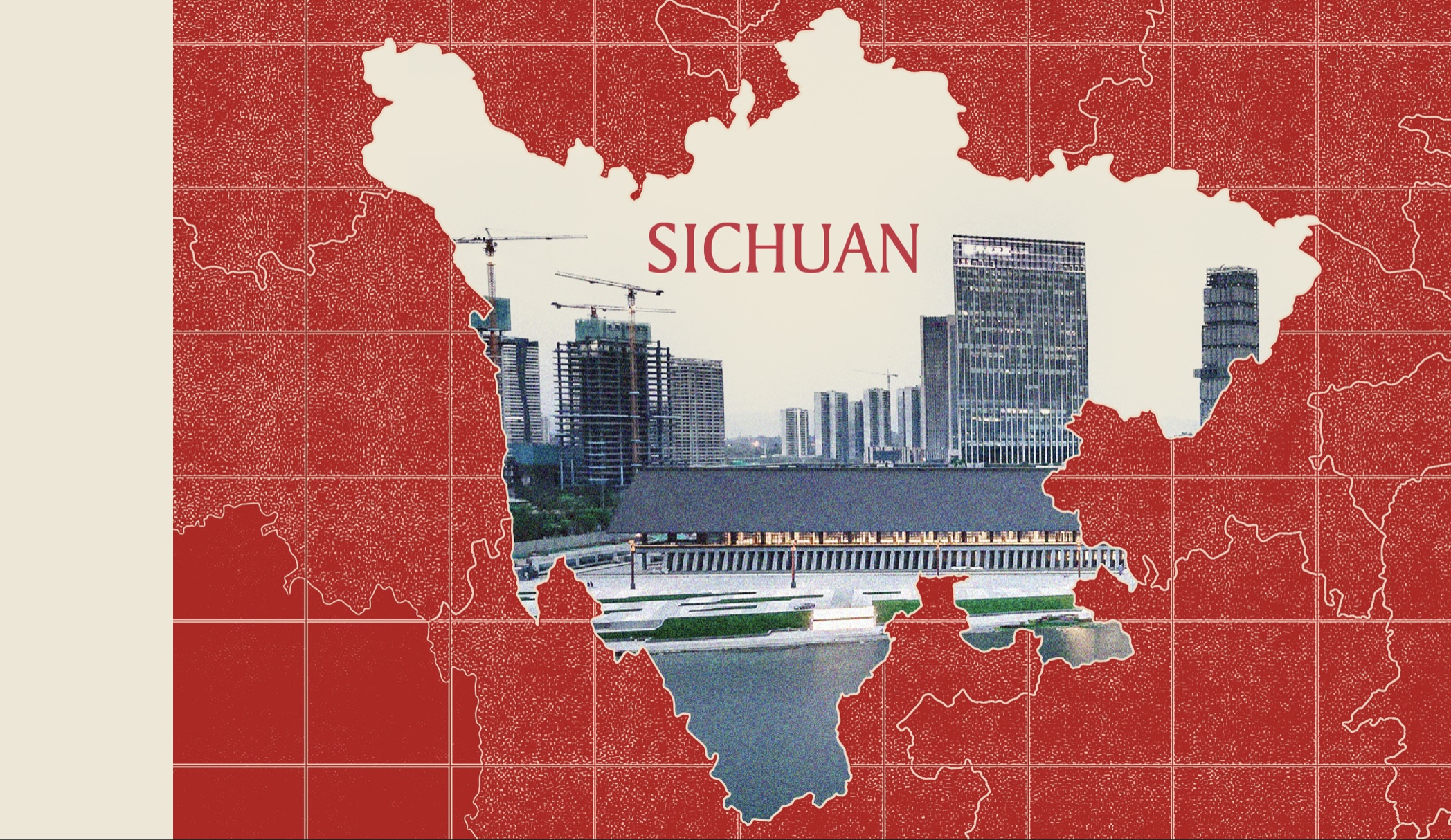
Chengdu is located in Sichuan Province, one of the green lungs of China. The city is surrounded by a wetland zone that holds roughly 250 to 300 days of overcast skies each year, and where one eats the country’s spiciest cuisine. The sky is gray and low all year round, summer brings tropical downpours, and winter is cold, though temperatures rarely drop below freezing. It is the “paradise” city where life is supposedly pleasant, at least that is what is said of it elsewhere in China. Sichuan is also one of the provinces most burdened by debt, alongside much richer, more industrialized authorities that are closer to the centers of power, like Zhejiang or Tianjin. Sichuan is not left behind: as the fifth-largest provincial economy, it is the leading economy in China’s “west.” The province and its people are known for their gambling habits. It is said that they invented mahjong tables covered with sounds-absorbing fabric to escape the ears of police who could identify places of gambling by the clatter of tiles. Before authorities banned it, people played mahjong in teahouses, in the shade of bamboo groves, a plant tied to local folklore as well as to the region’s panda regime, the emblematic animal of the area.
If one had to characterize it, Sichuan would be the opposite of Beijing: an “informal” province. This shows in the muggy heat of summer, when Sichuanese drink beer around Chinese hotpot fondues, the huoguo (whose paternity is disputed with the neighboring city of Chongqing), to sweat it out. It is in this type of establishment, with a plastic apron around the neck, that all sorts of contracts—legal, illegal, formal or informal, sometimes lucrative—are struck. In the manner of old adventure tales, one could almost explain that it is this particular “climate,” coupled with proximity to high-quality universities, embedded in a dynamic economy, and reinforced by a military tradition linked to the air force presence, that today makes Chengdu and its province one of the high places of Chinese cyber-offensive operations. Surprising perhaps, but supported by facts. The Chinese military increasingly relies on private companies rather than its own staff for cyber missions. And Chengdu is one of the nerve centers of this activity. In addition to its pool of engineers and its particular link to the army, it would possess this “touch,” this ease in the gray zones—indeed, characteristics that objectively place it as a favorable site for developing activities that skirt the law. However, as with all topics in China, Sichuan competes with other provinces, mainly with Hubei, in the cyber sector as well as in related areas such as artificial intelligence. This competition forces Chengdu to innovate, but also to sometimes be lax about securing these activities in order to keep state contracts that sustain it—an episode evidenced by i-Soon.
Chengdu and the revival of the “Third Front” in aerospace and cyber
From the mid-2010s onward, Xi Jinping revived the “Third Front,” a major military program launched by Mao Zedong. Sichuan had joined this arrangement as early as the 1960s. The declared objective was to move military ecosystems and industrial supply chains away from coastal zones toward inland, hard-to-access provinces like Sichuan—anchored to the Tibetan Plateau and the Hengduan Mountains, as well as Ningxia, Gansu, or Hubei—in order to mobilize a third “front” in case the first (coastal regions) and second (inner cities adjacent to those areas) were destroyed.
It is during this period that the province acquired a military specialization, initially in aerospace, then in cyber capabilities. This orientation is explained by the presence of a satellite launch base in Xichang in the south of the province; an air base in Qionglai, to the west of Chengdu; and the Fenghuangshan base to the north of the city. The province’s current affairs in 2026 testify to ongoing activity in this domain: Sichuan hosted the National Space Day, and Chengdu organized the fourth edition of its space industry conference, in the presence of the provincial governor. Likewise, Chinese military aircraft never before seen are regularly spotted over the city, including in 2024 what experts would call a sixth-generation aircraft.
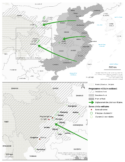
The Third Front doctrine was abandoned in the 1980s, leaving behind disused factories that nature gradually reclaimed. The military reform of 2015 and the creation of the Strategic Support Force, since dismantled in 2024, reactivated Sichuan’s Third Front. In addition to rugged terrain, the province possesses several assets revalorized in Beijing’s new geopolitical considerations: a continuously renewed pool of young recruits trained in local universities, companies close to military and state authorities, and a subsoil rich in critical materials. Over time, Chengdu has become more oriented toward a militarized services industry rather than manufacturing, without abandoning the latter objective entirely.
The development of private Sichuan cyber forces in service of the State
A somewhat secretive activity was revealed by a 2024 GitHub leak of data linked to the Sichuanese company i-Soon (Anxun Information Technology Co.; 安洵信息技术有限公司). This company, now inactive, would have conducted cyber operations for the Chinese government or provincial branches of certain ministries, including the Ministry of State Security. According to the leaked documents, the company allegedly hacked targets such as ministries, telecom operators, or universities in third countries for state clients. In France, Sciences Po appears on this list. Yet the most affected countries, based on available information, would be neighboring states to China.
This episode is not incidental. It testifies to the expansion of China’s cyber industry. According to the technology outlet 36Kr, Chengdu’s cyber sector has shown annual growth above 20% since 2018. The sector is structured around three types of actors: national leaders (Qi An Xin, Venustech, Huawei); national-level firms with provincial units (China Cybersecurity, Asiainfo Security); and provincial-level companies (Colasoft, Maipu Communication), a category that includes i-Soon. Several observers draw a link between i-Soon, other Sichuan cyber firms (Chengdu 404, for example), and APT41 (Advanced Persistent Threat 41), a group of criminal hackers that Beijing has mobilized since 2015 for espionage operations outside China. Some of its members, still wanted by the FBI, would be employees of Chengdu 404.
The rise of Chengdu in the defense ecosystem fits into a broader reshuffle at the highest levels of the State. With the PLA reform and the 2015 creation of the Strategic Support Force, later dismantled in 2024, the military would have shed espionage operations and theft of intellectual property in favor of the Ministry of State Security. In practice, however, the Public Security Ministry (the police equivalent) is also frequently cited as a client—and this highlights competition between these two ministries in the cyber sphere. Both agencies would resort to contracting with provincial firms, including in Sichuan. The choice of targets mostly falls to local offices of the State Security and Public Security Ministries. Analysts, however, offer no irrefutable evidence. The American Department of Justice appears to draw a clear link between i-Soon employees and operations conducted for the Public Security and State Security Ministries, as some of them are still actively sought.
Sichuan, a contributor to China’s civil-military fusion policy in cybersecurity
Chengdu does not hide its ambition to become China’s leader in cybersecurity: the city intends to contribute openly to Xi Jinping’s project of turning China into a “Cyber Power” (网络强国). As early as 2018, Chengdu urged companies, universities, the state, and the municipality to form a “cluster” and work in a horizontal manner. A municipal document proposes a “Cybersecurity Plan” for the city, aiming to become a “zone of civil-military integration” in cyberspace:
“We will establish a research institute and an industrial base for civil-military integration in cybersecurity, set up mechanisms for bidirectional transfer of scientific and technological results between the military and civilian sectors in this field, train versatile talents, encourage joint innovation in military and civilian technologies and the sharing of innovation resources, and develop a deep integration model for technologies, talent, and industries of both military and civilian sectors.”
Since Xi Jinping rose to power, the civ-mil fusion policy has taken a much more ambitious turn than under his predecessors. It is no longer merely about clearly identified pipelines between civil and military spheres, as seen with the seven government-supported universities known as the “Seven Sons of National Defense” (国防七子). Xi pushes the logic further: there should be links between civil and military sectors in all domains, including private R&D and civil universities. Hence Sichuan University (四川大学), a civilian institution in the heart of Chengdu, was chosen by the Ministry of Education and the Cyberspace Administration of China to establish a research center and a school to train cybersecurity talents up to the doctoral level. The municipality notes that the university has already set up internship agreements and joint laboratories with sector companies, including Chengdu 404, one of the private firms already involved in offensive cyber activities for the Chinese government.
The University of Electronic Science and Technology of China (UESTC, 电子科技大学), also based in Chengdu, has been affiliated since 2016 with SASTIND (State Administration for Science, Technology and Industry for National Defense) and the Ministry of Education. It also trains cybersecurity professionals. Its School of Cybersecurity and Information Security, founded in July 2015, relies notably on the National Laboratory for Anti-Jamming Technology in Communications, a domain with clear military roots. The UESTC does not appear to maintain special links with companies suspected of conducting offensive operations and seems institutionally closer to military entities than to the looser entrepreneurial network in which Chengdu 404 operates.
Not only does Chengdu train the talent, but the city also prides itself on spotting national “gems,” both in the private and public sectors, including the military. Since 2018, the city has hosted the Tianfu Cup, China’s equivalent of French hackathons or America’s Pwn2Own. University teams and corporate laboratories compete there to break into vulnerabilities of different targets. These competitions are held in relative secrecy; Chinese teams stopped participating in international equivalents since 2018 to avoid brain drain. Some reports indicate it is likely that vulnerabilities discovered in non-Chinese products are then handed to the Public Security Ministry and that the best hackers are directly approached by its services. The competition thus serves to identify the most promising talents and to uncover vulnerabilities still unknown, anchoring Sichuan further in a framework that promotes offensive capabilities.
The cyber development woven into Chengdu’s urban fabric
In Chengdu, places and events allow observation of the direct links between private, public, civilian, and military spheres in cyberspace. The cyber cluster is organized around sites dedicated to cybersecurity or civil-military fusion. In 2022, the city, together with Chongqing, obtained MIIT labeling for a national interregional cybersecurity industrial park (Chengdu-Chongqing region), distinguishing four sites in Chengdu.
Gaoxin (高新园) forms the R&D base of the Sichuan cyber ecosystem, oriented toward the military sector. It hosts the first Chinese industrial park entirely dedicated to cybersecurity: the Western Information Security Industry Park (国家西部信息安全产业园). It was created around the cryptography laboratory of the state-owned electronics defense company CETC, Institute No. 30 (中国电科第三十研究所), and its commercial subsidiaries.
Tianfu (四川天府新区) houses the city’s most advanced scientific infrastructures (supercomputers, national laboratories, innovation incubators). Created in 2014, this zone supports national strategic scientific and technological forces in all areas targeted by China, including cybersecurity, thus preceding China’s cyber policies. It attracts renowned scientists and engineers thanks to targeted funding.
Shuangliu (双流园) hosts an aerospace industrial cluster that predates the city’s cyber vocation and aligns with Chengdu’s ambition to serve the cyber sector while maintaining production activity. This zone concentrates the city’s innovation production chain.
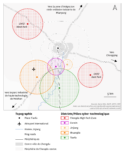
Jinjiang (锦江园), finally, specializes in commercial cyber applications.
Thus the four hubs theoretically fulfill differentiated functions, with an entire sector nourished by the talent formed in the city’s universities.
A double fierce competition: AI and Wuhan
In reality, most of these sites predate the cyber-development policies and do not solely aim to advance cybersecurity. Artificial intelligence and biotechnologies are also concerns for Chinese public decision-makers. The sustainability of the cyber sector may be questioned as it now competes for human and financial resources with the rapid development of artificial intelligence, as laid out in the Five-Year Plan. Since 2024, analysts at the national cybersecurity giant Qi An Xin have documented a net shift of capital toward AI. If cybersecurity firms continued to receive funding in 2024, it was almost exclusively because they repositioned around AI overlaps—such as data security and deepfake detection—rather than classic cybersecurity alone. Another report on private funding in China highlights this trend: the number of cybersecurity firms funded via the stock market fell from 60 to 20 between 2024 and 2025. After 2023, data on public funding for Chengdu and Sichuan are not available. It is therefore hard to say whether the province will follow the national trajectory. Yet everything points to it: Sichuan is among the provinces with the highest debt volumes in China (fifth), and it has suffered the housing sector crisis since Evergrande’s collapse in 2021. It is likely to seek entry into major national science and technology programs to continue financing itself—a trend heavily oriented toward AI.
The cyber sector in Chengdu is not only challenged by AI’s rise. It must also contend with a rival: Wuhan and the entire Hubei Province. In 2016, Wuhan received a direct mandate from the Cyberspace Administration of China to create a base for talent training and cybersecurity innovation. Among the 200 companies housed there, half of China’s 50 largest cybersecurity firms are present. Moreover, Hubei now surpasses Sichuan in cybersecurity training. If Sichuan remains broadly classified by trade press as one of the sector’s leading provinces, Hubei is still in the “challengers” tier. Chengdu nevertheless has significant advantages to pivot toward an “AI + security” strategy that would power both sectors in parallel—a harder task for Hubei, which has not yet consolidated a cluster.
The ambiguity of Chengdu
Chengdu embodies a textbook case of Xi Jinping’s civilo-military fusion: not a policy directed from Beijing by a handful of dedicated institutions, but a diffuse mesh where civil universities, private firms, industrial parks, and hacker competitions converge toward the same strategic objectives, with no single actor bearing sole responsibility—or irrefutable proof—of links to the state security apparatus. It is this porosity, maintained from Mao’s Third Front era through UESTC laboratories and internship schemes offered by Chengdu 404, that makes the city difficult to pin down for foreign chancelleries: it is neither purely civil nor openly military, operating on the fringe of two worlds.
That intrinsic ambiguity could, in the years to come, collide with a more prosaic constraint: money. The cyber financing slowdown at the national level, investors’ preference for AI, and Sichuan’s chronic debt paint a scenario in which Chengdu will have to reinvent its positioning, betting, as it seems to be doing, on the convergence “AI and security” rather than cyber security alone.
Time will tell if this strategy will preserve its competitive edge in China. What this dynamic confirms, in any case, is that China’s offensive cybersecurity is no longer purely a state affair: it has become a market, with its own poles of competitiveness, investment logics, and budgetary trade-offs — a market that Beijing frames, directs, and arms, without always fully controlling it.